Sunday, 10 November, 2019 10:53:35 AM
Agriculture >
Fruits > Dragon Fruit

DRAGON FRUIT TREE
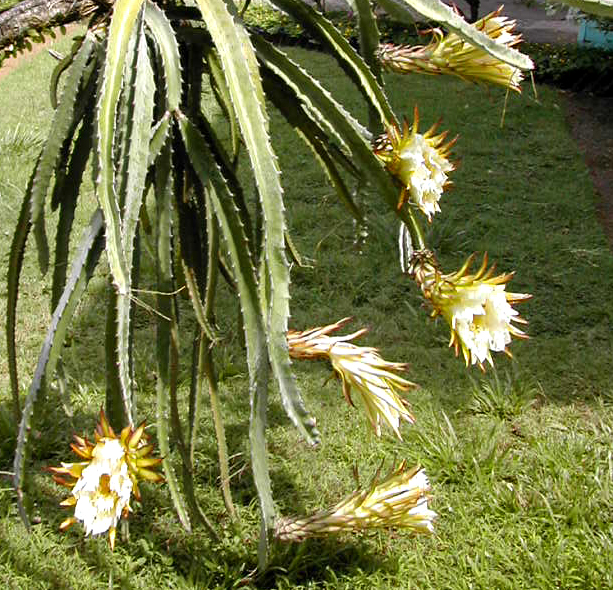
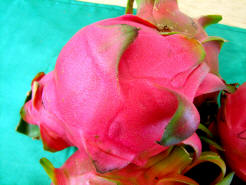
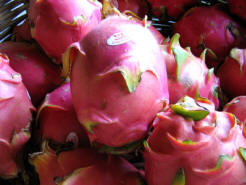
Dragon fruit trees produce large white flowers and vivid red fruit.
Dragon fruit trees are a type of woody cactus with wide, sprawling vines.
They grow anywhere. The fruit trees need sun light to grow long.
Pitaya is cultivated on a large scale in Malaysia.
Planting Pitaya (Dragon Fruits)
A dry tropical climate with an average temperature of 20-30ºC. Rainfall
requirements are 500-1500mm with alternating wet and dry seasons. Pitaya is able
to tolerate drought, heat, poor soil and cold. Maximum temperatures of Pitaya
are 38- 40ºC.
This "climbing cactus", is a tropical plant that can be grown organically. It
takes one year to for a young plant to be fully grown to bear fruits. Dragon
plant can be planted in pots. It needs regular sunlight and small amount of
water.
The fruit is juicy with a fruity flavors. Red Pitaya is attractive and pleasant
to eat.
The Pitaya, also known as Dragon Fruit or Dragon Pearl is the fruit of a
pitaya cactus. Native to Central and South America, the vine-like cactus is also
cultivated in Southeastern Asian countries such as Malaysia, Taiwan, and
Vietnam. The fruit comes in three types all with leathery, slightly leafy skin:
White Flesh, Red Outlook, Hylocereus Undatus, family of Cetaceae
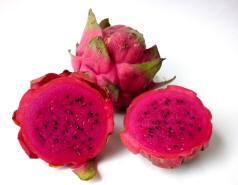
Red Flesh, Red Outlook, Hylocereus Polyrhizus, family of Cetaceae
White Flesh, Yellow Outlook, Selenicereus Megalanthus, family of Cetaceae
Sesame-sized seeds are embedded throughout the flesh.
The flesh, which is eaten raw, is bland, mildly sweet and low in calories. The
flavor is sometimes likened to that of the kiwifruit. The fruit may be converted
into juice or wine; the flowers can be eaten or steeped as tea. Although the
tiny pitaya seeds are eaten with the flesh, the seeds are indigestible.
Text original source : http://en.wikipedia.org/wiki/Pitaya
DRAGON FRUIT
(PITAYA)
Dragon Fruit Buah Naga Pitaya
S/N : Hylocereus polyrhizus - Warna Merah
Hylocereus undatus - Warna Putih
Family : Cactaceae
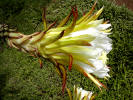
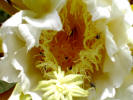
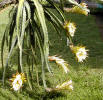
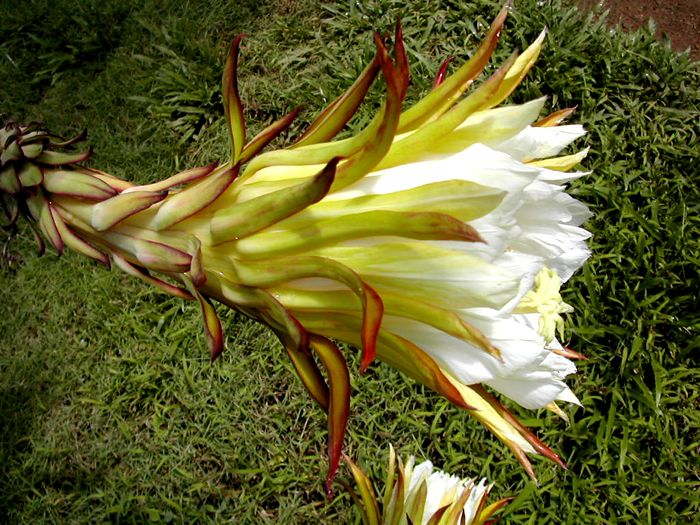
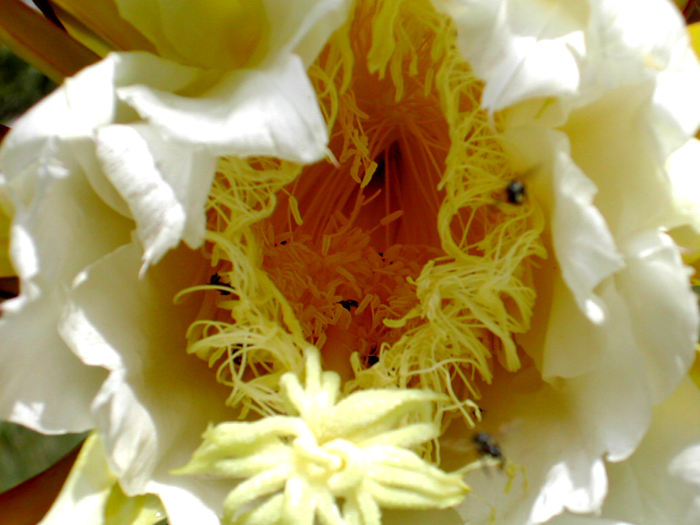
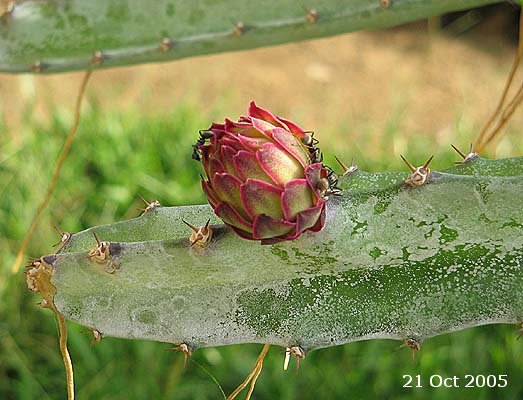
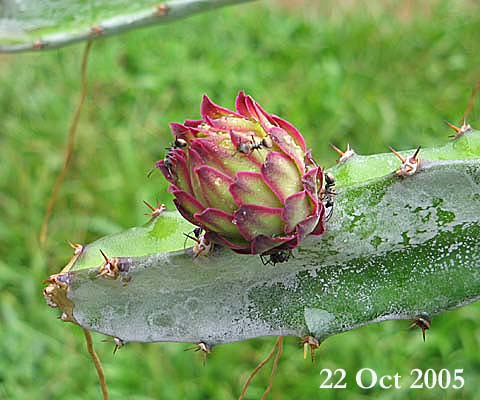
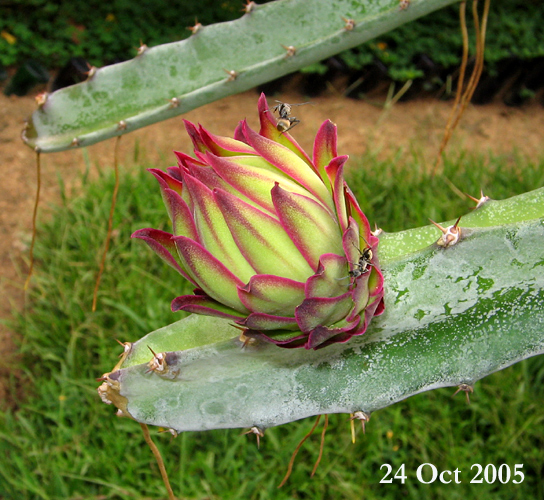
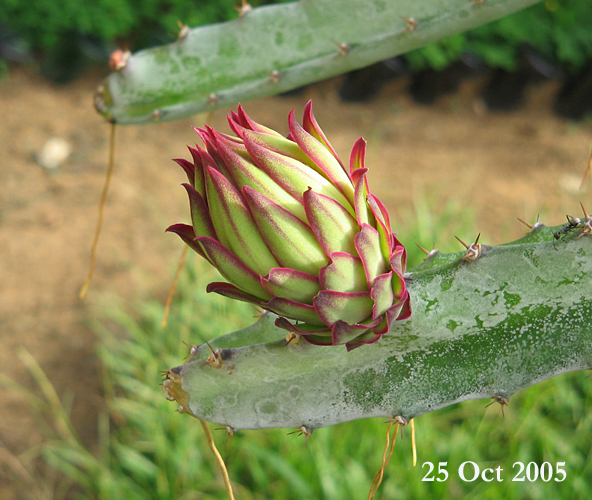
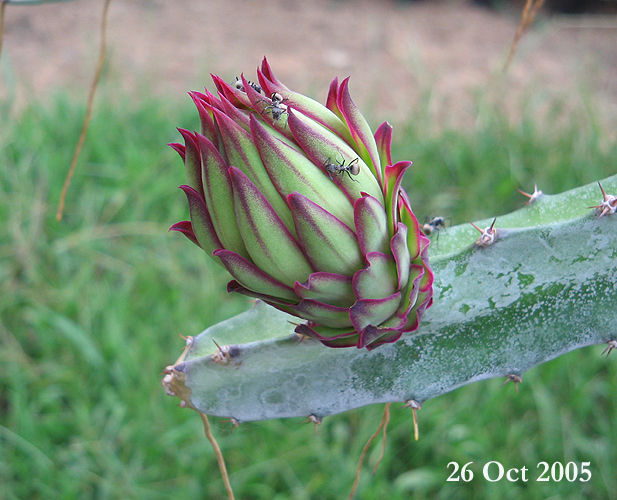
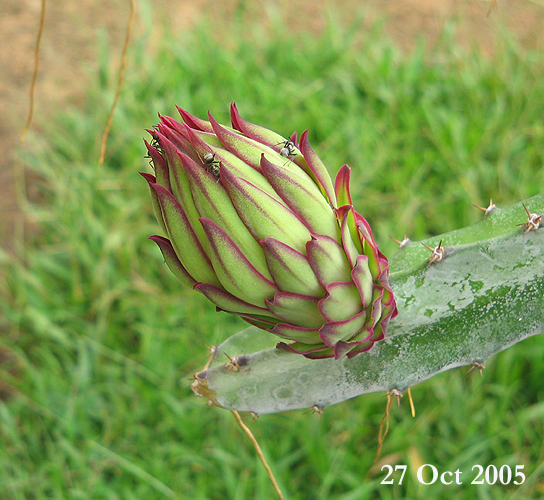
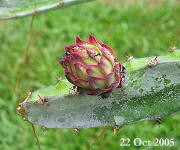
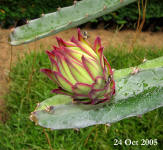
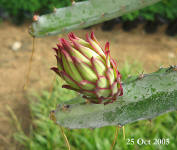
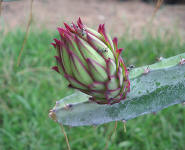
How a Dragon Fruit flower grow :
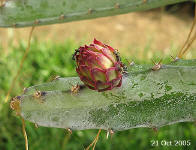
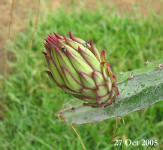
Dragon Fruits Garden
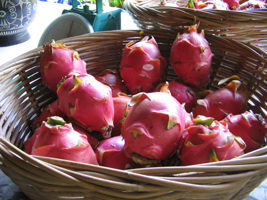
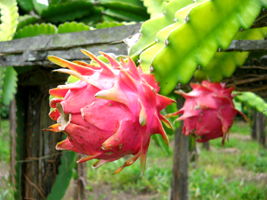
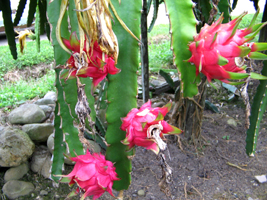
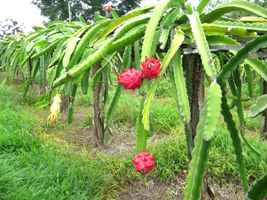
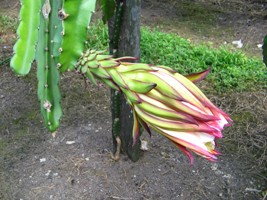
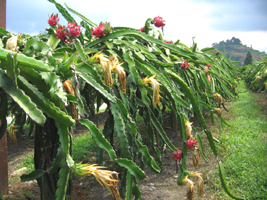
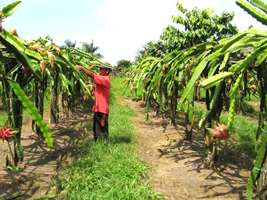
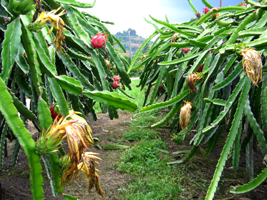
Tawau is blessed with good tropical climate and fertile volcanic soil. Many
crops grown well here like rubber, oil palm, coconut and cocoa.
Dragon fruit is one of the most recent newcomers in the Malaysian fruit market.
Dragon cultivation has made its way in the fruit industry in Tawau.
There are three varieties of dragon fruits grown:
1) White flesh dragon fruits (Hylocerues undatus),
2) Red flesh dragon fruit (Hylocereus polyrhizus) and
3) Yellow skin dragon fruit (Selenicereus megalenthus).
Only two varieties that suitable planted in Malaysia i.e red and white flesh
variety.
Red flesh dragon fruits is less in production and thus most demanding in the
market. This red variety could fatch a high price at RM 6.00 per kg compared to
white at RM 4.50 per kg. Besides consumed fresh, the red dragon fruit can
processed into cordial, jam, wine and other products.
The skin of dragon fruit can be processed to become natural food coloring. This
natural food coloring is safe to be used because it does not have any side
effects and no harm to health.
Young shoots can be cooked just like we cook lady's finger. Its nutritious and
is another source of vegetable which add medicinal value in our diet.
The dry flowers can be processed to make tea.
 |
Malaysian Agricultural Research and Development Institute (MARDI)
MARDI is a statutory body and undertakes
research and development (R&D) in food and tropical agriculture. |

 |
Kementerian Pertanian Dan Industri Asas Tani
Ministry of Agriculture (MOA)
http://www.doa.gov.my
Responsible for improving the incomes of
farmers, livestock breeders and fisherman by efficient utilizing of the
nation's resources; manages food production for domestic consumption and
export |
 |
MTDC
http://www.mtdc.com.my
|
 |
International Tropical Fruits Network (TFNet)
Independent, not-for-profit international
organization established by the member countries of the Food and
Agriculture Organization of the United Nations (UNFAO) to promote the
production, consumption, processing, marketing and international trade of
tropical and subtropical fruits.
|
 |
FAMA
http://famaexchange.org
|
 |
MITI
http://www.miti.gov.my
|
 |
SMIDEC
http://www.smidec.gov.my
|

MATRADE
http://www.matrade.gov.my
RELATED TOPICS