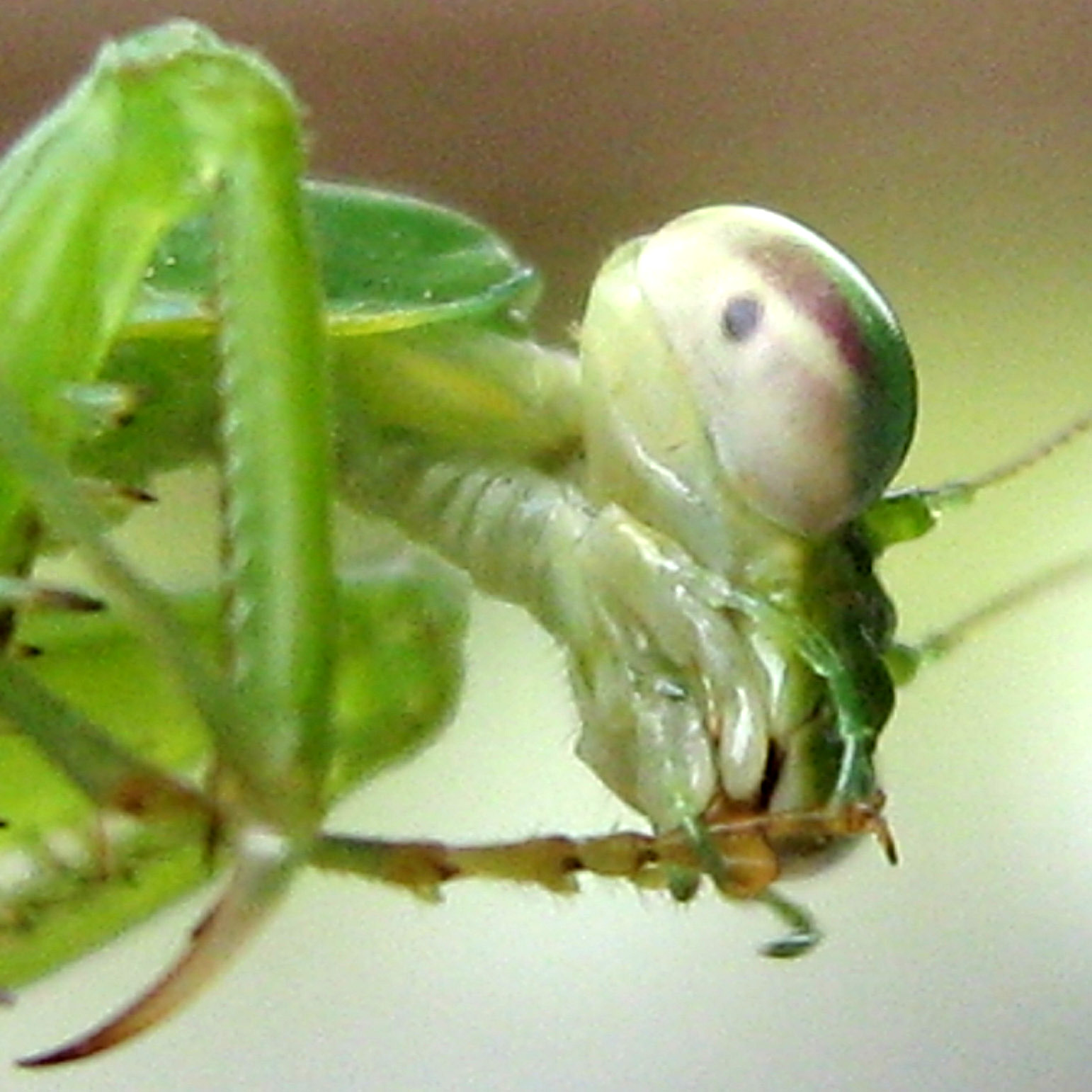
Updated on 9-5-2011 7:33AM
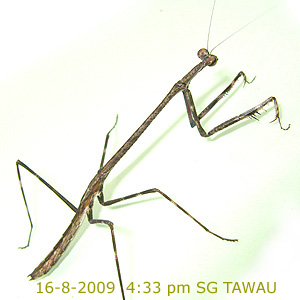
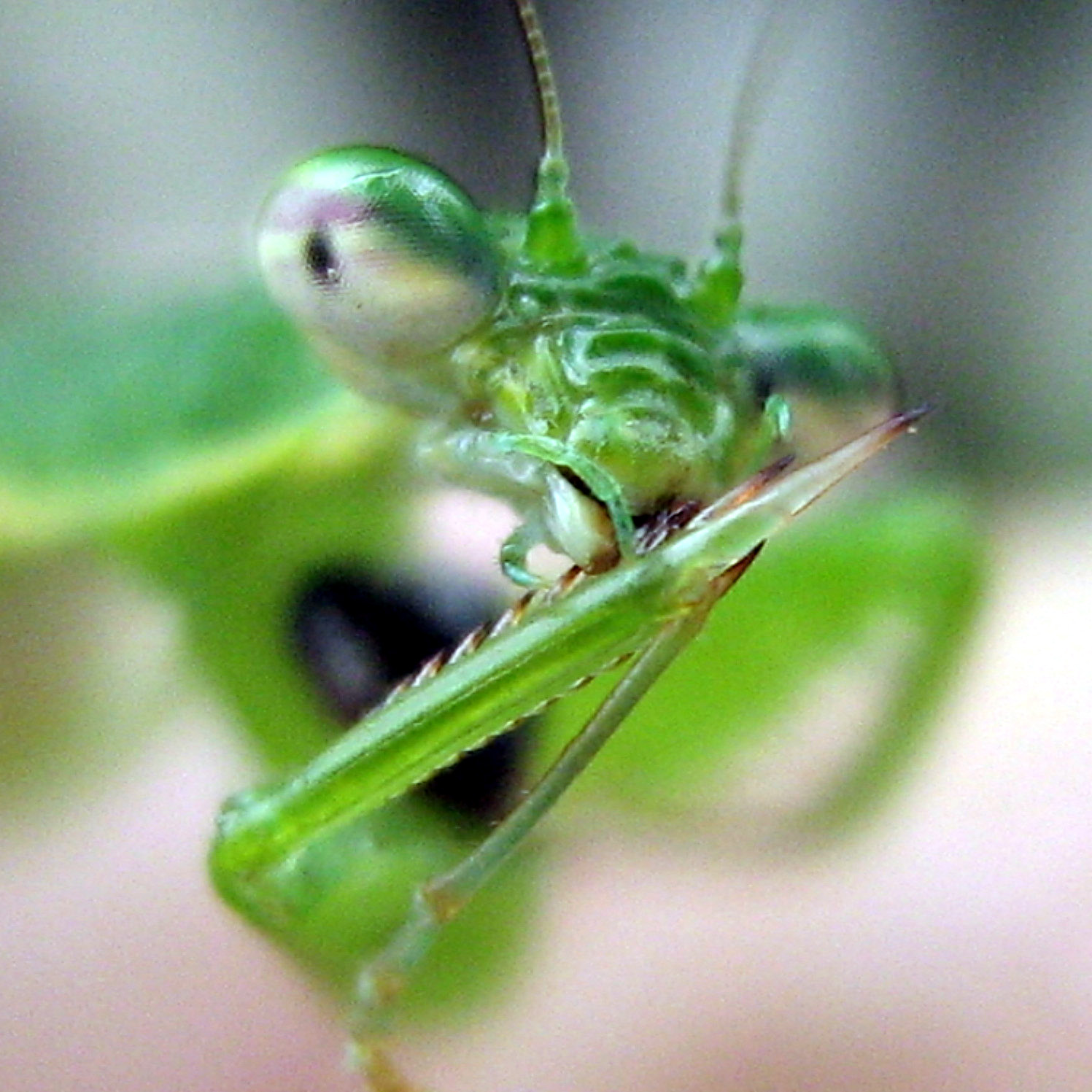
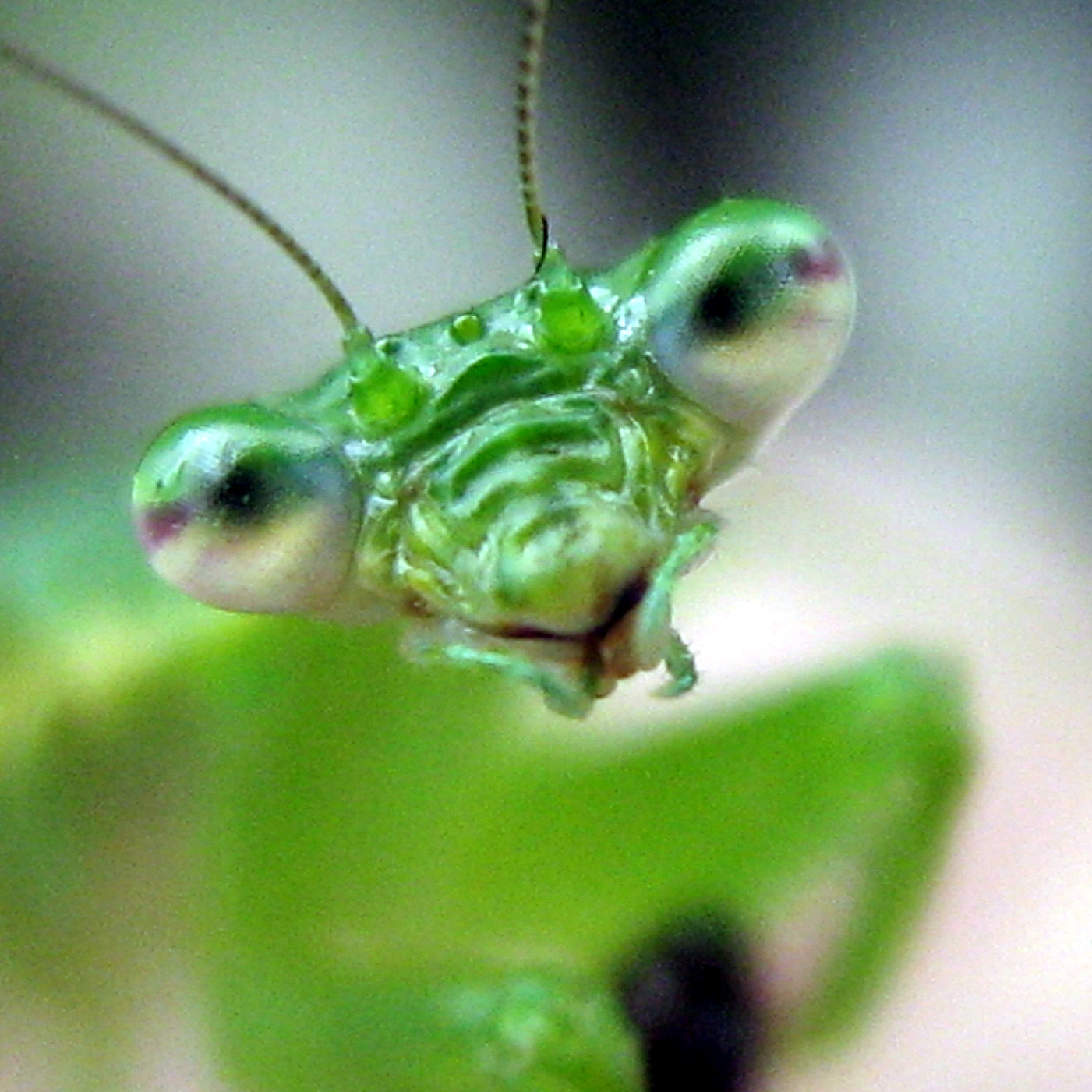
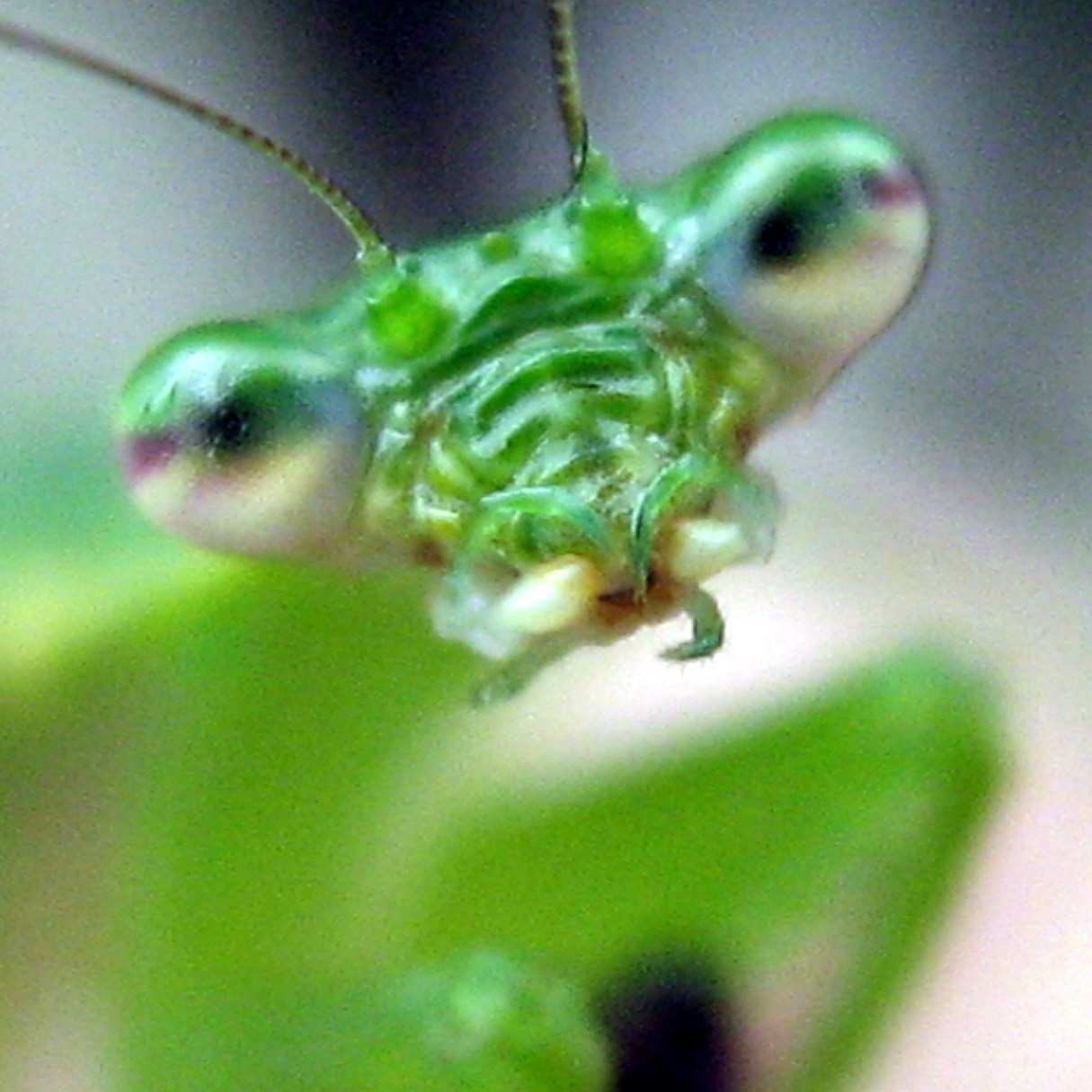
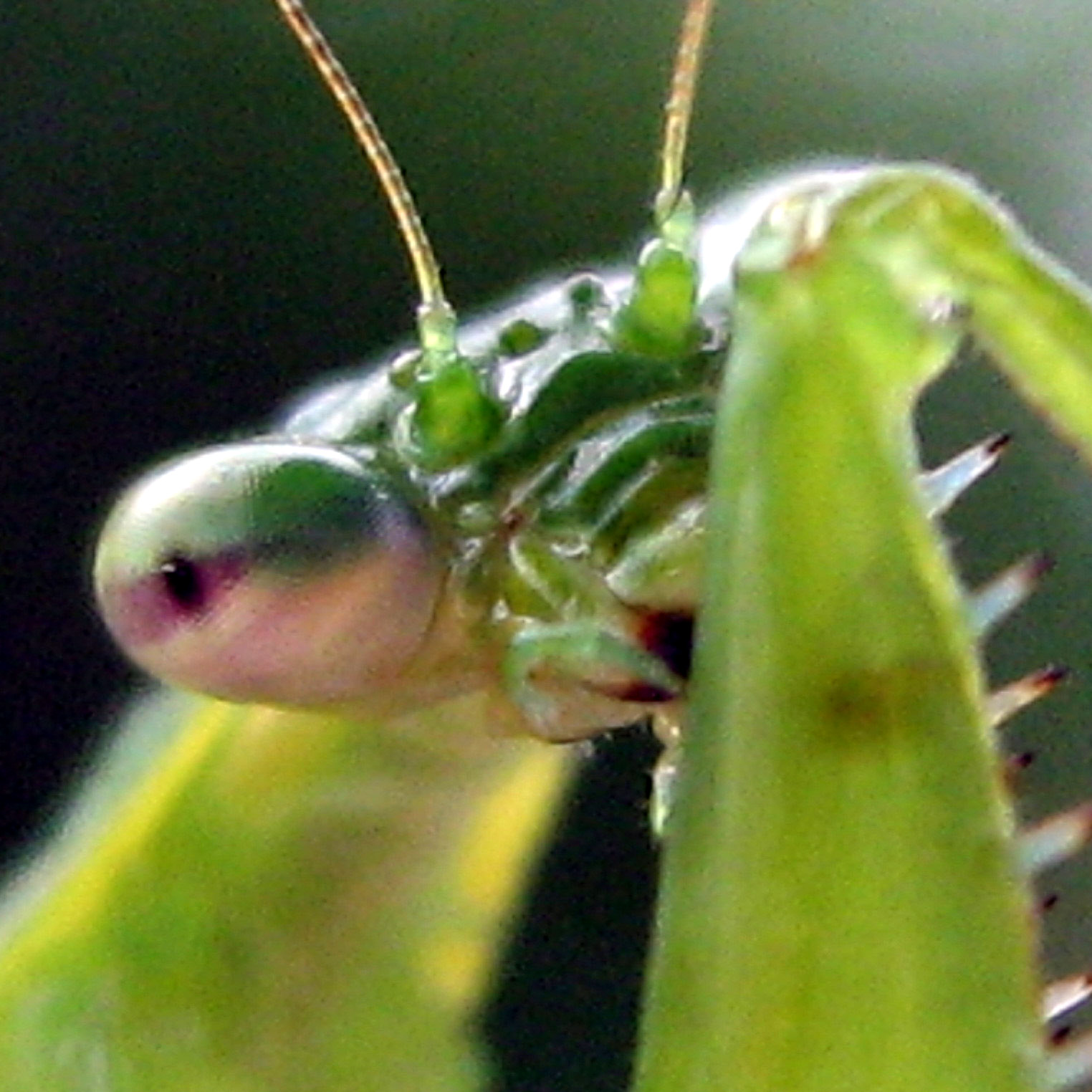
Praying mantis
螳螂目(大螳螂、小螳螂、 寬腹螳螂、微翅跳螳螂、樹皮螳螂、花螳螂、姬螳螂、)
| Phylum: Arthropoda Class: Insecta Order: Mantodea Family: Acanthopidae Family: Amorphoscelidae Family: Empusidae Family: Eremiaphilidae Family: Hymenopodidae Family: Iridopterygidae Family: Liturgusidae Family: Mantidae Family: Sibyllidae Family: Tarachodidae Family: Thespidae |
|
|
|
|
|
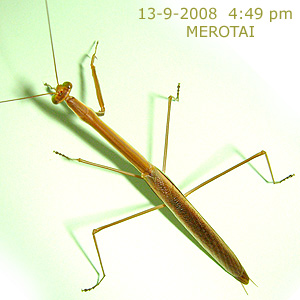
|
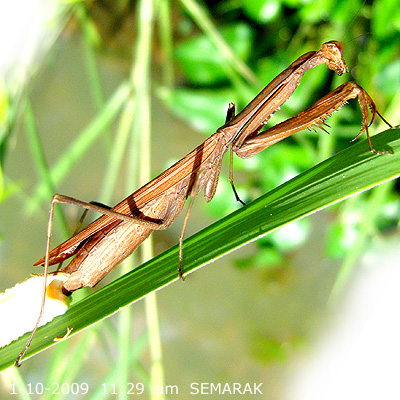
Most of
the roughly
1,800
species of
mantis-often
called
praying
mantises-spend
their time
sitting and
waiting,
seemingly at
prayer.
These highly
skilled
hunters and
masters of
disguise
have
fascinated
humans for
thousands of
years; the
ancient
Greeks first
used the
term mantis,
meaning
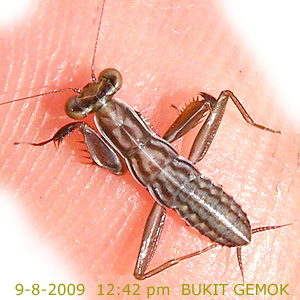
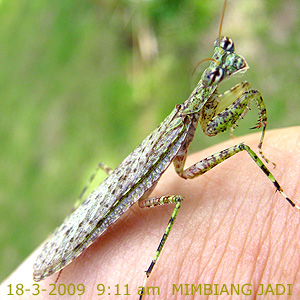
“prophet.” At first glance the animals, with their strong hind legs, resembled grasshoppers. But they lacked wings, which most grasshoppers have. Their front legs were studded with thorns, like those that praying mantis use to capture and hold their prey as they eat them alive. But the heads and hind legs of these baffling insects were clearly different from those of a mantis. From above they looked almost like plant-eating walkingsticks. Yet their second body segment was too short for a walkingstick, and their guts contained body parts from other insects, proof of carnivore. |
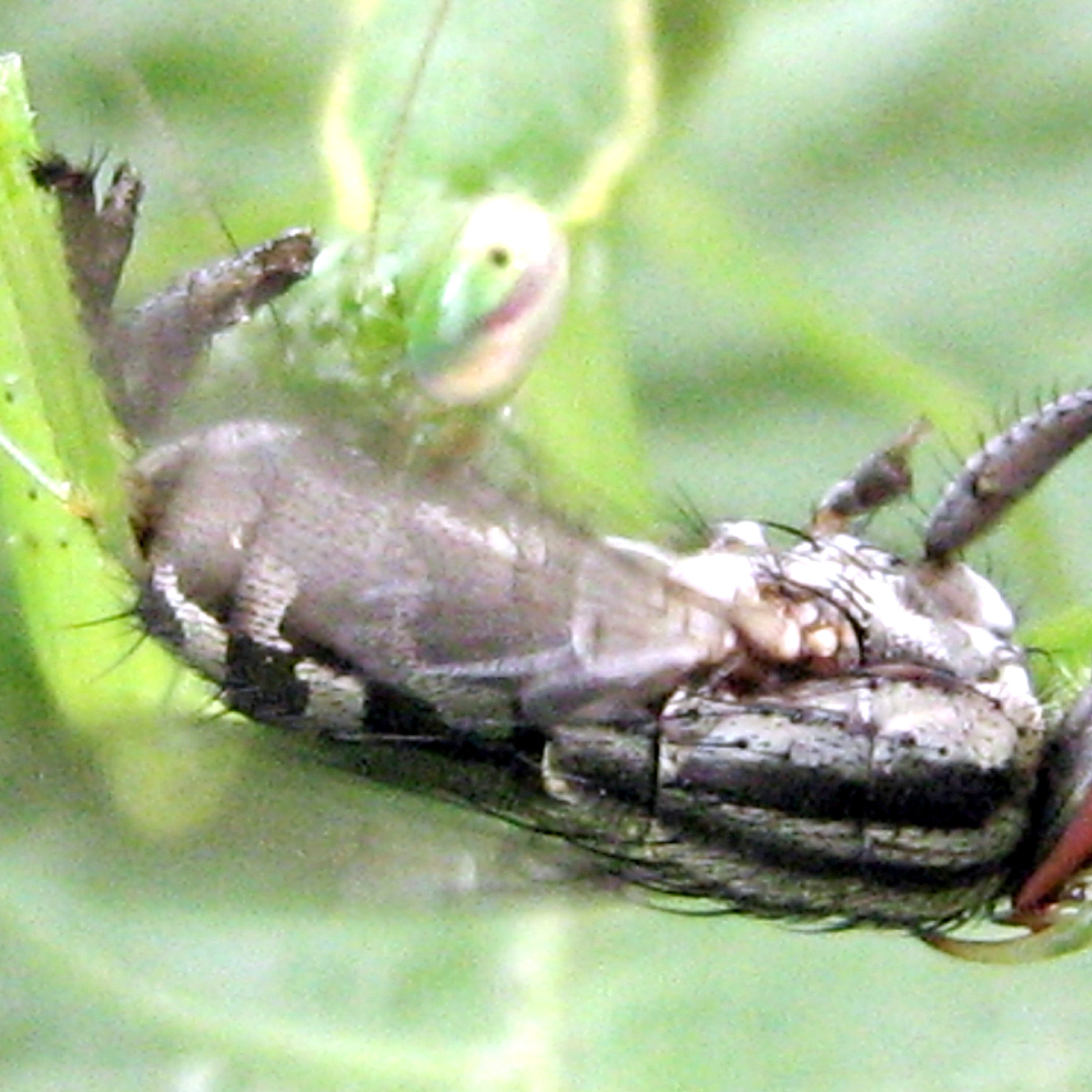
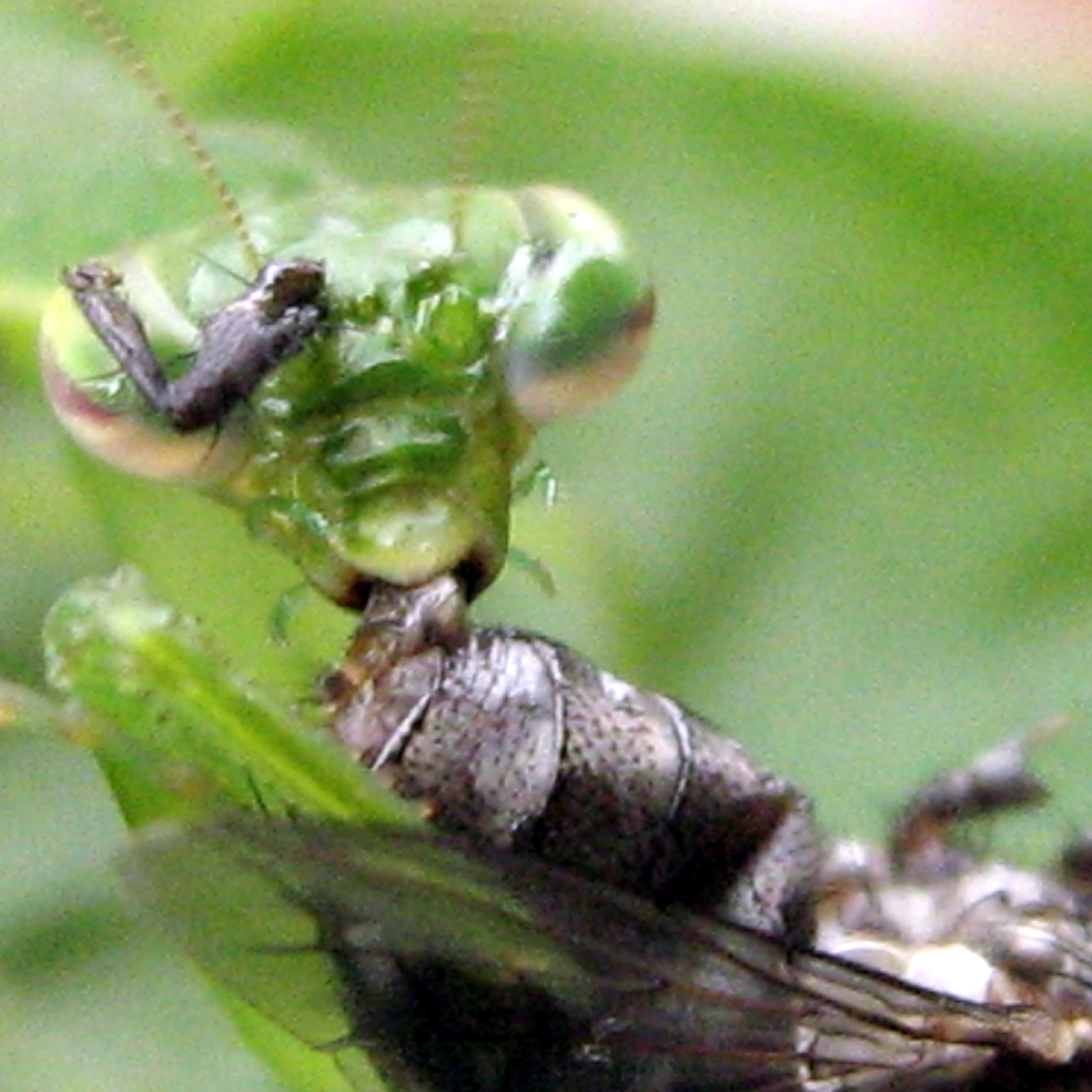
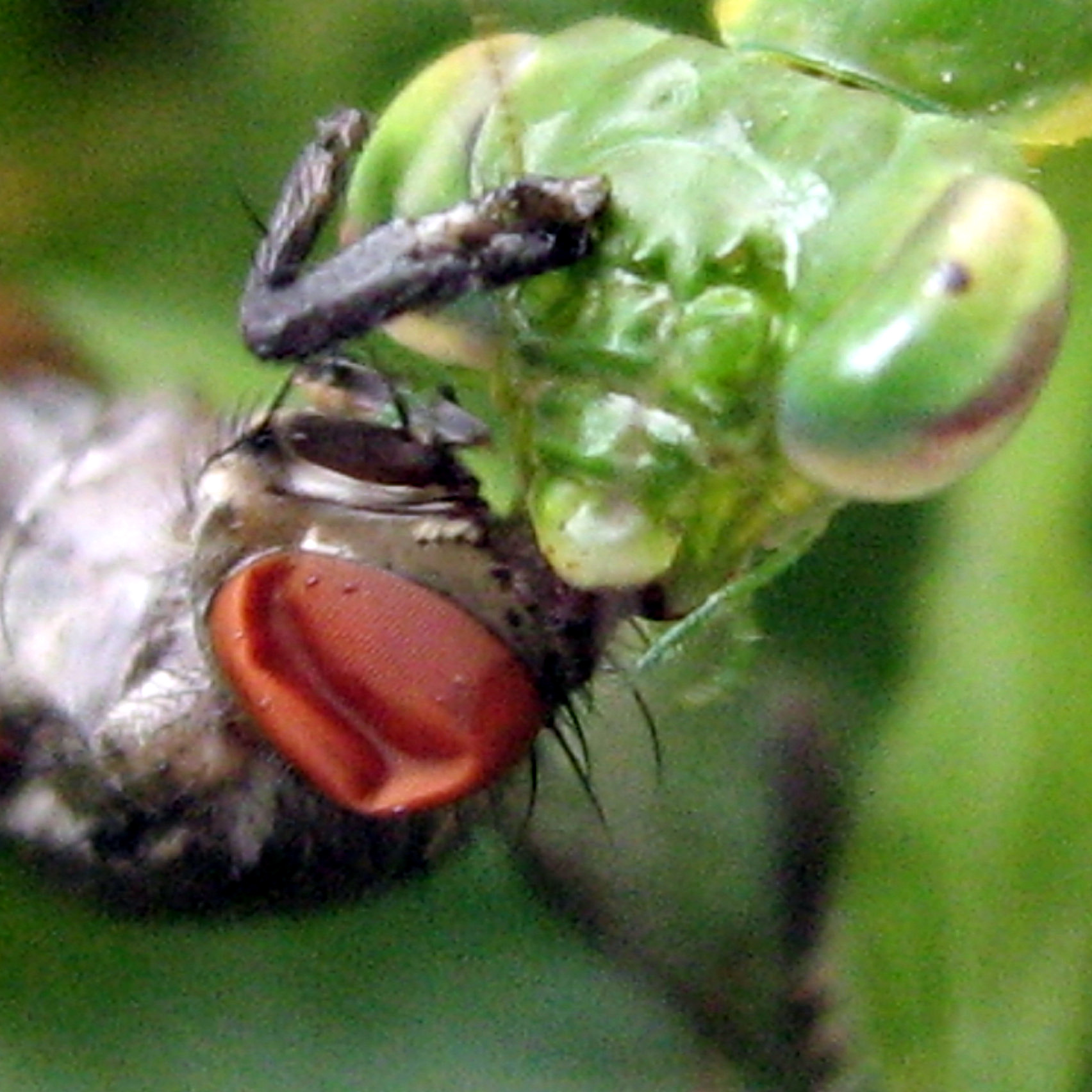
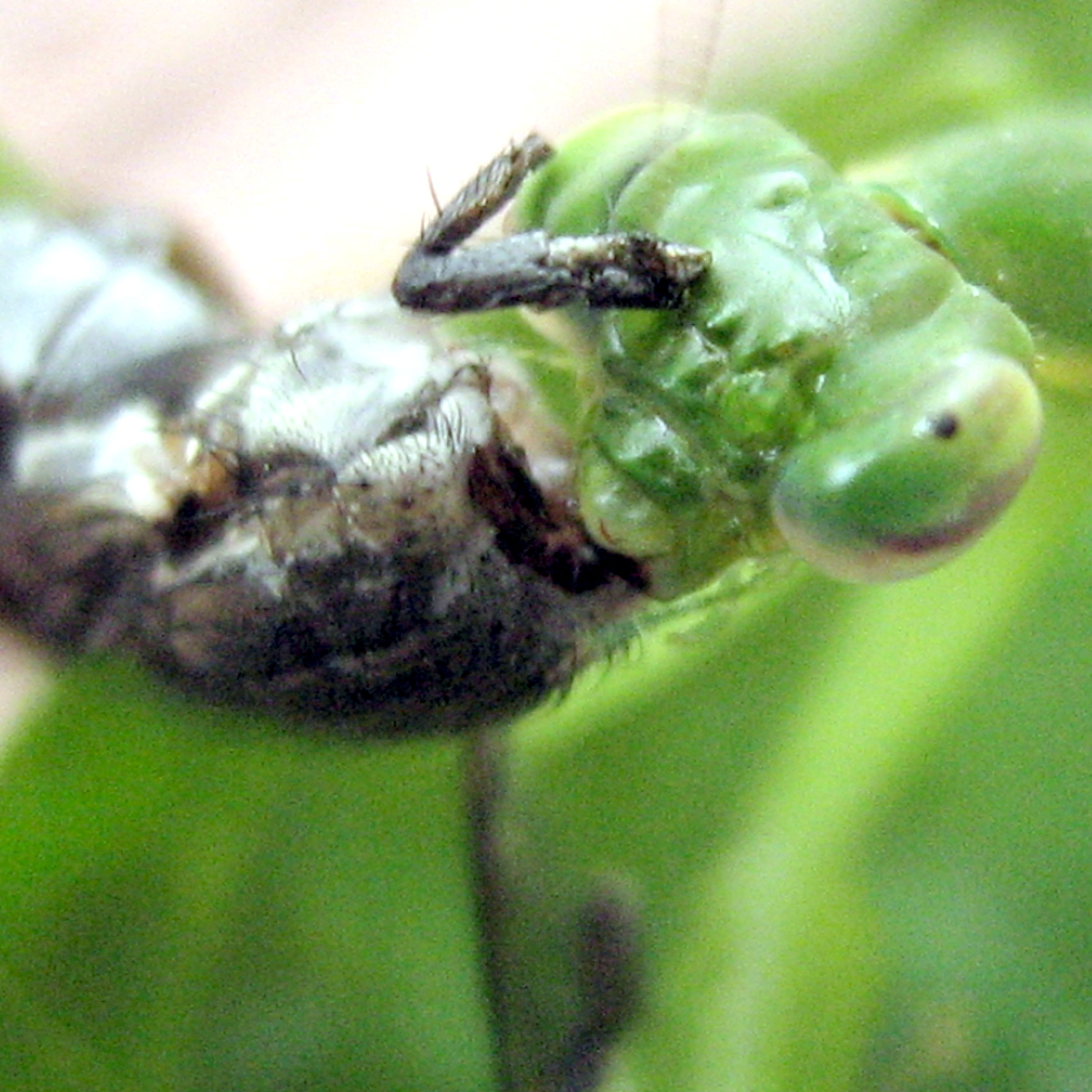
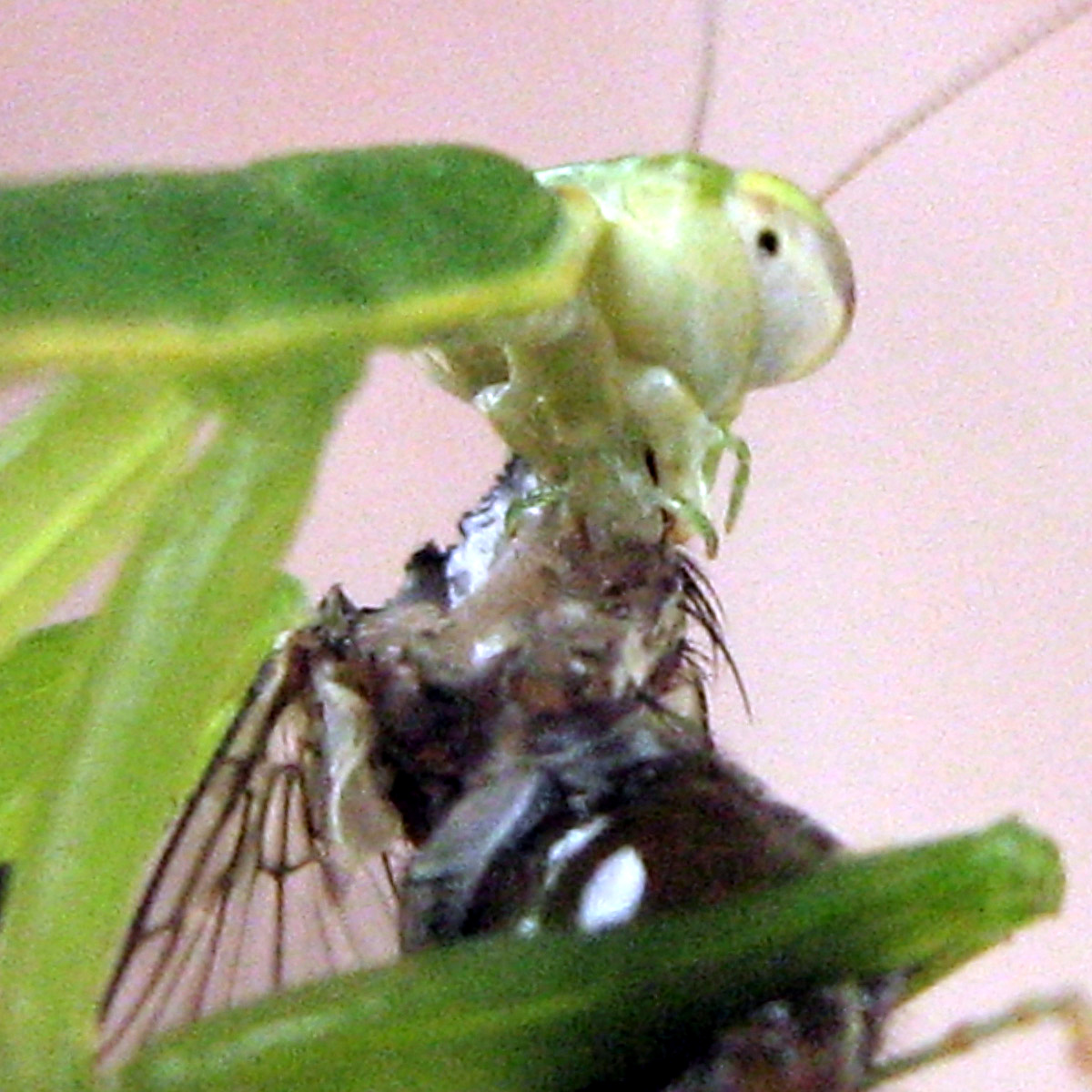
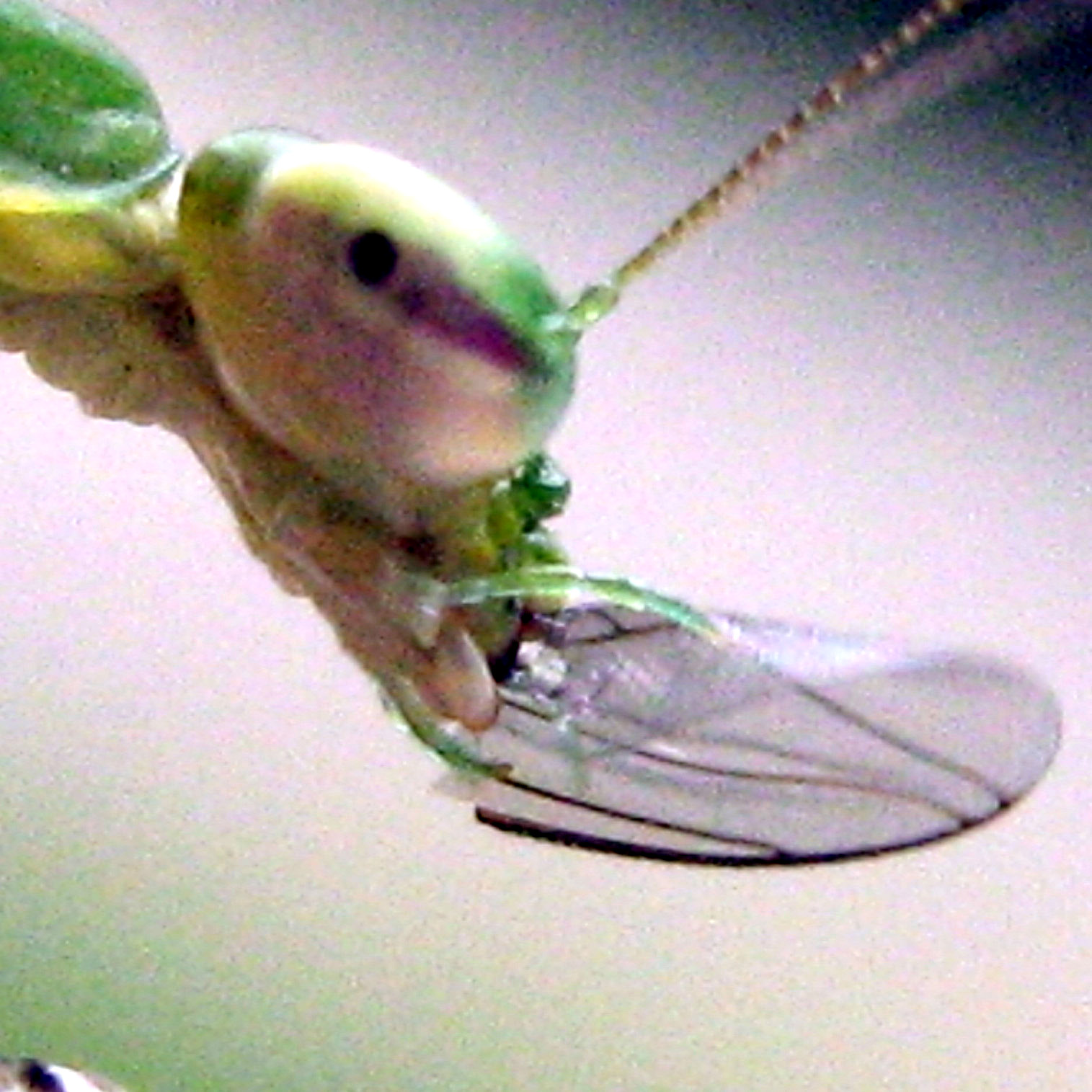
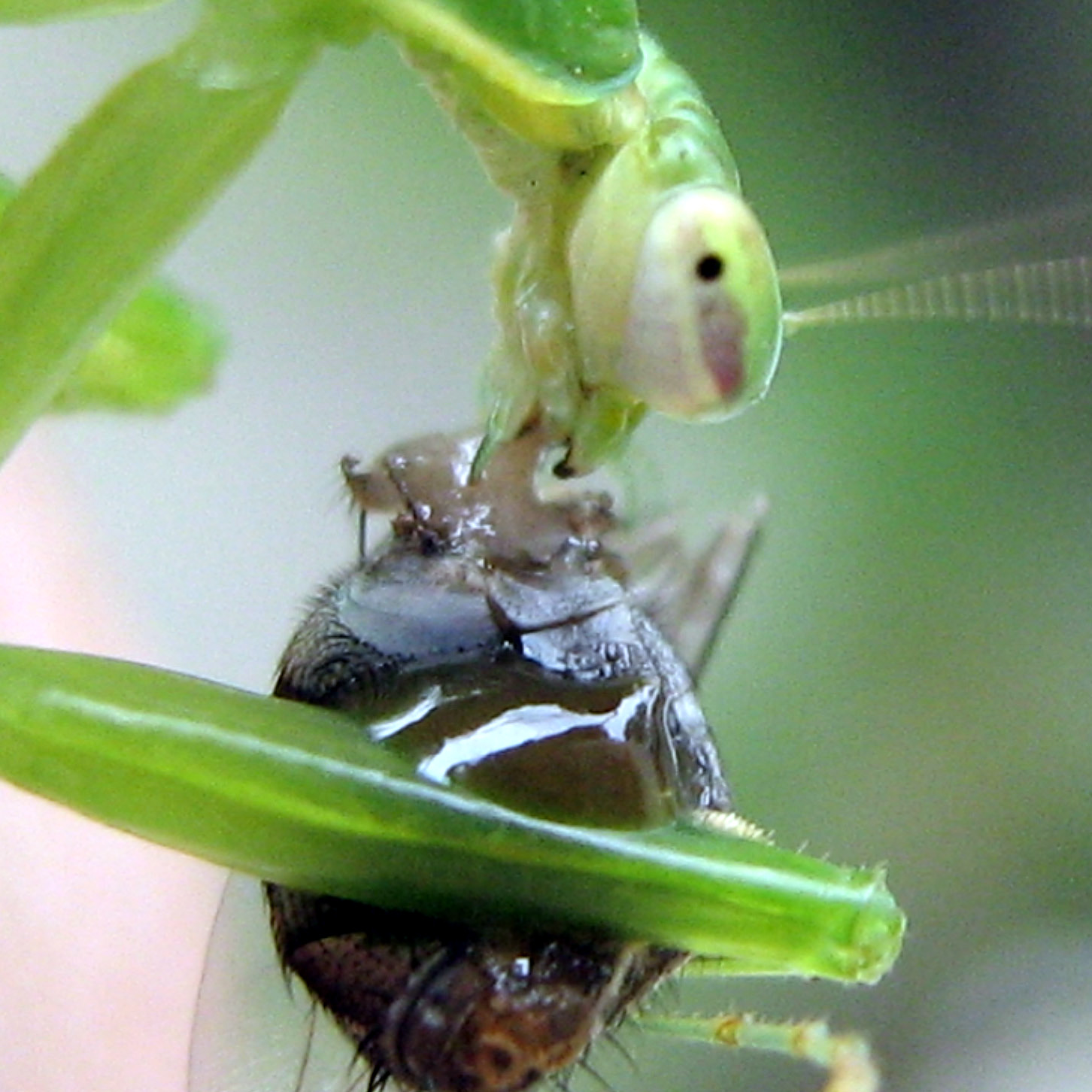
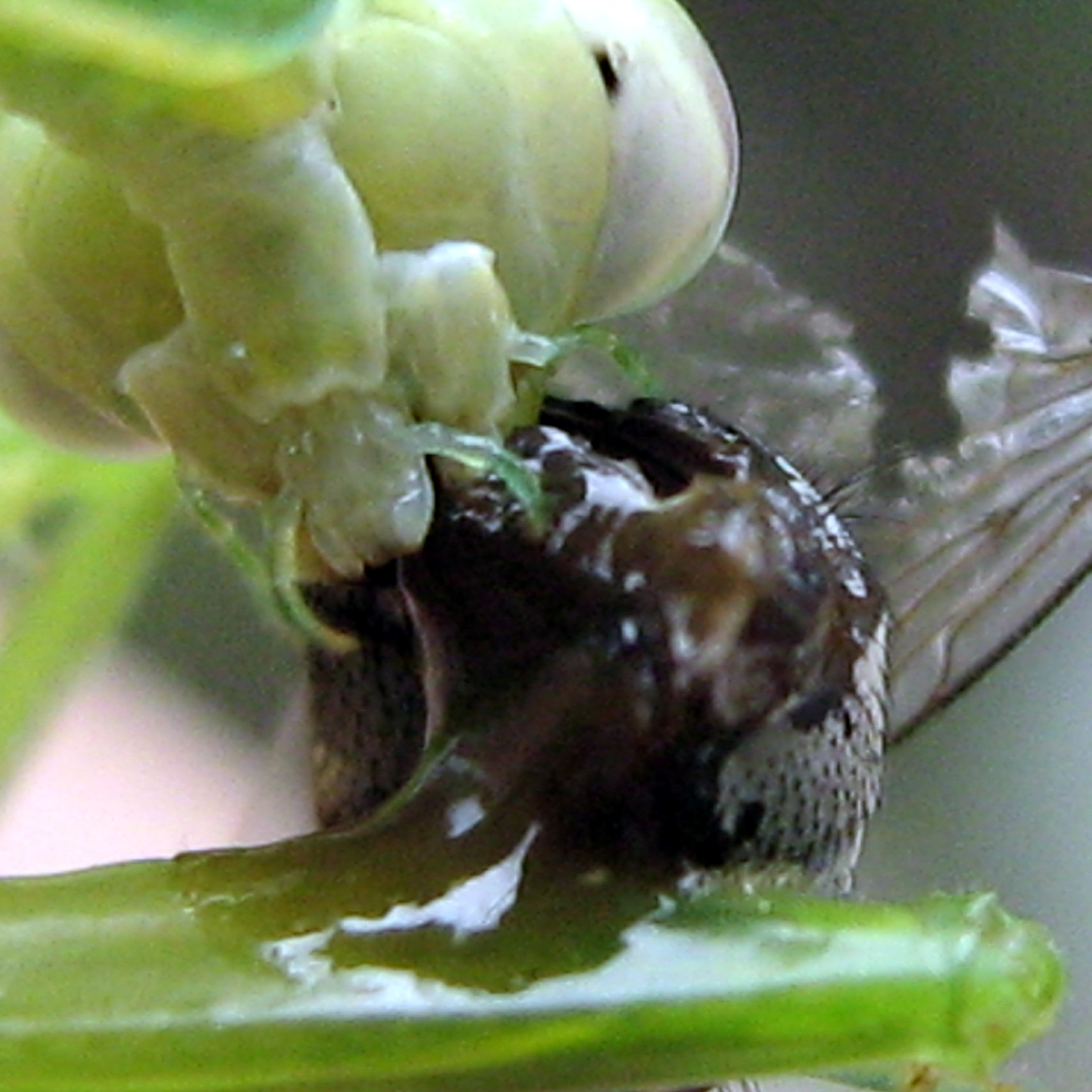
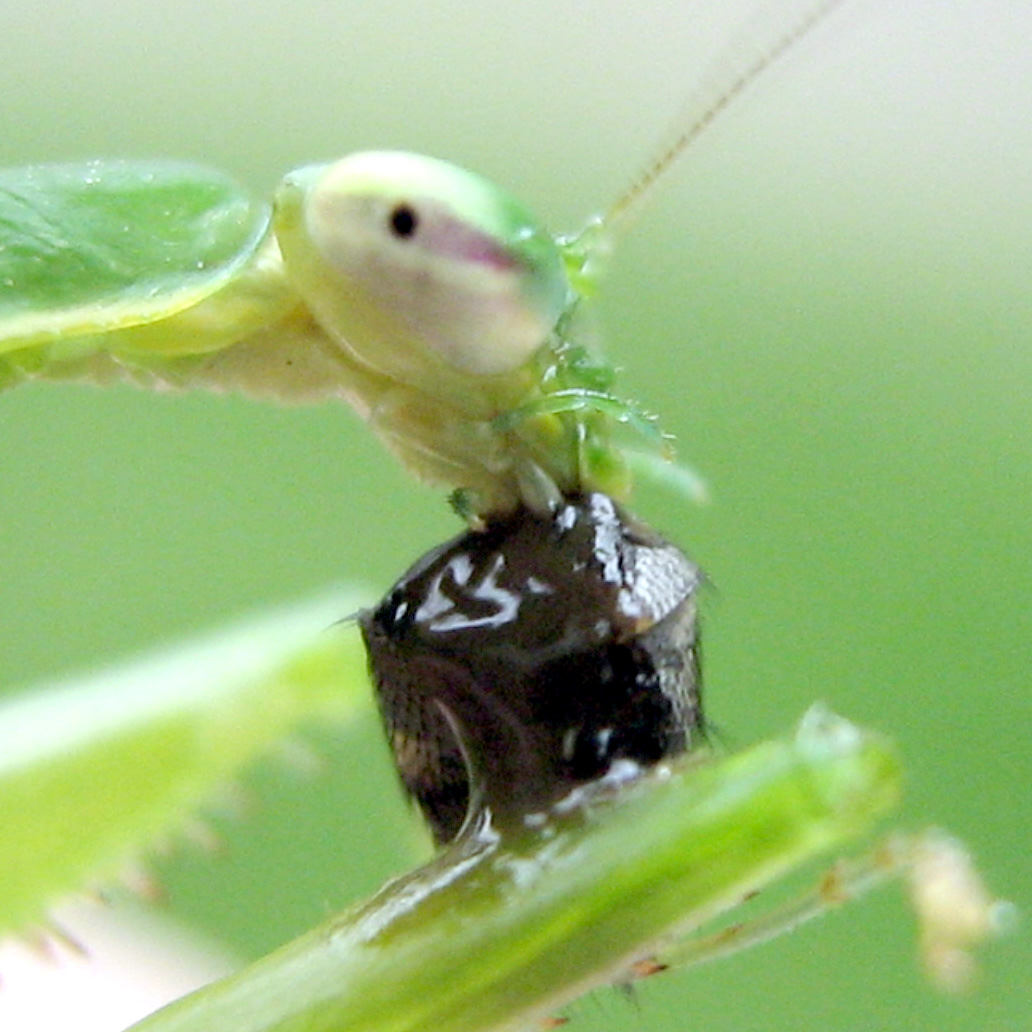
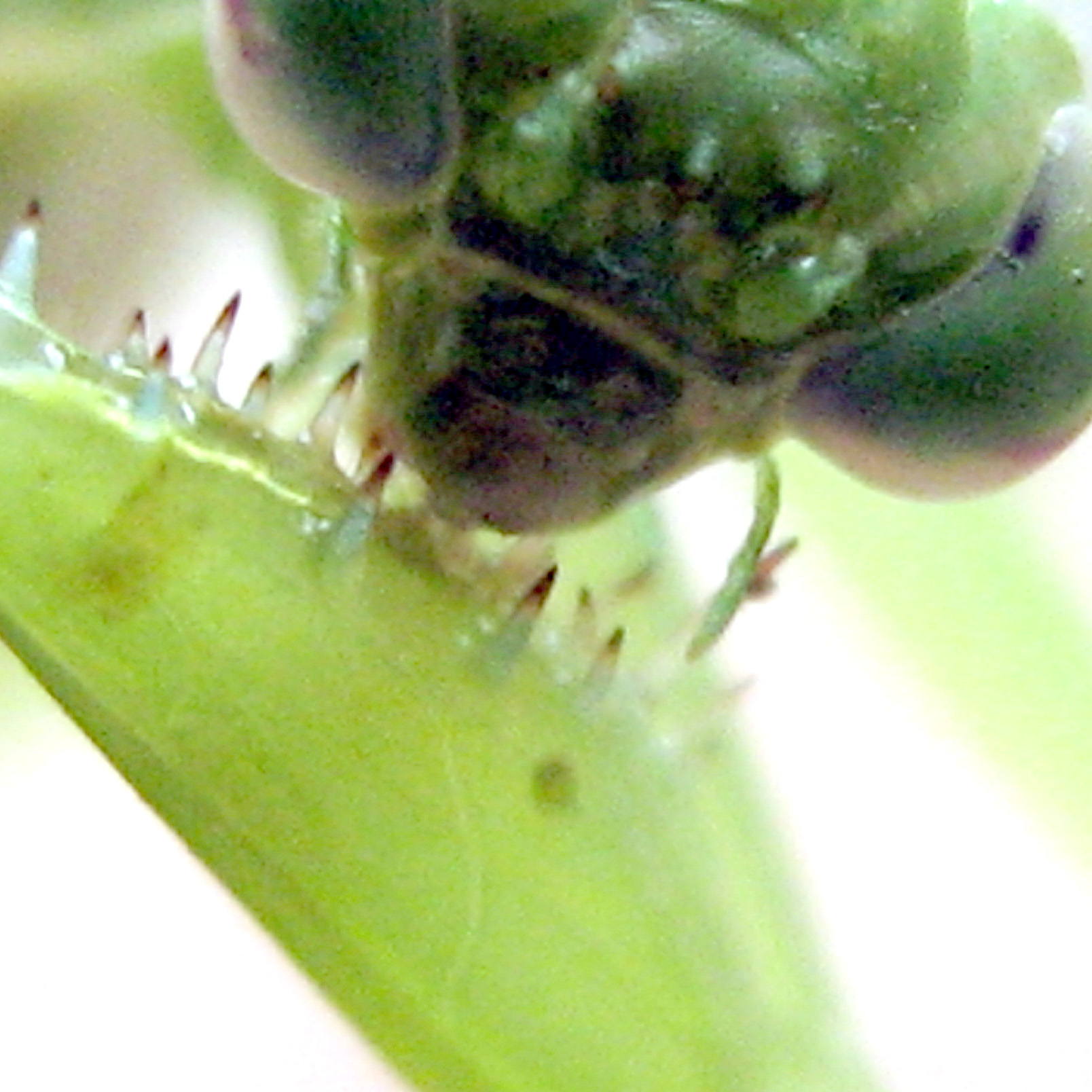
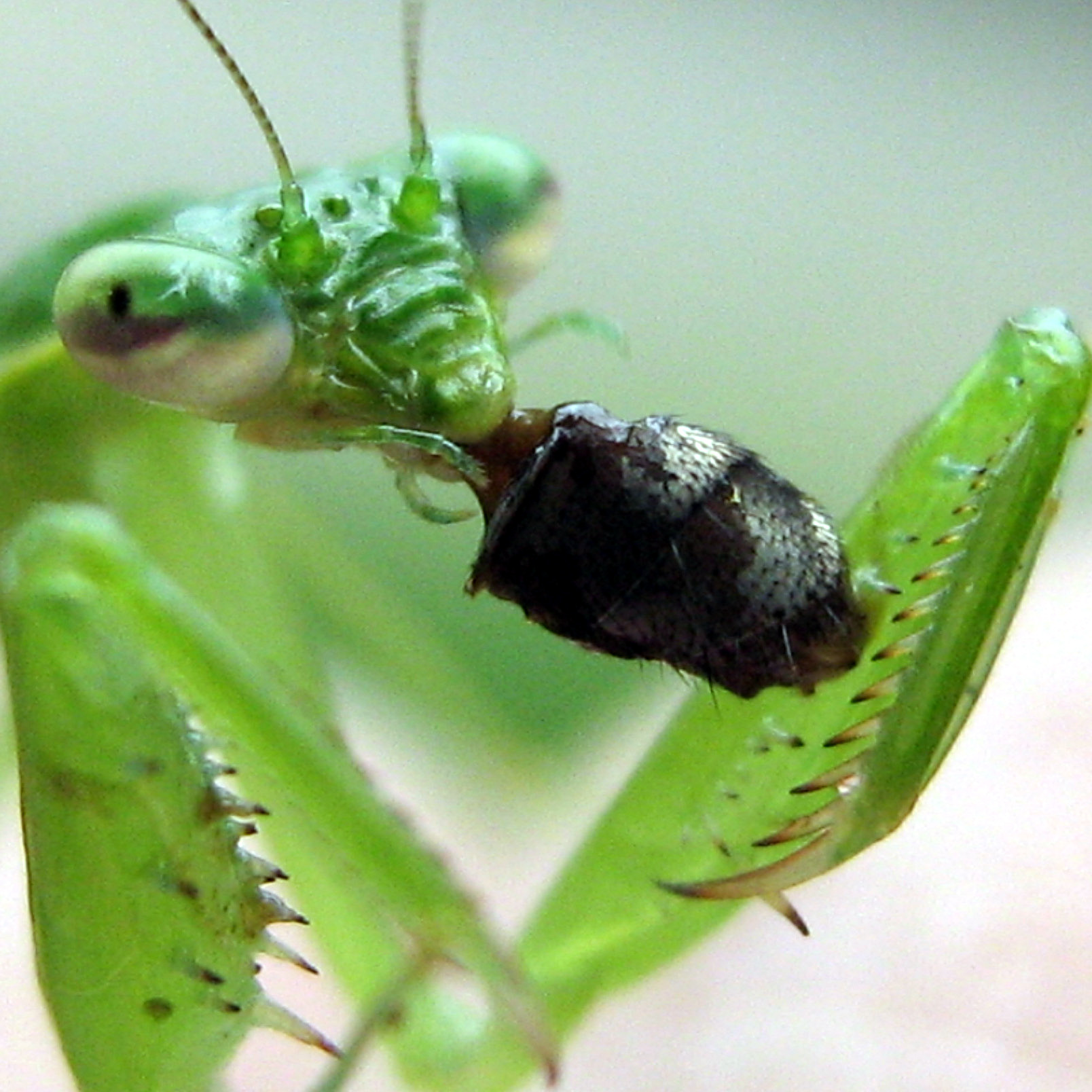
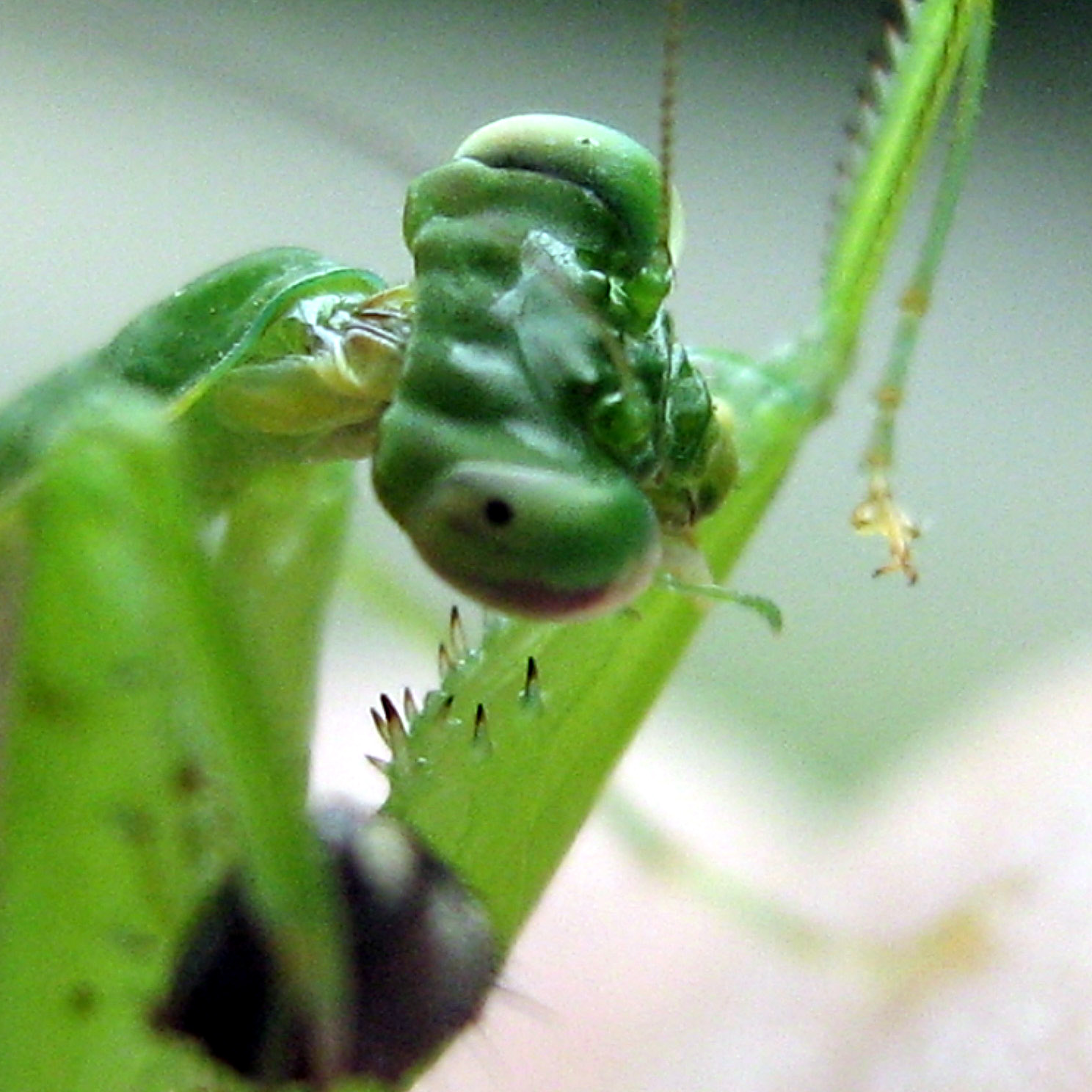
A Mantis feeding on a Common House Fly
|
Mantis (the
plural form
of Mantis)
prey on
other
insects.
Being a
carnivorous
insect, the
mantis feeds
on other
insects. It
is common
for larger
mantis
species to
prey on
small
lizards,
frogs, baby
birds,
snakes, and
even
rodents. Mantises are notable for their hunting abilities. They are exclusively predatory with a diet consists of living insects, including flies and aphids. Most mantises are ambush predators, waiting for prey to stray near then lashes out at remarkable speed. Mantis have a varied natural diet, including beetles, butterflies, spiders, crickets, grasshoppers, small frogs, small lizards, mice. |
| (螳螂目 Mantodea)台灣已知2科11屬20種 | |||
|
(螳螂科Mantidae)(螳科) 台灣已知9屬16種 -10 | |||
| (一)
昆蟲的分類:動物界→節肢動物門→昆蟲綱→螳螂目→螳螂科 (二)螳螂科:俗稱螳螂,生活史為卵→若蟲→成蟲,屬於漸進變態昆蟲。 若蟲蛻皮7次為成蟲,身體狹長,頭部呈倒三角形,複眼大突出,觸角絲狀細長,具咀嚼式口器,肉食性。前腳脛節發達具銳利的齒狀刺呈鎌刀狀,通稱「捕足腳」善於捕捉獵物。腹部末端具2根短尾絲, 產卵管不突出。卵囊呈海綿狀附於植物上叫「螵蛸」。全世界螳螂目有9科2000多種,台灣已知17種。 | |||
|
(螳螂科Mantidae)(大刀螳屬Tenodera ) 台灣已知本屬4種 | |||
![]() | |||
|
Tenodera
aridifolia(普) |
Tenodera
sp.(普) |
Tenodera
aridifolia(普) |
Tenodera
aridifolia(普) 大螳螂產卵(1) |
![]() |
![]() | ||
|
那純真無邪的臉龐(普) |
夜晚出現的螳螂 |
跟大家開一個玩笑 |
Podagrion sp. 螳小蜂與螳螂 |
![]() |
|||
|
殘而不廢的昆蟲 |
大螳螂孵化 |
| |
|
(螳螂科Mantidae)(斧螳屬Hierodula ) 台灣已知本屬4種 | |||
|
Hierodula bipapilla(普) |
寬腹螳螂孵化(3) |
Hierodula
bipapilla(普) |
![]() |
|||
|
Hierodula
formosana(普) |
Hierodula formosana(普) 台灣寬腹螳螂(雄)(4) |
Hierodula formosana(普) 台灣寬腹螳螂(4) 同左‧腹面(雄) |
Hierodula
formosana(普) |
|
| |||
|
(螳螂目 Mantodea)(螳螂科Mantidae)(汚斑螳屬Statilia )台灣已知本屬2種 | |||
![]() |
|||
|
Statilia
maculata(普) |
Statilia
maculata(普) |
Statilia
maculata(普) 小螳螂(卵囊)(5)(普) 本屬2種 |
螵蛸遭黑翅細蟴獵食 |
|
(螳螂目 Mantodea)(螳螂科Mantidae)(微翅螳屬Amantis )台灣已知本屬1種 | |||
|
![]() |
| |
| Amantis
nawai (普) 微翅跳螳螂(雌)(6) 體長14.5mm‧本屬1種 |
Amantis nawai
(普) |
Amantis
nawai (普) 微翅跳螳螂(雄)(6) |
Amantis nawai (普) 微翅跳螳螂(卵囊)(6) |
|
(螳螂目 Mantodea)(螳螂科Mantidae)(樹皮螳屬 Theopompula )台灣已知本屬1種 | |||
![]() |
|||
|
Theopompula
ophthalmica(少) |
Theopompula
ophthalmica(少) |
Theopompula ophthalmica(少) 樹皮螳螂(7) 體長45-50mm‧本屬1種 |
Theopompula
ophthalmica(少) |
|
(螳螂目 Mantodea)(螳螂科Mantidae)(奇葉螳屬Phyllothelys )台灣已知本屬1種 | |||
![]() |
|||
|
Phyllothelys werneri
(少) |
Phyllothelys werneri
(少) |
Phyllothelys werneri
(少) 魏氏奇葉螳螂(8) 體長 29-34 mm‧本屬1種 |
|
| (花螳科 Hymenopodidae)台灣已知2屬4種 | |||
![]() |
|||
|
Odontomantis planiceps
(普) |
Odontomantis planiceps
(普) 台灣花螳螂(9) 體長20mm‧本屬1種 |
Odontomantis
planiceps(普) |
Acromantis
formosana(少) |
|
Acromantis
formosana(少) |
Acromantis
formosana(少) |
| |
| (螳螂目 Mantodea)各式各樣的螵蛸 | |||
![]() |
![]() |
||
|
寬腹螳螂的螵蛸 |
大螳螂的螵蛸 |
小腹螳螂的螵蛸 |
螳螂的若蟲 |
|
| |||
|
註:種類分布狀況,(普)表示普遍、(特)表示特有種或特有亞種、(少)表示不普遍、(稀)表示稀有種類、(新)表示新種、沒有學名或(?)(@)表示不確定的分類。 | |||
|
INDEX : Insects January 11, 2016 02:26:22 PM |