
Oil Palm in Sabah > Palm Oil
WHAT IS PALM OIL
Palm oil is a kind of vegetable oil grouped broadly as follows:
1. Seed oils, such as groundnut or peanut oil, maize germ or corn oil, coconut
oil, palm kernel oil and soya bean oil; and
2) Fruit oils, especially olive oil, sunflower oil and palm oil.
World’s most produced Oil
Palm oil is forecast to be the world’s most produced and internationally traded
edible oil.
Apart from being use as cooking oil, Palm Oil also found in an astonishing range
of processed foods and cosmetics.
Supermarket products contains palm oil. Engineers targeting for the use of agro
fuels in Europe, China and North America are making palm oil an even hotter
commodity. Palm Oil can be used to produce biodiesel.
AFRICA – THE ‘FINAL INVESTMENT FRONTIER’ :
www.pambazuka.net/en


|
The tree
originated from Africa |
The Oil
from the fruits |
|
1
Oil Palm Planting 8
Social and environmental impacts 9 Malayan folkculture
|
1
History of Palm Oil Uses as Biodiesel International Palm Oil Market
Regional production of Palm Oil :
Impacts of Oil Palm |
Palm Oil Refining Process


Production of Crude Palm Oil (CPO) and Palm
Kernel (PK)
Fresh fruit bunches (FFB) are processed as soon as possible after cutting down
from the trees to prevent a rapid rise in free fatty acids (FFA) which affect
the quality of the crude palm oil (CPO).
Palm oil mills are generally located in the plantations to facilitate timely
transportation and effective processing of FFB.
In 2001, there were 352 palm oil mills in Malaysia, of which about 70% were
located in West Malaysia. The palm oil milling process involves the physical
extraction of palm products namely, crude palm oil and palm kernel from the FFB.
The process begins with sterilization of the FFB. The fruit bunches are steamed
in pressurized vessels up to 3 bars to arrest the formation of free fatty acids
and prepare the fruits for subsequent sub-processes.
The sterilized bunches are then stripped of the fruit lets in a rotating drum
thresher. The stripped bunches or empty fruit bunches (EFB) are transported to
the plantation for mulching while the fruit lets are conveyed to the press
digesters.
In the digesters, the fruits are heated using live steam and continuously
stirred to loosen the oil-bearing mesocarp from the nuts as well as to break
open the oil cells present in the mesocarp. The digested mash is then pressed,
extracting the oil by means of screw presses. The press cake is then conveyed to
the kernel plant where the kernels are recovered.
The oil from the press is diluted and pumped to vertical clarifier tanks. The
clarified oil is then fed to purifiers to remove dirt and moisture before being
dried further in the vacuum drier. The clean and dry oil is ready for storage
and dispatch.
The sludge from the clarifier sediment is fed into bowl centrifuges for further
oil recovery. The recovered oil is recycled to the clarifiers while the
water/sludge mixture which is referred to as Palm Oil Mill Effluent (POME) is
treated in the effluent treatment plant (ETP).
The press cake is conveyed to the depericarper where the fiber and nuts are
separated. Fiber is burned as fuel in the boiler to generate steam. The nuts are
cracked and the shell and kernel are separated by means of a winnower and
hydro-cyclone. The clean kernels are dried prior to storage.
From FFB to cooking oil, 2 milling processes are gone through :
1) Palm Oil Milling Process of FFB
2) Palm Oil Refining Process
About 80% of the national production of crude palm oil is used for food
purposes, mainly as cooking oils. The CPO produced by the mills have to be
refined to meet the industry’s and international standards (FAO’s Codex
Alimentarius) for edible oils. The production of refined oil is undertaken in 57
refineries in Malaysia (Table 10) with a total refining capacity of 15.5 million
tonnes CPO per year.
The refining process removes free fatty acids, phosphatides, odoriferous matter,
water as well as impurities such as dirt and traces of metals from the CPO; the
objective being to produce an edible oil of consistent quality that meets
industry’s standards and satisfies customer requirements particularly in respect
of FFA, moisture and impurities, Iodine Value, Peroxide Value, melting point,
color and flavor. The refined oil must tasteless and have a bland flavor.
CPO is processed by either physical or chemical refining to produce either
refined, bleached and deodorized palm oil (RBDPO) or neutralized, bleached and
deodorized palm oil (NBDPO). These are subjected to fractionation to obtain the
respective liquid olein fraction and the solid stearin fraction. (Figure 6). Of
the two processes, physical refining is the predominant approach adopted by the
refineries as it is simpler, less capital intensive, more efficient and produces
a lower effluent load.
Physical or steam refining begins with degumming when the CPO is treated with
food grade phosphoric acid or citric acid to remove natural gums in the form of
phosphatides , followed by bleaching with activated earth (Fuller’s Earth) under
vacuum to remove coloring matters as well as to adsorb any metal ions. The
treated oil is then heated to 240 C - 260 C under 2- 6 mm Hg (MEOMA, 2002) for
simultaneous deacidification and deodorization. The FFA is stripped off by live
steam and is recovered together with the entrained oil is as palm fatty acid
distillate. The steam distillation process also removes odors and off-flavors
from the CPO (‘Deodorization’). The oil is then cooled to 55°C before polishing.
In the chemical refining process, the FFA present in CPO is removed by
neutralization with caustic soda (sodium hydroxide), the concentration of the
latter being dependent on the quality of the CPO feedstock. This chemical
reaction produces neutralized CPO and a soap stock; the latter is separated from
the oil by a high-speed separator. The neutralized oil is subjected to earth
bleaching to remove color pigments and metal ions followed by deodorization -
steam distillation under vacuum to remove odoriferous matters such as aldehydes
and ketones.
The refined oil contains triglycerides of various compositions and melting
points, the main fractions being palm olein and palm stearin. These fractions
can be separated by dry fractionation, detergent fractionation and solvent
fractionation. Dry fractionation is commonly used whereby the refined oil is
allowed to crystallize under controlled temperature and the resultant slurry is
pumped through a membrane filter press to obtain the liquid olein fraction and
the solid stearin portion. The olein could also be fractionated for a second
time (‘double fractionation’) to produce a ‘super olein’ and a solid palm
mid-fraction (PMF) which is the feedstock for production of specialty fats and
other products.
Fatty Acid Compositions of Palm Oil Products, Soy
Oil and Coconut Oil
Source: Salmiah Ahmad, 2000
| Fatty Acids |
Palm Oil | Palm Olein |
Palm Kernel Oil |
Coconut Oil |
Soy Oil |
| C6:0 | 0.3 | 0.2 | |||
| C8:0 | 4.4 | 8.0 | |||
| C10:0 | 3.7 | 7.0 | |||
| C12:0 | 0.2 | 0.2 | 48.3 | 48.2 | |
| C14:0 | 1.1 | 1.0 | 15.6 | 18.0 | |
| C16:0 | 44.0 | 39.8 | 7.8 | 8.5 | 6.5 |
| C18:0 | 4.5 | 4.4 | 2.0 | 2.3 | 4.2 |
| C18:1 | 39.2 | 42.5 | 15.1 | 5.7 | 28.0 |
| C18:2 | 10.1 | 11.2 | 2.7 | 2.1 | 52.6 |
| Others | 0.8 | 0.9 | 0.1 | 8.0 | |
| Iodine Value | 53.3 | 58.4 | 17.8 | 9.5 | 133.0 |
Uses of Palm Oil Products
3 - Highly suitable
2 - Suitable
1 - Minor Application Only
0 - Not suitable
| Product | Palm Oil 棕櫚油 |
Palm
Stearin (Soft) 棕櫚硬脂(軟) |
Palm Stearin
(Hard) 棕櫚硬脂(硬) |
Palm
Kernel
Oil
棕櫚仁油 |
| Shortenings 酥油 | 3 | 3 | 2 | 1 |
| Vanaspati | 3 | 3 | 1 | 0 |
| Margarines人造黃油 | 3 | 3 | 1 | 3 |
| Frying Fats 煎炸油脂 | 3 | 2 | 0 | 0 |
| Cooking Oil (Hot Climate) 食用油(炎熱的氣候) | 0 | 0 | 0 | 0 |
| Specialty Fats for Coatings 特種油脂的塗料 | 0 | 3 | 0 | 3 |
| Ice Cream 冰淇淋 | 3 | 0 | 0 | 3 |
| Cookies 曲奇餅 | 3 | 2 | 1 | 0 |
| Crackers 餅乾 | 3 | 2 | 1 | 3 |
| Cake Mixes 蛋糕粉 | 3 | 2 | 1 | 0 |
| Icing | 2 | 1 | 0 | 0 |
| Instant Noodles 方便麵 | 3 | 2 | 0 | 0 |
| Non-Dairy Creamer 奶精 | 1 | 1 | 0 | 3 |
| Biscuits 餅乾 | 3 | 2 | 1 | 3 |
| Dough Fat發麵團 | 3 | 3 | 3 | 0 |

Palm oil is a form of edible vegetable oil obtained from the fruit of the Oil palm tree. The oil palm is a tropical palm tree. Palm oil requires particular temperature conditions. Palm oil has a high solidification range of 41 - 31°C. In Malaysia it has a liquid consistency, but in temperate countries it is fatty and need heating.
Palm oil is produced from a species of palm tree originally from West Africa.
The species of tree has emerged over last few decades as one world’s widely used
crops.
Palm oil goes into a range of products available in virtually every supermarket,
pharmacy, and department store.
It is used in :
1) processed foods ranging from crackers to peanut butter to ice cream;
2) beauty products like shampoo, cosmetics, shaving cream, and soap (which
account for nearly 10 percent of global consumption of palm oil);
3) industrial lubricants;
4) biofuel
Its versatility, combined with a yield far in excess of any other oilseed, has
fueled its rapid expansion across southeast Asia: today, Indonesia and
Malaysia—which account for 85 percent of global palm oil production—have more
than 50,000 square miles of palm plantations, up from fewer than 580 square
miles in 1984.
But the crop’s success has come at a great environmental cost: more than half of
the expansion since 1980 has come at the expense of natural forests.
As such, palm oil has been targeted by environmentalists and scientists
concerned about biodiversity loss, greenhouse gas emissions, and pollution.
Palm oil industry has been challenged by land rights issues and social abuses,
since expansion is occurring in areas where communities may traditionally use
forests but lack title to land.
It took a long years for oil palm of Malaysia to occupy its present position in
biological, technical, managerial and environmental.
Oil Palm has both perennial and evergreen nature (giving a continuous year-round
canopy cover intercepting a high proportion of incoming radiation), the
year-round production of fruit bunches and the high partition of total
assimilates into harvested product.
The fruit of new tree varieties has a higher proportion of flesh (from which the
palm oil is obtained) relative to kernel (from which palm kernel oil is
extracted). Generally, palm oil is used as cooking oil while palm kernel oil is
used in making processed foods.
You can look forward to enjoying soap, shampoos and other palm oil products with
a clean conscience following overwhelming acceptance by the Roundtable for
Sustainable Palm Oil (RSPO) - a group of producers, buyers, retailers, financial
institutions and NGOs - on a set of criteria for the responsible production of
palm oil.
Known as the "RSPO Principles and Criteria for Sustainable Palm Oil Production",
the criteria give companies much-needed guidelines to produce palm oil in an
environmentally-friendly and socially-responsible way. Its ratification was the
result of a year-long participatory process involving a broad spectrum of
stakeholders. WWF- Malaysia is an active member of the RSPO and was represented
in the Criteria Working Group that helped develop the Principles and Criteria.
CHINESE TRANSLATION :
Palm Fatty Acid Distillate - 棕櫚脂肪酸蒸餾物
Crude Palm Oil - 毛棕櫚油
Palm Kernel - 棕仁籽
RBD Soya Bean Oil - 精煉豆油
Shortening - 起酥油
Margarine - 人造奶油
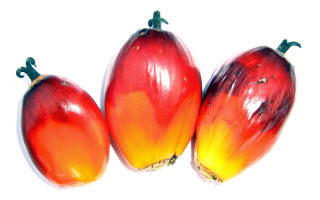
The fruit is reddish, about the size of a large plum and grows in large bunches. A bunch of fruits can weigh between 10 to 40 kilograms each. Each fruit contains a single seed (the palm kernel) surrounded by a soft oily pulp. Oil is extracted from both the pulp of the fruit and the kernel.
Nutrition : Palm oil is high in vitamin K and dietary Magnesium. Palm oil
contains 43 percent saturated fats, 43 percent monounsaturated fats and 13
percent polyunsaturated fats.
Its high nutritional value means that the palm nut is eaten by a wide variety of
animals, including, rather improbably, two birds of prey, the Palm Nut Vulture
and the Harrier Hawk.
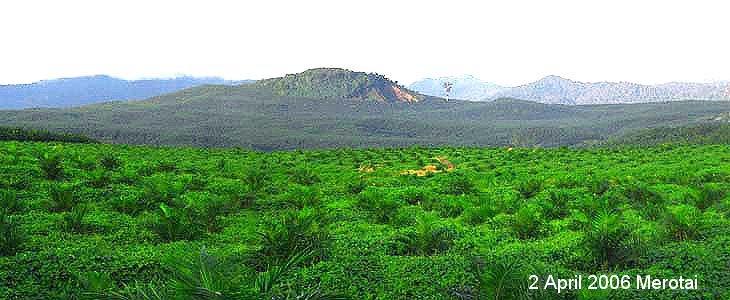
The Oil palm originated in West Africa but has since been planted successfully in tropical regions such as Malaysia within 20 degrees of the equator.


Every 100 kilograms of fruit bunches can extract 22 kilograms of palm oil and
1.6 kilograms of palm kernel oil.
Palm oil itself is reddish and contains a high amount of arytenoids. It is used
as cooking oil, to make margarine and is a component of many processed foods.
Both palm and palm kernel oil are high in olefins, a potentially valuable
chemical group that can be processed into many non-food products as well.
The high productivity of the Oil palm at producing oil (as high as 7,250 liters
per hectare per year) has made it the prime source of vegetable oil for many
tropical countries. Also, it is seen as a potential resource for producing the
necessary vegetable oil for biodiesel.
There are two species of oil palm, the better known one is the one
originating from Guinea, Africa and was first illustrated by Nicholaas Jacquin
in 1763, hence its name, Elaeis guineensis Jacq.
Possible Health Concerns
Palm oil is a saturated fat that was taken out of many products in the
late 1980's after an effective campaign waged in part by the American Soybean
Association and the nonprofit Center for Science in the Public Interest (CSPI)
helped turn people away from all forms of "tropical grease." Tropical oils were
therefore replaced by hydrogenated oils about two decades ago owing to health
concerns. However, faced with the lack of trans fat free vegetable oil
alternatives, some companies are quietly turning back to palm and other tropical
oils. Palm oil is semi-solid at room temperature, making it useful in products
such as cookies, crackers, spreads, and bars. It is also less expensive than
other vegetable oils. These companies oppose the claims of CSPI and argue that
palm oil can be healthful. Labels for some products state that it has no
trans-fatty acids. Also, although the so-called tropical oils, palm, coconut,
and cocoa butter are high in saturated fats, evidence is still lacking about
their effects on the heart. The countries with the highest palm-oil intake,
Costa Rica and Malaysia, also have much lower heart disease rates and
cholesterol levels than Western nations.
Palm and other tropical oils are thus reemerging partly because they are cheap
and partly because more recent research appears to show that they may not all be
as bad as once thought. Palm oil has a large portion of heart-healthy
monounsaturated fats, vitamin E and other antioxidants. Recent studies appear to
show that it acts like an unsaturated fat in the body and may help reduce
cholesterol. However, other research indicates that has had no effect on blood
cholesterol. Thus, the health effects of palm oil are still debated. The means
of processing the oil could be an important factor.

Palm Oil Inspection, Testing and Certification
PORAM Palm Oil Specification tests:
Free fatty acid
Moisture and impurities
Iodine value
Melting point
Colour
Saponifiable matter
Total fatty matter
Palm Oil Certification :
Full Out-turn guarantee FOG*
Supervision of shipment
Supervison of transport
Verification of quality
Verification of quantity
Verification of weight
Laboratory Analysis
Ship tank inspection
Storage tank inspection
Container tank inspection
Ship and Shore quantities
Discrepancies and loss investigation
Quality Control and sampling
Contract compliance
*FOG - Full Out-turn guarantee, is provided to cover commercial risks for loss
in weight between loading and discharge.
Testing provided includes all contractual specifications normally included in
the palm oil market, including requirements for PORAM, STC, GCP, SAVOLA, etc.
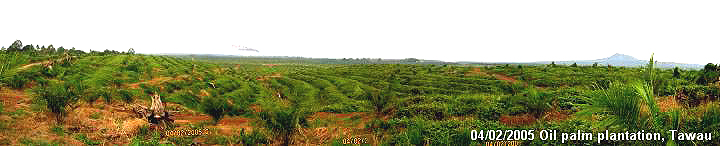
In Malaysia, 11% of the total land area (about 62% of the country's
agricultural land) is devoted to palm oil.
CSPI, Environmental Defense, the International Primate Protection League,
Rainforest Relief, WALHI/Friends of the Earth Indonesia, and a dozen other
organizations from around the world are urging the International Monetary Fund,
the World Bank, and other international aid agencies not to fund oil-palm
development projects.
CSPI alleges that companies sometimes profit from selling logs from the
rainforest and then burn the area to make way for oil palms.
The associated road-building, soil erosion, air and water pollution, and
chemical contamination also have contributed to the loss of wildlife habitat and
the displacement of indigenous peoples.


Soil erosion :
loss of wildlife habitat...
...displacement of indigenous peoples.
Possible Environmental Concerns
A recent report from CSPI says that palm oil production contributes to
the destruction of the rainforest. CSPI and some environmental groups are asking
that companies which must use palm oil use as little as possible and obtain it
from environmentally sustainable sources.
Michael F. Jacobson, who co-authored the report with wildlife ecologist Ellie
Brown, said "consumers and food processors should realize that palm oil still
promotes heart disease and that producing palm oil has a devastating impact on
rainforest and endangered wildlife."
Most palm oil is produced in Malaysia or Indonesia. Production in Indonesia has
grown more than 30-fold since the mid-1960s, such that almost 12,000 square
miles are planted in oil palm.
RELATED TOPICS
|
|
Oil Palm in Malaysia |