
Updated on : Thursday, October 15, 2020 02:23:22 AM
| (Bukit Tengkorak (Skull Hill)) The Summit of Bukit Tengkorak Archaeological Heritage Site |
|
Family Nephilidae絡新婦科 Species: Nephila pilipes 斑絡新婦
We have in our digital image bank a total of individual records (5 female and 2 male. The two males were all found together with in pair with female on the same web) |
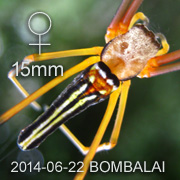 Nephila pilipes
Juvenile Female
15mm |
one more in 2020 from gudang 4 Female ♀ 42mm 2020-10-04 SUN GUDANG EMPAT
|
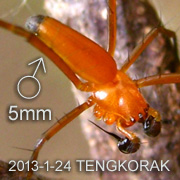 Nephila pilipes Male ♂5mm 2013-01-24 BUKIT TENGKORAK |
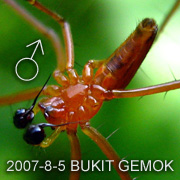 Nephila pilipes Male 2007-08-05 BUKIT GEMOK |
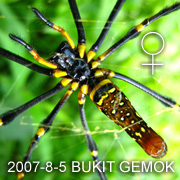 Nephila pilipes Female |
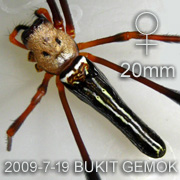 Nephila pilipes Female 20mm 2009-07-19 BUKIT GEMOK |
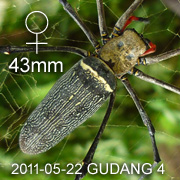 Nephila pilipes Female 43mm 2011-05-22 GUDANG 4 |
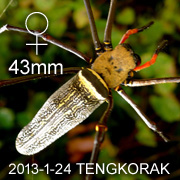 Nephila pilipes Female 43mm 2013-01-24 TENGKORAK |
 |
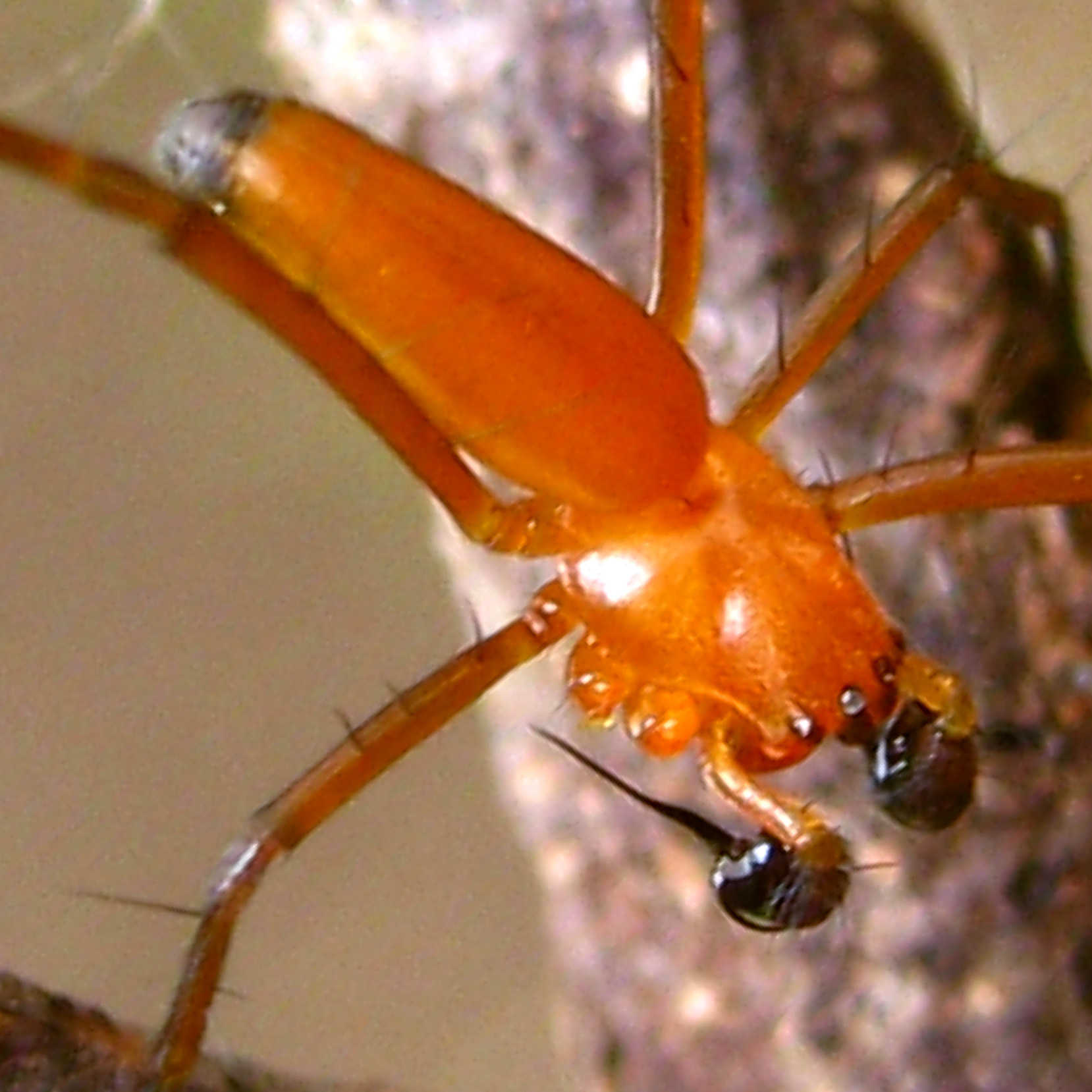
Bottom view of A Male Nephila pilipes |
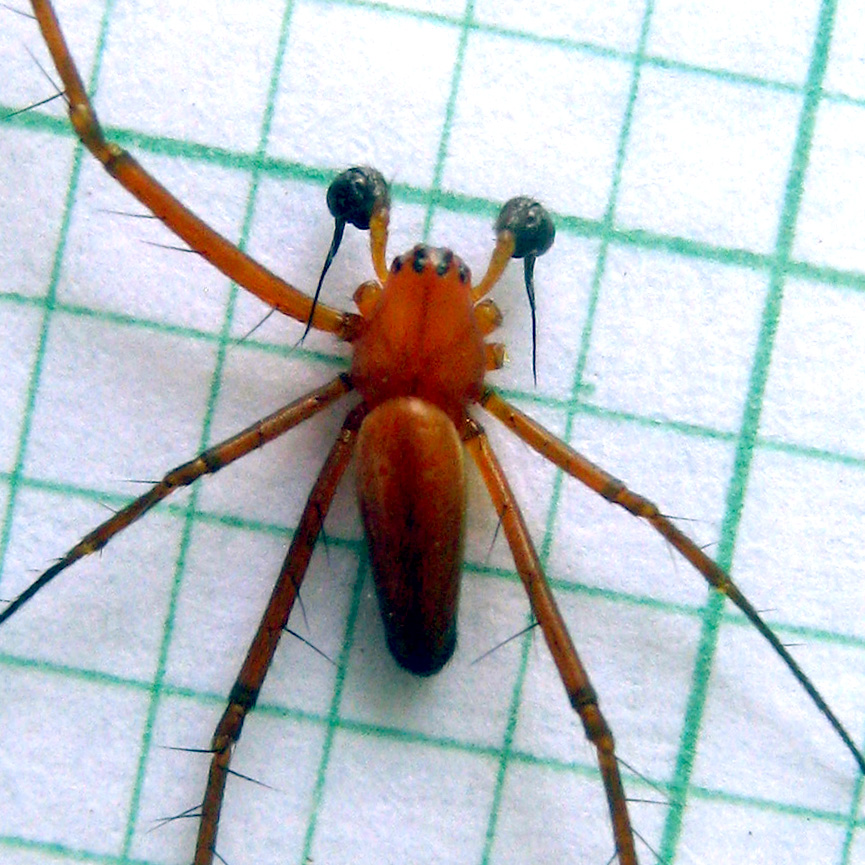 |
♂ A Male Nephila pilipes 24-1-2013 11:59AM BUKIT TENGKORAK
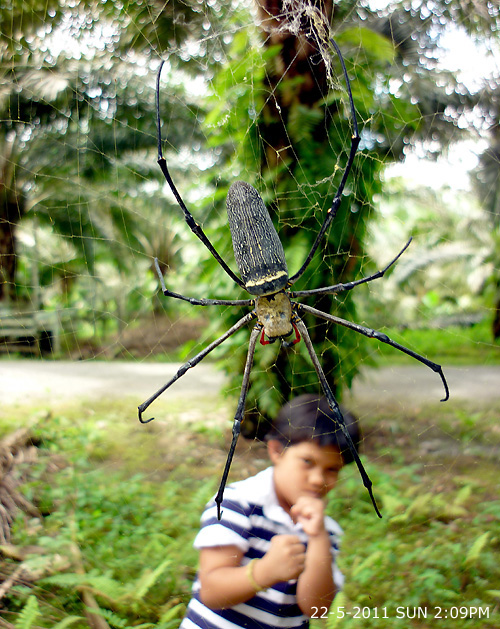
The female Nephila pilipes may be the largest spider in the world, but its male counterpart is as tiny as 5mm. Size = 5mm
|
 |
Though after at the same web with the females, the male are usually overlooked by us for its to small a size. |
 |
Nephila pilipes
|
| The Giant wood spider (Nephila maculata/nephila
pilipes)
http://www.naturia.per.sg/buloh/inverts/nephila.htm Also named as the Golden Orb web spider or the Banana spider. One of the largest spiders in the world. The golden color of its web is what gives it one of its names. Its silk has a yellow color due to the presence of xanthurenic acid and quinones. From photo above you can see that the web is yellowish. Under the sunshine the web is a shinning golden web. The web itself is the strongest of spider webs. The web above 2 meters in diameters and strong enough to trap large flying insects. Its usual prey are butterflies, grasshoppers etc. which get stuck in its nest. The spider is known to leave insect wings within its large web as a visible warning to warn off birds. When the eggs are to be laid, the female, unlike most spiders, digs a hole, lines it with silk and lays her egg in it. When the young spiders hatch they have to quickly disperse before they get cannibalised by their siblings.
|