Overview
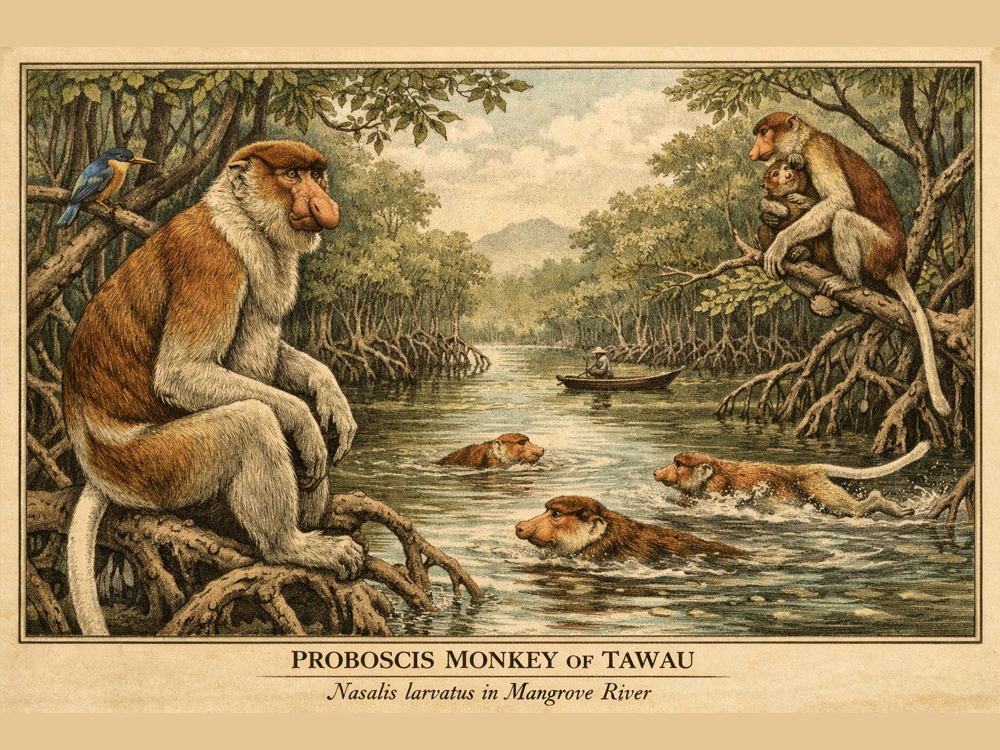
The Proboscis Monkey is a Bornean endemic primate, easily recognizable by its large, pendulous nose and reddish-brown fur. It is primarily found in coastal mangroves and riverine forests, including areas around Tawau.
Habitat & Ecology
Proboscis Monkeys are highly adapted to **riverine and mangrove ecosystems**. They are excellent swimmers and can often be seen crossing rivers. Mangrove roots provide shelter and abundant food sources, including leaves, fruits, and seeds.
- Preferred areas: lowland rivers, estuaries, and mangrove forests.
- Social structure: live in groups of 10–20 individuals, led by a dominant male.
- Activity: mostly active during the day, resting at night in tall mangrove trees.
Behavior & Diet
These monkeys are folivorous, feeding mainly on leaves, fruits, and seeds. Their large stomachs allow them to digest fibrous leaves efficiently. They are often seen **jumping between mangrove branches** or swimming across rivers to forage.
Where to See in Tawau
Key locations around Tawau for spotting Proboscis Monkeys include:
- **Tawau Hills Park riverside areas** – smaller groups observed early morning or late afternoon.
- **Kuala Tawau mangroves** – frequent sightings along tidal waterways.
- **Pulau Sebatik mangroves** – occasional river-crossing groups.
Conservation Efforts
The Proboscis Monkey is listed as **Endangered** due to habitat loss and mangrove deforestation. Local initiatives in Tawau include:
- 1StopBorneo Conservation – protecting riverine and mangrove habitats.
- Wildlife Sanctuary Sabah – mangrove restoration projects.
- Community mangrove replanting programs along the Tawau River estuary.
Fun Facts
- They are excellent swimmers and use their webbed feet to cross rivers.
- Adult males’ noses can grow over 10 cm long and are thought to attract females.
- Groups communicate with honks, coughs, and splashing sounds in water.