Chapter 7 · Rice, Forest and River第7章 · 稻米、森林與河流Bab 7 · Padi, Hutan dan Sungai
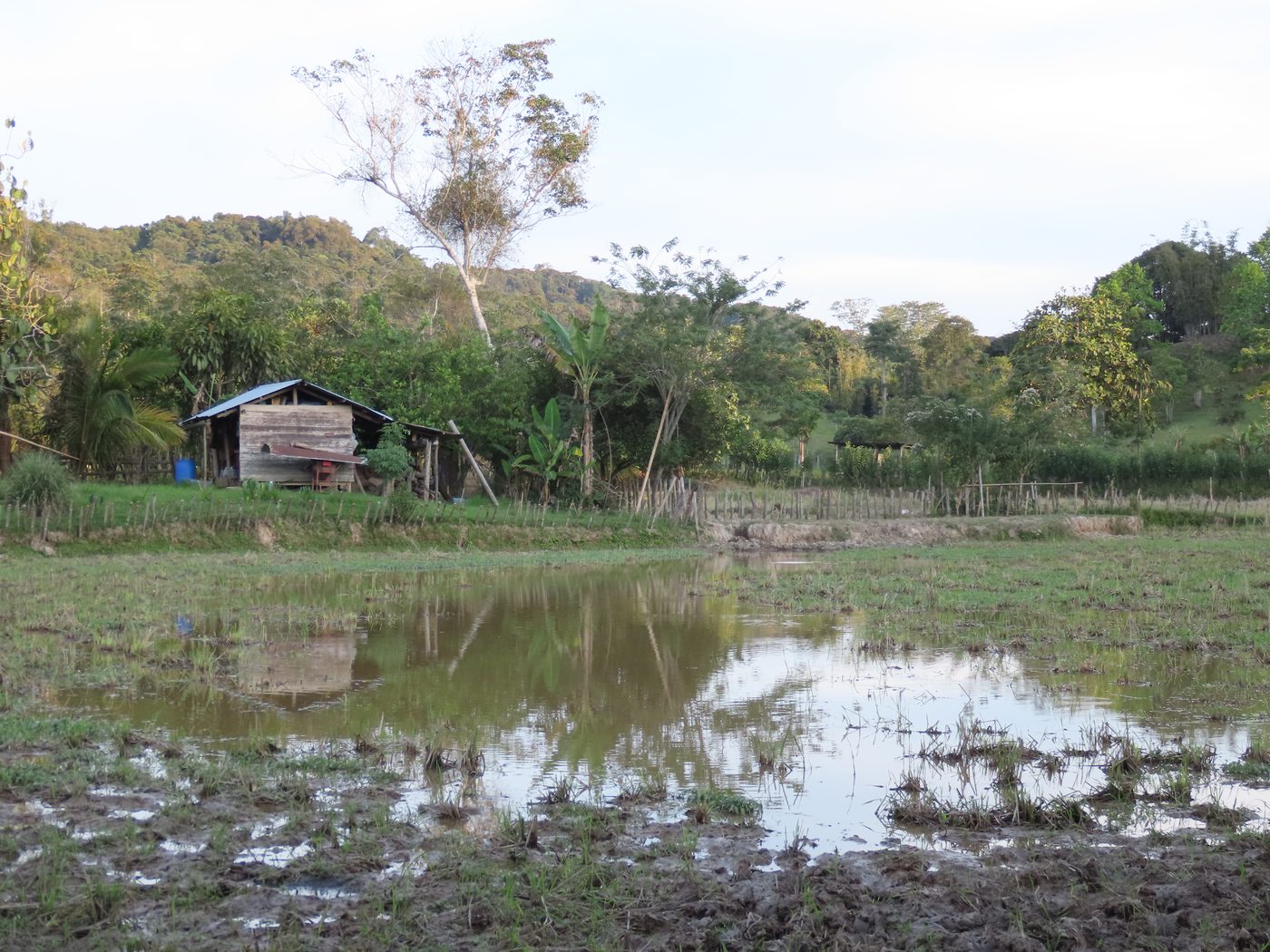
Ask anyone in Long Pasia what matters most, and rice will be near the top of the answer. Families plant wet paddy in the valley and dry hill rice on slopes cleared from the forest, then let the hill fields rest for ten to fifteen years so the forest can grow back. Long Pasia’s Adan rice is famous; villagers credit the soil and the red water of the Sia River.
問龍巴夏任何人甚麼最重要,稻米一定名列前茅。家家戶戶在谷地種水田,在從森林開墾的山坡上種旱稻,然後讓山田休耕十至十五年,讓森林重新長回來。龍巴夏的亞單米遠近馳名;村民說這要歸功於這裡的泥土和夏河的紅色河水。
Tanya sesiapa di Long Pasia apa yang paling penting, dan padi pasti hampir di atas senarai. Keluarga menanam padi sawah di lembah dan padi bukit di lereng yang dibuka dari hutan, kemudian membiarkan ladang bukit berehat sepuluh hingga lima belas tahun supaya hutan tumbuh semula. Beras Adan Long Pasia terkenal; penduduk memuji tanah dan air merah Sungai Sia.
The forest and the rivers fill the rest of the plate. When researchers studied the village’s meals in 1999–2000, they counted more than a hundred kinds of vegetables, 28 kinds of mushroom and over a hundred fruits. Wild boar and river fish are favourite foods, and snails are gathered from April to June. Children are especially fond of wild fruits.
森林和河流填滿了餐盤的其餘部分。研究人員在1999至2000年研究村民的飲食時,數出了一百多種蔬菜、28種菇類和一百多種水果。野豬和河魚是大家喜愛的食物,四月至六月還會採集螺。孩子們尤其喜歡吃野果。
Hutan dan sungai mengisi selebihnya. Apabila penyelidik mengkaji hidangan kampung pada 1999–2000, mereka mengira lebih seratus jenis sayur, 28 jenis cendawan dan lebih seratus jenis buah. Babi hutan dan ikan sungai makanan kegemaran, dan siput dikutip dari April hingga Jun. Kanak-kanak amat gemar buah hutan.
On big occasions the whole community gathers for an irau, a feast. There is luba’ laya’ — rice cooked in leaf parcels — and sometimes rice moulded into the shape of a crocodile, the old symbol of Lundayeh strength.
遇上重要日子,全村人會聚在一起舉行irau盛宴。席上有luba’ laya’──用葉子包著煮的米飯──有時還有塑成鱷魚形狀的米飯,那是倫達耶人力量的古老象徵。
Pada majlis besar seluruh komuniti berkumpul untuk irau, iaitu kenduri. Ada luba’ laya’ — nasi yang dimasak dalam bungkusan daun — dan kadangkala nasi yang dibentuk seperti buaya, lambang lama kekuatan Lundayeh.
- Homestay guests eat what the family eats — “so they know what we eat here”, as one host put it.民宿客人與主人家同吃──正如一位主人所說,「讓他們知道我們在這裡吃甚麼」。Tetamu inap desa makan apa yang dimakan keluarga — “supaya mereka tahu apa yang kami makan di sini”, kata seorang tuan rumah.
- Coffee and tobacco have been the village’s most successful cash crops.咖啡和煙草一直是村裡最成功的經濟作物。Kopi dan tembakau menjadi tanaman kontan paling berjaya di kampung ini.
Sources: Ulu Padas report (SBCP); Hoare (2003); Ganesan et al. (2020); Borneo News (2017).