
RUMAH WARGATUA
Old Folks Home
Retirement Planning · Child Education Planning · Investment in Tawau
| Every individual of different occupation
and age will go into retirement one day.
Regardless of how you want to spend your
golden years, you will need sufficient
financial preparation beforehand. Simply follow the subsequent steps and you might well be on your way to an ideal retirement lifestyle: Step 1: Anticipate your retirement age and length of golden years Although early retirement is something most of us wish for, it also means you will need a lot more money as you need to fund a longer retirement period. According to Bank Negara Malaysia, the average lifespan of Malaysians is 77 years for males and 83 years for females. As such, your retirement funds will then have to endure the eroding effects of inflation for about 20 years or so. It is therefore important to build a solid nest egg which will be able to match the increasing cost of living. Example Scenario Adam is a 35-year old bank manager who plans to retire at the age of 55 and he expects to live up to the age of 80. This gives him a retirement period of 25 years and 20 years to build up his retirement fund.
Step 2: Determine your retirement needs The next step is to think about what you will do during this life stage. You will also need to pay attention to the basic living expenses during retirement - those that generally will increase as well as those that will decrease.
A simple way to gauge how much you will need for your retirement is by taking 80 to 90 percent from your current annual expenses. However, you will also need to factor in the inflation rate over the years before your retirement. Example : Adam's annual expenses amount to RM60,000 (including loan repayments for housing and car). Upon his retirement, he targets to have fully paid off his mortgage and be debt-free during his golden years. Therefore, he estimates his yearly expenses during retirement to be 80 percent of his present expenses. Taking into account inflation of 4 percent per annum, his expenses would increase to RM105,120 after 20 years. Current Expenses = RM60,000 Future Expenses = (RM60,000 x 80%) x 2.19 =RM105,120 Step 3 : Calculate how much is needed to generate your retirement fund and the shortfall To generate enough money throughout your retirement, you would need to place a lump sum figure into an investment vehicle which gives good returns. However, you should also note that although you may have stopped working, inflation continues to work. Hence, your real returns will be less after adjusting for inflation. You can calculate the retirement fund needed by using Table B. Example : Adam targets to get about 5 percent return on investments upon his retirement. Using his yearly expenditures of RM105,120 and his real rate of returns (rate of returns during retirement after adjusting inflation, 5?o-4% Q. 1%), he would need about RM2,337,869 at retirement to sustain himself for the next 25 years. Retirement Fund required at retirement age = RM105,120 x 22.24 = RM2.337.869 After calculating the retirement amount that is needed, you will now need to find out how much your shortfall is. Simply deduct off your estimated Employees' Provident Fund (EPF) savings you would have accumulated at retirement age to find out exactly how much you will need to save prior to your retirement. Example : Adam estimates to have about RM950,000 in his EPF account when he retires, which leaves him with RM 1,387,869 to make up for in the next 20 years. Retirement Fund = RM2,337,869 EPF savings = RM950,000 Shortfall = RM2,337,869 - RM950,000 =RM1,387,869
Step 4: Come up with a lump sum investment to kick start the programme It helps if you have a lump sum from your savings to kick start the saving programme. First, you have to put aside at least six months worth of expenses as an emergency buffer. You can use Table A to calculate how much a lump sum investment can help. Example Scenario After setting aside an emergency buffer for six months, Adam has about RM70,000 to kick start his investment programme. He plans to invest the lump sum into an equity unit trust fund which he expects will give him annual returns of 9 percent*. This means his investment will grow to RM392,000 upon his retirement, leaving another shortfall ofRM995,869.
Lump sum investment = RM70,000 Total after 20 years (with 9% annual returns) = RM70,000 x 5.60 = RM392,000 Shortfall (after lump sum investment) = RM1,387,869 - RM392,000 = RM 995,869
Step 5: Work out how much you need to save every month This is the most crucial part of the programme. As you already have a timeframe of when you are going to retire, you must get the most out of your investments within this period. Of course, the higher your returns, the easier it will be for you to achieve your target. But take note that risk and reward go hand-in-hand; the higher the potential returns, the higher the risk you need to take. You can use Table C to calculate how much you would need to contribute monthly to your retirement fund shortfall. Example Scenario Adam plans to invest in a portfolio of stocks and unit trusts to fund for his shortfall. Using an example of 9 percent annual returns*, he will need to invest RM1,484 every month in order to get RM995,869 by the time he retires 20 years later. Amount needed = RM995,869 Monthly investments (with 9% annual returns for 20 years) = RM995,869 x 0.00149 = RM1,484
|
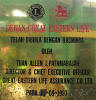
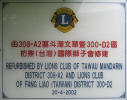
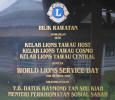
RUMAH WARGATUA
Old Folks Home
Location : Air Panas, Tawau

Old Folks Home Tawau


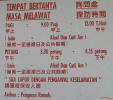
Visiting Hours
Morning : 9:00 am to 12:00 noon


|
|