eTawau > Insects of Borneo > Flies > A bristly fly on the Bombalai Hill road
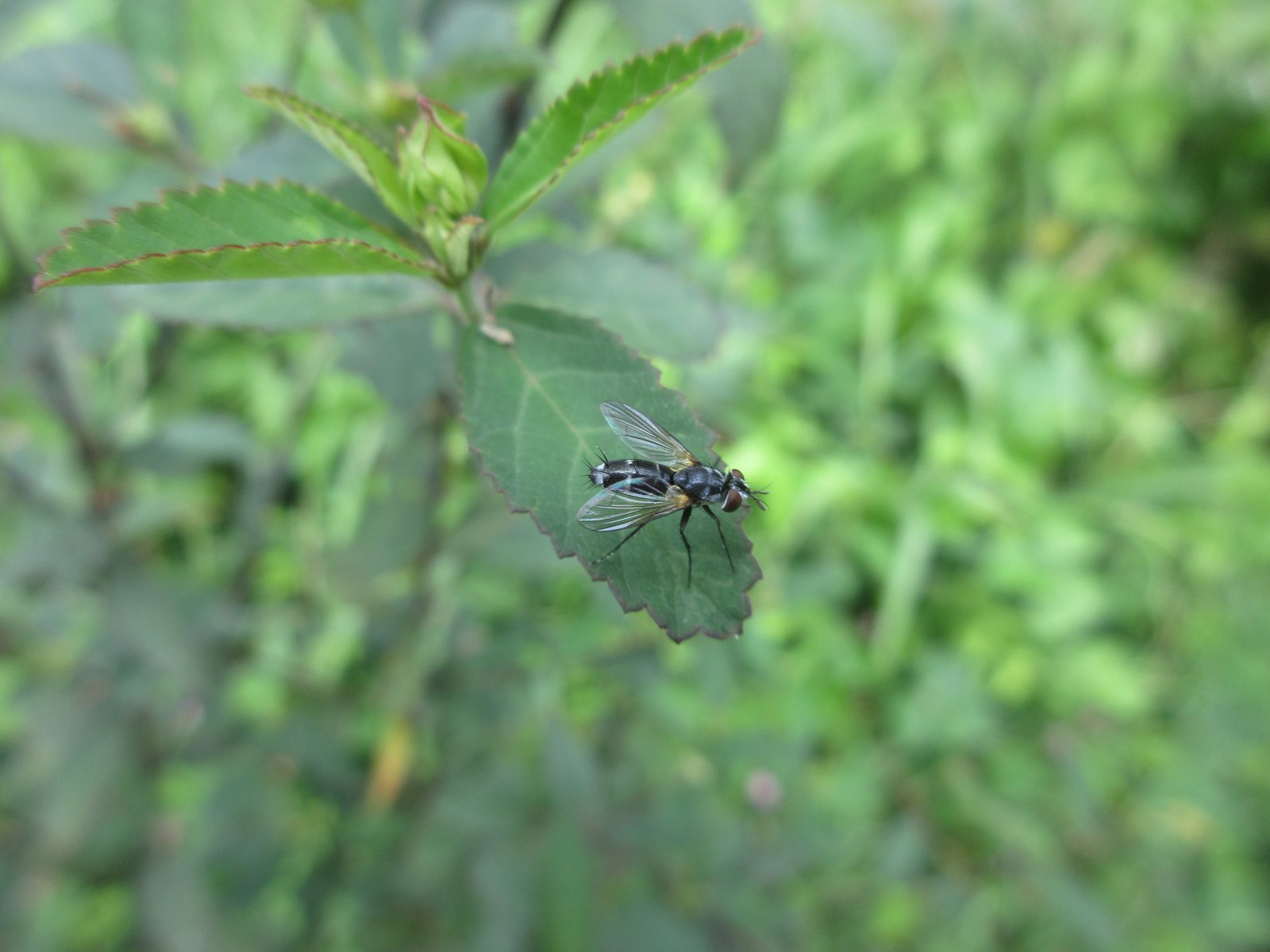
A grey-and-black fly with a bristle-studded abdomen, beside the plantation road at the start of the Bombalai Hill trail, on a hot morning in September 2026
It came in, landed on a leaf at the edge of the road, sat for a few seconds and was gone. There was time for one photograph. Looking at it afterwards, the thing that stands out is the abdomen: banded black and silver, and studded, especially towards the tip, with long, stiff black bristles like the spines of a cactus.
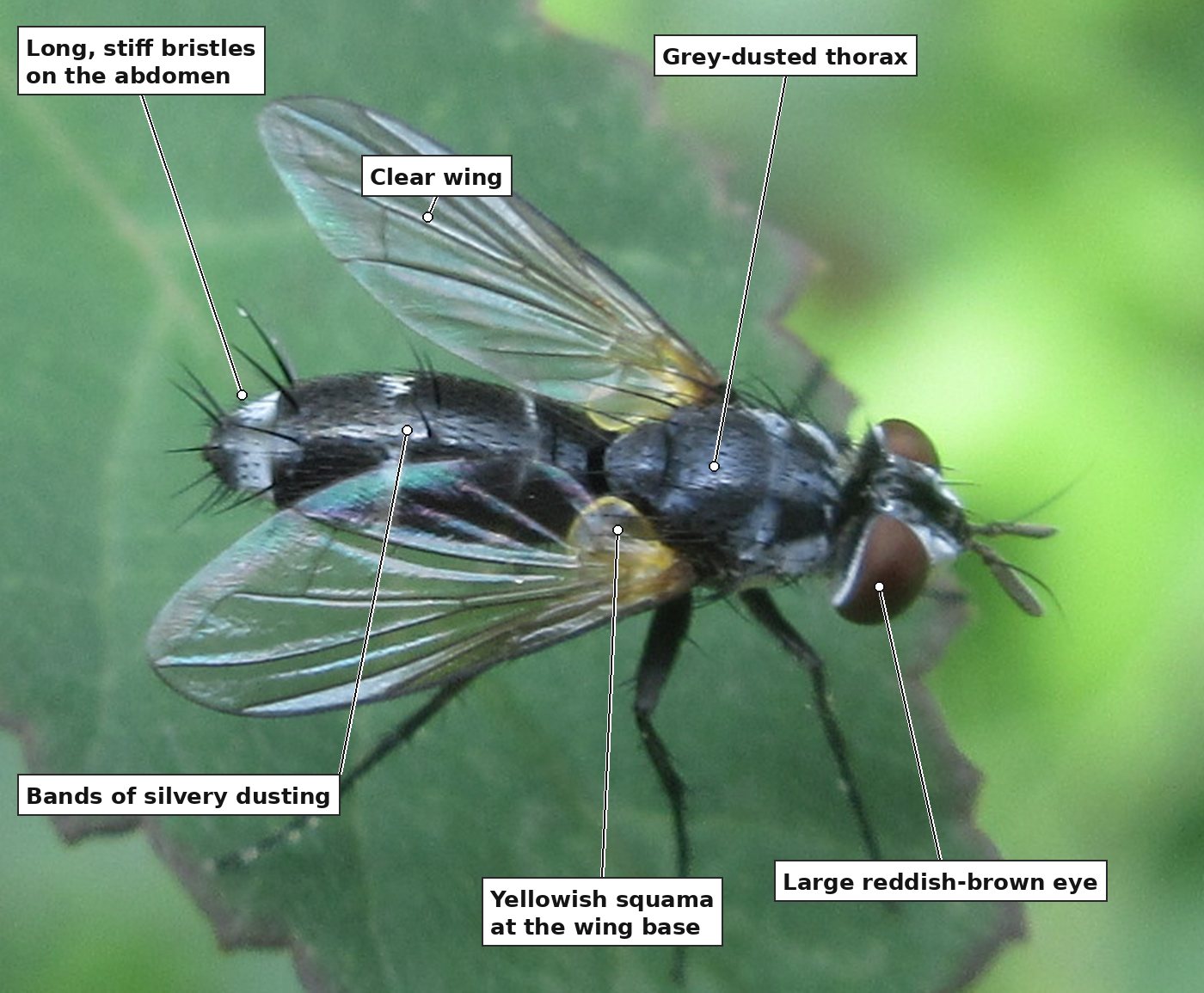
It is a true fly, and it belongs to the Oestroidea, the superfamily of the blow flies, flesh flies, tachinid flies and bot flies. That is as far as the identifiers on iNaturalist were willing to go from one photograph, and it is a safe place to stop. What the photograph shows:
Tachinid flies are parasitoids. A female lays her eggs on, in or near another insect — very often a caterpillar, but also beetles, bugs and grasshoppers — and her larvae feed inside it until it dies. They are one of the biggest families of flies, and among the most useful to farmers, because they kill large numbers of plant-eating caterpillars. A bristly fly visiting the leaves of a regrowing roadside, where caterpillars feed, would be in exactly the right place.
The fly flew before anything could be put beside it, so this record has no size. Flies of this build are usually somewhere between a house fly and a large blow fly in size.
The first kilometre of the Bombalai
Hill trail, the plantation road that starts just outside the Tawau Hills Park entrance, Tawau, Sabah — inside
the 50-metre buffer along
the protected forest, where the old oil palm is no longer replanted and the land is growing back. One
fly, not measured, alone; landed on the leaf of an unidentified shrub, stayed a few
seconds and flew off. Grey-dusted thorax; silvery-banded, bristly abdomen; large reddish-brown eyes;
yellowish squamae. Diptera: Oestroidea. Family not determined, probably Tachinidae.
One frame, 10:11:30.
— iNaturalist observation
404992354
Eight minutes later, on the same stretch of plantation road, the same camera photographed a cotton stainer bug on a roadside mallow — the commonest insect on that stretch.
About the photograph. One frame by Wong Fook Yee with a Canon IXUS 285 HS, no flash,
at 10:11:30 on 17 September 2026 beside the plantation road at the start of the Bombalai Hill trail,
Tawau, Sabah. The camera original had never been opened in an editor. For this page it has been
reduced, and cropped, enlarged and labelled for the close view; nothing has been sharpened, recoloured,
added or removed.
The identification to superfamily is the iNaturalist community's; the account of tachinid biology is
from the general entomological literature. The locality, date, weather and behaviour are the
photographer's own. Photograph © Wong Fook Yee. Page written 1 October 2026.