eTawau > Insects of Borneo > Nerve-winged insects > An antlion on the Tawau River
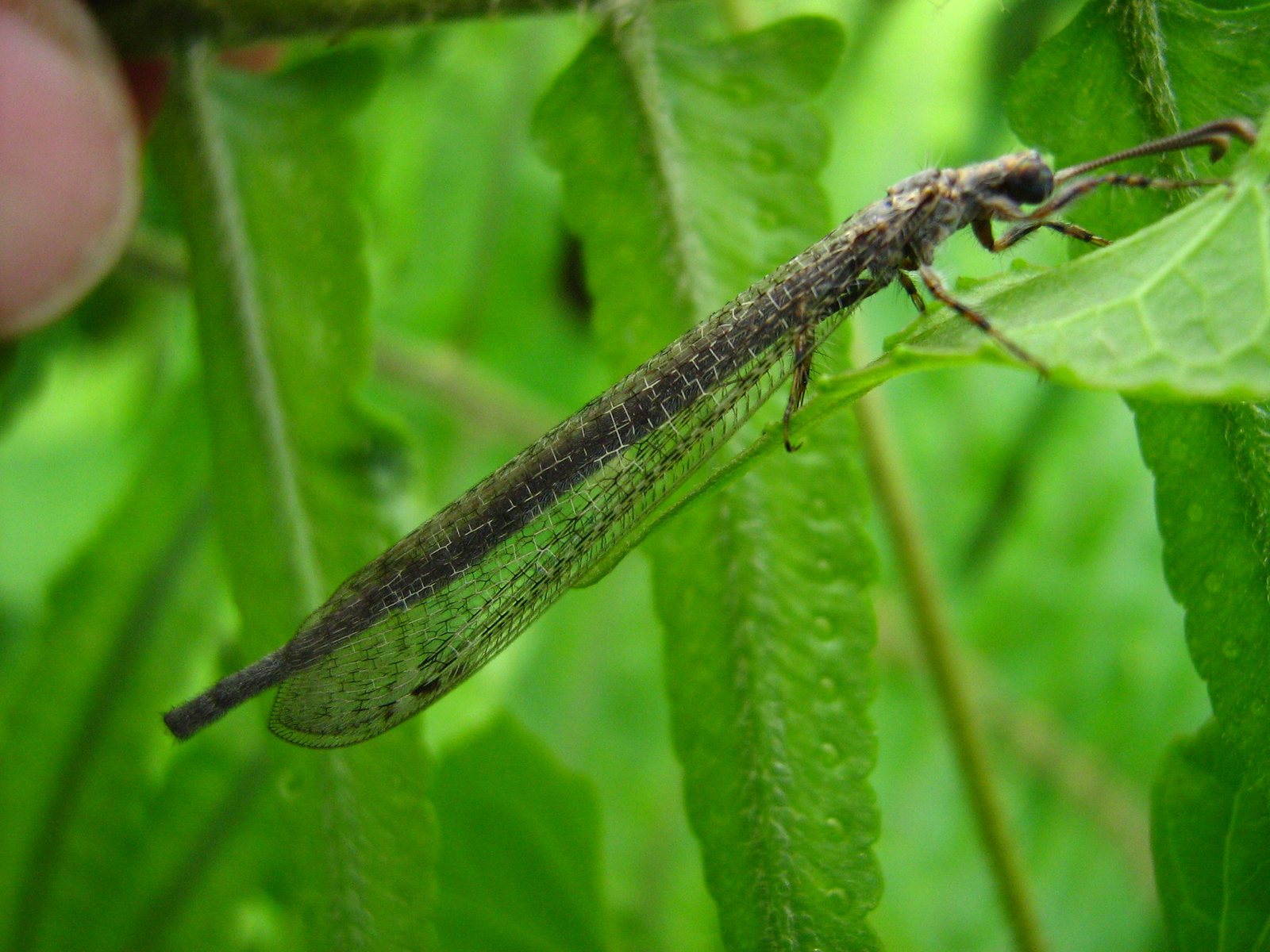
An adult antlion resting on the bank of the Tawau River near the White Bridge, on a sunny July afternoon in 2007
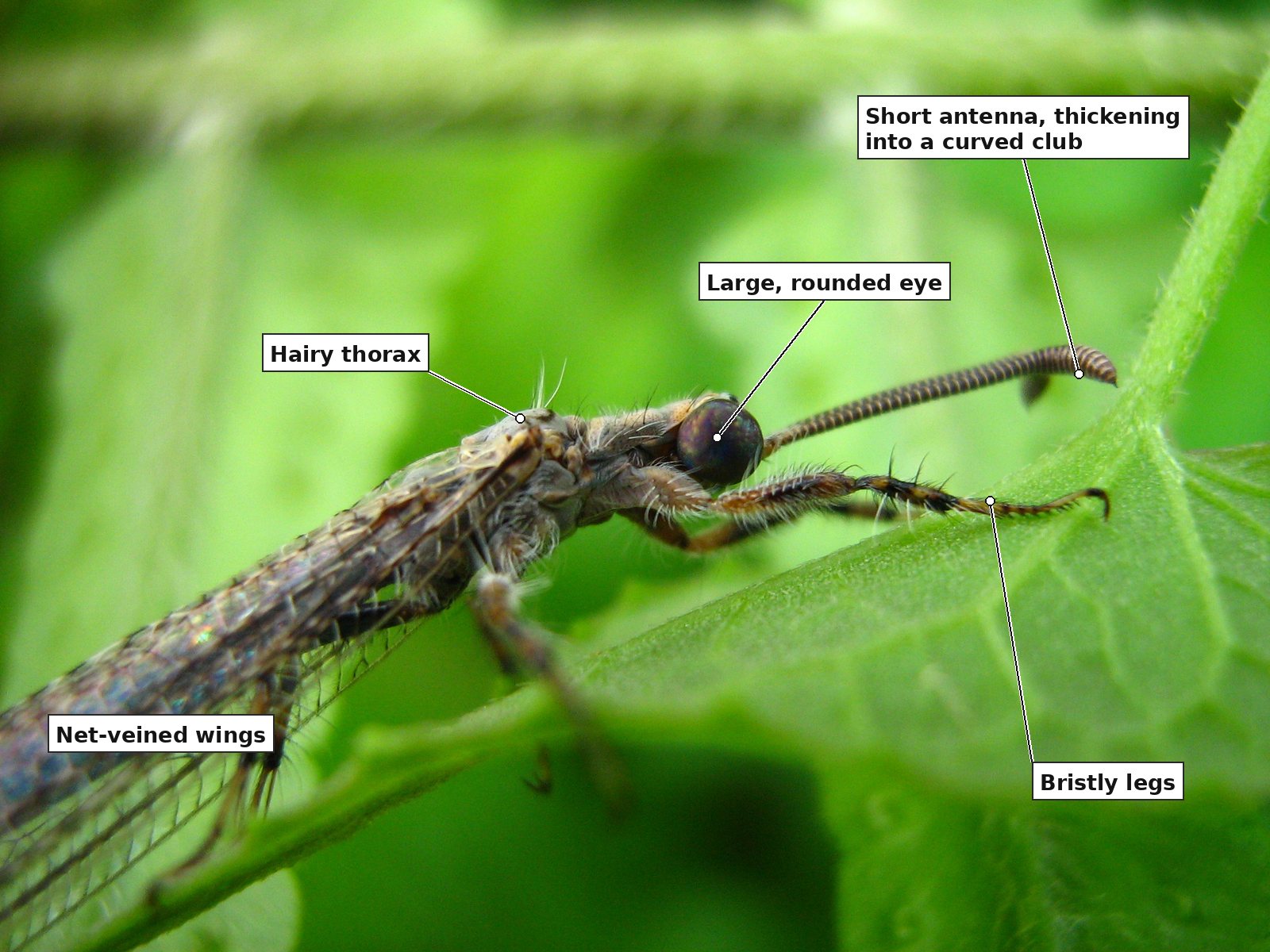
It was resting on a dry stem by the river, long and grey-brown, with its wings folded tight along its body, and it did not move. I moved it onto a green leaf for better photographs, and it stayed there, still, while I took them. Close up it has the long, lacy, net-veined wings of a lacewing and the long body of a damselfly, and on its head a pair of short antennae that curl over at the tips like a fern shoot.
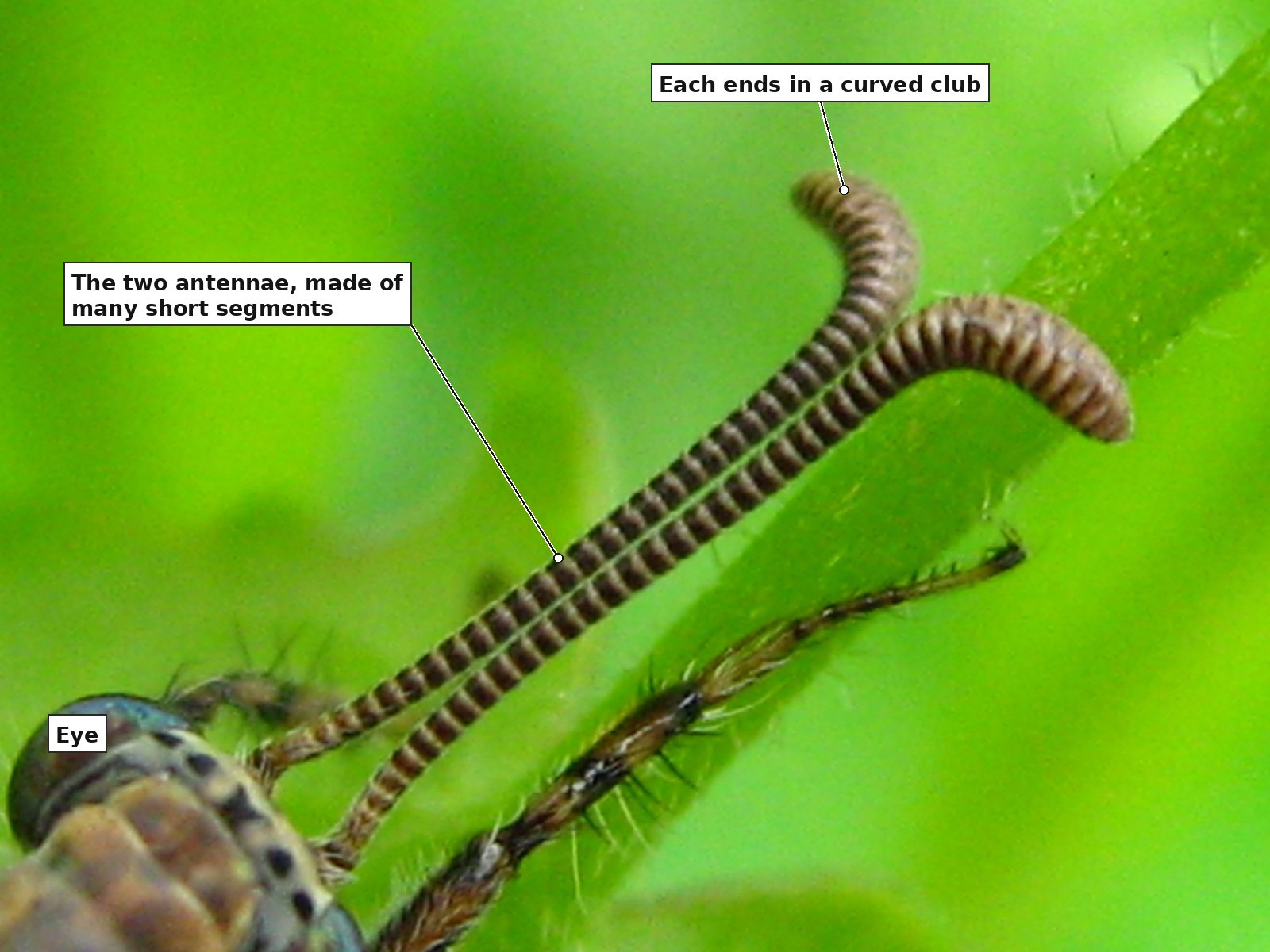
Four groups of insects in Borneo have long bodies and long, net-veined wings, and they are easy to mix up. The antennae sort them out:
The name belongs to the young, not the adult. An antlion larva is a small, fat, bristly animal with a pair of long, sickle-shaped jaws. In many species it digs a cone-shaped pit in dry sand or dust, often under an overhang where rain does not reach, and buries itself at the bottom with only its jaws showing. An ant that steps over the edge slides down the loose sides; if it tries to climb out, the larva flicks sand up at it until it falls into the jaws. Other antlion larvae dig no pit and simply lie in wait under the sand or in leaf litter. In some countries they are called doodlebugs, after the wandering trails they leave in the sand.
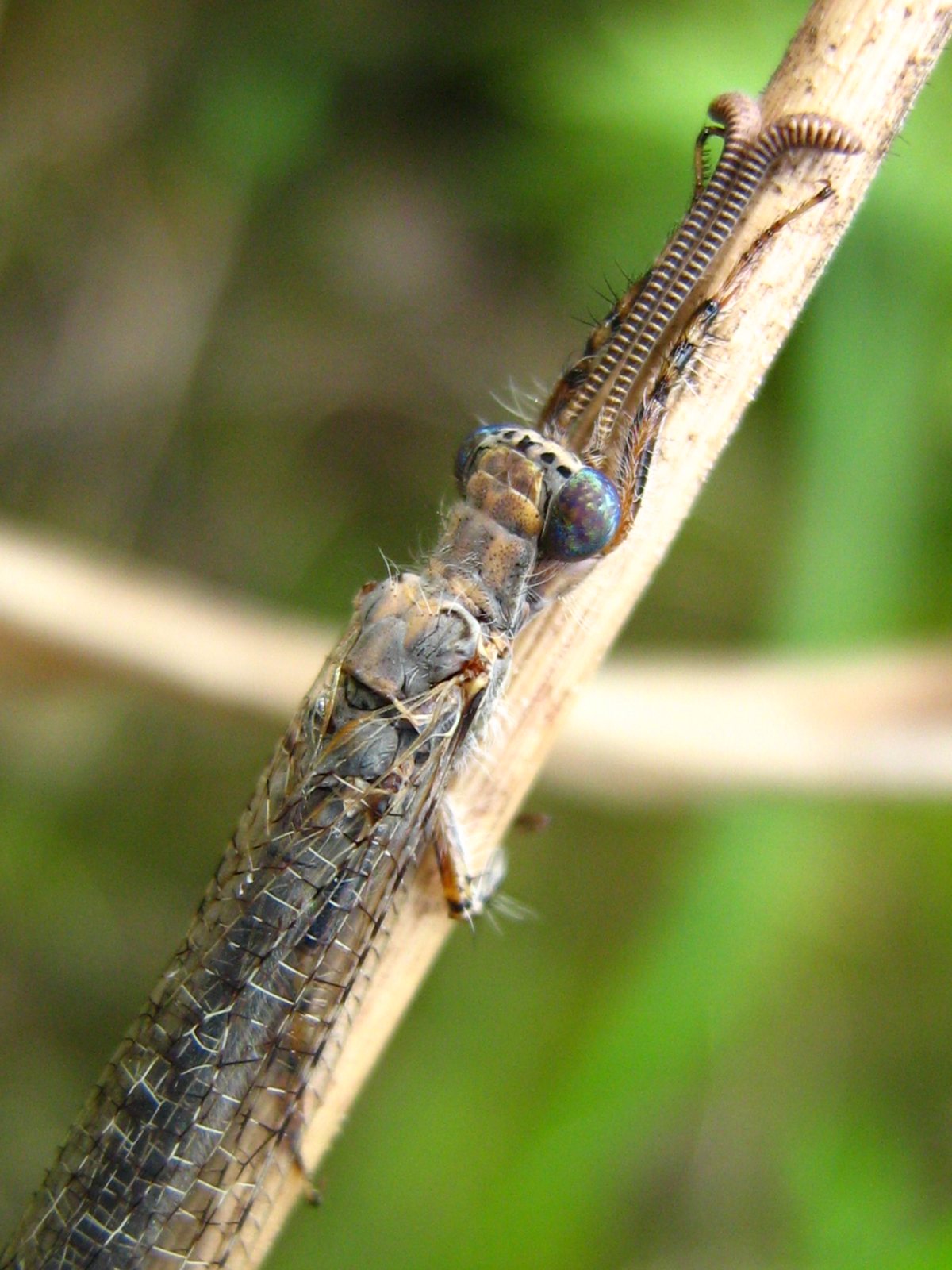
The adult is a different life altogether: a soft, rather feeble flier that is active from dusk and rests by day on stems and grasses, lying along them so that it looks like part of the plant. Finding one sitting perfectly still on a dry stem in the afternoon, as this one was, is the normal way to meet an adult antlion.
There was nothing beside it to give a scale, so this record has no size. The fingertip in the first photograph is closer to the lens than the insect and cannot be used as a ruler. Antlions of this build are usually a few centimetres long, with the wings folded.
The bank of the Tawau River near the White Bridge, Kuhara Road, Tawau, Sabah —
inside the Tawau River Triangle: the White
Bridge is where Jalan Kuhara crosses the river, and where the river enters the Triangle. One
adult antlion, not measured, alone, resting motionless on a dry stem of an
unidentified plant. Grey-brown, with long, narrow, clear, densely veined wings folded roof-like along
the body; the abdomen longer than the wings; short antennae thickening into curved clubs; large,
rounded, iridescent eyes; bristly legs. Moved by hand onto a green leaf, where it stayed still for
three more photographs. Neuroptera: Myrmeleontidae — an antlion. Genus and species
not determined. Four frames, 15:55:48 to 16:00:23.
— iNaturalist observation
404723424
About the photographs. Four frames by Wong Fook Yee with a Canon PowerShot A430, no
flash, f/2.8, 5.4 mm, at 15:55:48, 15:57:49, 15:58:45 and 16:00:23 on 7 July 2007 on the bank of the
Tawau River near the White Bridge, Kuhara Road, Tawau, Sabah. All four are camera originals that had
never been opened in an editor. For this page they have been reduced, the first-taken frame turned
upright as the camera recorded it, and two labelled; nothing has been sharpened, recoloured, added or
removed. The insect was moved from a dry stem to a leaf after the first frame.
The account of antlion larvae, adult habits and the differences between antlions, owlflies,
dobsonflies and dragonflies is from the general entomological literature. The locality, date,
weather and behaviour are the photographer's own. All photographs © Wong Fook Yee. Page written
30 September 2026.