
Sea Bajau of Borneo
HOME > People and their cultures > The Sea Bajau of Borneo
Sea Bajau of Borneo
The Southeast Asian island world is home to several maritime communities
whose people often are referred to as "sea nomads" or "sea gypsies," names that
appeal to the exoticist imagination of Western travelers.
The Sama Dilaut, one of these sea-going peoples, live in following regions :
- Philippine Sulu Archipelago
- Southwestern Mindanao
- Sabah in Borneo
- East Kalimantan
- Sulawesi
- Eastern Indonesian islands
In East Coast Borneo, the Bajau Laut, as the Sama Dilaut around Semporna,
Sabah/Borneo call themselves, have strong ties with their related communities in
the Philippines.
Some of these Bajau Laut have maintained their nomadic or semi-nomadic
lifestyle, living in houseboats and only temporarily setting up makeshift huts
on small islets in the Celebes and South China Seas.
Some have become sedentary, living in the stilt houses "floating villages" that
started to grow considerably in Semporna during the 1960s.

Bajau of Borneo Island
The Bajau people came from 2 tribes :
1) Bajau tribes of Kota Belud
2) Bajau Laut tribes of Semporna
The Bajau tribes of Kota Belud are known for horse-riding while the Bajau Laut
tribes of Semporna are known for their seafaring skills.
Bajau Laut tribes are known as the sea gypsy people like other island people of
the Pacific Ocean in southern Philippines and other small islands.
For many years Bajau Laut lived in the ocean on make-shift house boats. Only in
recent years they made settlements on coastal area with houses built on stilts.
The ocean is still their main source of living - fishing, collecting clams and
mussels, and pearl farming in Bodgaya Island and Boheydulang Island.

Traditional Festival Costume of Bajau Laut tribes (sea gypsy people) of Malaysia
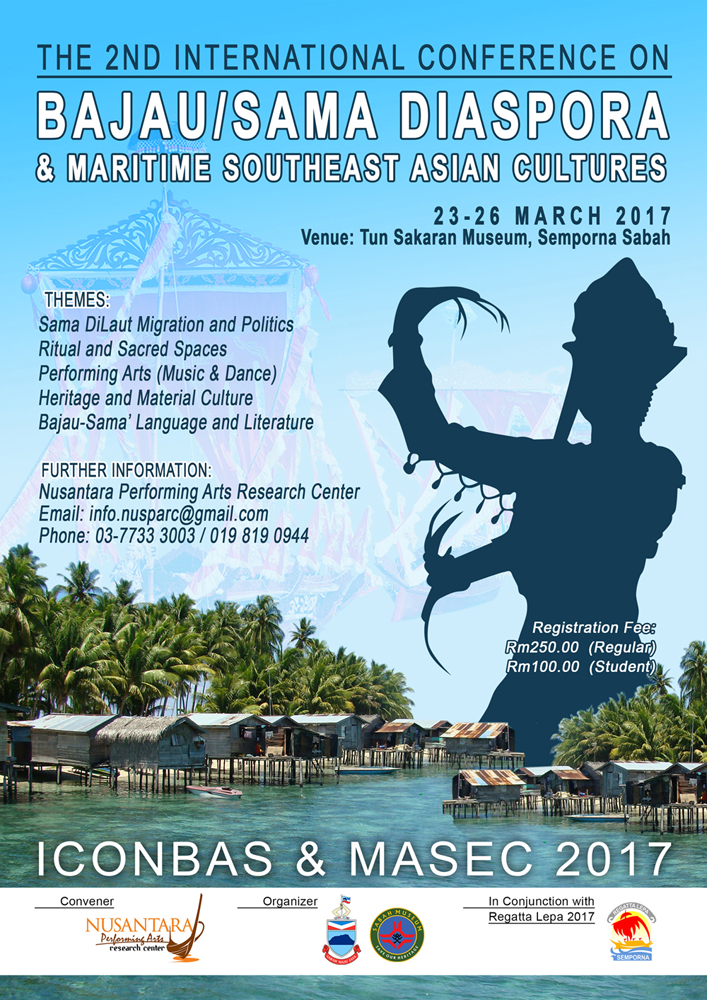
The 2nd International Confernece on BAJAU/SAMA Diaspora &
Maritime Southeast Asian Cultures 23 - 26 March 2017
Theme: Sama DiLaut Migration & Politics; Ritual & Sacred Spaces; Performing Arts
(Music & Dance); Heritage & Material Culture; Bajau Sama Language & Literature.

Bajau Laut (Sea Bajau) traditionally lived on house boats. Recent years they
made settlements on coastal houses on stilts. The sea is still their main source
of living.
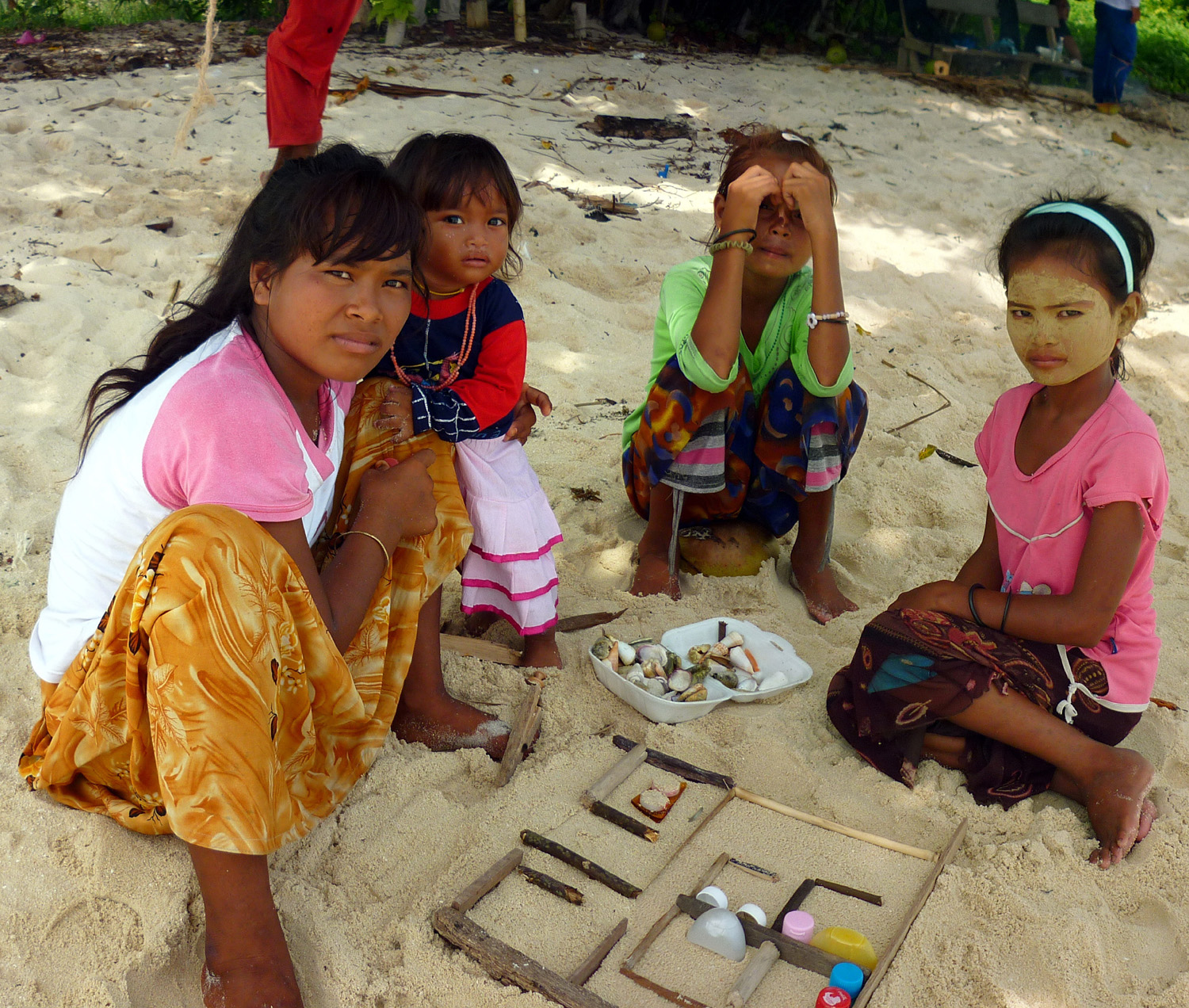

Dream of island girls ......
Welcome to Sibuan Island Bajau Laut Village.
Dream of the Bajau island girls..........
..... a proper home with bed room, kitchen and bathroom.
The boats of the Bajau
The Bajau Laut of Sabah, Malaysia are using two types of boats:
1- The Lepa - served as fishing and house boat,
2- The Boggo’ - much smaller, dug-out from solid log.
In the Philippines the Bajau (Sama) use a third type of boat:
3- Vinta boat
The boggo’ is used exclusively inshore, or over shallow water,
The Lepa serves as the main fishing vessel and family home during sea voyages.
The Vinta has a sail with assorted vertical colors that represents the colorful
culture and history of the Muslim community
".....According to village informants, the lepa was first made for trade by Sama
Kubang boatwrights and was adopted by the Bajau Laut, apparently replacing earlier
outrigger boats.
Its introduction may have been as recent as the beginning of the twentieth century, although this is not certain. However, photographs taken in Semporna in the 1910s and early 1920s show only small outrigger vessels (e.g., see Cook 1924 : 120)."
Clifford Sather
Bajau laut boat-building in Semporna
journals.openedition.org/
The Bajau of Borneo
2018 Tawau International Cultural Festival
8th April 2018 Tawau Town
The Bajau of Borneo - Video
(The Sea Gypsies of Celebes Sea)
Islands in Celebes Sea are home to several maritime people.
Travelers refers them as the "sea gypsies"
Sea Bajau (Sama Dilaut) is one of these sea-going peoples
Sama Dilaut (Sea Bajau ) live all over the Philippine Sulu Archipelago,
Southwestern Mindanao, Sabah in Borneo, East Kalimantan, Sulawesi, and Eastern
Indonesian islands.
In Borneo Island, Sama Dilaut settled down in Semporna Town and the nearby
islands.
They call themselves the Sea Bajau (Bajau Laut) and maintain strong ties with
their related communities in Celebes Sea.
Bajau, from old to young, are a colorful, festive and musical people.
They are descendents of royalty in their belief.
This is why they traditionally wear richly colorful costumes made by hand.
In East Coast Borneo, the Bajau Laut, as the Sama Dilaut around Semporna,
Sabah/Borneo call themselves,
Last of the sea gypsies: Fascinating images of the nomadic Borneo tribe who spend their lives on the water
Read more: www.dailymail.co.uk/travel
Sabah's Bajau Laut Community Ready To Embrace
Development
www.bernama.com/bernama/
www.thestar.com.my/news/
By Haslin Gaffor
SEMPORNA, Feb 22, 2008 (Bernama) -- At one time, Imai Ulaiman, 50, used to
live on his boat at sea but now has resettled on terra firma along with his
family at Pulau Bodgaya.
In spite of the initial apprehensions, Imai still went ahead with his decision
to end his nomadic lifestyle on the boat with the direction literally set by the
winds.
This was the typical life of the Bajau Laut or the Pala'u community who are
known as the sea-farers of Sabah.
But what prompted Imai to take the plunge, he told the writer through an
interpreter, it is to embrace development for the sake of his future
generations.
Imai's family is among the 30 odd families living in the settlement and the sea
is still close to their heart.
Their house stands on the sea and the boat still serves them as their main
transport mode. The Bajau Laut's change in lifestyle has helped the government
and the non-governmental organisations to channel assistance, especially
employment opportunities based on marine resources.
SOSIO-ECONOMY PROJECTS
Imai made the right decision because he will be among the settlers to partake in
a seaweed culture project under the Semporna Island's Darwin Project meant to
improve their socio-economic standing.
Under this project, the participants are provided equipment and the know-how in
implementing the seaweed culture project.
The Semporna Island's Darwin Project is an initiative to rope in the local
community to preserve the marine life especially the corals at the Tun Sakaran
Marine Park.
The project took off in 1998 and maintained by the Marine Preservation
Organisation with the cooperation of Sabah Parks to preserve the biodiversity
around the park by encouraging the sustainable use of the marine resources.
Imai said he is eager to get on with the seaweed culture as it promises regular
income for the family.
"At present, we live on the catch and coconuts collected from nearby islands. I
want to change my present way of life so that my coming generations can enjoy
development and they can go to school," said Imai who only speaks in his native
language.
Imai lives with his wife, children and grandchildren in two adjoining houses,
and the houses are cramped as 15 people are living in them.
NO REGULAR INCOME
The dwellers in the island don't have steady source of income and valuable catch
like shrimps and fishes are sold to fishermen or bartered for rice or clothes.
Many from the Pala'u ethnicity still hold strongly to their traditional ways
with most without identification documents or formal education. They speak only
in their mother-tongue.
Another member of the community who is also seeking the winds of change is
Injalmani Masewani, 50, who is also eager to participate in the Semporna Island
Darwin Project.
"I cant wait to get on with this project as it promises a bright future for the
whole family and free us from the shackles of poverty," said the father of nine.
MIGRATING TO LAND
It is estimated that at present there are only about 150 Pala'u families in the
district who still live on boats. The major Pala'u settlements in this district
is at Kampung Labuan Haji, Pulau Bum-Bum and Kampung Bangau-Bangau. Many live in
homes built under the Hardcore Poor Housing Programme.
The Bajau Laut community in Pulau Bodgaya has been offered the seaweed culture
project as it has proven successful in several coastal districts.
The seaweed culture activity is a viable income generator for the locals and is
helping to enhance Semporna district's economy as the leading seaweed producer
in Sabah. In this district the seaweed culture project has already been
implemented in Pulau Selakan, Kerindingan, Bum-Bum, Sebangkat, Sibuan, Pababag
and Omadal.
The project has transformed the lives of the settlers in the village and they
are now no longer left out from development.
-- BERNAMA
RELATED TOPICS
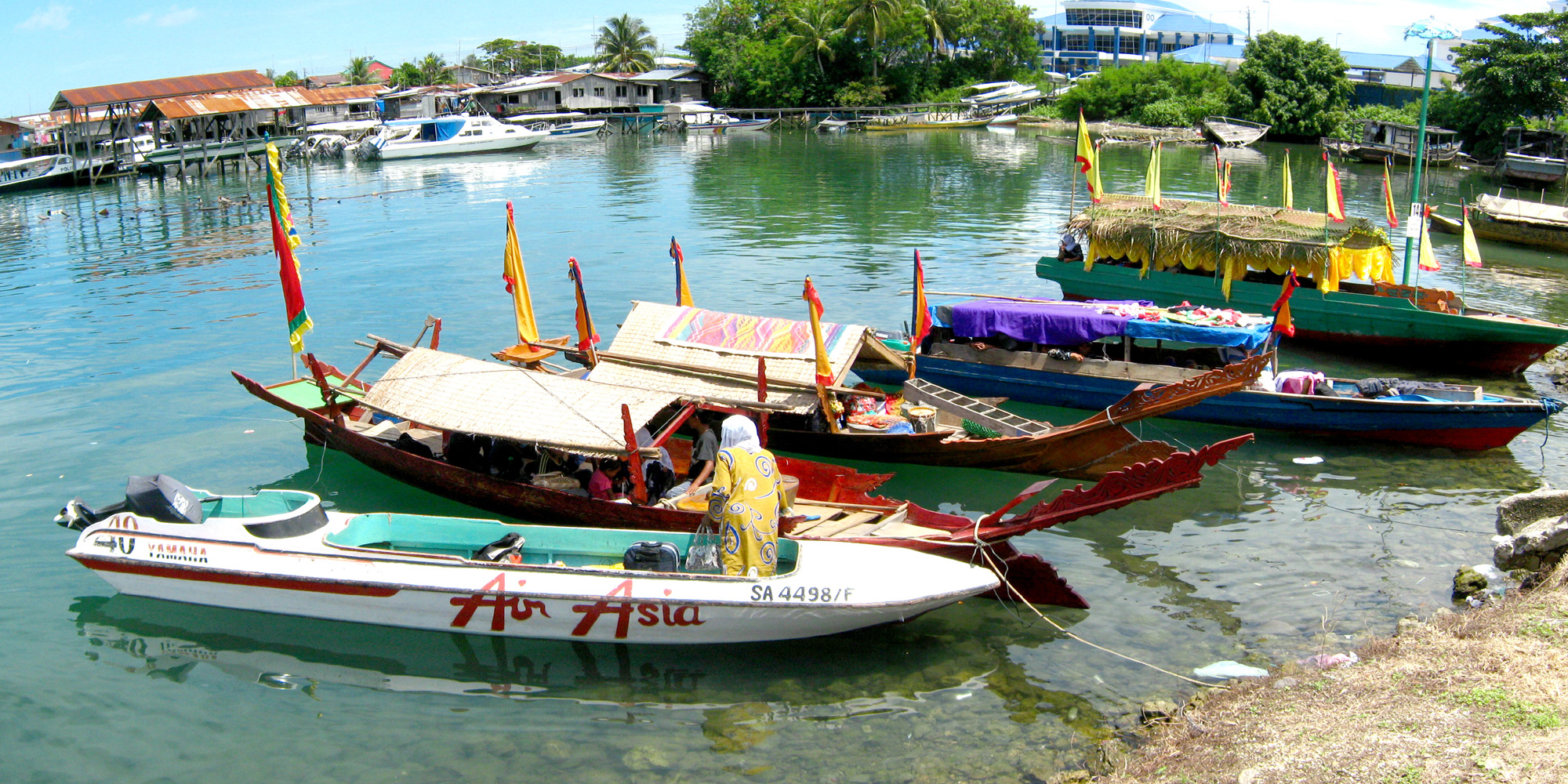
Regatta Lepa
Plenty of life and colour to the sleep town of Semporna
during the three days....
17 April 2020 - 19 April 2020
Friday to Sunday
A 3 days annual water festival that filled the otherwise sleepy town Semporna with parade of Lepa boats, traditional music, dance and games.

Murut of Borneo
Sabah, Malaysia
Murut are the third largest indigenous group in Sabah, after the Kadazandusun
and the Bajau.
|
|
People and their cultures |
