GUIDE TO
COMMON SPIDERS IN BORNEO ISLAND
Ctenus sarawakensis
♀19mm
two-clawed legs
2018-09-28 FRI TBL

Ctenus sarawakensis 砂拉越櫛足蛛

♀19mm
2018-09-28 FRI TAWAU
|
Scientific name Ctenus sarawakensis 中國蜘蛛生態大圖鑑 Page 217 -
220
♀18mm ESPLANATE 30-11-2014 SUN 11:04AM 30-11-2014 ESPLANATE
|
| Wandering spider Family Ctenidae |
Wolf spider Family Lycosidae |
|
|
|
|
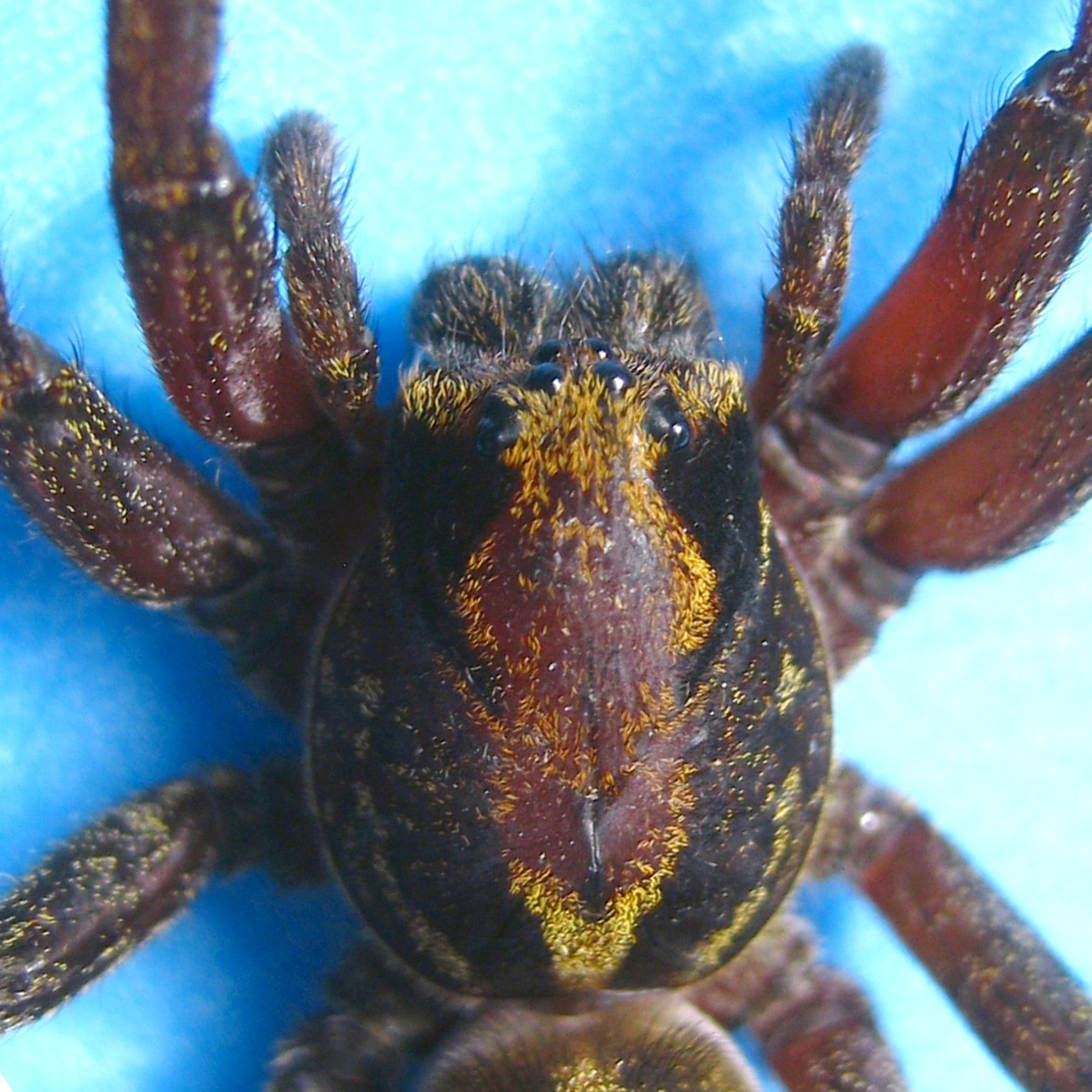
Our naked eyes can see only 6 eyes. Two of the eyes in the middle row are small and hidden below the two posterior eyes that could not be seen easily without magnifying. |
|
|
|
 Wolf spider Family Lycosidae |
 |
 |
 |
 |
| The wandering spiders are the members of
the spider family Ctenidae.
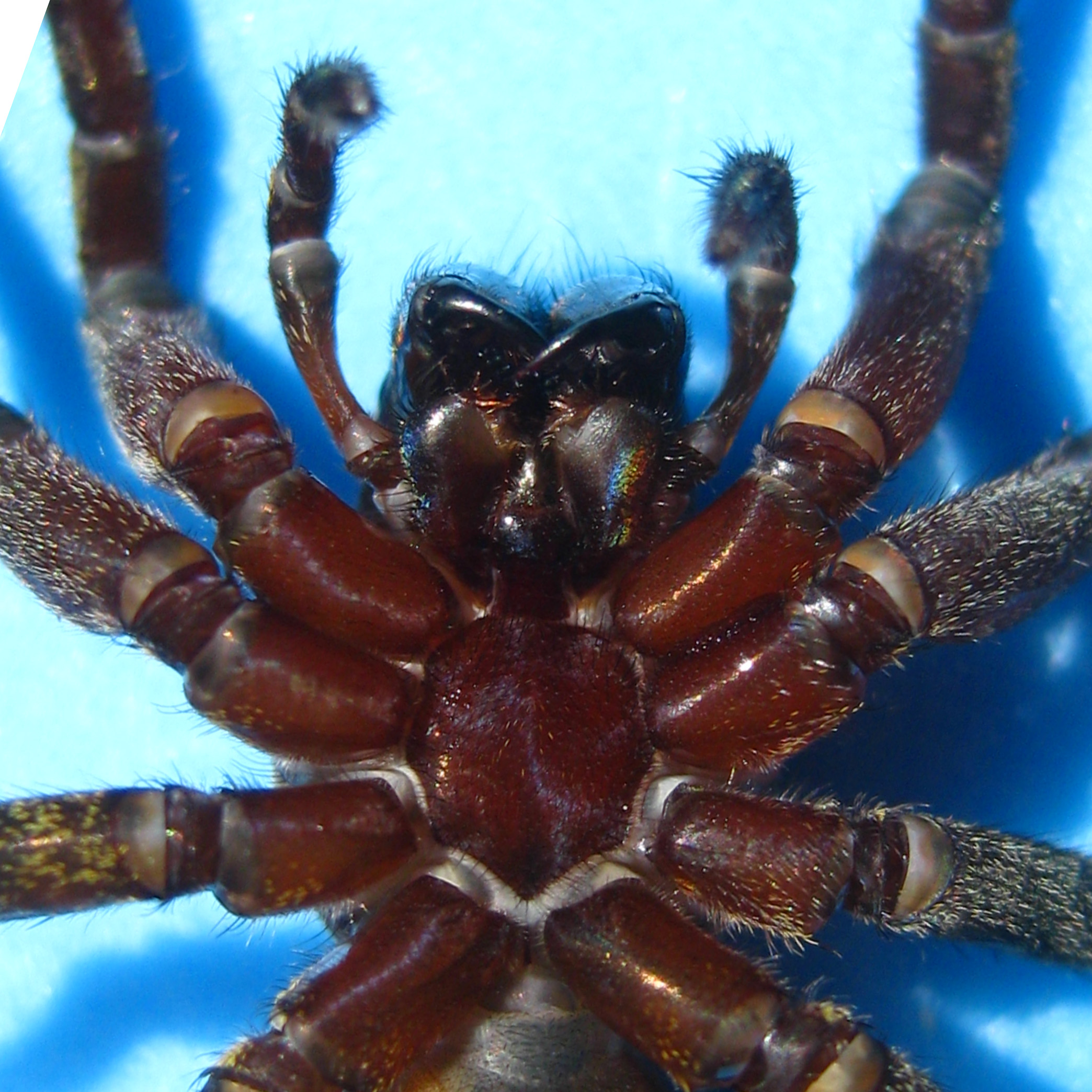
Ctenus sarawakensis The carapace is a medium dark-brown, with a wide pale median band in the cephalic area which narrows in the thoracic area. Submarginal carapace bands are grey. White recumbent setae cover the median band and are scattered on the submarginal bands. The dorsal surface of the legs is dark like the carapace, but the underside of the legs and the sternum is paler, almost yellow.
Ctenus sarawakensis is similar in appearance to the wolf spider and is almost always mistaken for a wolf spider of family Lycosidae. Their appearance and habits, as well as the fact that they are relative often mistaken for wolf spiders Although it looks like a wolf spider, Ctenus sarawakensis actually belongs to the family Ctenidae. Ctenids can be determined to family by their unique eye arrangement, 8 eyes in 3 rows in a 2-4-2 pattern. Lycosids also have a unique pattern, but in a 4-2- 2 arrangement. Ctenus sarawakensis are slow runners and look sickly weak creature. The family Ctenidae is primarily tropical and worldwide in distribution. Male and female are similar in colour.
Venter of legs and sternum is as dark as dorsum of legs. Length ranges from 15-20 mm (Peck 1981). Leg span may be as much as 75 mm (3"). Ctenus sarawakensis is a wandering hunting spider; it does not make a web to catch prey. Individuals are generally found in mesic habitats, on big trees, on the leaf litter, and even in caves. Their colour pattern is cryptic, and they can be difficult to see unless disturbed. I am able to see it because it struggling to craw up the tree from the ground avoiding an army of big black ant marching past the ground under the tree. |
 |
Nothing is known of the bite of Ctenus
sarawakensis, but based on its size of 18mm, one might expect some
pain and swelling to be associated with the bite.
Dead or casualty from spider bite in Borneo Island is never heard of. However, as with any insect bite, all severe
or allergic reactions to a bite should receive prompt medical
attention. |
 |
This female is 18mm in body length. |