Updated : 31-3-2014 MON 6:33PM


Perodua Viva


Perodua, manufacturer of entry-level cars, make the cheapest cars in Malaysia market. Many customer are first-time buyers just want a reliable set of ‘wheels' for daily transportation.

These first time customer don't crave for the latest and greatest. Customers in this segment - referred to as the ‘A segment' in car industry - also have expectations not different from those upper segments who pay more for their cars.

According to a senior Perodua executive, Malaysian A-segment customers are actually much more demanding than those in other countries like Japan or Europe where, because they buy cheap cars, they know that they should not expect much. "Our Malaysian customers are, in a sense, spoilt and they want features and even quality levels to be comparable to cars that are at higher levels and cost more!"


Perodua thus faced a big challenge even though it makes the cheapest cars in Malaysia.  Perodua  had to offer quality which is better than similar models in other countries and because it is a Malaysian company, it is expected to also provide its products to Malaysians at a low price.

Because of high expectations, Perodua made sure in keeps improving quality and constantly refreshes and updates its products.

Since established, it has introduced six all-new models which cater to a broad range of customers. Perodua models were adapted from models that are produced by Daihatsu Motor, Perodua's partner.

In some cases, the adaptation has been cosmetic although in the case of the Myvi, it was actually a collaborative effort in which Perodua was a partner in the original development of the model that is now shared with Daihatsu, Toyota and Subaru.

New ‘Viva' replaces Kelisa and positioned above the Kancil.


The A and B segments are Perodua's domain . The new Viva has  ‘Practical-Spacious-Compact' concept which will suit today's Malaysian lifestyles.

Perodua's models are shared with Daihatsu and the Viva has been adapted from the Daihatsu Mira which, coincidentally, was also the basis for the original Kancil. It is not from the same model as the Kelisa, which was the Cuore. Mira has evolved from the model in the early 1990s to the one today which was chosen for the Viva in terms of design, technology and even dimensions.

DESIGN


Viva seems like a ‘baby Myvi' with its own character with a more flowing profile which suggests good aerodynamics.

The height to width ratio is also well balanced with the wheel arches flared out slightly, giving a sporty undertone. On the 1000 cc versions, the spottiness is further enhanced with side skirting and there's also a rear roof spoiler with the 1000 cc Viva Premium. Since it replaces the Kelisa, the first comparison should be made with that model and in overall length, the Via is 95 mm longer but its width is narrower by 15 mm (although that actually makes no different to interior space). It stands taller by over 100 mm and sits on a wheelbase of 2390 mm, 30 mm longer than the Kelisa's.

INTERIOR
The area which Perodua highlights about the Viva is interior length which it claims to be superior to local rivals - and even the Myvi. According to Perodua-supplied data, the Viva's interior length is 1845 mm which is 10 mm more than the Myvi, a bigger car. Of course, 10 mm isn't meaningful so let's compare to the Kelisa and Kancil, both of which are over 120 mm shorter in cabin length. Perodua also provided data for rival models (but didn't identify them) and the closest is 55 mm shorter.

The couple distance is also another measure of spaciousness in a cabin and with the Kancil, one could say the occupants were rather close. No so with the Viva which has a front couple distance (width-wise)of 840 mm, 114 mm more than the Kancil. This comes from having an interior width of 1300 mm, which is 115 mm wider than the Kancil.


Large interior space is a highlight

Doors open 90 degrees from the body

Perodua also claims the Viva is Best-in-Class when it comes to cabin volume (interior height x interior width x interior length) at 2.99 cubic meters. The Myvi, one class above, is 3.26 cubic meters while the closest rivals are 2.90 cubic meters. Both the Kancil and Kelisa have smaller volumes that the Viva.
Another impressive thing about the Viva's cabin space is the luggage capacity - 449 liters when the rear seat is flat. It's not as big as the Kenari (which has a high ceiling) or the Myvi but it is substantially more than the Kelisa and Kancil and its immediate rivals. Access to the boot space is easy as the opening is pretty large and yet the sill is just 600 mm off the road. A thoughtful provision is a net which can keep loose items in place although its position would be better across the 1010 mm opening than behind the backrests. If it is across the opening, then it can also serve as a barrier to prevent things from falling out when the door is raised.

Like the Myvi, the doors of the Viva open extra-wide to 90 degrees... even wider than the Myvi which is 80 degrees to the body. With an opening that wide - almost like the doors have been taken off - it is very easy to get in and out. As a precaution, the hinge has three stages so that it does not swing open fully inadvertently and hit a wall or another car. Incidentally, for most cars, the opening angle is between 60 and 70 degrees.

Besides boasting of generous cabin space, Perodua is also proud to say that they have put in a lot of effort to provide a car of higher quality with the Viva. It's not just having better materials but also the thoughtfulness in the textures on surfaces and the interior color scheme, all of which can make a difference to the ambience. Grey is the dominant color but it is not a dull shade and blends well with the other trim in certain areas.

The centre section of the dashboard has a metallic finish which adds class and has a clean layout for the ventilation controls and audio system. Audio enthusiasts will be happy to note that Perodua has not integrated the audio head unit into the panel, unlike the Myvi. This means that it will be possible to replace the unit with an after-market set more easily if you don't like what Perodua gives you. The 850 cc and 1000 cc Vivas come with a 1DIN radio/CD-player and 4 speakers while the 660 cc version has a cassette player only with the radio.

As for instrumentation, the well-shrouded panel has two large meters, speedometer on the left and tachometer on the right. Following current trends, there is no coolant temperature gauge and when the engine is cold, a blue light is on which goes off when the normal operating temperature is reached. If an overheating condition is imminent, a red light comes on to warn the driver. Presumably, the threshold for overheating is set with a sufficient tolerance and not when the radiator is about to blow! A small LCD window between the two meters shows the fuel level and odometer/trip meter. If the car has an automatic transmission, the gear position is also shown. On the 1000 cc version, a buzzer sounds when the headlamps are left on after the engine is switched off and the doors left open. This is certainly a good feature that will save the battery from going flat.

The features list for the Viva is good though many of the goodies are only found on the 1000 cc versions. These are items like a driver's seat height adjuster, adjustable seatbelt upper anchor position, electrically-adjustable door mirrors (also in 850 cc version), retractable door mirrors, power windows and door locking (also in 850 cc version), vanity mirror (but only on the driver's side), under seat tray and the steering wheel also has a more classy design. But all versions do come with features like upholders, plenty of small storage spaces, a coin slot and even a utility box that is good for a toll tag or hand phone.

POWERTRAIN/CHASSIS
Now to the power trains and for the Viva, there are three 3-cylinder engine choices: 660 cc, 850 cc and 1000 cc. They are familiar engines but updated with modern technology such as DVVT (Dynamic Variable Valve Timing) and EFI, and they all have twin overhead camshafts. Having DVVT in the two smaller engines is something which gives Perodua the right to say ‘First in Class'.Power and torque ratings for the engines are as follow:

EF-VE 660 (659 cc) - 37 kW/50.3 bhp at 7200 rpm, 58 Nm at4400 rpm
ED-VE 850 (847 cc) - 39 kW/53.0 bhp at 6000 rpm, 76 Nm at 4000 rpm
EJ-VE 1000 (989 cc) - 45 kW/61.2 bhp at 6000 rpm, 90 Nm at 3600 rpm
5-speed manual transaxles are available for all engines but the 4-speed automatic is only available with the 1000 cc engine.

The suspension is typical of small hatchbacks with MacPherson struts in front located by an L-shaped lower arm. The suspension geometry has been optimized for better steering response and ride comfort. The 1000 cc engine has power-assisted steering and also a front stabilizer. At the rear, it's hardly surprising to see a torsion beam axle and trailing arms - so many small hatchbacks have them now!

SAFETY
In the area of safety, the Viva is well provided for although it is still a pity that they cannot offer airbags as standard on every version. Encik Hafiz said that it is still a matter of cost which is hard to absorb even though they have done their best to bring their production cost down. Thus they can only offer it on the Viva 1000 cc Premium at this time, and likewise with ABS (with EBD).

Perodua drew on Daihatsu's long experience in making small cars safe. The bodyshell has many reinforcements to maintain its integrity during a crash and of note is the extra protection for the front occupants' heads. Honeycomb pads which are Impact-absorbing are attached to the upper corner of roof just over the A-pillar. The driver is also protected from being injured by the steering wheel as it will collapse in the event of a front collision. All occupants get seatbelts in the Viva and the two at the rear sides have 3-point belts while the middle person has a 2-point belt.


MARKETING PLANS

The five color choices

The introduction of the Viva should certainly spur buying interest in the market and particularly for Perodua which is intent on maintaining its leadership position. While the Myvi was an amazing success from Day 1, the company is cautious about the prospects of the Viva which is partly why the Kancil still remains in production. It's a pity that the Kelisa has to go but it would have been impractical to have two models in the same niche, which some other companies do and simply mess themselves up instead."We have nevertheless learnt lessons from the Myvi launch and we are now better prepared for the initial demand that we expect for the Viva. We have already assembled 2,000 units so we can deliver faster and we plan to produce between 7,000 and 8,000 units a month although we are projecting sales of 6,500 units a month," revealed Encik Hafiz.

Elaborating further, he said that they expect 55% of the Vivas sold to be the 1000 cc version. In recent times, Perodua has seen a shift in its customers to first-time buyers but for the Myvi, it is expecting that such buyers will account for 30% of sales and 50% will be additional car buyers. A small percentage will come from those who are replacing their existing cars.

KEY SPECIFICATIONS

Overall length: 3575 mm
Overall width: 1475 mm
Overall height: 1530 mm
Wheelbase: 2390 mm
Front track: 1320 ~ 1300 mm (depending on version)
Rear track: 1310 ~1290 mm (depending on version)
Weight: 755 ~ 800 kgs (depending on version)
Turning radius: 4.2 meters (660/850 cc), 4.4 meters (1000 cc)
Tyre sizes: 155/70x12 (660/850 cc), 155/65R13 (1000 cc Std), 165/55R14 (1000 cc Premium)
Spare tyre: Space-saver T105/90D12


Tawau Viva Auto Club - TVAC

http://www.facebook.com


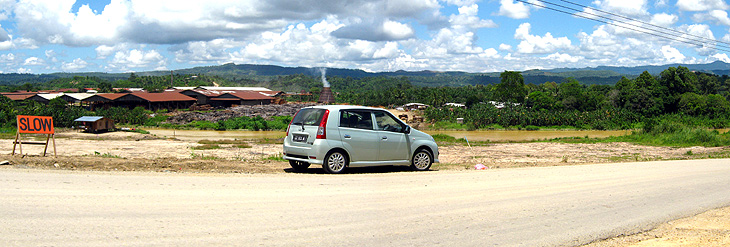
VIVA at Kalabakan Town, Malaysia
Photo above : VIVA at Kalabakan Town, Malaysia

The Difference between a VIVA 1000cc and a MyVi 1300cc

Perodua Viva 1000cc Premium

Rm 41,000

Myvi 1.3

Rm 46,000

Crash test results of the previous gen Daihatsu Mira that the Perodua Viva is based managed a 3 star rating. The Perodua Myvi’s Japanese cousin the 2005 Daihatsu Sirion scored a 4 star score in the Euro NCAP crash test for adult protection,
Perodua Viva 1000cc Premium, it weighs 800kg and puts out 60 horsepower – that gives it a power to weight ratio of 0.075 horsepower per kg. The Myvi 1.3 weighs 955kg and puts out 86 horsepower.

That’s a power to weight ratio of 0.09 horsepower per kg.

Perodua Viva 3-cylinder engines. 3-cylinders have more vibration Perodua Myvi 1.3 liter uses a 4-cylinder engine, and 4-cylinder engines are a lot smoother than 3-cylinder engines
Perodua Viva 1000cc Premium Manual can travel 17.5km per liter of petrol The Myvi 1.3 manual is rated at 17.1km per liter of petrol.
Viva 1.0 liter automatic, can get 15.1km per liter Myvi 1.3 Auto can get 13.5 km per liter,
Perodua Viva 1845mm Interial Perodua Myvis 1835mm Interial
4-seater 5-seater
Viva’s boot is 149 liters with the rear bench upright Myvi’s 255 liters with the rear bench upright


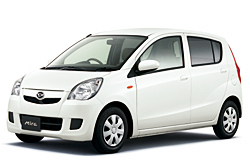
2010 Daihatsu Mira Cocoa

Only for Japanese market

Fully redesigned mini vehicle 7th Generation Mira launched in Japan on December 18, 2006.

This new Mira, the seventh generation of the series, has been completely updated, including the platform and the engine.

Daihatsu Japan has updated their Daihatsu Mira with a new model and  the new facelift seems to sport headlamps that look like they belong to the Myvi family! This is the similar design on the new Perodua Kancil Replacement Model - Perodua Viva

Related :

Daihatsu Leeza
Daihatsu Move
Daihatsu YRV
Daihatsu Copen
Daihatsu Opti
Daihatsu Trevis
Perodua Kancil
Perodua Kelisa
Perodua Viva
 

Body style(s) :

3-door Hatchback
5-door Hatchback

Manufacturer Daihatsu
Also called :

Daihatsu Cuore
Daihatsu Domino
Daihatsu Charade
Handivan
Handi

Production:

1980–present(7th Gen presently)
2000-Present(Pakistan only-4th Gen)
Class : Kei car or City car


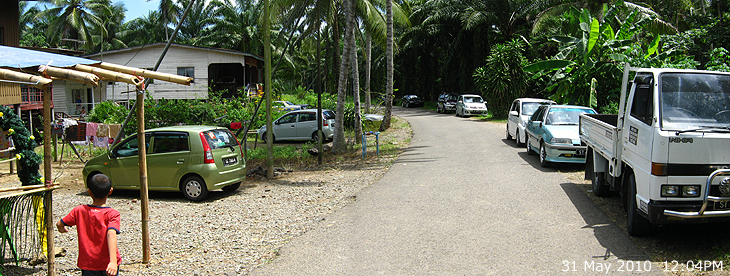
Photo above :  Among the 10 cars parked beside this village road in Tawau, 4 are Viva model.

Perodua’s Viva is the most popular model in Sabah for 2009. Viva's  popularity is attributed to its affordability and  style.

Viva was named ‘The Best Value for Money’ model, in terms of fuel consumption and the cost of maintenance for 2008 & 2009 by Frost & Sullivan.


Elite feature a UV protection coating on its window that is  reject 91% UV rays.

All Elite have seats adjusters for the driver seat & electric adjustable side mirrors. For Elite EZi its side mirrors are also electric retractable with integrated turn signal.
 

External

1) Viva Elite custom front grill,
2) Intergarated foglamps,
3) Custom front bumper &
4) Nice design of engine hood.


Side view

1) Chrome door handle,
2) Side skirt,
3) 14inc 12 spoke alloy rims
4) Side skirts.


Rear view

1) New rear bumper with honeycomb grille design
2) Reverse sensor.


Inside Interior

1) 1-DIN head unit that support MP3&WMA
2) Seat back pockets,
3) An underside tray &
4) Fabric trim on the door panels.


VIVA VIVA ELITE
Viva was launched on 10th May 2007.

Replacing  both the Perodua Kancil and Perodua Kelisa

Viva Elite was launched on July 23, 2009

Aimed at offering the market a variant with a more stylish image compared to the original ViVA. An aesthetic modification in the style of the Myvi SE.
The last unit of the Perodua Kancil rolled off Perodua’s production line 20 July 2009.

Replacement model is Perodua Viva 660 BX manual. RM26,000 OTR Sabah East Malaysia

 
The Perodua Viva was originally launched with 5 colours –

1) Pearl Jade,

2) Tropical Green,

3) Ivory White,

4) Passion Red and

5) Glittering Silver.

6) Sapphire Blue (new color)

7) Ebony Black (new color).


Light automobile with the most fuel efficient car in Malaysia
VIVA
LAUNCHED ON MAY 10, 2007

The word viva means "long life" (in Spanish and Italian and is also used in English) as a salutation or to express praise.

PERODUA VIVA
THE 6TH GENERATION OF DAIHATSU MIRA
(also known as the Cuore, Domino or Charade outside of Japan )

Official Perodua Viva website


More information on the Perodua Viva :

FIRST LOOKS Perodua Viva  by Chips about the launch of new Perodua Viva in 2007

The motortrader website's discussion group.

paultan.org published further details and photos.

Perodua has announced in January 2010 a new rearranged line-up for the its popular ViVA compact hatch. They have already introduced the entry level 660BX to take the place of the retired Kancil at the lower end of Perodua's model spectrum. Now the new 1.0-litre 'Elite' premium versions to top the ViVA range.

There are two trim levels for the Elite Viva :

1) Elite - 5-speed manual and 4-speed automatic transmission
2) Elite EZi - automatic transmission only.

Differentiating the ViVA Elite from the standard ViVAs are :

1) a newly designed front fascia
2) seat fabrics
3) 12-spoke 14" alloy rims
4) an MP3/WMA digital audio unit
5) UV protection glass.


The ViVA Elite EZi gets even more features :

6) side mirror integrated signal lamps
7) rear spoiler
8) power folding side mirror
9) twin airbags
10) Antilock Brakes with Electronic Brake force Distribution and Brake Assist.

The ViVA Elite has the best of both worlds; you can now have a car that is fuel efficient, affordable to maintain and yet delivers all the comforts that are a must in today's urban lifestyle.

In a show of refreshing frankness and honesty, Perodua revealed that they were stung into action by a drop in sales of the 1.0-litre and by the 660 variant not performing as planned. The presentation made to the media also pointed at an Exora-inspired surge that saw Proton overtook Perodua's sales figures in June 2009.

Perodua offering to the Malaysian public the cheapest car and the cheapest automatic car on sale :

1) ViVA 660BX  - the cheapest car
2) ViVA 1.0 - cheapest automatic car


Perodua ViVa awarded 2009 Frost & Sullivan Best Value for Money Award

The Perodua ViVa retained the title for the most fuel efficient car in Malaysia for the second consecutive year, after it received the 2009 Frost & Sullivan Asia Pacific Automotive Award for Best Value for Money Model of the Year 2009 Malaysia

The 2009 Frost & Sullivan Asia Pacific Automotive Award for Best Value for Money Model of the Year (Malaysia) was presented to Perodua Sales Sdn Bhd for its model Perodua Viva.

“The passion and commitment demonstrated by Perodua makes it the deserving recipient of the 2009 Frost & Sullivan Best Value for Money Model of the Year Award for Perodua Viva,......The company has displayed excellence ability to manufacture and produce a vehicle that is best in class for efficiency and affordability for every consumer in Malaysia.” Frost & Sullivan

In 2008, about 68,000 units of the ViVa was sold. See Best selling cars in Malaysia.


1st Generation of
PERODUA VIVA
LAUNCHED ON MAY 10, 2007

for Malaysian Market

6TH GENERATION OF
DAIHATSU MIRA (CUORE)
LAUNCHED ON December 18, 2006

for Japanese Market


The Difference between a Viva and an Atos

A BRIEF COMPARISON BETWEEN VIVA AND ATOS

VIVA ATOS
Perodua Viva 1000cc Premium

Japanese Daihatsu Engine

Inokom Atos GLA

Korean Hyundai Engine

Viva light and tin body Atos got solid body
No air beg. EZI model has air begs No air beg
Interior – Viva better presentable (up to date), but looks fragile.
Better equipment such as electric mirror both adjust and fold, nice dash,
better seat adjustment and better legrom.
Atos boring but solid looking,
Pioneer radio CD, more spaces to put your things etc. The cushion also feels more durable and also double folding seats.
But no RPM meter.

The Difference between a VIVA and a AVANZA

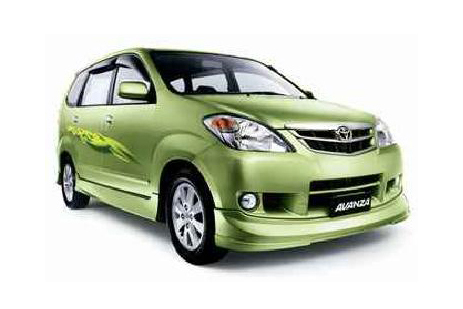
Malaysian's Viva looks like mini Japanese's Avanza

PERODUA
VIVA
850CC Standard (AM8EX) Manual

Mira Avy/Mira VI (2002-2006)

Toyota
AVANZA


Viva Model Price effective January 2010 Tawau Solid Color

Rm

Metallic Color

Rm

Viva 1000cc Standard Elite

Viva 660CC Basic (AM6BX) Manual 27,000 27,500
Viva 660CC Standard (AM6EX) Manual 30,700 31,000
Viva 850CC Standard (AM8EX) Manual 34,700 35,000

Viva 1000cc Standard Elite (AM1GX) Manual

Viva 1000cc Standard Elite (AM1GX) Manual 39,600 40,000
Viva 1000CC Basic (AM1BZ) Auto 38,700 39,000
Viva 1000CC Standard Elite (AM1EZ) Auto 42,700 43,000
Viva 1000CC Premium Elite (AM1ZH) Auto with Airbags & ABS 46,700 47,000

Viva 850cc Standard (AM8EX) Manual


NEW INTEREST RATE EFFECTIVE 1st JUNE 2010

3.85% FOR 9 YRS

3.75% FOR 7 YRS

3.5% FOR 5 YRS


On The Road PRICE
OTR as in Tawau January 2010

  SOLID COLOR METALLIC COLOR
Viva 850CC Standard (AM8EX) Manual Rm 34,700 Rm 35,000

Monthly Installment calculation for Viva 850cc Standard (AM8EX) Manual Metallic
Down Payment Bank Loan 5 Years
3.5%
7 Years
3.65%
9 Years
3.75%
Rm 5,000 Rm 30,000 Rm 600 Rm 450 Rm 360
Total Loan payment + Interest to bank : Rm 36,000 Rm 37,800 Rm 38,880
Total Interest paid to bank : Rm 6,000 Rm 7,800 Rm 8,880


Viva 1000cc Standard Elite (AM1GX) Manual


On The Road PRICE
OTR as in Tawau January 2010

  SOLID COLOR METALLIC COLOR
Viva 1000cc Standard Elite (AM1GX) Manual Rm 39,600 Rm 40,000

Monthly Installment calculation for Viva 1000cc Standard Elite (AM1GX) Manual Metallic
Down Payment Bank Loan 5 Years
3.5%
7 Years
3.65%
9 Years
3.75%
Rm 4,000.00 Rm 36,000.00 Rm 705 Rm 538 Rm 446
Total Loan payment + Interest to bank : Rm 42,300 Rm 45, 192 Rm 48, 158
Total Interest paid to bank : Rm 6,300 Rm 9,192 Rm 12,158

http://keretavivamsia.blogspot.com/2010/01/perodua-smart-assist.html

Car accident reports that involved Viva
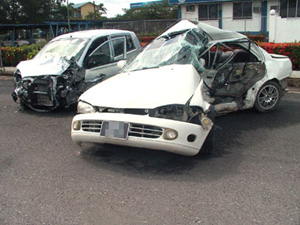
March 17, 2010, Wednesday
SARIKEI: A 21-year-old man was killed instantly when his Proton Wira collided with a Perodua Viva along the Nyelong bypass around 9pm on Monday.....the fatal accident took place after Ngu apparently lost control of his car and entered the opposite lane..... the oncoming Viva had rammed into Ngu’s car when it crossed into the wrong lane.
The impact of the crash badly damaged both cars, with the Wira a total wreck, while the front portion of the Viva was badly damaged.

BorneoPost online
http://www.theborneopost.com/?p=17290


 Buying a car in Tawau  Saturday, September 13, 2014 09:27:18 AM

statistics in vBulletin