Introduction
Tawau is home to a rich and dynamic mix of ethnic communities whose cultures have developed over centuries. Shaped by geography, migration, trade, and shared experiences, the people of Tawau form a multicultural society where traditions continue to thrive alongside modern life.
From coastal fishing villages to inland farming communities, cultural identity in Tawau is closely linked to the environment. Language, music, festivals, and livelihoods reflect both ancestral heritage and adaptation to changing times.

The Cultural Landscape of Tawau
The cultural landscape of Tawau is shaped by its natural surroundings and historical connections. Coastal areas encouraged maritime lifestyles, trade, and fishing-based cultures, while inland regions supported farming, forest use, and river-based settlements.
Over time, interaction between indigenous groups and migrant communities created a shared cultural space. Markets, towns, and transport routes became meeting points where languages mixed, customs blended, and new cultural expressions emerged.
Rather than existing in isolation, Tawau's cultures developed through cooperation, exchange, and coexistence, forming the multicultural identity seen today.
Geography & Settlement
Settlement patterns in Tawau are closely tied to landforms such as coastal plains, river valleys, and inland highlands. Fertile soils, volcanic terrain, and access to natural resources influenced where communities established villages and farms.
Explore how Tawau's land and geology shape human settlement →

Historical Migration & Settlement
Tawau's population grew through several waves of settlement and migration. Indigenous communities were among the earliest inhabitants, establishing social systems closely connected to land and sea.
Later, maritime traders and seafaring groups arrived through regional trade networks, followed by migrants during the colonial and early modern periods. These movements introduced new skills, languages, and economic activities.

Key Settlement Periods
- Early Indigenous Period: Establishment of land- and river-based communities
- Maritime Trade Era: Coastal settlements linked to regional trade
- Colonial & Commercial Expansion: Growth of towns and trade centers
- Modern Era: Internal migration and urban development

Each period added layers to Tawau's cultural identity, resulting in the diverse society present today.
Ethnic Groups
Tawau is home to numerous indigenous and migrant communities. Each group contributes unique traditions, belief systems, and social practices that enrich the region's cultural fabric.
Traditional knowledge, customary laws, clothing styles, and community structures reflect deep historical roots while continuing to evolve in modern society.

Languages & Dialects

Linguistic diversity is a defining feature of Tawau. Many residents grow up multilingual, using different languages at home, in school, and in public life. Language serves not only as a communication tool but also as a carrier of cultural values, oral history, and identity.
Did You Know?
Many people in Tawau comfortably speak three or more languages in daily life, reflecting the district's remarkable cultural and linguistic diversity.
Daily Life & Social Values
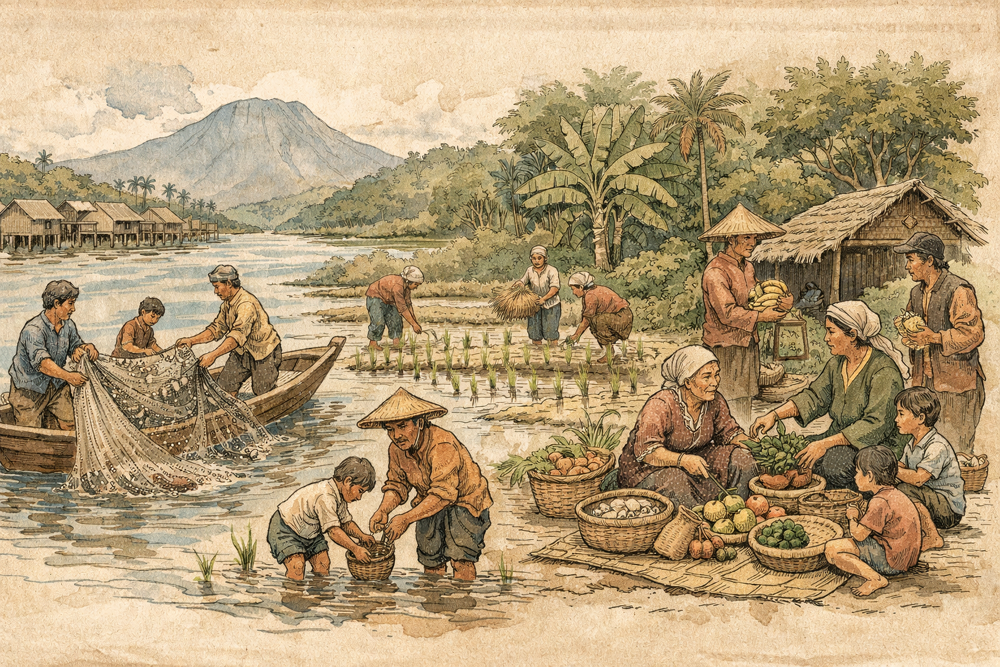
Despite cultural differences, Tawau's communities share common social values such as cooperation, respect for elders, hospitality, and community responsibility.
Daily life often centers around family, education, religious practice, and shared public spaces such as markets and community halls. These everyday interactions strengthen social harmony and mutual understanding.
Rivers: Lifelines of Culture
Rivers play a vital role in daily life, serving as sources of water, food, transport, and cultural connection. Many traditional practices developed along river systems that linked inland communities to coastal areas.
Traditions & Festivals
Cultural traditions in Tawau are expressed through festivals, ceremonies, and rituals that mark important events such as harvests, religious celebrations, and life milestones.

Arts, Music & Crafts

Artistic expression in Tawau includes music, dance, weaving, carving, and other traditional crafts. These forms often carry symbolic meanings and serve as tools for storytelling and cultural preservation.
Traditional Livelihoods
Traditional livelihoods such as fishing, farming, trading, and small-scale crafts connect people directly to Tawau's natural environment.
These economic activities reflect deep ecological knowledge and sustainable practices passed down through generations.

Learn more about Tawau's livelihoods →
Nature-Based Livelihoods
Traditional livelihoods developed alongside Tawau's forests, rivers, and seas. Sustainable practices emerged from close observation of wildlife behavior and seasonal ecological changes.
Explore Tawau's wildlife and the ecosystems people depend on →
Culture in a Modern Tawau

Modern education, technology, and urban development continue to influence cultural expression in Tawau. While lifestyles change, many communities actively preserve traditions through education, festivals, and cultural documentation.
This balance between tradition and modernity defines Tawau as a living cultural landscape rather than a static historical record.
Climate & Culture
Seasonal rainfall, monsoon patterns, and tropical climate conditions influence farming cycles, fishing activities, housing design, and cultural calendars.
Discover how Tawau's climate shapes culture and livelihoods →
People, Land, and Nature: A Connected System

In Tawau, people, land, water, climate, and wildlife form an interconnected system. Cultural traditions, settlement patterns, and livelihoods cannot be understood in isolation from the natural environment.