Introduction | 简介
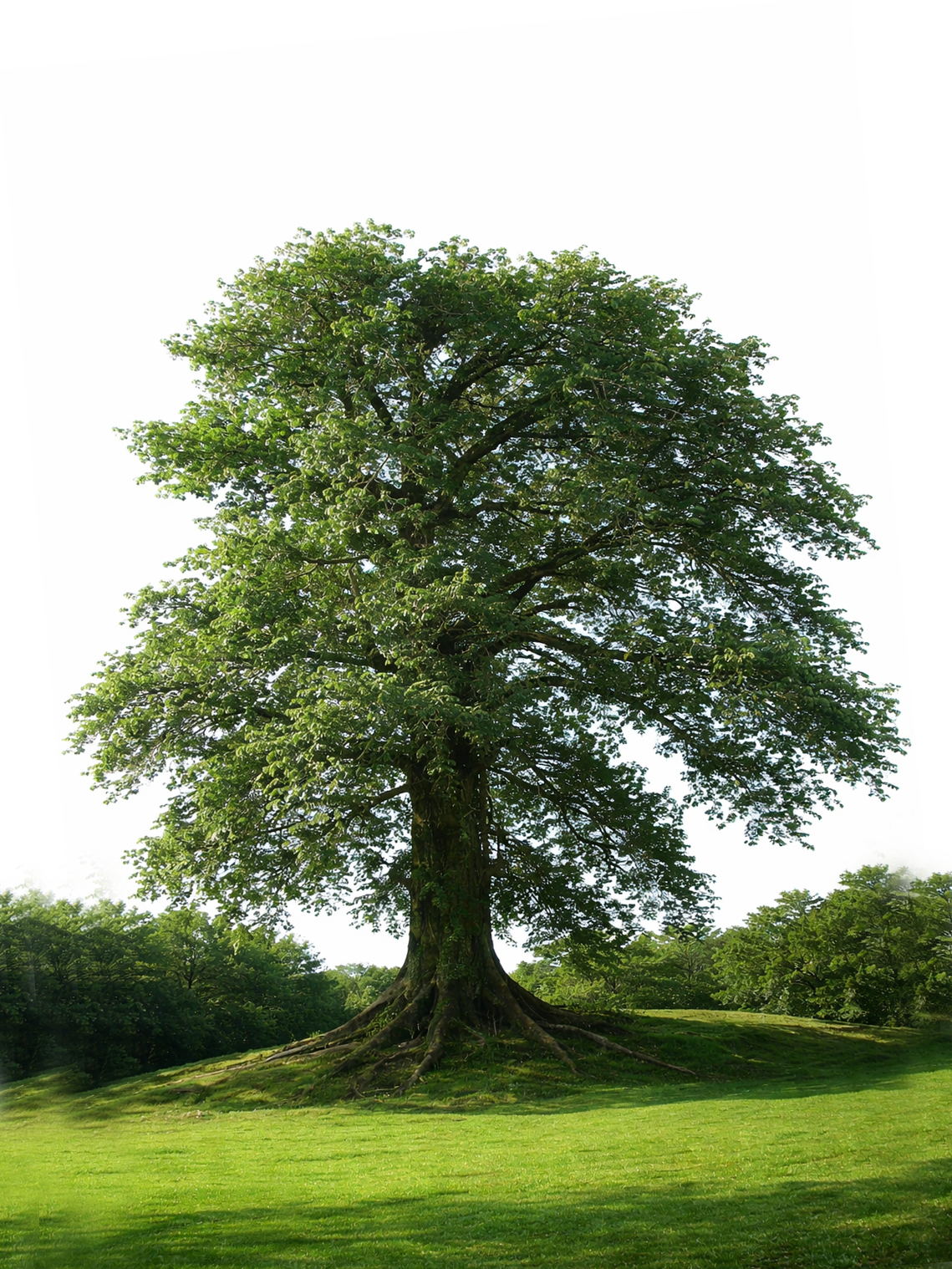
A mature Kapok Tree in Sri Aman, Sarawak (2008) | 砂拉越诗巫安成熟吉贝木棉 (2008)
Ceiba pentandra, commonly known as the kapok tree or silk-cotton tree, is a majestic tropical giant renowned for its impressive height, distinctive buttressed trunk, and valuable seed fibers. This deciduous tree plays significant ecological, economic, and cultural roles across tropical regions worldwide.
Ceiba pentandra,俗称吉贝木棉或丝棉树,是一种雄伟的热带巨树,以其惊人的高度、独特的板状根和有价值的种子纤维而闻名。这种落叶树在全球热带地区的生态、经济和文化中扮演着重要角色。
Taxonomic Classification | 分类学
Modern taxonomy, through molecular phylogenetics, has revealed genetic relationships that sometimes differ from traditional morphological classifications. Ceiba pentandra belongs to the Malvaceae family, showing surprising kinship with smaller plants like hibiscus.
现代分类学通过分子系统发育学揭示了有时与传统形态分类不同的遗传关系。Ceiba pentandra属于锦葵科,显示出与芙蓉等较小植物的惊人亲缘关系。
Classification Details | 分类详情
- Family: Malvaceae (Mallow family) | 科: 锦葵科
- Subfamily: Bombacoideae | 亚科: 木棉亚科
- Genus: Ceiba | 属: 吉贝属
- Species: Ceiba pentandra (L.) Gaertn. | 种: 吉贝木棉
Related Plants | 相关植物
Hibiscus rosa-sinensis (Chinese hibiscus) also belongs to the Malvaceae family but in the Malvoideae subfamily. Despite dramatic differences in size and form, both hibiscus and kapok share microscopic traits such as mucilage production and stamen tube structures, revealed through DNA analysis.
Hibiscus rosa-sinensis(朱槿)同样属于锦葵科,但属于锦葵亚科。尽管在大小和形态上存在巨大差异,但朱槿和吉贝木棉共享微观特征,如粘液产生和雄蕊管结构,这通过DNA分析得以揭示。
Botanical Description | 植物学特征

Twigs with dehiscent fruits showing kapok fibers | 带有开裂果实显示木棉纤维的枝条

Green and ripe kapok pods | 绿色和成熟的木棉荚果
- Growth Form: Deciduous tropical tree, often thorny when young, reaching heights of 60-70 meters (up to 230 feet).
- Trunk: Stout and buttressed, providing stability in rainforest soils. Can reach diameters of 3 meters.
- Leaves: Palmately compound with 5-8 leaflets, clustered at twig ends, 15-20 cm long.
- Flowers: Small, cream to dirty white, with a faint milky odor, pollinated by bats.
- Fruits: Oblong capsules (pods), 15-30 cm long, green when young, turning brown to blackish when ripe.
- Seeds: Numerous brown seeds, each surrounded by silky fibers known as kapok.
- 生长形态: 落叶热带乔木,幼时常有刺,高达60-70米(最高230英尺)。
- 树干: 粗壮且具板状根,为热带雨林土壤提供稳定性。直径可达3米。
- 叶子: 掌状复叶,具5-8小时,簇生于小枝末端,长15-20厘米。
- 花朵: 小,奶油色至脏白色,有淡淡奶味,由蝙蝠授粉。
- 果实: 椭圆形蒴果(荚果),长15-30厘米,幼时绿色,成熟时变为棕色至黑褐色。
- 种子: 众多棕色种子,每颗被丝状纤维(木棉)包围。
Distribution and Habitat | 分布与生境
- Native Range: Tropical America (Mexico to Brazil and Peru).
- Cultivation: Widely grown in tropical Asia, Africa, and Malaysia for centuries.
- Habitat: Thrives in lowland tropical forests, adapted to warm, humid climates with annual rainfall of 1500-2500 mm.
- Human Planting: Commonly planted in villages, towns, and colonial-era settlements for shade and ornamental value.
- 原产地: 热带美洲(墨西哥至巴西和秘鲁)。
- 栽培范围: 几个世纪以来在热带亚洲、非洲和马来西亚广泛种植。
- 生境: 在低地热带森林中茁壮生长,适应温暖湿润气候,年降雨量1500-2500毫米。
- 人工种植: 常见于村庄、城镇和殖民时期定居点,用于遮荫和观赏价值。
Historical and Cultural Significance | 历史与文化意义
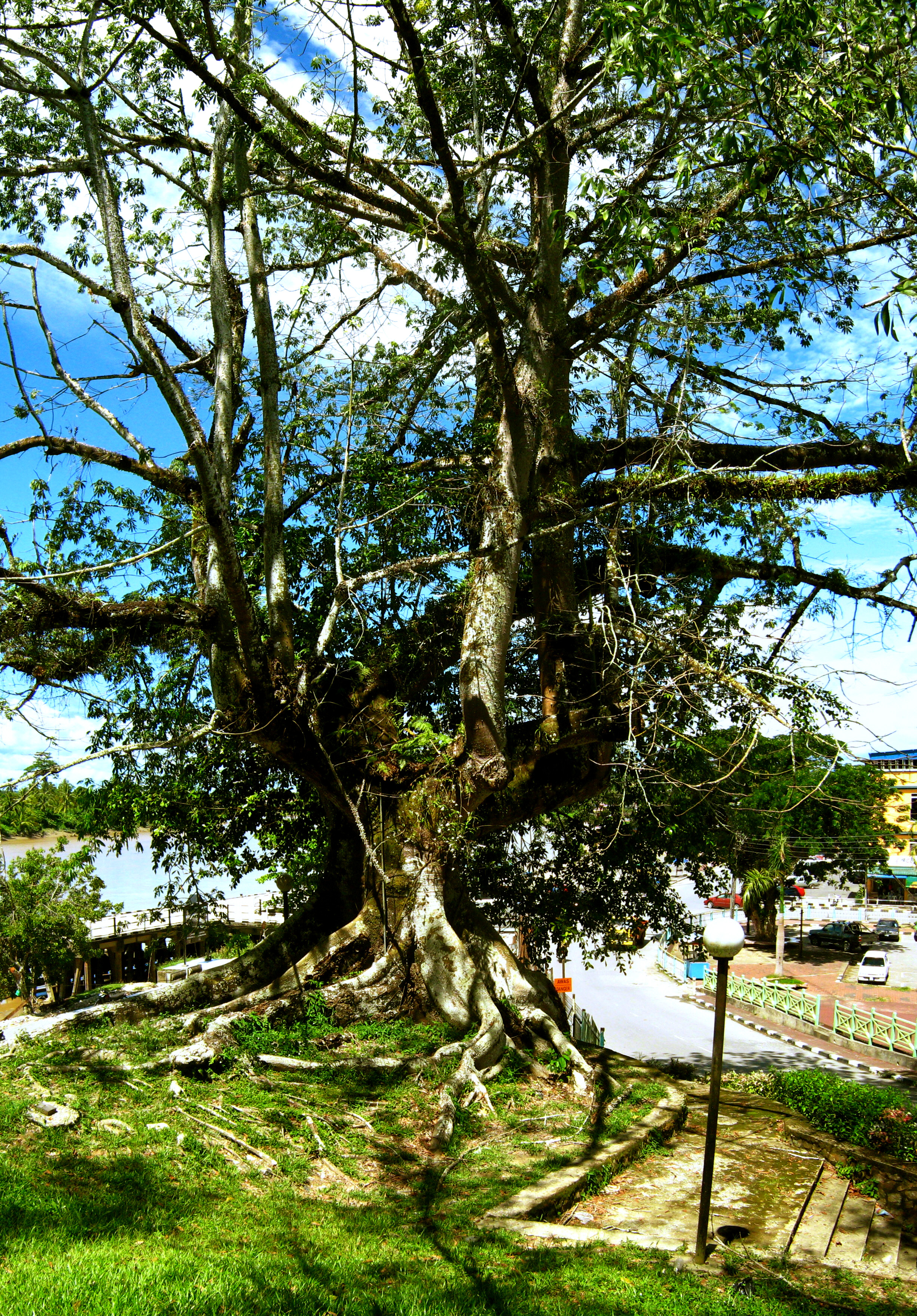
Kapok tree at Fort Alice, Sri Aman Town, Sarawak | 砂拉越诗巫安堡艾丽丝古堡的吉贝木棉
During the British colonial period (particularly in the 1950s), kapok trees were systematically planted in Malaysian towns, schools, and administrative centers. These fast-growing shade trees provided cooling shade, marked public spaces, and created a sense of permanence within planned settlements.
Example: The kapok tree at Fort Alice, Sri Aman Town, Sarawak, became a landmark and symbol of permanence. Such trees serve as living witnesses of history, marking public spaces and community memory across generations.
In pre-Columbian Mesoamerican cultures, the ceiba tree was considered sacred, representing the "world tree" or axis mundi connecting the underworld, earthly realm, and heavens.
在英国殖民时期(特别是1950年代),吉贝木棉被系统性地种植在马来西亚的城镇、学校和行政中心。这些快速生长的遮荫树提供了凉爽的树荫,界定了公共空间,并在规划定居点内创造了一种永恒感。
示例:砂拉越诗巫安堡艾丽丝古堡的吉贝木棉成为一个地标和永恒的象征。这些树木作为历史的活见证,跨越世代标记着公共空间和社区记忆。
在前哥伦布时期的中美洲文化中,吉贝树被视为神圣的,代表着连接地下世界、人间和天堂的"世界树"或宇宙轴心。
Kapok Fiber and Uses | 木棉纤维与用途
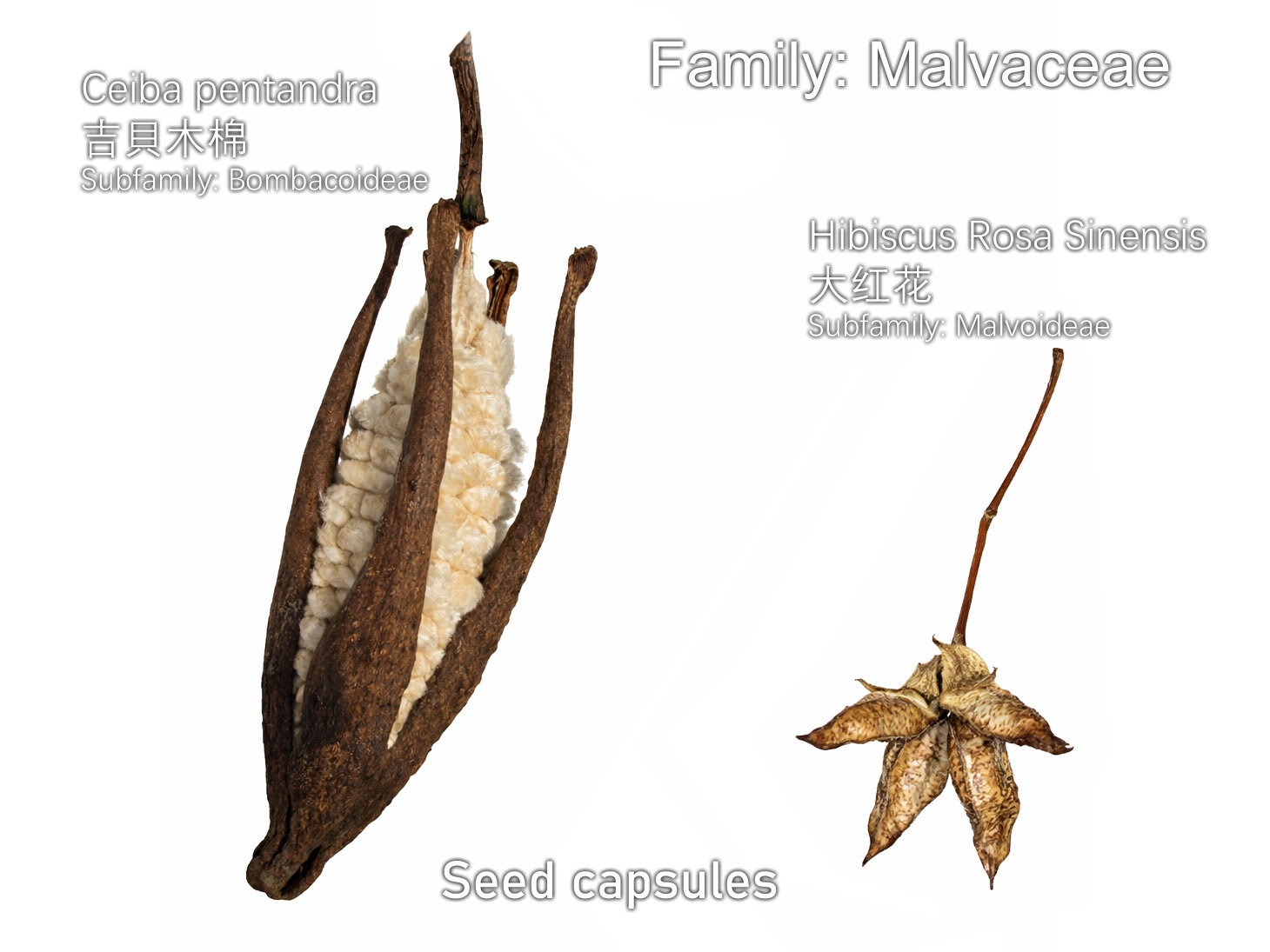
Kapok seed capsule showing fibrous interior | 显示纤维内部的木棉种子荚果
Kapod Pod Description | 木棉荚果描述
- Shape & Size: Oblong and tapered at both ends, typically 15-30 cm long, hanging in clusters.
- Color: Green when immature, turning brown or blackish as it ripens.
- Texture: Outer shell (exocarp) is firm and slightly woody, sometimes rough.
- Dehiscence: Splits open naturally along seams when mature.
- Interior: Mass of soft, silky fibers (kapok), pale cream to yellowish-white.
- Seeds: Numerous small brown seeds embedded within the kapok floss.
Function and Use | 功能与用途
- Seed Dispersal: Fluffy kapok fibers help disperse seeds by wind, acting like natural parachutes.
- Traditional Uses: Harvested for stuffing pillows, mattresses, cushions, and life jackets due to buoyancy and water resistance.
- Modern Applications: Used in sustainable thermal insulation, soundproofing materials, and as absorbent for oil spills.
- Ecological Importance: Provides nesting material for birds and small mammals in its natural habitat.
木棉荚果描述 | Kapod Pod Description
- 形状与大小: 椭圆形,两端渐尖,通常长15-30厘米,成簇悬挂。
- 颜色: 未成熟时绿色,成熟时变为棕色或黑褐色。
- 质地: 外壳(外果皮)坚固且略带木质,有时粗糙。
- 开裂: 成熟时沿接缝自然裂开。
- 内部: 大量柔软丝状纤维(木棉),淡奶油色至黄白色。
- 种子: 众多嵌入木棉绒中的棕色小种子。
功能与用途 | Function and Use
- 种子传播: 蓬松的木棉纤维通过风帮助传播种子,如同天然降落伞。
- 传统用途: 因其浮力和防水性而收获用于填充枕头、床垫、垫子和救生衣。
- 现代应用: 用于可持续隔热、隔音材料,以及作为油污吸收剂。
- 生态重要性: 在其自然栖息地为鸟类和小型哺乳动物提供筑巢材料。
Comparison with Hibiscus | 与朱槿的比较
Despite dramatic differences in appearance, Ceiba pentandra and Hibiscus rosa-sinensis share a common genetic ancestry within the Malvaceae family. This classification reflects modern phylogenetic understanding based on DNA analysis rather than just morphological similarities.
尽管外观差异巨大,Ceiba pentandra和Hibiscus rosa-sinensis在锦葵科内共享共同的遗传祖先。这种分类反映了基于DNA分析而非仅形态相似性的现代系统发育理解。
Evolutionary Relationship | 进化关系
Ceiba (kapok trees) and Hibiscus (mallows) are classified under the same family because molecular phylogenetics has revealed they share a common ancestor. They represent different evolutionary paths within Malvaceae, adapting to distinct ecological niches while retaining fundamental genetic traits like stamen tube structures and mucilage production.
This classification is part of the updated Malvaceae sensu lato (in the wider sense), which now includes plants previously classified in distinct families like Bombacaceae (where Ceiba was placed) and Sterculiaceae.
进化关系 | Evolutionary Relationship
吉贝(木棉树)和朱槿(锦葵)被归为同一科是因为分子系统发育学揭示了它们共享一个共同祖先。它们代表了锦葵科内不同的进化路径,适应不同的生态位,同时保留了基本的遗传特征,如雄蕊管结构和粘液产生。
这种分类是更新后的广义锦葵科的一部分,现在包括了以前被归入不同科的植物,如木棉科(吉贝所属)和梧桐科。
Did You Know? | 你知道吗?
- Kapok fibers are 8 times lighter than cotton by volume and can support up to 30 times their weight in water, making them historically valuable for life preservers.
- A single kapok tree can produce 15-20 kg of kapok fiber annually.
- The buttressed roots of mature kapok trees can extend up to 15 meters from the trunk, creating microhabitats for various organisms.
- In traditional medicine, various parts of the kapok tree are used to treat fever, diarrhea, and respiratory conditions.
- The wood is lightweight and resistant to termites, used for canoes, carving, and plywood.
- 木棉纤维体积比棉花轻8倍,在水中能支撑达其重量30倍的重量,这使其历史上对救生设备很有价值。
- 一棵吉贝木棉树每年可产15-20公斤木棉纤维。
- 成熟吉贝木棉树的板状根可从树干延伸达15米,为各种生物创造微生境。
- 在传统医学中,吉贝木棉树的各部分用于治疗发热、腹泻和呼吸道疾病。
- 木材轻便且抗白蚁,用于独木舟、雕刻和胶合板。
Conservation Status | 保护状况
Ceiba pentandra is classified as Least Concern on the IUCN Red List due to its wide distribution and cultivation. However, natural populations in some regions face threats from habitat loss and overharvesting. Cultivated trees in urban areas serve as important genetic reservoirs and cultural landmarks worthy of preservation.
In Borneo, kapok trees planted during the colonial era are increasingly recognized as part of cultural heritage, with efforts to document and preserve notable specimens.
由于分布广泛且被广泛栽培,Ceiba pentandra在IUCN红色名录中被列为无危。然而,一些地区的自然种群面临栖息地丧失和过度采伐的威胁。城市地区的栽培树作为重要的遗传资源库和文化地标,值得保护。
在婆罗洲,殖民时期种植的木棉树日益被认为是文化遗产的一部分,人们正在努力记录和保护显著的标本。