Draft chapter — eTawau will expand this story over time. Corrections, memories and photos are welcome: please tell eTawau (eTawau@yahoo.com).初稿篇章──eTawau會逐步擴寫這個故事。歡迎指正、分享回憶和照片:請告訴eTawau(eTawau@yahoo.com)。Bab draf — eTawau akan mengembangkan kisah ini dari semasa ke semasa. Pembetulan, kenangan dan foto dialu-alukan: sila maklumkan eTawau (eTawau@yahoo.com).
Chapter 4 · Coal at Silimpopon
第4章 · 實林蓬蓬的煤
Bab 4 · Arang Batu di Silimpopon
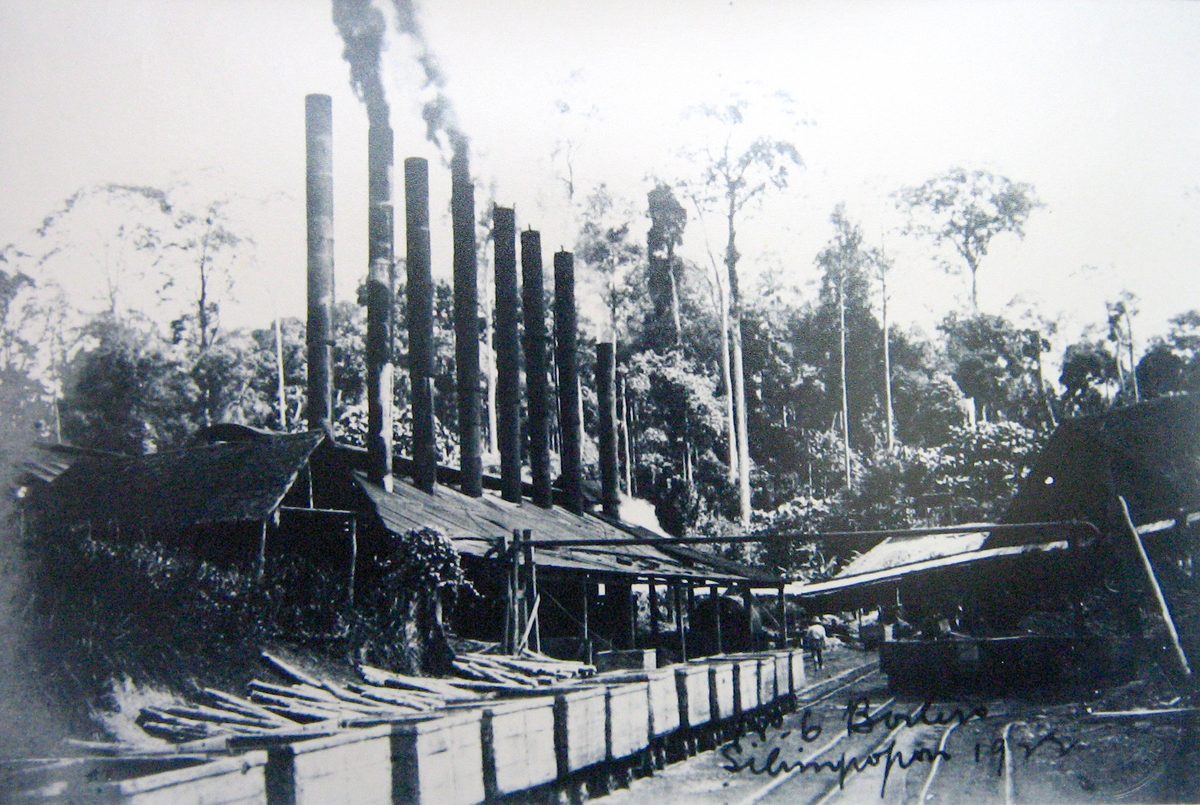
Far up the rivers west of Tawau, in what is now the Kalabakan district, the Cowie Harbour Coal Company opened a mine at Silimpopon in 1905. The next year it exported its first 25 tons of coal. The company built a whole camp in the forest, with boilers, houses and a Chinese school — the only Chinese school in the state that the Chartered Company paid to support. Most of its pupils were grown men.
在斗湖以西河流的上游,今天的加拉巴干縣境內,可威灣煤礦公司在1905年開辦了實林蓬蓬煤礦。第二年,它輸出了第一批25噸煤。公司在森林中建起整個營地,有鍋爐、宿舍,還有一所華文學校──全州唯一受渣打公司津貼的華校。學生大多是成年男子。
Jauh di hulu sungai di barat Tawau, di kawasan yang kini daerah Kalabakan, Cowie Harbour Coal Company membuka lombong di Silimpopon pada 1905. Tahun berikutnya ia mengeksport 25 tan arang batu pertama. Syarikat membina seluruh kem di dalam hutan, dengan dandang, rumah dan sekolah Cina — satu-satunya sekolah Cina di negeri ini yang dibantu Syarikat Berpiagam. Kebanyakan muridnya lelaki dewasa.
The miners were Chinese. Many came on contracts from southern China; some had worked as labourers in France during the First World War. At the peak there were 1,200 miners, and in 1922 the mine produced 87,543 tons. Wikipedia says more than 3,000 people lived around the mine at its peak.
礦工都是華人。許多人是從華南簽約而來;也有人在第一次世界大戰時曾在法國當勞工。高峰期有1,200名礦工,1922年產煤87,543噸。維基百科說,高峰時礦區周圍住了3,000多人。
Pelombong ialah orang Cina. Ramai datang dengan kontrak dari selatan China; ada yang pernah menjadi buruh di Perancis semasa Perang Dunia Pertama. Pada puncaknya terdapat 1,200 pelombong, dan pada 1922 lombong itu mengeluarkan 87,543 tan. Wikipedia menyatakan lebih 3,000 orang tinggal di sekitar lombong pada puncaknya.
Camp life was hard. From 21 February to 2 March 1921, Hakka and Cantonese miners fought each other; about 200 rioted at first, then about 600. Twelve people died, five were wounded by gunfire and some 300 were detained before the police commander Reginald Rutter restored order. Ten years later the world price of coal fell, and the mine closed — in 1931 according to the centenary history, in 1932 according to eTawau’s 1930s page. The forest grew back over the camp.
營地生活很艱苦。1921年2月21日至3月2日,客家礦工和廣府礦工互相械鬥;起初約200人參與,後來增至約600人。12人死亡,5人中槍受傷,約300人被拘留,直到警察指揮官Reginald Rutter恢復秩序。十年後世界煤價下跌,煤礦關閉──《斗湖簡史》說是1931年,eTawau的1930年代頁面說是1932年。森林又重新覆蓋了營地。
Kehidupan kem sukar. Dari 21 Februari hingga 2 Mac 1921, pelombong Hakka dan Kantonis bergaduh sesama sendiri; kira-kira 200 merusuh pada mulanya, kemudian kira-kira 600. Dua belas orang maut, lima cedera ditembak dan kira-kira 300 ditahan sebelum komander polis Reginald Rutter memulihkan keadaan. Sepuluh tahun kemudian harga arang batu dunia jatuh, dan lombong ditutup — pada 1931 menurut sejarah ulang tahun ke-100, pada 1932 menurut halaman 1930-an eTawau. Hutan tumbuh semula di atas kem itu.
Sources: eTawau, “斗湖簡史” (History 1898), “History of Tawau 1922” and “1930–1939”; Wikipedia, “Silimpopon Riots” (citing Straits newspapers of March 1921).
資料來源:eTawau, “斗湖簡史” (History 1898), “History of Tawau 1922” and “1930–1939”; Wikipedia, “Silimpopon Riots” (citing Straits newspapers of March 1921).
Sumber: eTawau, “斗湖簡史” (History 1898), “History of Tawau 1922” and “1930–1939”; Wikipedia, “Silimpopon Riots” (citing Straits newspapers of March 1921).