
Updated on 9-9-2012 SUN 2:19PM
| Japanese Cemetery & Monument in Kuching | Japanese in Sabah |
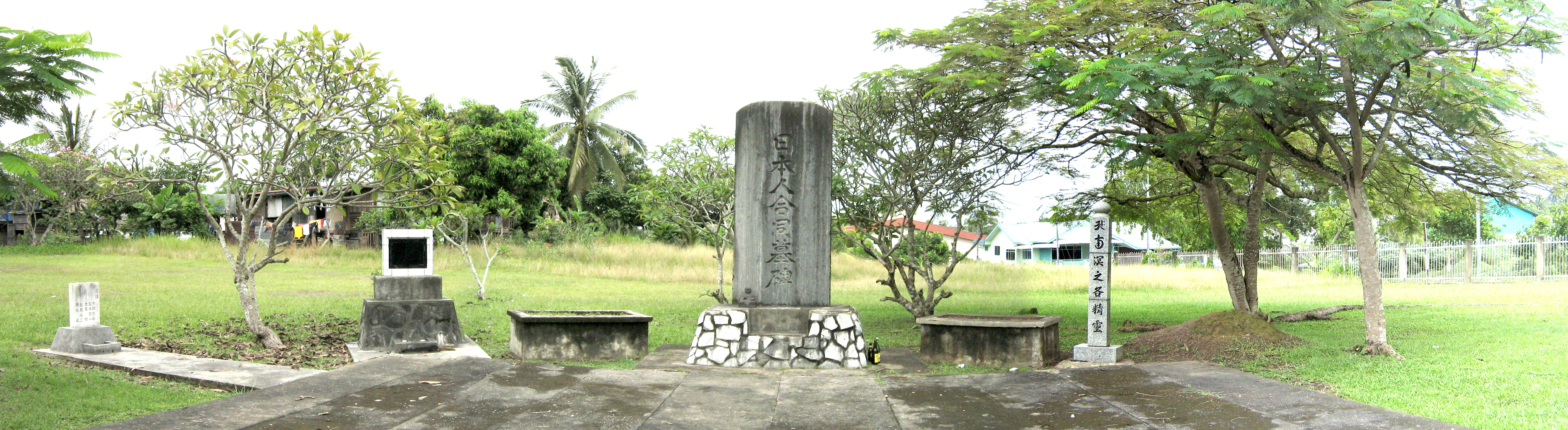

タ ワ ウ 日 本 人 墓 地
敷地面積 約8000平方メートル
Source :
http://borneo.web.infoseek.co.jp/tawau.htm
Japanese war cemetery and monument in Tawau


タワウ(タワオ)日本人墓地は、1918(大正7)年12月14日に墓地が使用許可された。
その後、1931(昭和6)年2月11日タワウ日本人会発足と同時に日本人会に管理が移管
された。当初、木製の個人墓の集合であったが、腐食が進み判読できないものが多数
あり、1976年8月に合同墓碑建立計画が提案された。1977年2月、建立費用は日本
政府が負担、墓碑は日産農林工業株式会社が寄贈した。1977年から墓地整備
がなされ、1978年6月敷地を巡る柵が完成して、現在に至っている。
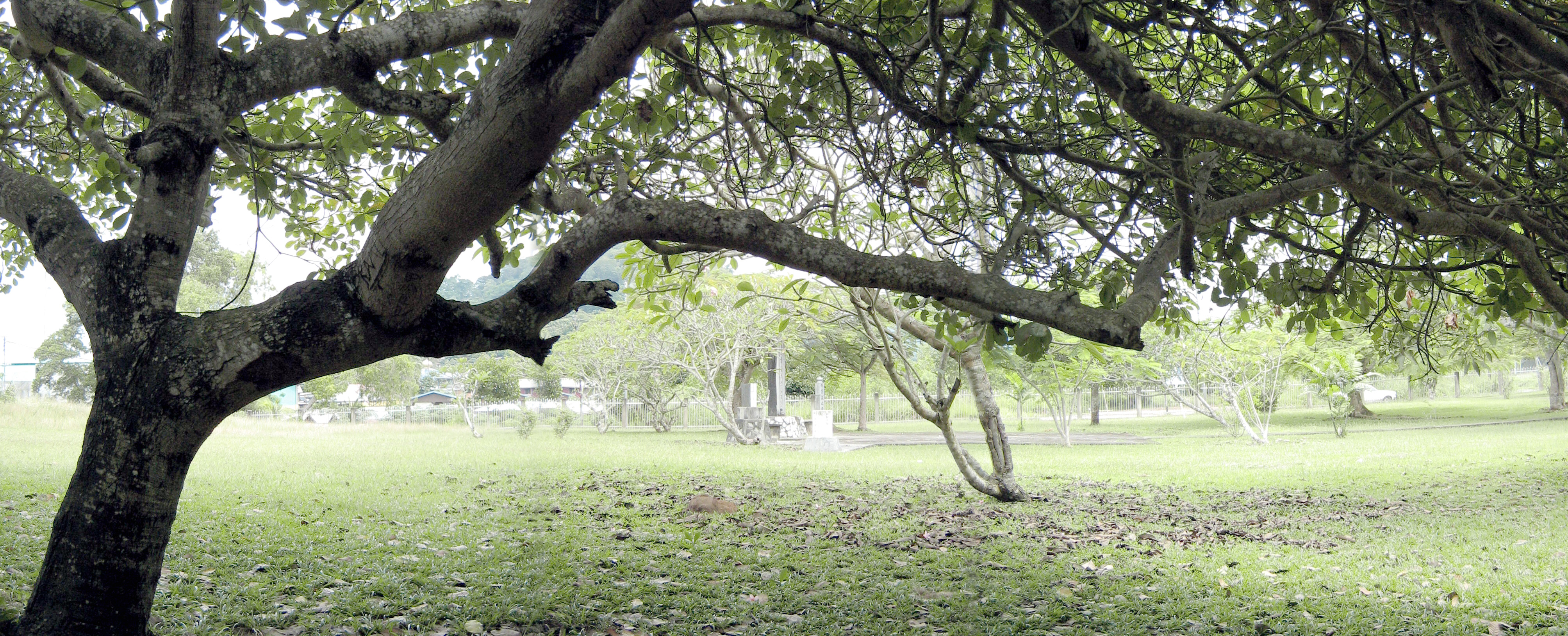
|
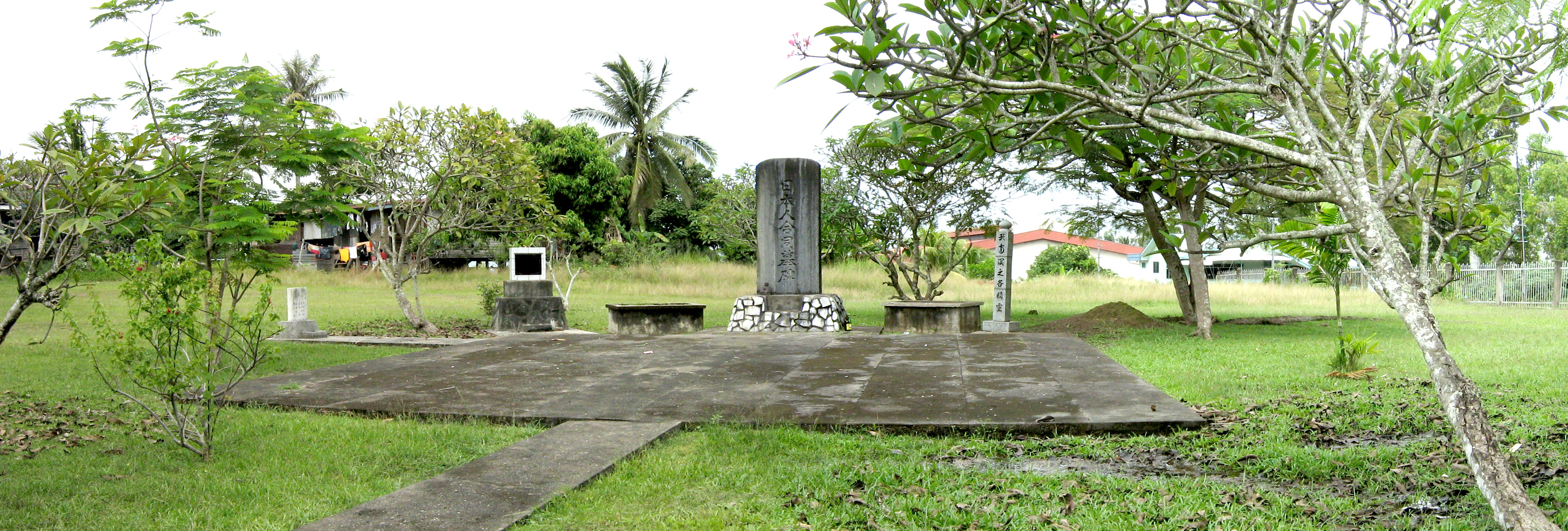
タワウ日本人墓地
|
後に8名追加されたが、判読できない者5名、判読できる碑銘は以下の3名である。
中村直吉、折田志郎、大友友吉
 |
このページは、北ボルネオ会(旧タワオ会)発行の『ボルネオ』第3号 上東輝夫『東マレーシア概説』を参考に作成した。 |
The Japanese cemetery in Tawau :


| Many it
was the Chinese who first came to Tawau and developed the place
economically to prosperous. But it was the Japanese who first came here. The Japanese were in the fishing business, canning and exported the manufactured goods back to Japan. There were some roads like Kuhara and Kubota named after the Japanese. After World War II, the Japanese lost to the Allies. The have to uproot from the colony and return to their own country. Dozens of successful Japanese business men had to forsake whatever they had painstakingly build in Tawau and return to Japan. The Japanese cemetery was under the care of the Japanese Consulate in Kota Kinabalu. The cemetery was well managed. There is also a Japanese Cemetery in Sandakan Most of those buried in the Tawau cemetery were the Japanese passed away before the second world war.
Original Reference Source : http://www.questia.com
Japanese have played a major part in the economic development of Tawau since the 1898. Japan was a source of skilled and unskilled workers, and also prostitutes, in the 1890s, while the early 1900s brought growing numbers of peasant-agriculturalists, shopkeepers and small businessmen. Restrictive immigration measures introduced in the United States, Canada and the Philippines after 1900 forced the Japanese government to give serious consideration to Sabah as a potential destination for Japanese settlers. Japan sent its Consul in Batavia, Nariaki Someya, to Sandakan in 1910 to carry out a feasibility study on this issue. As a result, the number of Japanese in Sabah began to increase after 1910. By the 1930s, both individual Japanese
immigrants and Japanese firms were already active in economic
activities, with two conglomerate giants, Kuhara (Nissan) and Kubota
(Mitsubishi), as the major investors.' There is a study of the Japanese economic role in Sabah by Yukata Shimomoto on "Japan and the Chartered Company,- a short account. by Shimomoto on "Japanese Immigrants in Tawau, British North Borneo", Japanese immigrants to Tawau contributed to the following fields: agriculture, particularly the growing of rubber and manila hemp; tuna and skipjack fishing; and the canning of tuna. There was a secret immigration scheme
by successive Japanese governments operated from 1915 to the 1930s. Today there are about 20 Japanese working in Tawau in the timber industry. Japanese investment was the largest
investment in Tawau before the second world war. Many
Japanese and Taiwanese (recruded by Japanese) came to Tawau to develop
rubber and plantations. Tawau was important to the Japanese during World
War Two (1941-1945) for its timber and minerals from the surrounding
forest and hills. Sabah was under the British Administration at that time. Japanese companies in Tawau involved in supporting the Japanese army to occupy Sabah during the second world war. After the war, British asked the Japanese to leave Tawau and their business properties were con-festicate and auctioned to the public. Chinese businessmen acquired over the Japanese business properties through auction from the British. They carry on and redeveloped the previous Japanese properties with success at the same time keep a very low profile and quiet about the Japanese every present in Sabah. Thus very little is know about the Japanese history in Tawau today except the old Chinese in Tawau. Many of the very old remaining coconuts trees you see in Tawau were planted by the Japanese 70 years ago. There are several Japanese names in Tawau Today the following 4 roads remain the old original name by the Japanese : Jalan Kuhara , with a similar name. 1) Jalan Kuhara, with a school named SMK Kuhara 2) Jalan Kubota (久保田-
甲波打軍營及甲波打路, 久保田椰园)
a military camp named Kem Kubota and a golf
course Kubota Goft Course 3) Jalan KuKusan and
4) Jalan DR. Yamamoto (山本醫生路)
5) Jalan Nisan Norin
四號麻房 was original started
by a Japanese Company. Until today the Hakka Chinese planters still
call the area as 四號麻房
If you are keen enough to ask the
old Chinese about stories on Japanese War, many of the old folks would
tell you about a 'Treasure Cave' of the Japanese army about 1 kilometer
from the White Bridge toward Merotai.
Japanese Today
There are about 20 Japanese living in Tawau today. Most
of them in the timber business.
Tawau Japan Club
Tel: 089-750330 FAX: 089-752612
Chairman of TJC Takao Matsuki |
|
April 03, 2013 01:35:58 PM |
|

