eTawau > Spiders of Borneo > Web-building spiders > Theridiidae > Famakytta > Famakytta flavescens
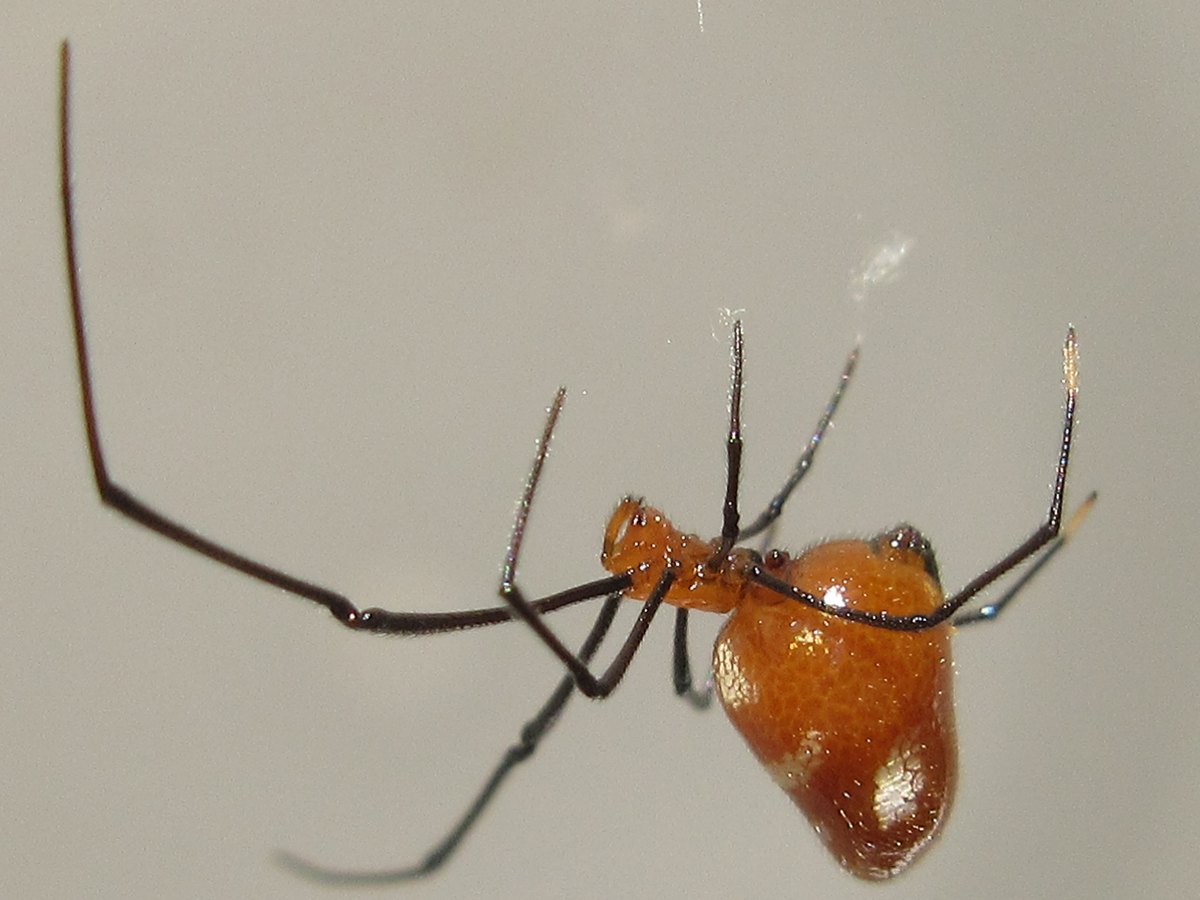
A small orange dewdrop spider with silver patches, living in the webs of bigger spiders and stealing their food. Formerly Argyrodes flavescens.
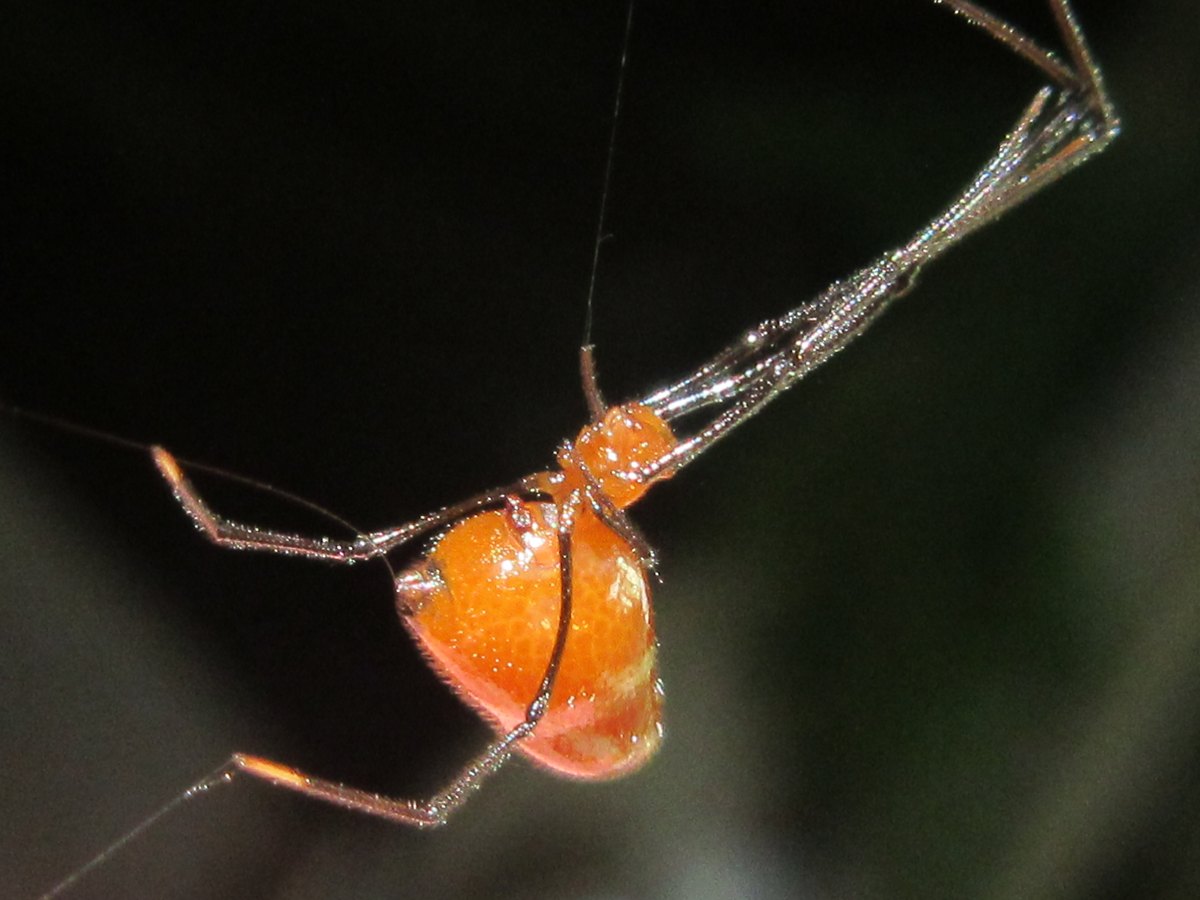
The colour changes with the light. The same 2026 female looked bright orange in daylight and dark red-brown under indoor light (Record 4). Famakytta miniacea can also have white side spots and a dark spot at the tip, so a photograph alone may not separate the two. The name of the 2026 female comes from iNaturalist (observation 410456743): genus Famakytta, with F. flavescens as the top species suggestion. The names of the 2009 spiders are the photographer's own.
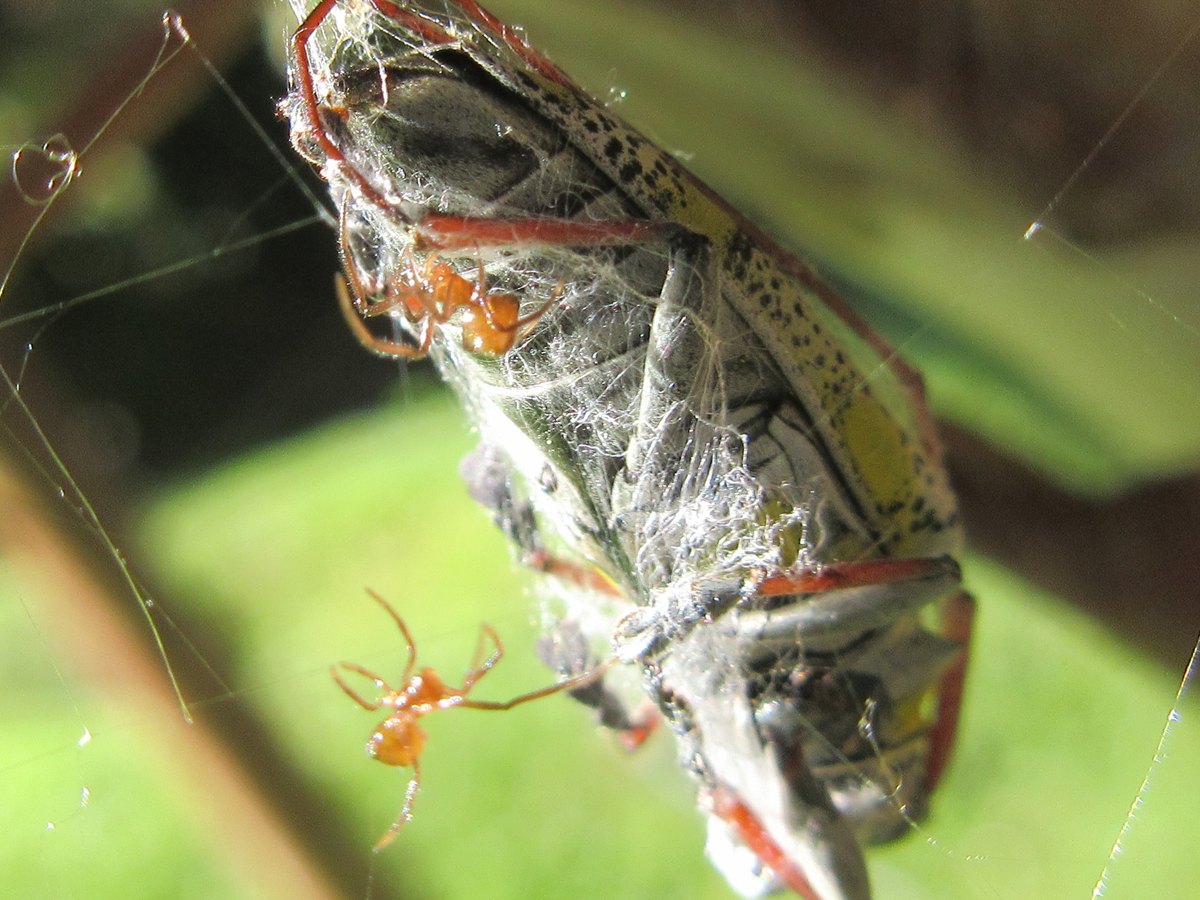
Dewdrop spiders (subfamily Argyrodinae) move into the webs of bigger spiders and take a share of the food caught there. On 21 October 2026 at the AKI Backpackers inn, two small males were feeding on a grasshopper that a big web spider had wrapped in silk. The big spider, which looks like a golden orb-weaver (Nephila, not identified), lived in a hole in the tree trunk behind a tangle of dead leaves, came out for a moment to feed and went back into the hole.
Record 4 · 21 October 2026 · AKI Backpackers inn, Kinabalu Park NEW
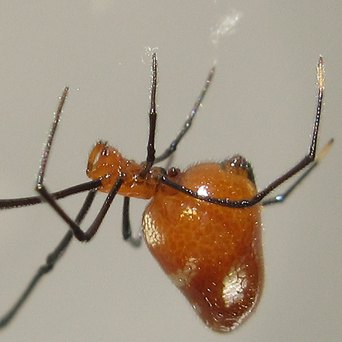
| Date | Wednesday 21 October 2026, 09:32–11:10 (camera clocks) |
|---|---|
| Place | AKI Backpackers inn, about 100 m from the entrance of Kinabalu Park, Sabah |
| Web | The web of a big spider (looks like a golden orb-weaver, Nephila; not identified) against a tree trunk, with a tangle of dead leaves and twigs in front of its hole |
| Number | One female photographed, and two males on the host's prey. Several more females and males on the same tree, in different webs. |
| Behaviour | The female never stopped moving |
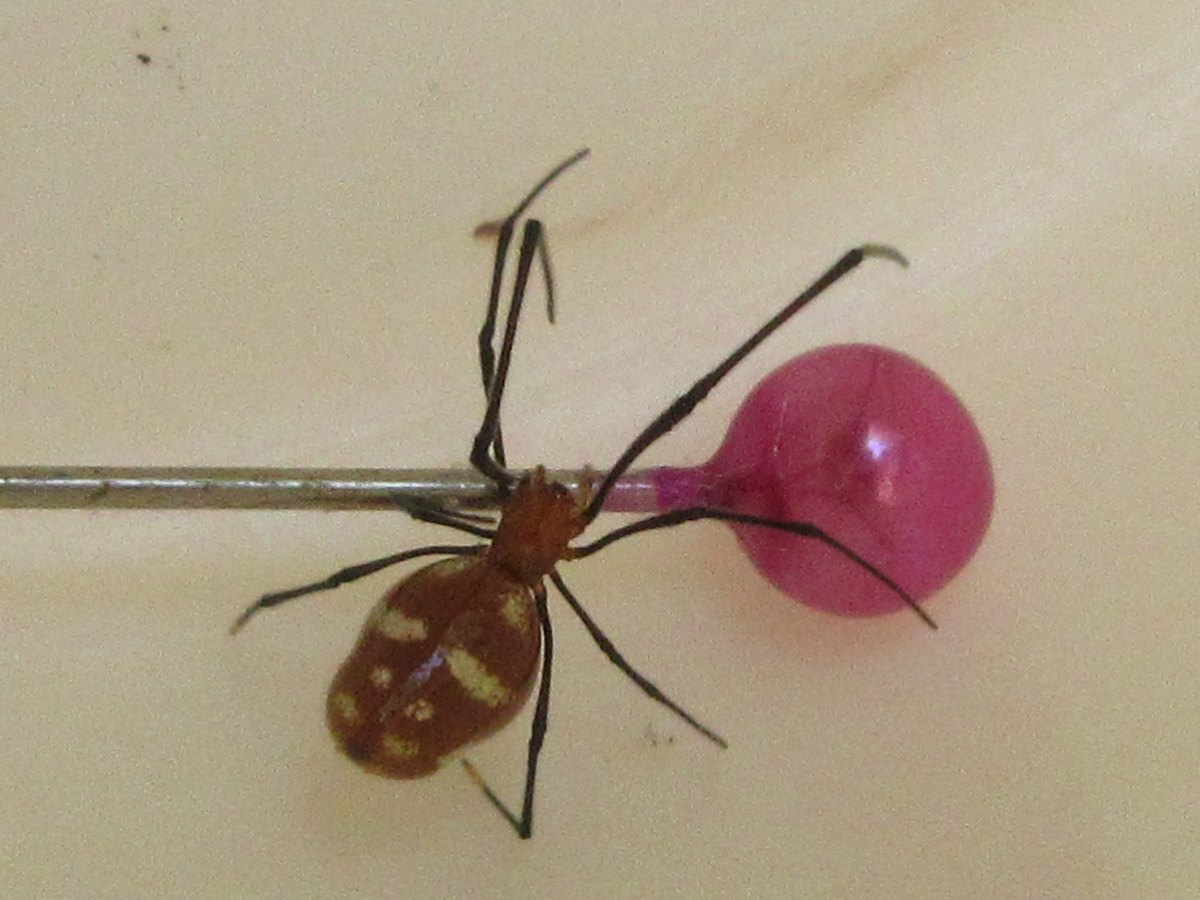
| Size | About 5–6 mm, legs not included (not measured; estimated from a pin, see below) |
| Cameras | Canon IXUS 285 HS; Panasonic DMC-LX5 (the host spider) |
| Observer | Wong Fook Yee. Photographed in a white container and released back where she was found. |
| iNaturalist | observation 410456743 |
The host. The big spider lived in a hole in the trunk and would not come out to be photographed, except once, at 10:48, when it came out to feed on the grasshopper and then went back into the hole. Earlier, at 09:32, two small males were already on the same wrapped grasshopper, taking their share; the females were nearby, out of the frame. Several kinds of web spider live at the inn; on the same morning the photographer recorded Argiope reinwardti by the solar lamp.
Record 3 · 12 July 2009 · Tawau River Triangle NAME NOT CONFIRMED
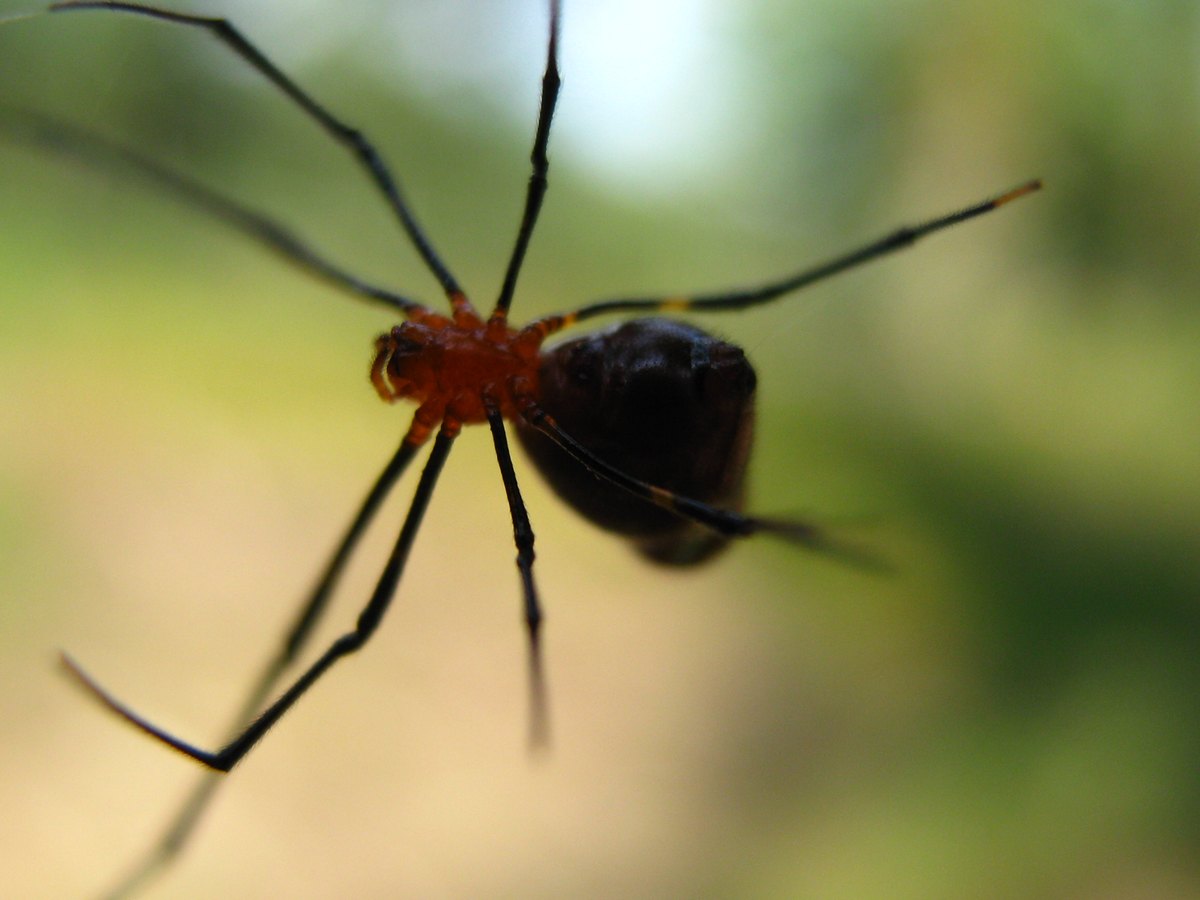
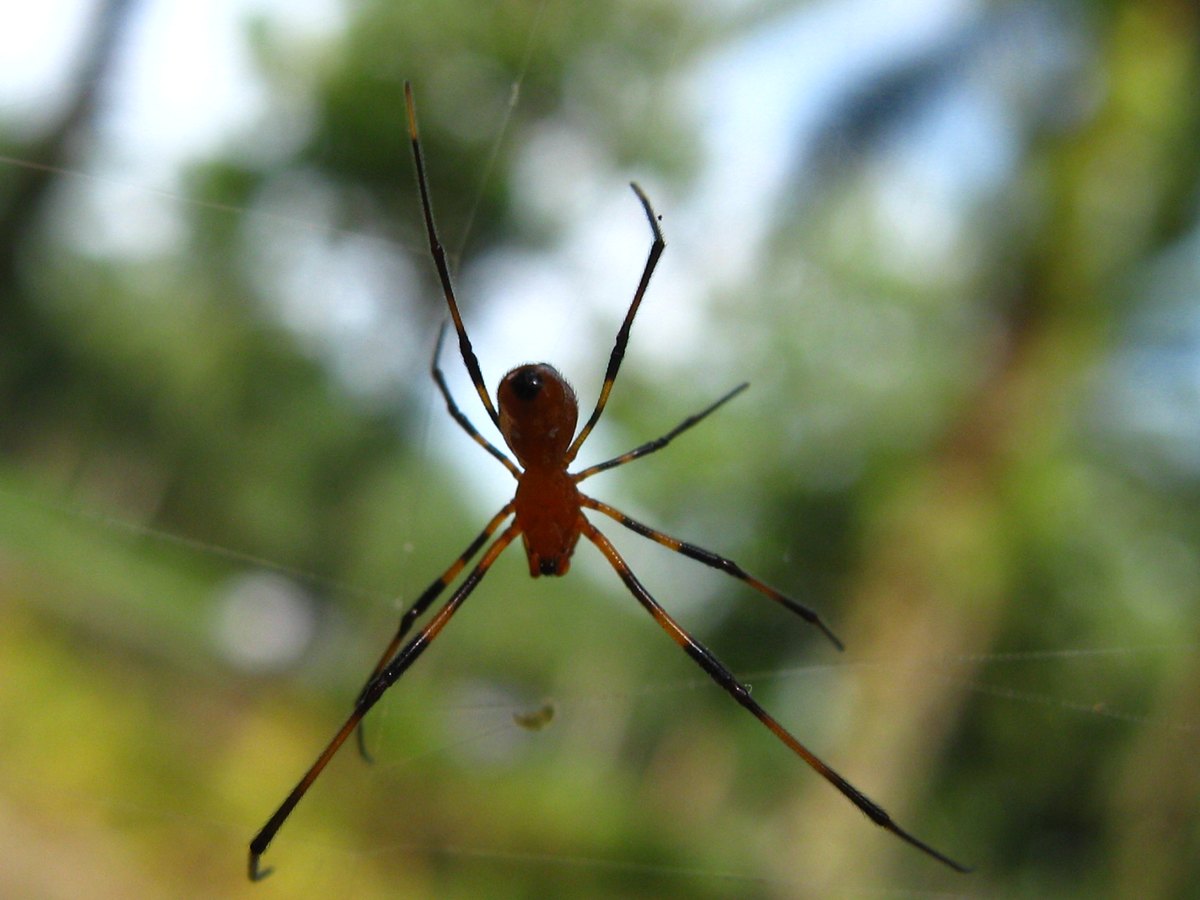
Two spiders in one web, photographed at 15:23–15:25 with a Canon PowerShot A470, in the Tawau River Triangle (whether inside or just outside the Triangle was not recorded). The photographer filed them with this species. They do not look like the other records: one has an all-black abdomen without silver bands, the other a small abdomen and long banded legs (it may be a male, or a different spider). Name not confirmed; size not recorded.
Record 2 · 9 July 2009 · Bukit Gemok, Tawau
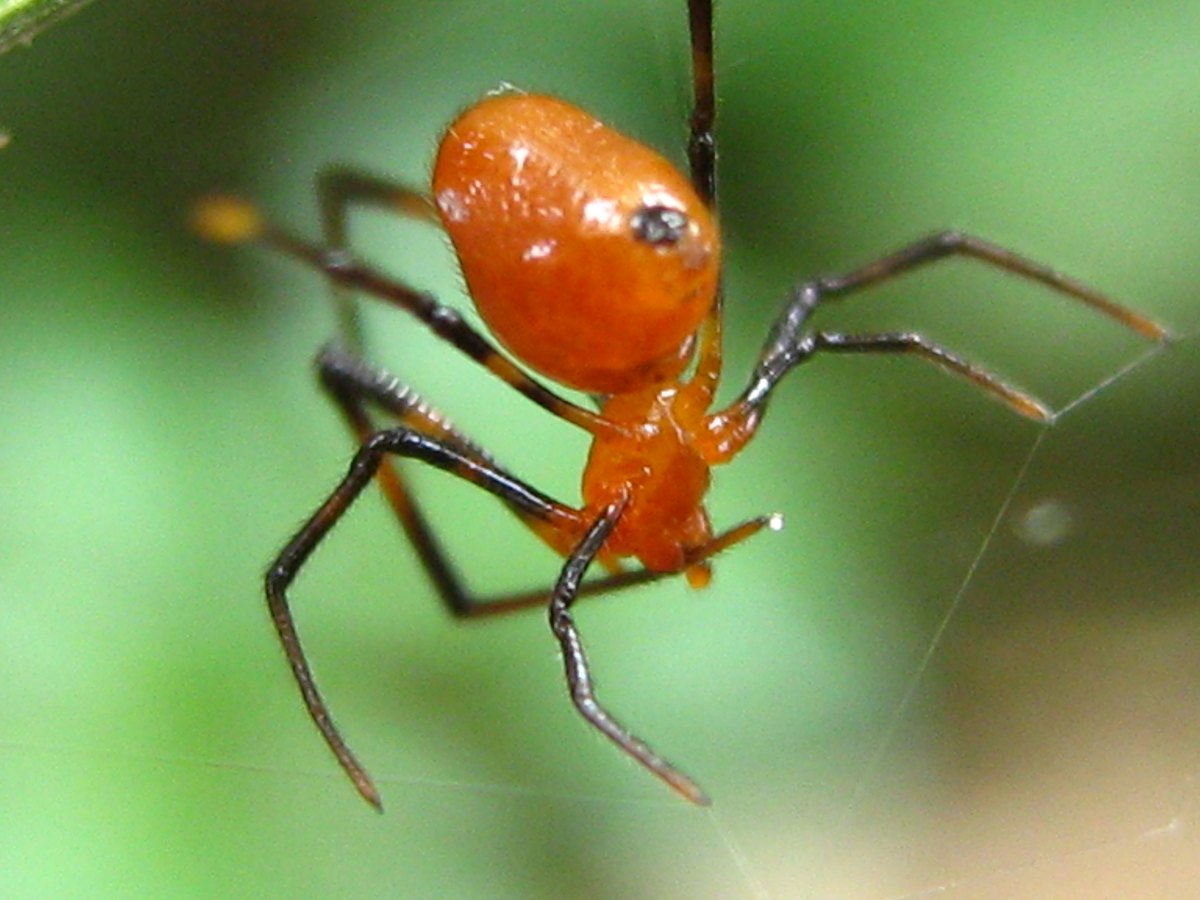
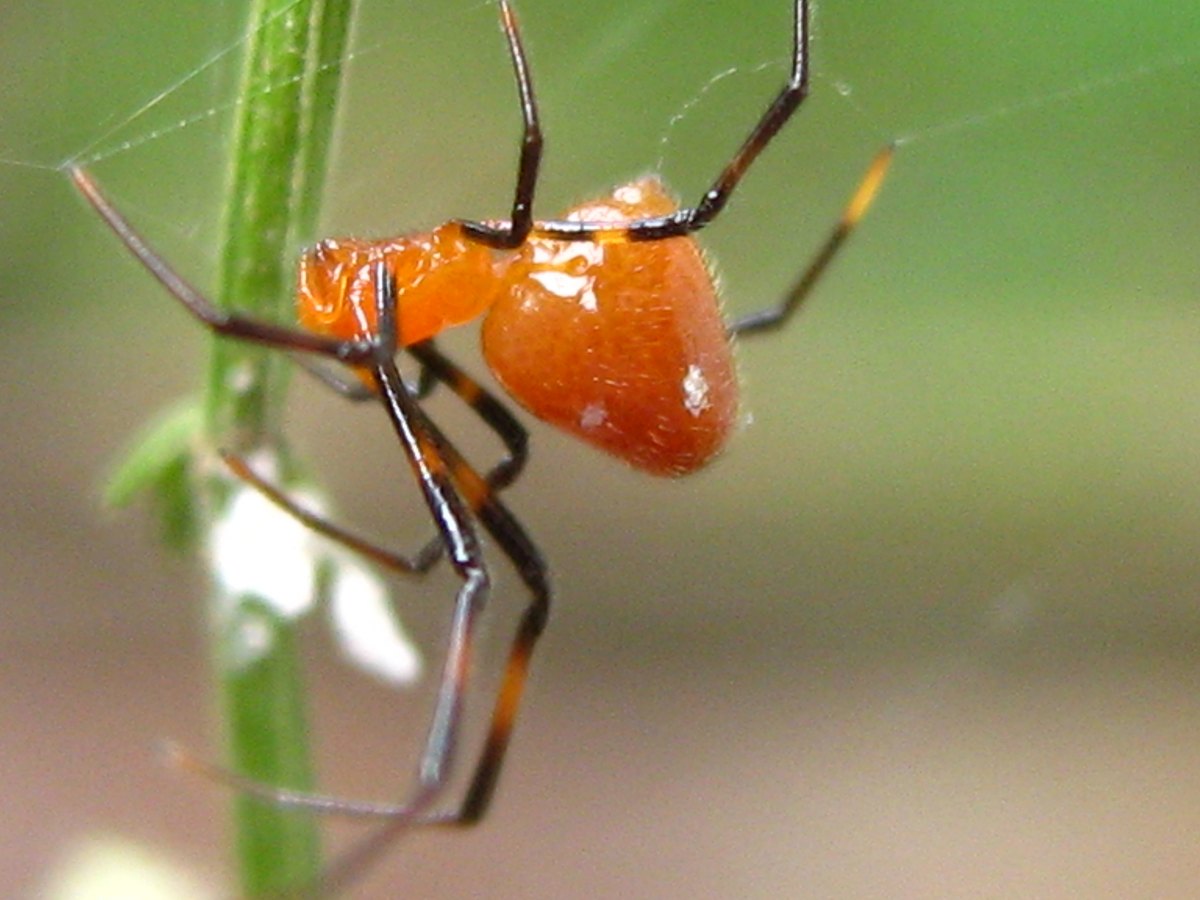
One female, photographed at 09:32–09:42 with a Canon PowerShot A470, first on graph paper and then back on a weedy plant. Size not recorded.
Record 1 · 8 July 2009 · Bukit Gemok, Tawau
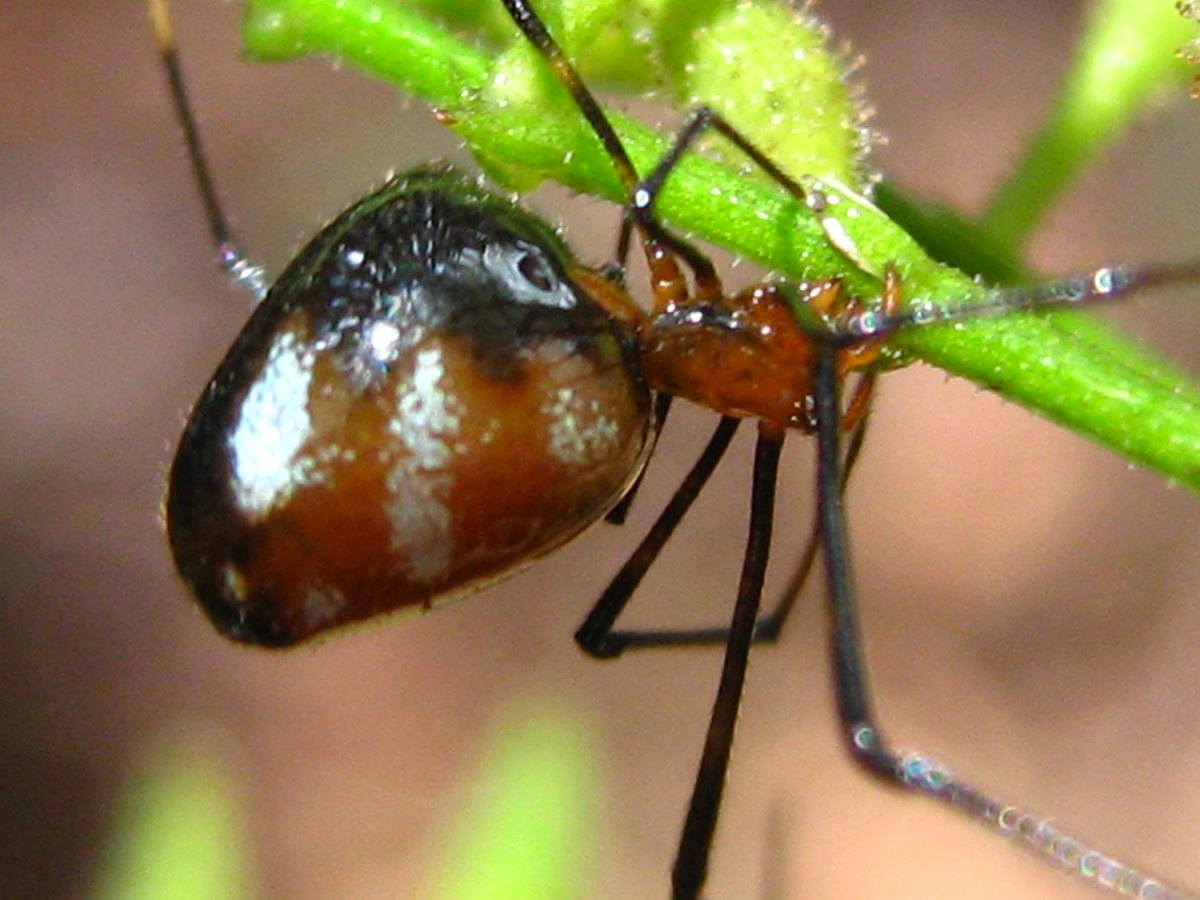
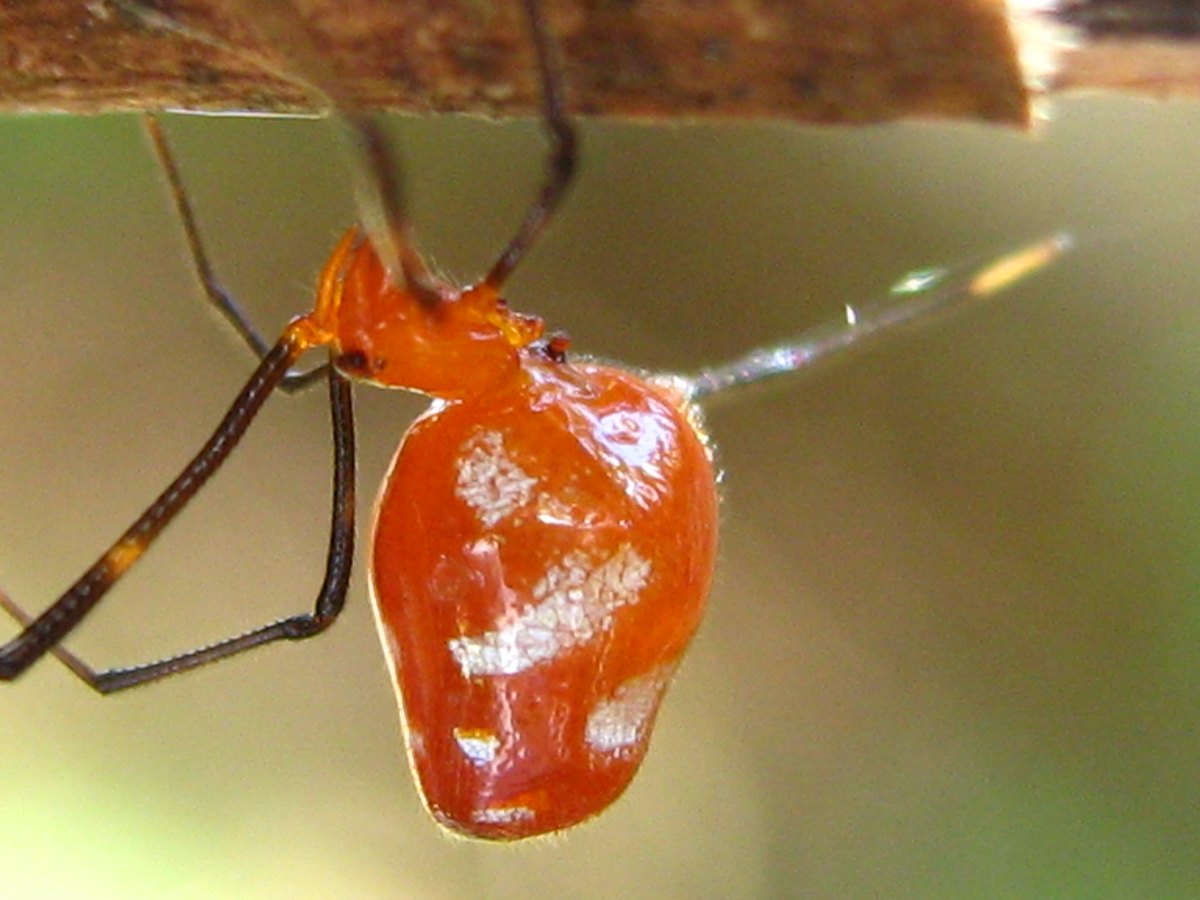
Two females at Bukit Gemok on the same morning, photographed with a Canon PowerShot A470: a darker one on a weedy plant at 10:17–10:39 and a bright orange one on a dry twig at 11:50–12:44. Both were also photographed on graph paper. Females 3.5–5 mm (the photographer's figure).
Earlier pages on this site gave the place of this record as "PUI YUK" and called the orange spider Argyrodes miniaceus. The photographer corrected the place to Bukit Gemok on 24 October 2026; the photo folders say the same.
Photographs © Wong Fook Yee. Dates and times from the cameras; places, 2009 sizes, names of the 2009 spiders and the account of 2026 are the photographer's own. Classification, the new genus and distribution: World Spider Catalog (Natural History Museum Bern); Pett, B. L., Ferreira, E. & Agnarsson, I. (2025), Megadiverse Madagascar: new species and genera of argyrodine spiders, Insect Systematics and Diversity 9(6): ixaf047. Page built 24 October 2026; it replaces the 2017 page Argyrodes flavescens.