INDEX to Spiders of Sungai Tawau


We have in our image bank the following 3 males :

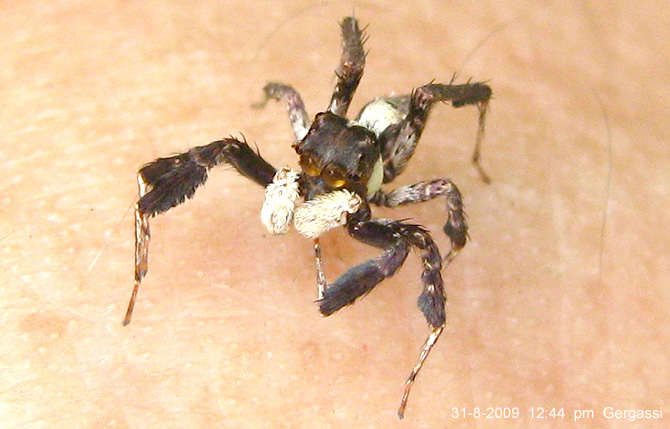
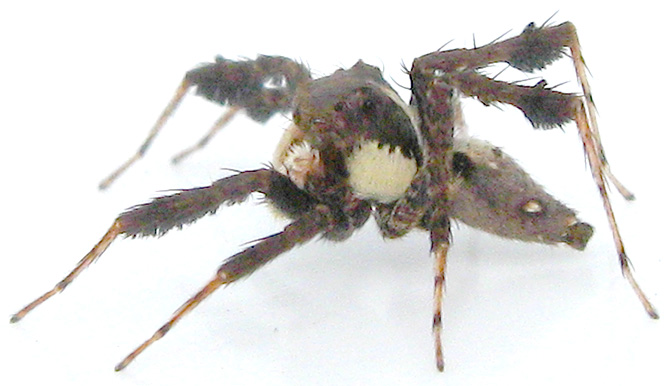
Portia fimbriata
Male 5mm

31-8-2009
Gergassi

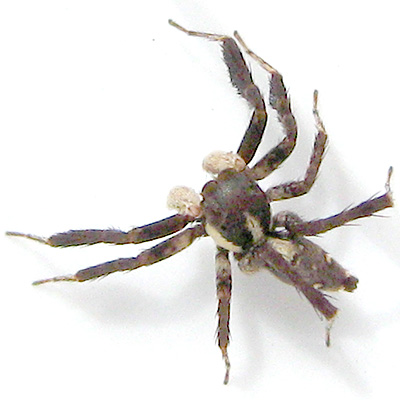
Portia fimbriata
Male

11-12-2009 Poring

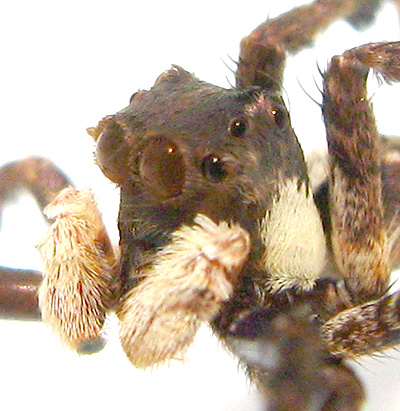
Portia fimbriata
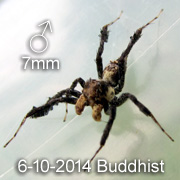
Male  7mm

6-10-2014 BUDDHIST


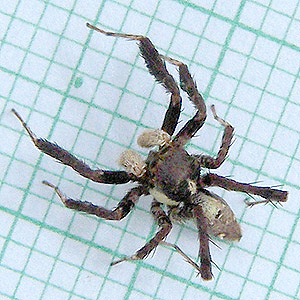
Portia fimbriata

Family: Salticidae
Genus: Portia
Species:
Portia fimbriata

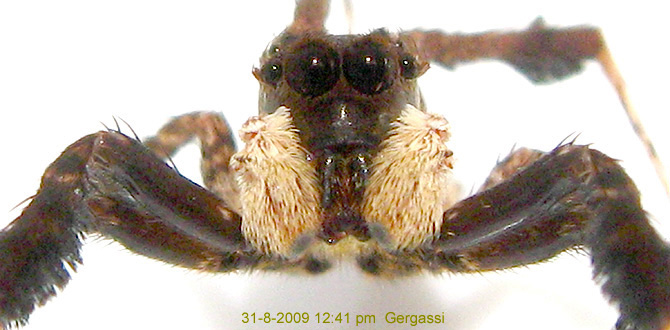
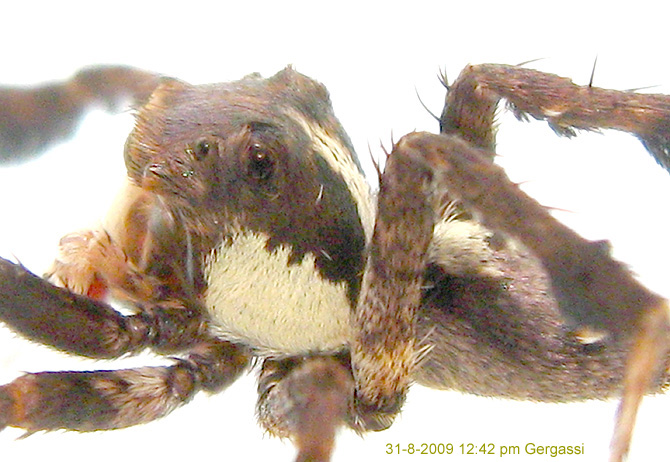
MALE 31-8-2009 Gergassi Ridge, Malaysia
FEMALE 25-10-2014 MINI HYDRO

BUDDHIST TEMPLE 6-10-2014 SUN 12:41PM

♀8mm

7mm

Protected Rain Forest
Oil Palm Plantation

MINI HYDRO STATION 25-10-2014 SAT 3:17PM

Portia fimbriata


This female Portia fimbriata is 8mm in body length.

The longest leg is the hind leg which is 11mm in length.

Poor creature, it has one hind leg missing.


MINI HYDRO STATION of BOMBALAI. This female spider was found on the wire fencing  50 meters before MINI HYDRO STATION of BOMBALAI.

Between the protected rain forest and private oil palm plantation is the Sungai Tawau River (a small upper stream). The Mini Hydro Station is beside the stream.


Portia fimbriata
 
Portia fimbriata
 
Portia fimbriata
 
The appearance of Portia fimbriata is unlike that of other spiders. They are about 1 cm long, and have cryptic markings, tufts of hair and long spindly legs. Because of their unusual appearance, Portia fimbriata are often mistaken for detritus by both prey and potential predators.

Portia fimbriata
 
Portia fimbriata are found in the rainforests of Malaysia where moist conditions found in tropical rainforests.

COMMON JUMPING SPIDERS IN TAWAU


Superior Vision

Portia fimbriata has vision superior to that of many other spiders.

Portia fimbriata has six small lateral eyes that detect movement in a field of view that is as large as 360°. The two principal eyes are located on the front of the head and provide acute vision.

This is indicated by their ability to find and eat other spider's eggs. Because eggs to not move, it is necessary to have acute vision to find them.

Portia fimbriata
 

Portia fimbriata
 
This Portia fimbriata male is 5 mm in body length.

COMMON JUMPING SPIDERS IN TAWAU


Portia fimbriata are primarily araneophagic, meaning they eat other spiders, including other salticids. Portia fimbriata also eat insects and the eggs of other spiders.

Portia fimbriata are predatory, and they use several methods of predation. One is aggressive vibratory mimicry, in which Portia fimbriata climb on to the web of their victim and use their legs and palps to pluck signals on the web. They imitate the signals of their intended victim's prey. When the victim comes close to Portia fimbriata, they make their attack.

Portia fimbriata are specialists at catching cursorial salticids. Most cursorial salticids don't build typical webs, but they spin orb-like nests out of silk. Portia fimbriata make vibratory signals on the silk of the nest. When the salticid pokes its head out to investigate, they attack. This is called nest probing.

Another type of predation used by Portia fimbriata is cryptic stalking. In this method, the hunter moves very slowly. If the salticid turns to face it, Portia fimbriata pulls its palps back and out of the prey's view and freezes. In this position Portia fimbriata resembles a piece of detritus. Eventually it approaches the prey from behind, and swoops in for the kill.

Other jumping spiders of the genus Portia exhibit aggressive mimicry, nest probing, or cryptic stalking. Portia fimbriata is the only species that exhibits all three behaviors. Portia fimbriata also displays species specific predation tactics.


Unlike other salticids, Portia fimbriata are web building spiders. Portia fimbriata use their webs not only as nests, but as a mode of predation. They build their webs near, and fastened to, the webs of another species, creating a single compound structure. It then is easy for a Portia fimbriata to invade the neighboring web. The web of Portia fimbriata is not sticky, but sometimes does catch insects. In this situation, Portia fimbriata usually do not eat the insect, but wait for spiders from the a neighboring web to approach, and eat them instead. (Jackson 1985, Jackson 1998, Jackson 1992, Daiqin and Jackson 1997)


More about Malaysian spiders  10-7-2009  June 30, 2020 10:40:34 PM

counter for iweb