Family: Thomisidae
Genus: Phrynarachne
Phrynarachne ceylonica
錫蘭瘤蟹蛛
Last Updated on Thursday, 29 October, 2020 02:25:28 AM
Spiders of Borneo > Family Thomisidae 蟹蛛科 > Genus Phrynarachne 瘤蟹蛛屬 > Phrynarachne ceylonica 錫蘭瘤蟹蛛
Family: Thomisidae
Genus: Phrynarachne
Phrynarachne ceylonica
錫蘭瘤蟹蛛
中國蜘蛛生態大圖鑑 Page 857
Bird-dung Crab Spider
More about this
pair of Phrynarachne
ceylonica
More about the above male
Phrynarachne ceylonica
More about the above
female Phrynarachne ceylonica

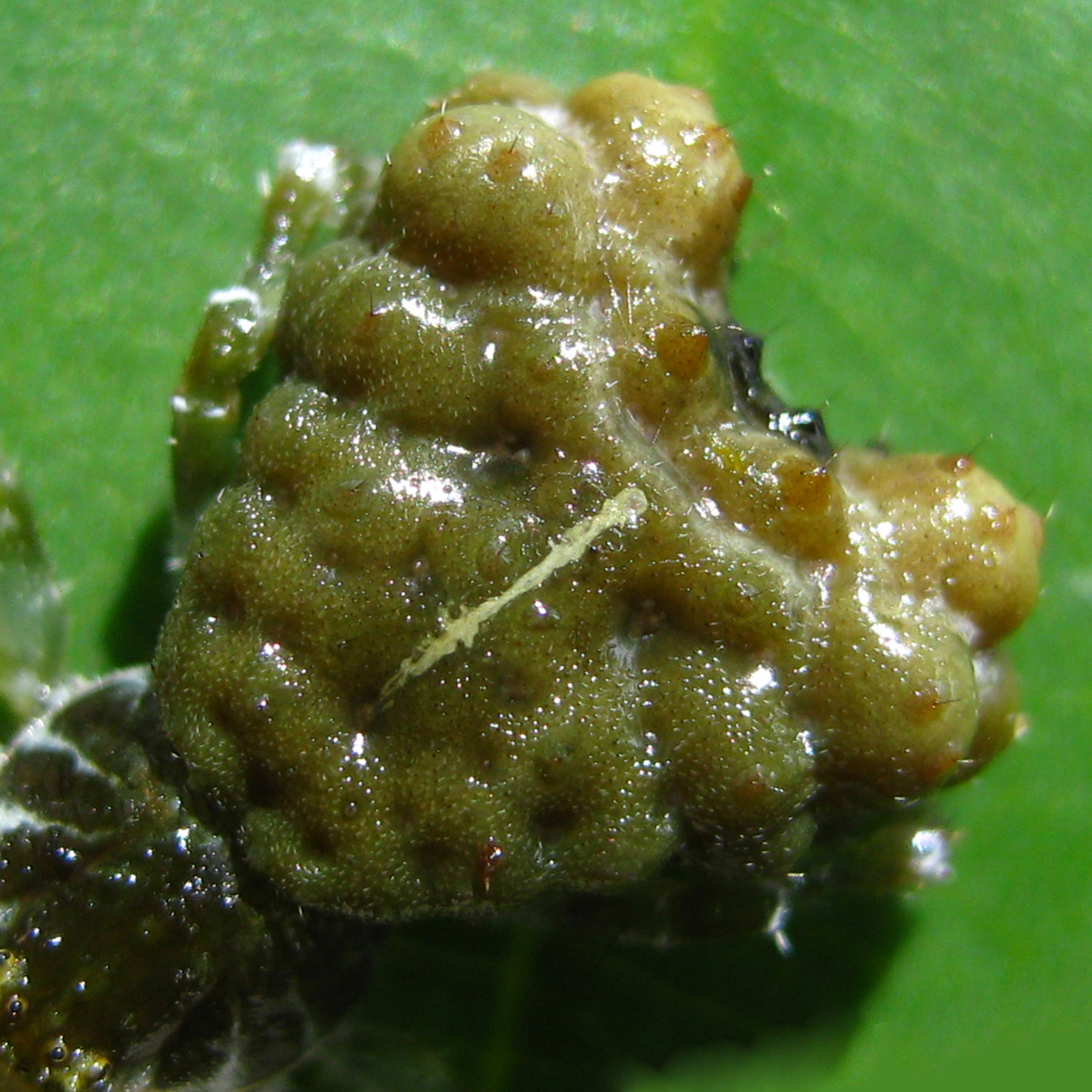
The female's blobs and warts over the thick and glazed body surface give the
"wet" and "lumpy" look of a piece of fresh bird excrement.
Some Phyrnarachne spiders emit a pronounced smell of faeces or urine. The sight
and smell of bird-dropping may be a clever device to attract and ambush flies.
The hair grand extract oilly transperient liquit (see image left) which may be
the source of the pronounced smell of faeces or urine that attract flies.
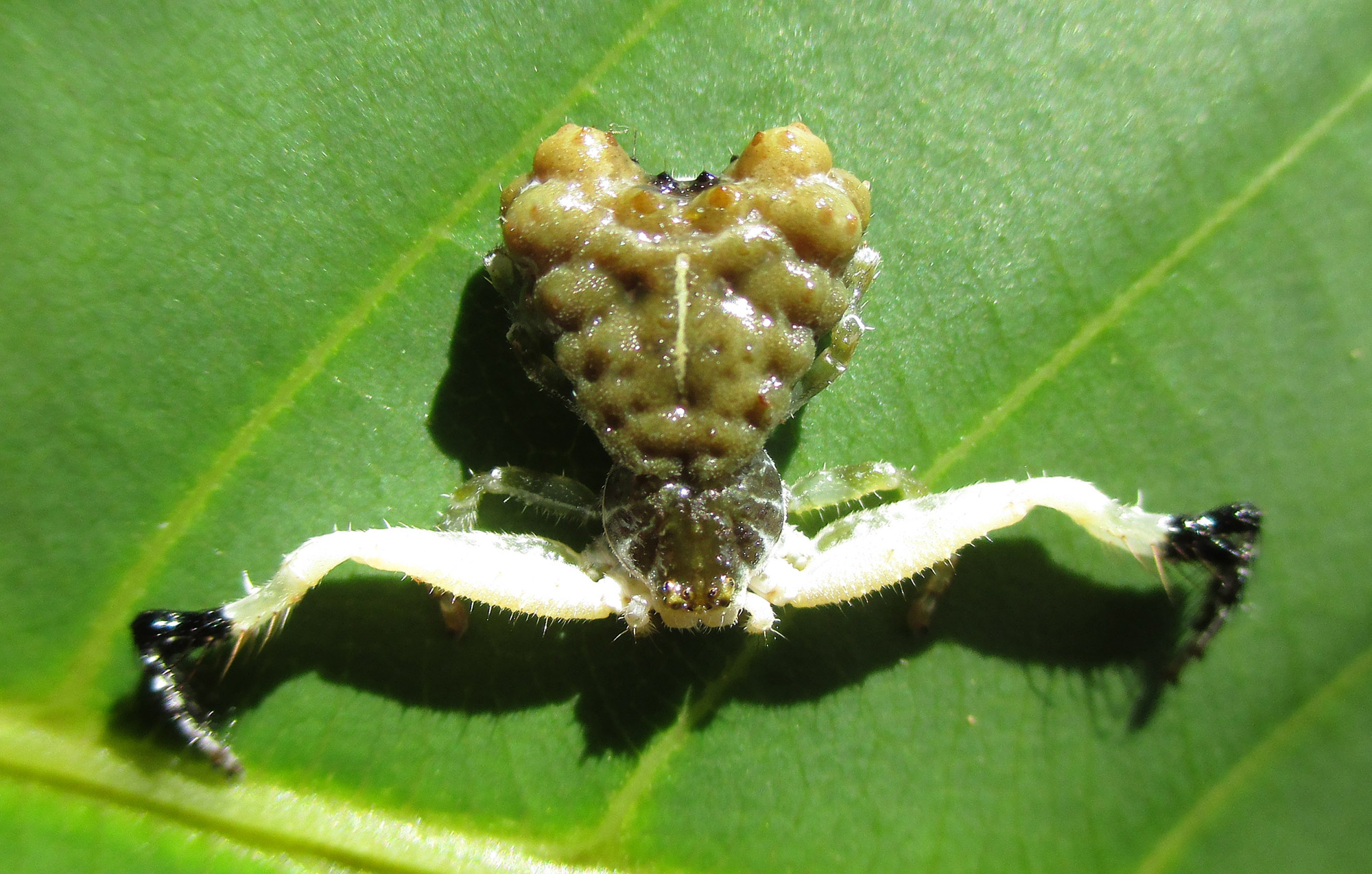
This female Phrynarachne ceylonica is 10mm in body length.
The two pairs of front legs when straight out into straight can reach a span of
20mm from one tip to tip of another leg.
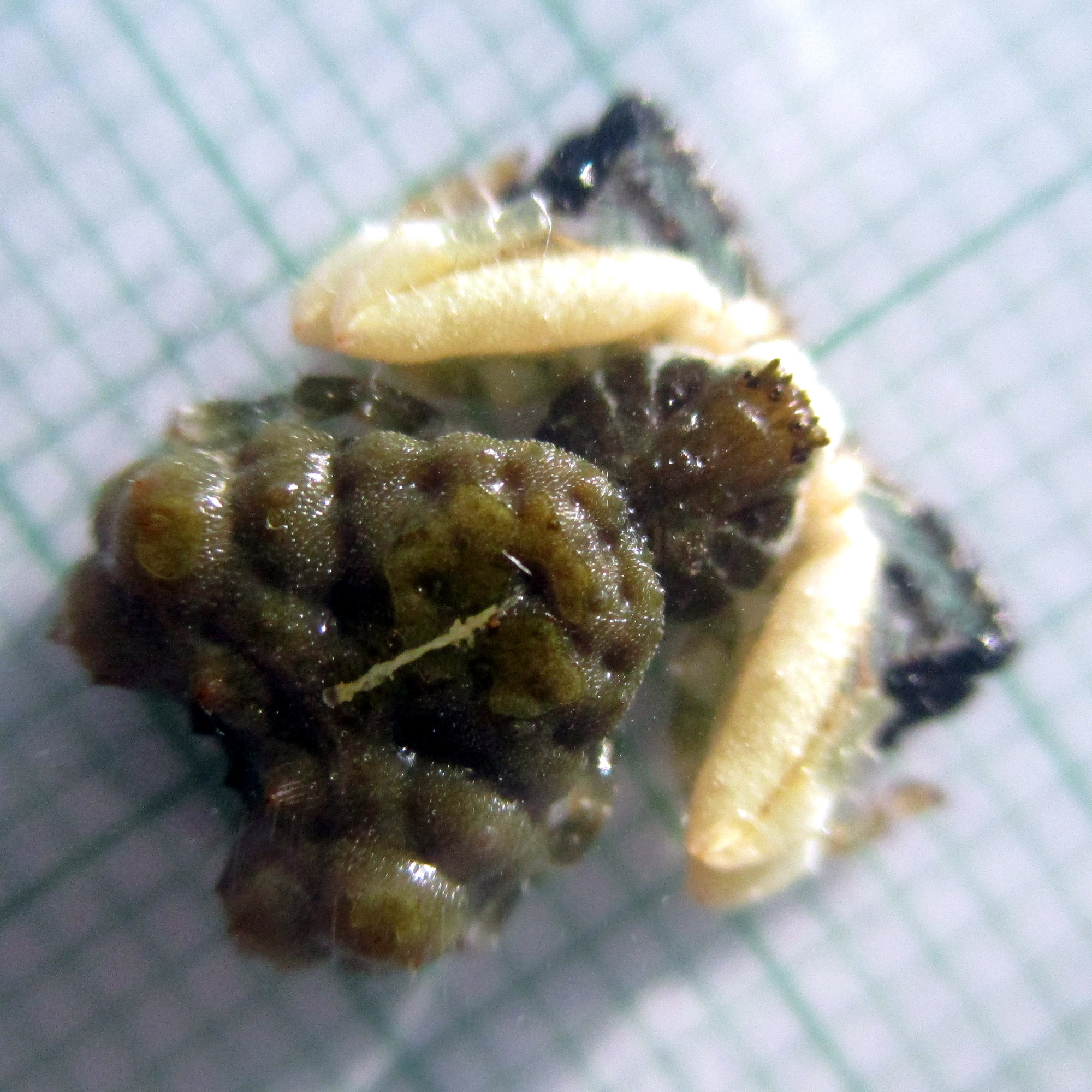
Phrynarachne ceylonica Hatching
TEXT AND IMAGES BY WONG FOOK YEE
I have been following a young female on a piece of leave for few days. Then on 9-10-2014 it no more at the spot any longer. Phrynarachne ceylonica do not change residing spot often as other spider does. Only disturbing will sue it away. Or it might have been eaten by a bird I feared.
Or perhaps it might hide somewhere else temporary such as from strong sunlight.
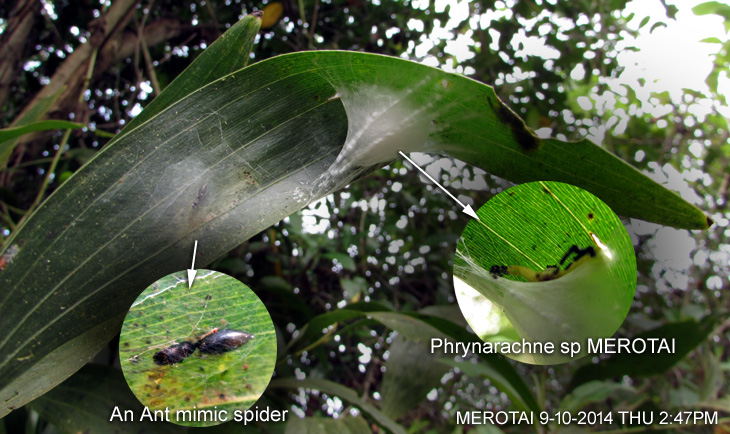
I search the attaching leaves and to my excitement, it is just a leave above
away and in a brand new "home". It has made herself a newly webbed silk camp and
hid inside the bag. Its a sign of egg laying and hatching in progress.
Phrynarachne ceylonica is one of the few tempted spiders always stay at the very
same spot and do not wander around like other species.
Almost all female spiders protect their eggs by making a silk ‘bed’ and then
covering them with a silk ’blanket’. She then wraps them in more silk to make
the egg sac.
The spider hangs or attached the sac someplace safe and guards it until the
babies hatch. When the babies hatch they often stay inside the sac to finish
developing.
Some spider mother’s stay until the spider lings leave the sac, others will
either leave or die before seeing their babies.
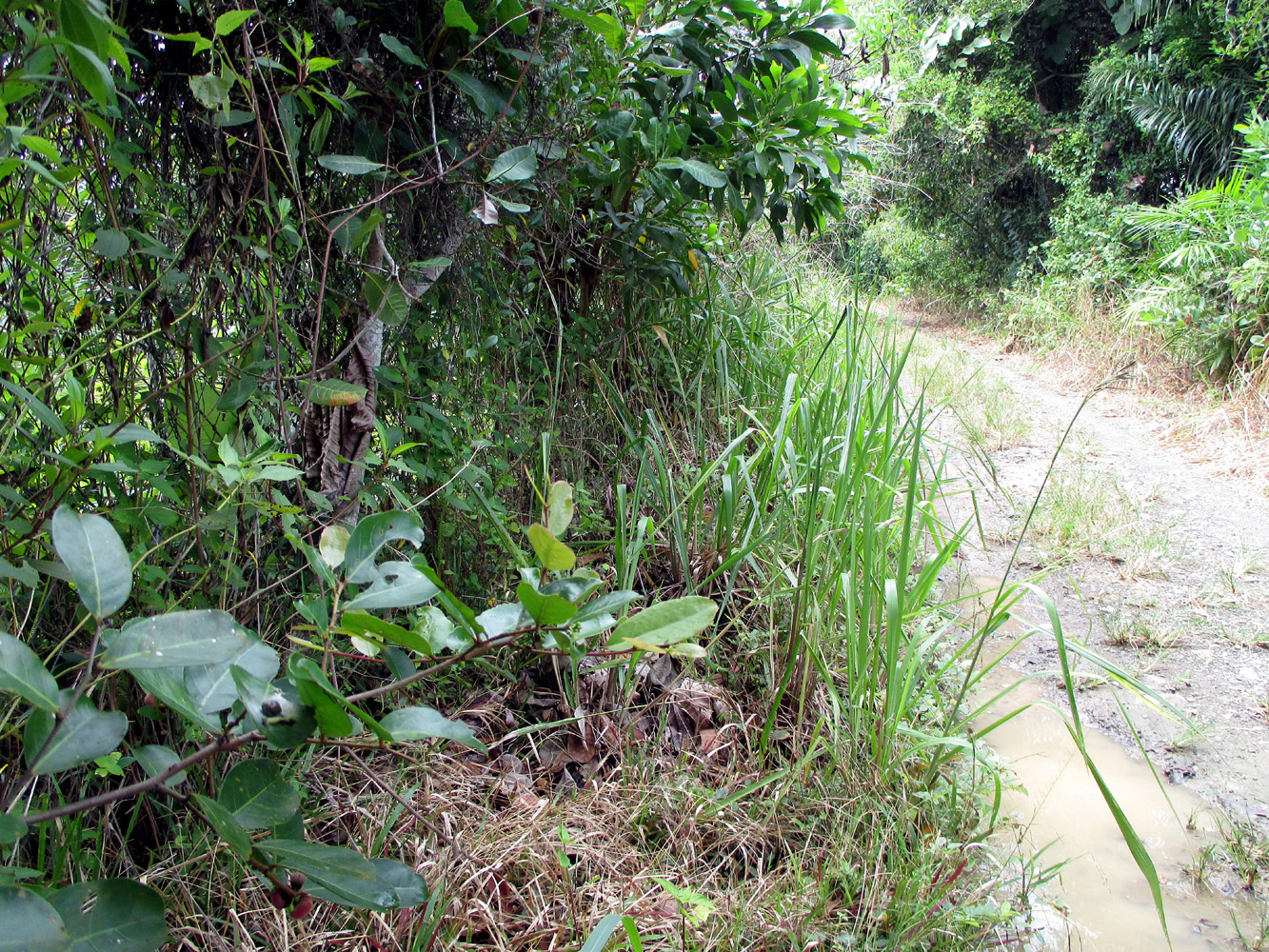
There is a tree in Merotai where a family of about 10 Phrynarachne ceylonica are
residing. This was discovered in October 2014.
Commondly called Bird-Dung Spider because the spider's blobs and warts over the
thick and somewhat glazed body surface give the "wet" and "lumpy" look of a
piece of fresh bird excrement.
A slow-moving spider in the Family Thomisidae, it remain undisturbed it will
stationed among shaded leaves of a bushy tree.
The spider reinforces the simulation of bird-droppings by drawing its legs close
to the body and lying motionless on a leaf for long hours.
Bird dung crab spiders under the genus Phrynarachne appear to be one of the
rarest group.
Only 30 species are recognized as such spiders in genus Phrynarachne as against
41,253 species of spiders known globally.
The Bird Dropping Crab Spider employs clever mimicry to deceive both its
predators and prey.
The coloring of its body, along with a layer of white silk deposited on the
leaf, make it appear as an unappealing piece of scat. The odor of the spider,
which is also reminiscent of a bird dropping, may serve to attract flies which
then become an easy meal.
It sometimes sits on a small patch of white silk, which can be mistaken for the
white stain caused by the bird-dung when it is splashed on the leaf. Some
Phyrnarachne spiders emit a pronounced smell of faeces or urine. The sight and
smell of bird-dropping may be a clever device to attract and ambush flies.
Crab spiders move sideways, like crabs. The body is not as hairy as in most
spiders. They are slow-moving spiders which do not actively hunt like Wolf
Spiders. Instead, they remain stationary and await in ambush for some
unsuspecting insects to land in front of them.
The first two pairs of legs in most Crab Spiders are longer and heavier than the
third and fourth pairs, and are armed with spines for holding and grasping prey.
(see above image)
RELATED TOPICS
|
|
Common Spiders of Borneo |