|
1 Acentroscelus 2 Acracanthostoma 3 Alcimochthes 4 Amyciaea 5 Angaeus 6 Ansiea 7 Aphantochilus 8 Apyretina 9 Ascurisoma 10 Avelis 11 Bassaniana 12 Bassaniodes 13 Boliscodes 14 Boliscus 15 Bomis 16 Bonapruncinia 17 Borboropactus 18 Bucranium 19 Camaricus 20 Carcinarachne 21 Cebrenninus 22 Ceraarachne 23 Cetratus 24 Coenypha 25 Coriarachne 26 Corynethrix 27 Cozyptila 28 Cupa 29 Cymbacha 30 Cymbachina 31 Cynathea 32 Cyriogonus 33 Deltoclita 34 Demogenes 35 Diaea 36 Dietopsa 37 Dimizonops 38 Diplotychus 39 Domatha 40 Ebelingia 41 Ebrechtella 42 Emplesiogonus 43 Epicadinus 44 Epicadus 45 Epidius 46 Erissoides 47 Erissus 48 Felsina 49 Firmicus 50 Geraesta 51 Gnoerichia 52 Haedanula 53 Haplotmarus 54 Hedana 55 Henriksenia 56 Herbessus 57 Heriaesynaema 58 Heriaeus 59 Heterogriffus 60 Hewittia |
61 Hexommulocymus 62 Holopelus 63 Iphoctesis 64 Isala 65 Isaloides 66 Lampertia 67 Latifrons 68 Ledouxia 69 Loxobates 70 Loxoporetes 71 Lycopus 72 Lysiteles 73 Majellula 74 Martus 75 Massuria 76 Mastira 77 Mecaphesa 78 Megapyge 79 Metadiaea 80 Misumena 81 Misumenoides 82 Misumenops 83 Misumessus 84 Modysticus 85 Monaeses 86 Musaeus 87 Mystaria 88 Narcaeus 89 Nyctimus 90 Ocyllus 91 Onocolus 92 Ostanes 93 Oxytate (FORMALLY Dieta) 94 Ozyptila 95 Pactactes 96 Pagida 97 Parabomis 98 Paramystaria 99 Parasmodix 100 Parastephanops 101 Parastrophius 102 Parasynema 103 Pasias 104 Pasiasula 105 Peritraeus 106 Phaenopoma 107 Pharta 108 Pherecydes 109 Philodamia 110 Philogaeus 111 Phireza 112 Phrynarachne 113 Physoplatys 114 Pistius 115 Plancinus 116 Plastonomus 117 Platyarachne 118 Platythomisus 119 Poecilothomisus 120 Porropis |
121 Pothaeus 122 Prepotelus 123 Pseudamyciaea 124 Pseudoporrhopis 125 Pycnaxis 126 Pyresthesis 127 Reinickella 128 Rejanellus 129 Rhaebobates 130 Runcinia 131 Runcinioides 132 Saccodomus 133 Sanmenia 134 Scopticus 135 Sidymella 136 Simorcus 137 Sinothomisus 138 Smodicinodes 139 Smodicinus 140 Soelteria 141 Stephanopis 142 Stephanopoides 143 Stiphropella 144 Stiphropus 145 Strigoplus 146 Strophius 147 Sylligma 148 Synaemops 149 Synalus 150 Synema 151 Synstrophius 152 Tagulinus 153 Tagulis 154 Takachihoa 155 Talaus 156 Tarrocanus 157 Taypaliito 158 Tharpyna 159 Tharrhalea 160 Thomisops 161 Thomisus 162 Titidiops 163 Titidius 164 Tmarus 165 Tobias 166 Trichopagis 167 Ulocymus 168 Uraarachne 169 Wechselia 170 Xysticus 171 Zametopias 172 Zametopina 173 Zygometis |
A Gallery of Spider Species of Sabah
| Ant mimicry spiders | PHOLCIDAE | OECOBIIDAE | TETRAGNATHIDAE | ARANEIDAE | LYCOSIDAE | PISAURIDAE | OXYOPIDAE | PSECHRIDAE | ZODARIIDAE | THOMISIDAE | SALTICIDAE |
THOMISIDAE
Crab Spiders
|
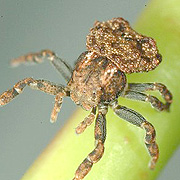
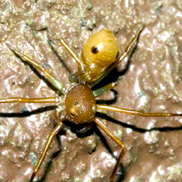
Crab Spiders (Thomisidae) Crab spiders do not actively hunt for food nor do they weave webs to trap insects. They are slow-moving creatures which lie in ambush for prey. (Please see my article Ambush Artistes.) They walk sideways like crabs do, hence the name. As these pictures show, they lurk on flowers or leaves, and strike when an insect lands in front of them. In this wait-and-capture method of securing their meals, crab spiders are sometimes aided by camouflage and mimicry, their body blending with the flower on which they are waiting. In some cases, they even mimic bird droppings. When you get acquinted with Family Thomisidae, you’ll find that there are quite a few species of the bird-dung mimics (Phrynarachne species). Please click on a thumbnail image to view the larger photo. The photo opens in another window. You can go on to subsequent photos inside that new window. After viewing, close that window to return to this page |
|
||
|
|
||




蟹蛛科Thomisidae CRAB SPIDERS & RUNNING CRAB SPIDERS Other Names: Thomisids (crab spiders), Philodromids
(running crab spiders)
|