Draft chapter — eTawau will expand this story over time. Corrections, memories and photos are welcome: please tell eTawau (eTawau@yahoo.com).初稿篇章──eTawau會逐步擴寫這個故事。歡迎指正、分享回憶和照片:請告訴eTawau(eTawau@yahoo.com)。Bab draf — eTawau akan mengembangkan kisah ini dari semasa ke semasa. Pembetulan, kenangan dan foto dialu-alukan: sila maklumkan eTawau (eTawau@yahoo.com).
Chapter 2 · Humabon and the Holy Child
第2章 · 胡馬汶與聖嬰
Bab 2 · Humabon dan Kanak-kanak Suci
In April 1521 a Spanish expedition led by Ferdinand Magellan, a Portuguese navigator sailing for King Charles I, reached the island of Cebu. Its chief, Rajah Humabon, and his wife Hara Humamay agreed to be baptised: he took the name Carlos and she the name Juana. According to the expedition’s chronicler, Antonio Pigafetta, Magellan gave them gifts, among them a small wooden statue of the Child Jesus — the Santo Niño. Within weeks Magellan was dead, killed on 27 April 1521 in the Battle of Mactan, and his men sailed away.
1521年4月,由為西班牙國王查理一世效力的葡萄牙航海家麥哲倫率領的西班牙船隊抵達宿霧島。島上的首領胡馬汶王(Rajah Humabon)和他的妻子胡馬梅(Hara Humamay)同意受洗:他取名卡洛斯,她取名胡安娜。據船隊的記錄者安東尼奧·皮加費塔記載,麥哲倫送給他們禮物,其中有一尊小小的木製聖嬰耶穌像──聖嬰像(Santo Niño)。數週之內,麥哲倫就在1521年4月27日的麥克坦之戰中戰死,他的部下隨即離去。
Pada April 1521 sebuah ekspedisi Sepanyol yang dipimpin Ferdinand Magellan, pelayar Portugis yang belayar untuk Raja Charles I, sampai ke pulau Cebu. Ketuanya, Rajah Humabon, dan isterinya Hara Humamay bersetuju dibaptiskan: dia mengambil nama Carlos dan isterinya Juana. Menurut pencatat ekspedisi, Antonio Pigafetta, Magellan memberi mereka hadiah, antaranya sebuah patung kayu kecil Kanak-kanak Yesus — Santo Niño. Dalam beberapa minggu Magellan terbunuh, pada 27 April 1521 dalam Pertempuran Mactan, dan anak buahnya belayar pergi.
Found in the ashes, 1565
1565年,在灰燼中找到
Ditemui dalam abu, 1565
Forty-four years later, on 27 April 1565, a new Spanish expedition under Miguel López de Legazpi arrived at Cebu. The settlement was burned. The next day, 28 April 1565, a Spanish mariner named Juan Camus found the image of the Santo Niño in a pine box among the ruins of a burnt house. It was taken as the same image Magellan had given to Juana. Cebu still remembers the finding as the Kaplag, and 1565 also marks the start of the Augustinian mission in the Philippines.
四十四年後,1565年4月27日,黎牙實比率領的新一支西班牙船隊抵達宿霧。村落被燒毀。第二天,1565年4月28日,一位名叫胡安·卡穆斯(Juan Camus)的西班牙水手在一間燒毀的房子廢墟中,發現了裝在松木箱裡的聖嬰像。人們認為這就是麥哲倫送給胡安娜的那尊聖像。宿霧至今以Kaplag(「尋獲」)紀念此事,1565年也是奧斯定會在菲律賓傳教的開端。
Empat puluh empat tahun kemudian, pada 27 April 1565, ekspedisi Sepanyol baharu di bawah Miguel López de Legazpi tiba di Cebu. Penempatan itu dibakar. Keesokan harinya, 28 April 1565, seorang kelasi Sepanyol bernama Juan Camus menemui patung Santo Niño dalam sebuah peti kayu pain di celah runtuhan rumah yang terbakar. Ia dianggap patung yang sama yang diberi Magellan kepada Juana. Cebu masih mengingati penemuan itu sebagai Kaplag, dan 1565 juga menandakan permulaan misi Augustinian di Filipina.
Wikipedia, “Santo Niño de Cebú”; Cultural Center of the Philippines, Encyclopedia of Philippine Art; Philippine Daily Inquirer (Ambeth Ocampo, 2015); santonino500.com (2020)
Sources differ: how big is it?
說法不一:聖像有多大?
Sumber berbeza: berapa besarnya?
Wikipedia, following older accounts, says the wooden image stood about 30 cm tall when it was found. The Cultural Center of the Philippines’ encyclopedia gives its height as approximately 90 cm, perhaps including its tall ornamented pedestal. Both agree that it is carved from wood, painted, dressed mostly in red, and kept today behind bulletproof glass in the Basilica Minore del Santo Niño in Cebu City. It is the only canonically crowned image of Jesus in the Philippines.
維基百科根據較早的記載,說這尊木像被發現時約高30厘米。菲律賓文化中心的百科全書則說它約高90厘米,或許包括了高大華麗的底座。兩者都同意它是木雕彩繪、主要穿紅衣,今天收藏在宿霧市聖嬰聖殿的防彈玻璃後面。它是菲律賓唯一經教會正式加冕的耶穌聖像。
Wikipedia, mengikut catatan lama, menyatakan patung kayu itu kira-kira 30 cm tinggi semasa ditemui. Ensiklopedia Pusat Kebudayaan Filipina memberi ketinggiannya kira-kira 90 cm, mungkin termasuk tapaknya yang tinggi berhias. Kedua-duanya bersetuju ia diukir daripada kayu, dicat, berpakaian kebanyakannya merah, dan kini disimpan di sebalik kaca kalis peluru di Basilica Minore del Santo Niño di Bandaraya Cebu. Ia satu-satunya patung Yesus di Filipina yang dimahkotakan secara kanonik.
Wikipedia, “Santo Niño de Cebú”; Cultural Center of the Philippines
Two views of 1521 and 1565
對1521年和1565年的兩種看法
Dua pandangan tentang 1521 dan 1565
For many Filipino Catholics, 1521 and 1565 are the beginning of the faith in their islands, and the Santo Niño is the sign of it. Other writers stress that the same years began conquest: Legazpi’s men burned Cebu’s settlement, and Spanish rule followed for more than three centuries. Some Filipinos remember Lapulapu, the chief who fought Magellan at Mactan, as the first to resist. eTawau records these views without taking sides.
對許多菲律賓天主教徒來說,1521年和1565年是信仰在他們島上的開端,而聖嬰像就是它的標誌。另一些作者則強調同樣的年份也開啟了征服:黎牙實比的部下燒毀了宿霧的村落,此後是三百多年的西班牙統治。也有菲律賓人紀念在麥克坦與麥哲倫作戰的首領拉普拉普,視他為第一位反抗者。eTawau記錄這些觀點,不偏袒任何一方。
Bagi ramai penganut Katolik Filipina, 1521 dan 1565 ialah permulaan iman di pulau-pulau mereka, dan Santo Niño tandanya. Penulis lain menegaskan bahawa tahun-tahun yang sama memulakan penaklukan: anak buah Legazpi membakar penempatan Cebu, dan pemerintahan Sepanyol menyusul lebih tiga abad. Sebahagian orang Filipina mengenang Lapulapu, ketua yang memerangi Magellan di Mactan, sebagai penentang pertama. eTawau merekodkan pandangan ini tanpa memihak.
Cultural Center of the Philippines; Columban Mission; Wikipedia, “Santo Niño de Cebú” and “Lapulapu”
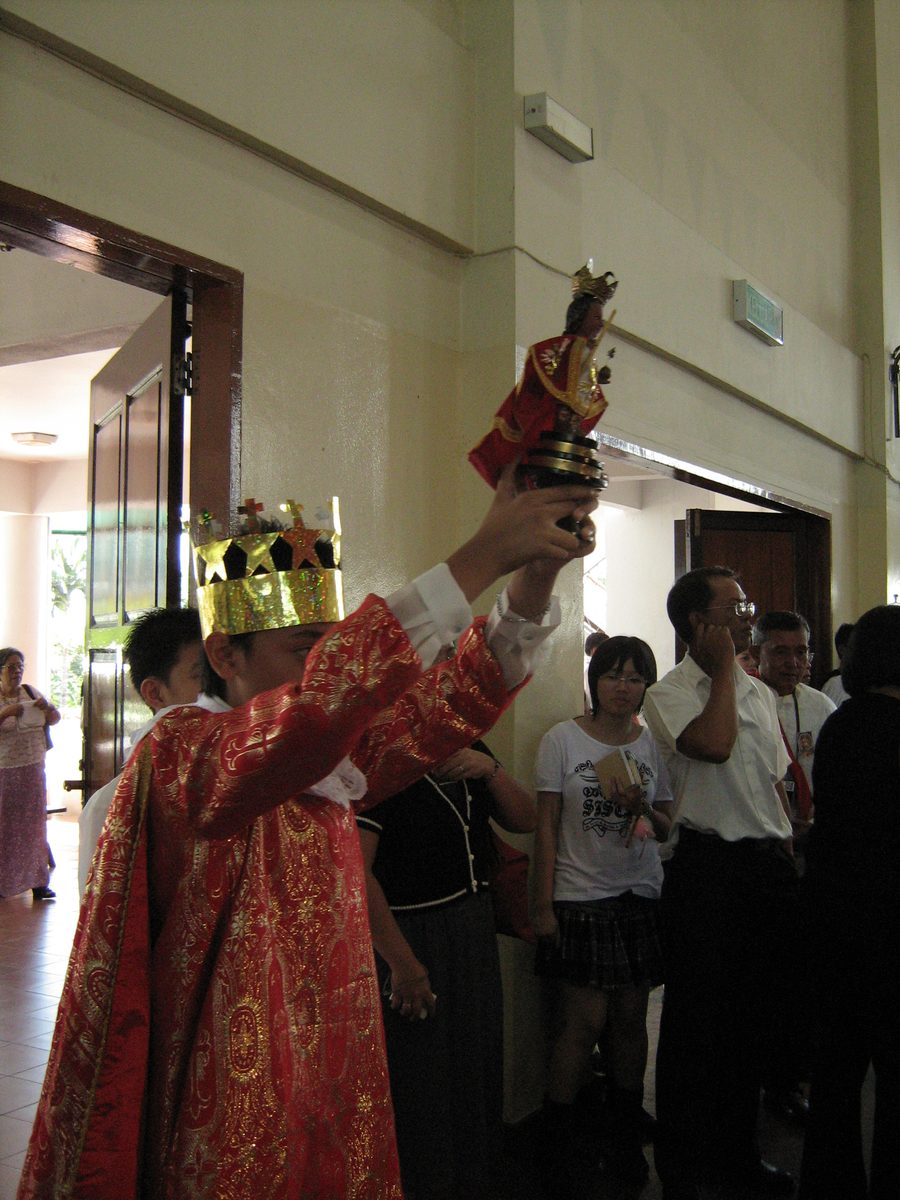
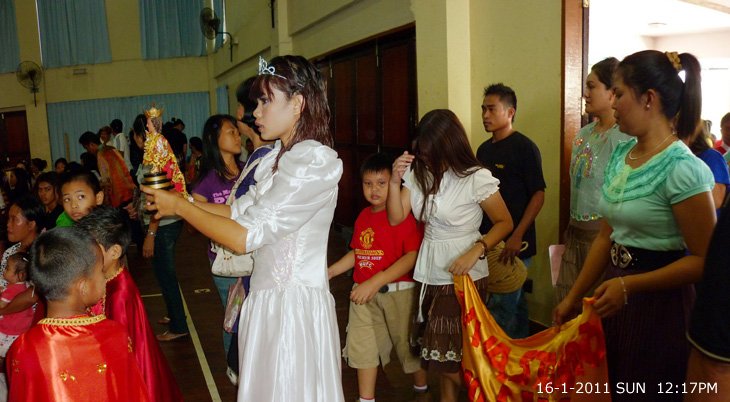
The feast of the Santo Niño is kept on the third Sunday of January. In Cebu it is the biggest festival of the year; wherever Cebuanos and other Filipinos live, the image goes with them — and in Tawau, it has been carried every January since 1998.
聖嬰節在每年1月的第三個星期日舉行。在宿霧,這是一年中最盛大的節日;凡有宿霧人和其他菲律賓人居住的地方,聖嬰像就跟著他們──在斗湖,從1998年起每年1月都有人捧著它遊行。
Pesta Santo Niño disambut pada hari Ahad ketiga bulan Januari. Di Cebu ia pesta terbesar tahun itu; di mana sahaja orang Cebuano dan orang Filipina lain tinggal, patung itu turut bersama mereka — dan di Tawau, ia diarak setiap Januari sejak 1998.
Sources: Wikipedia, “Santo Niño de Cebú”; Cultural Center of the Philippines, Encyclopedia of Philippine Art; Philippine Daily Inquirer (2015); The Freeman (20 Jan 2024); Columban Mission; Wikipedia, “Lapulapu”; Diocese of Sandakan (2012); eTawau Santo Niño photos (team).
資料來源:Wikipedia, “Santo Niño de Cebú”; Cultural Center of the Philippines, Encyclopedia of Philippine Art; Philippine Daily Inquirer (2015); The Freeman (20 Jan 2024); Columban Mission; Wikipedia, “Lapulapu”; Diocese of Sandakan (2012); eTawau Santo Niño photos (team).
Sumber: Wikipedia, “Santo Niño de Cebú”; Cultural Center of the Philippines, Encyclopedia of Philippine Art; Philippine Daily Inquirer (2015); The Freeman (20 Jan 2024); Columban Mission; Wikipedia, “Lapulapu”; Diocese of Sandakan (2012); eTawau Santo Niño photos (team).