From the island of the east — sandalwood, tais and the likurai drum — to the estates and the festival stage of Tawau
來自東方之島──檀香、塔伊斯織布和利庫萊鼓──來到斗湖的園坵和節慶舞台
Dari pulau di timur — cendana, tais dan gendang likurai — ke ladang dan pentas festival Tawau
Stream B · sea lanes源流B · 海路Aliran B · laluan laut
30,777 km²The island of Timor, shared by Indonesia and Timor-Leste帝汶島的面積,由印尼和東帝汶分治Pulau Timor, dikongsi Indonesia dan Timor-Leste
1225A Chinese official records Timor as rich in sandalwood一位中國官員記載帝汶盛產檀香Pegawai China mencatat Timor kaya dengan cendana
1950sEast Flores families begin to settle in Sabah東弗洛勒斯家庭開始在沙巴定居Keluarga Flores Timur mula menetap di Sabah
2006Earliest eTawau photos of Timor dancers at the Tawau festivaleTawau最早的帝汶舞者斗湖文化節照片Foto eTawau terawal penari Timor di festival Tawau
1
Who are the Timor people of Tawau?
斗湖的帝汶人是誰?
Siapakah orang Timor di Tawau?
The people Tawau calls “Timor” or “Timur” trace their roots to the far south-east of Indonesia: to the island of Timor — now shared by Indonesian West Timor and independent Timor-Leste — and to the neighbouring islands of Flores and Adonara in the province of East Nusa Tenggara. Most are Christians, many of them Catholics. Since at least the 1950s they have come to work on the estates of Sabah, above all in the Tawau Division, and some have married local people and stayed. At the Tawau festival they are known for their handwoven tais and the drum dance likurai.
Bangsa yang dipanggil “Timor” atau “Timur” di Tawau berakar di hujung tenggara Indonesia: di pulau Timor — kini dikongsi Timor Barat Indonesia dan Timor-Leste yang merdeka — dan di pulau-pulau jiran Flores dan Adonara di wilayah Nusa Tenggara Timur. Kebanyakannya Kristian, ramai yang Katolik. Sekurang-kurangnya sejak 1950-an mereka datang bekerja di ladang-ladang Sabah, terutamanya di Bahagian Tawau, dan ada yang berkahwin dengan penduduk tempatan dan menetap. Di festival Tawau mereka terkenal dengan kain tenunan tais dan tarian gendang likurai.
Stream B · sea lanes源流B · 海路Aliran B · laluan lautLanguages: Austronesian (Tetum, Uab Meto, Lamaholot) and Papuan (Bunak, Fataluku)語言:南島語(德頓語、Uab Meto語、拉馬霍洛特語)和巴布亞語(布納克語、法塔盧庫語)Bahasa: Austronesia (Tetum, Uab Meto, Lamaholot) dan Papua (Bunak, Fataluku)
Names you will meet
您會遇到的名字
Nama yang akan anda temui
Timor · Timur
the island; from Malay timur, “east”島名;源自馬來語timur(「東」)pulau itu; daripada perkataan Melayu timur
Timor-Leste
the independent country in the east of the island (since 2002)島東部的獨立國家(2002年起)negara merdeka di timur pulau (sejak 2002)
NTT
Nusa Tenggara Timur, the Indonesian province of West Timor, Flores and Sumba東努沙登加拉,包括西帝汶、弗洛勒斯和松巴的印尼省份Nusa Tenggara Timur, wilayah Indonesia yang merangkumi Timor Barat, Flores dan Sumba
Atoni · Dawan
the largest people of West Timor西帝汶最大的民族bangsa terbesar di Timor Barat
Tetum · Belu
people of central Timor; Tetum is a language of Timor-Leste帝汶中部的民族;德頓語是東帝汶的語言之一bangsa di tengah Timor; Tetum ialah bahasa Timor-Leste
Lamaholot · Florenese
the people of East Flores, Adonara and Solor東弗洛勒斯、阿多納拉和索洛的民族bangsa Flores Timur, Adonara dan Solor
Om
what many Timor and Flores workers are called in Sabah在沙巴,許多帝汶和弗洛勒斯工人被這樣稱呼panggilan bagi ramai pekerja Timor dan Flores di Sabah
the welcome war dance, and the small drum the women beat迎賓戰舞,以及婦女拍打的小鼓tarian perang sambutan, dan gendang kecil yang dipukul wanita
Sources: Wikipedia, “Timor”, “Timorese in Malaysia” and “Lamaholot people”; Wan Shawaluddin et al., MANU 22 (2015); R. Tirtosudarmo (2018); UNESCO (2021); eTawau festival photos.
資料來源:Wikipedia, “Timor”, “Timorese in Malaysia” and “Lamaholot people”; Wan Shawaluddin et al., MANU 22 (2015); R. Tirtosudarmo (2018); UNESCO (2021); eTawau festival photos.
Sumber: Wikipedia, “Timor”, “Timorese in Malaysia” and “Lamaholot people”; Wan Shawaluddin et al., MANU 22 (2015); R. Tirtosudarmo (2018); UNESCO (2021); eTawau festival photos.
2
Timor and its neighbours
帝汶島及其鄰島
Timor dan pulau-pulau jirannya
Timor and its neighbours: the island shared by Indonesia and Timor-Leste, and Flores, Adonara and Solor, home of many of Tawau’s “Timor” families. Schematic, not to scale.帝汶島及其鄰島:由印尼和東帝汶分治的帝汶島,以及斗湖許多「帝汶」家庭的故鄉弗洛勒斯、阿多納拉和索洛。示意圖,非按比例。Timor dan pulau-pulau jirannya: pulau yang dikongsi Indonesia dan Timor-Leste, serta Flores, Adonara dan Solor, kampung halaman ramai keluarga “Timor” di Tawau. Skematik, tidak berskala.
Timor is a dry, mountainous island of 30,777 km² at the eastern end of the Lesser Sunda Islands, less than 500 km from Australia. Its highest peaks are Mutis in West Timor and Ramelau in Timor-Leste. The west, with the capital Kupang, belongs to Indonesia’s province of East Nusa Tenggara (5.3 million people in 2020), which also takes in Flores, Sumba and more than 500 smaller islands. The east is the Democratic Republic of Timor-Leste, with its capital at Dili, which in 2025 joined ASEAN.
Timor ialah pulau kering dan bergunung seluas 30,777 km² di hujung timur Kepulauan Sunda Kecil, kurang 500 km dari Australia. Puncak tertingginya ialah Mutis di Timor Barat dan Ramelau di Timor-Leste. Bahagian barat, dengan ibu kota Kupang, milik wilayah Nusa Tenggara Timur Indonesia (5.3 juta penduduk pada 2020), yang juga merangkumi Flores, Sumba dan lebih 500 pulau kecil. Bahagian timur ialah Republik Demokratik Timor-Leste, dengan ibu kota di Dili, yang menyertai ASEAN pada 2025.
🌳
Sandalwood
檀香
Cendana
The fragrant wood that brought traders from China, Java, Luzon and Portugal.
把中國、爪哇、呂宋和葡萄牙商人吸引而來的芬芳木材。
Kayu wangi yang membawa pedagang dari China, Jawa, Luzon dan Portugal.
🗣️
Two families of languages
兩大語系
Dua keluarga bahasa
Austronesian Tetum and Uab Meto beside Papuan Bunak, Makasae and Fataluku.
南島語系的德頓語、Uab Meto語,與巴布亞語系的布納克語、馬卡賽語和法塔盧庫語並存。
Tetum dan Uab Meto (Austronesia) di samping Bunak, Makasae dan Fataluku (Papua).
⛪
A Christian island
基督教之島
Pulau Kristian
About 90 per cent of the people of Timor are Christian.
帝汶約90%的人口是基督徒。
Kira-kira 90 peratus penduduk Timor beragama Kristian.
Sources: Wikipedia, “Timor” and “East Nusa Tenggara”; Britannica, “East Nusa Tenggara”; Kaiping & Klamer (2022); Malay Mail and Bernama (ASEAN, 26 Oct 2025).
資料來源:Wikipedia, “Timor” and “East Nusa Tenggara”; Britannica, “East Nusa Tenggara”; Kaiping & Klamer (2022); Malay Mail and Bernama (ASEAN, 26 Oct 2025).
Sumber: Wikipedia, “Timor” and “East Nusa Tenggara”; Britannica, “East Nusa Tenggara”; Kaiping & Klamer (2022); Malay Mail and Bernama (ASEAN, 26 Oct 2025).
3
Sandalwood, kings and two colonial powers
檀香、王國與兩個殖民強權
Cendana, raja dan dua kuasa penjajah
From at least the 10th century, Timor’s sandalwood was shipped to China; in 1225 the Chinese official Zhao Rugua noted the island as rich in it. Tetum tradition tells that their ancestors came from “Sina Mutin Malaka” and founded four kingdoms, of which Wehali was the most powerful, while the Atoni of the west lived in round houses called ume kbubu. Portuguese traders and Dominican friars arrived in the 16th century — the friars founded Lifau in 1556 — and for a century the real power lay with the Catholic, Portuguese-speaking Topasses. The Dutch took Kupang in the 1650s. The island was finally divided by treaties of 1859 and 1914–1916.
Sekurang-kurangnya sejak abad ke-10, cendana Timor dihantar ke China; pada 1225 pegawai China Zhao Rugua mencatat pulau itu kaya dengannya. Tradisi Tetum menyatakan leluhur mereka datang dari “Sina Mutin Malaka” dan mengasaskan empat kerajaan, dengan Wehali paling berkuasa, manakala orang Atoni di barat tinggal di rumah bulat yang dipanggil ume kbubu. Pedagang Portugis dan paderi Dominican tiba pada abad ke-16 — paderi itu membuka Lifau pada 1556 — dan selama satu abad kuasa sebenar terletak pada Topasses yang Katolik dan berbahasa Portugis. Belanda merampas Kupang pada 1650-an. Pulau itu akhirnya dibahagi melalui perjanjian 1859 dan 1914–1916.
⛪ 1556⛪ 1556年⛪ 1556Dominican friars found Lifau.道明會修士建立利法烏。Paderi Dominican membuka Lifau.
🏰 1650s🏰 1650年代🏰 1650-anThe Dutch take Kupang and build Fort Concordia.荷蘭人奪得古邦,建造和諧堡。Belanda merampas Kupang dan membina Kubu Concordia.
📜 1859 · 1916📜 1859 · 1916年📜 1859 · 1916Treaties divide the island between the Dutch and the Portuguese.條約把島嶼分給荷蘭和葡萄牙。Perjanjian membahagi pulau antara Belanda dan Portugis.
Sources: Wikipedia, “Chinese people in Timor-Leste”, “Tetum people”, “Atoni”, “Portuguese Timor” and “West Timor”; Leiden University review of de Roever (2002); WorldStatesmen; Cavac (treaties).
資料來源:Wikipedia, “Chinese people in Timor-Leste”, “Tetum people”, “Atoni”, “Portuguese Timor” and “West Timor”; Leiden University review of de Roever (2002); WorldStatesmen; Cavac (treaties).
Sumber: Wikipedia, “Chinese people in Timor-Leste”, “Tetum people”, “Atoni”, “Portuguese Timor” and “West Timor”; Leiden University review of de Roever (2002); WorldStatesmen; Cavac (treaties).
4
War, a divided island and a new nation
戰爭、分裂的島嶼與新生的國家
Perang, pulau yang terbelah dan negara baharu
In the Second World War, Australian commandos of Sparrow Force fought the Japanese in the mountains of Timor from February 1942 to February 1943, helped by Timorese known as criados; tens of thousands of Timorese civilians died during the occupation. After 1949 the Dutch west became part of Indonesia. The Portuguese east declared independence in November 1975, was invaded by Indonesia on 7 December 1975, voted for independence in a UN ballot on 30 August 1999, and became the independent nation of Timor-Leste on 20 May 2002. On 26 October 2025, in Kuala Lumpur, Timor-Leste became the 11th member of ASEAN.
Dalam Perang Dunia Kedua, komando Australia Sparrow Force memerangi Jepun di pergunungan Timor dari Februari 1942 hingga Februari 1943, dibantu orang Timor yang dikenali sebagai criados; puluhan ribu orang awam Timor terkorban semasa pendudukan. Selepas 1949 bahagian barat milik Belanda menjadi sebahagian Indonesia. Bahagian timur milik Portugis mengisytiharkan kemerdekaan pada November 1975, diserang Indonesia pada 7 Disember 1975, mengundi untuk merdeka dalam undian PBB pada 30 Ogos 1999, dan menjadi negara merdeka Timor-Leste pada 20 Mei 2002. Pada 26 Oktober 2025, di Kuala Lumpur, Timor-Leste menjadi anggota ke-11 ASEAN.
One island, two stories
一個島,兩種故事
Satu pulau, dua kisah
For Timor-Leste, 1975–1999 was an occupation and 2002 a restoration of independence. For many families in Indonesian West Timor, the same years brought soldiers, refugees and new neighbours from across the border. eTawau tells both sides from the sources and takes no side.
Bagi Timor-Leste, 1975–1999 ialah pendudukan dan 2002 pemulihan kemerdekaan. Bagi ramai keluarga di Timor Barat Indonesia, tahun-tahun yang sama membawa tentera, pelarian dan jiran baharu dari seberang sempadan. eTawau menceritakan kedua-dua pihak berdasarkan sumber dan tidak memihak.
Sources: Wikipedia, “Battle of Timor”; Australian War Memorial; UCDP; UN Peacemaker; Gale (2022); ANU Press; Bernama, The Star, Malay Mail (26 Oct 2025).
資料來源:Wikipedia, “Battle of Timor”; Australian War Memorial; UCDP; UN Peacemaker; Gale (2022); ANU Press; Bernama, The Star, Malay Mail (26 Oct 2025).
Sumber: Wikipedia, “Battle of Timor”; Australian War Memorial; UCDP; UN Peacemaker; Gale (2022); ANU Press; Bernama, The Star, Malay Mail (26 Oct 2025).
5
The Timor people in Sabah and Tawau
沙巴與斗湖的帝汶人
Orang Timor di Sabah dan Tawau
The usual way north: by ship to Kalimantan, then across the border into Sabah. Schematic, not to scale.常見的北上路線:乘船到加里曼丹,再越境進入沙巴。示意圖,非按比例。Laluan biasa ke utara: dengan kapal ke Kalimantan, kemudian merentas sempadan ke Sabah. Skematik, tidak berskala.
The Australian demographer Graeme Hugo suggested that the flow from East Nusa Tenggara to Sabah may have begun with men left behind after the Second World War, who found work on North Borneo’s plantations. The Indonesian scholar Riwanto Tirtosudarmo writes that East Flores families began to settle in Sabah in the late 1950s, travelling by ship to Kalimantan and crossing the border, and working as plantation labourers. An estate list from the 1960s shows 34 Timor men, women and children on Imam Estate in Tawau. By the 2010s, Malaysian researchers found the Timor — people of Timor, Adonara and Flores, known in Sabah as “Om” — to be the second-largest group of Indonesian estate workers after the Bugis. Wikipedia notes that most Timorese in Malaysia live in the Tawau Division, and that some have married into local families.
Ahli demografi Australia Graeme Hugo mencadangkan bahawa aliran dari Nusa Tenggara Timur ke Sabah mungkin bermula dengan lelaki yang tertinggal selepas Perang Dunia Kedua, yang mendapat kerja di ladang-ladang Borneo Utara. Sarjana Indonesia Riwanto Tirtosudarmo menulis bahawa keluarga Flores Timur mula menetap di Sabah pada lewat 1950-an, belayar ke Kalimantan dan menyeberang sempadan, dan bekerja sebagai buruh ladang. Senarai ladang dari 1960-an menunjukkan 34 orang Timor — lelaki, wanita dan kanak-kanak — di Ladang Imam, Tawau. Menjelang 2010-an, penyelidik Malaysia mendapati orang Timor — orang dari Timor, Adonara dan Flores, yang dikenali di Sabah sebagai “Om” — ialah kumpulan pekerja ladang Indonesia kedua terbesar selepas Bugis. Wikipedia mencatat kebanyakan orang Timor di Malaysia tinggal di Bahagian Tawau, dan ada yang telah berkahwin dengan keluarga tempatan.
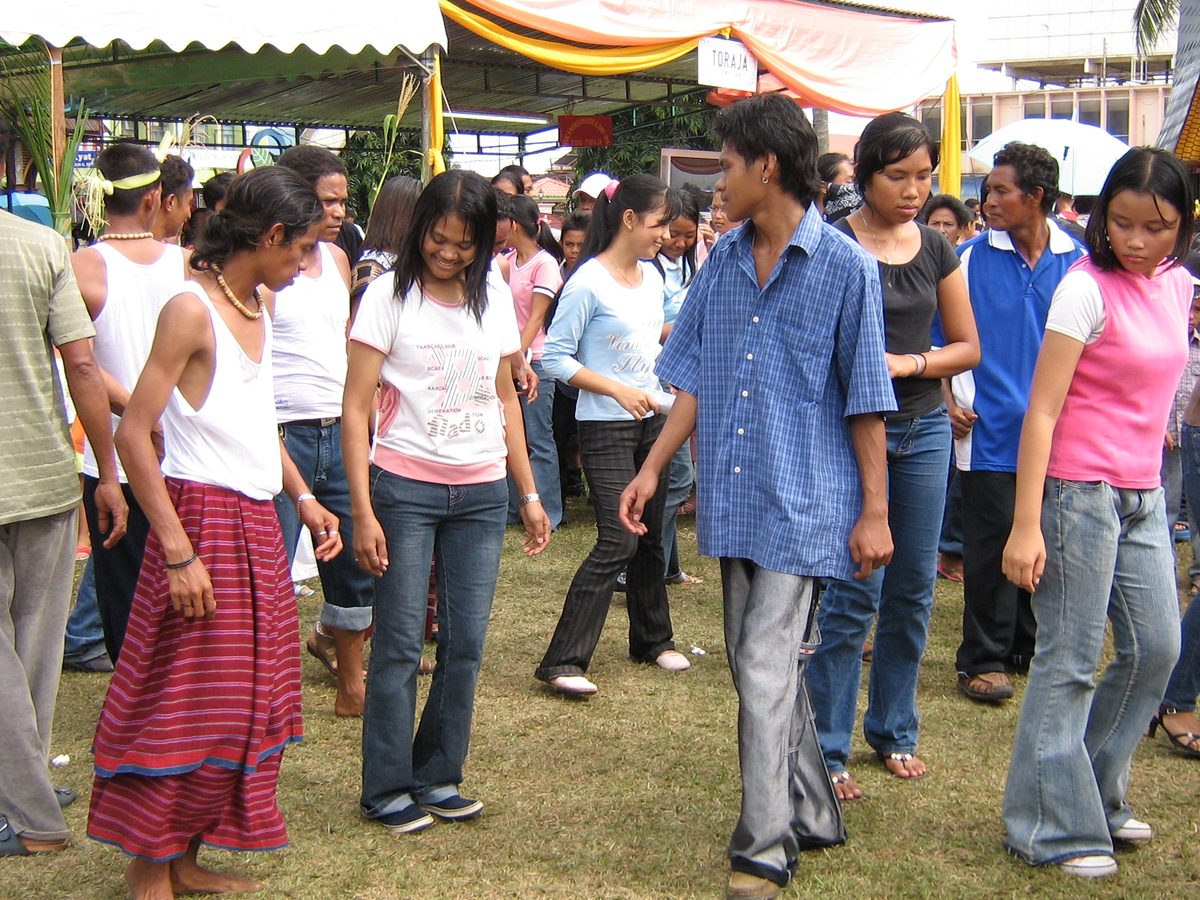
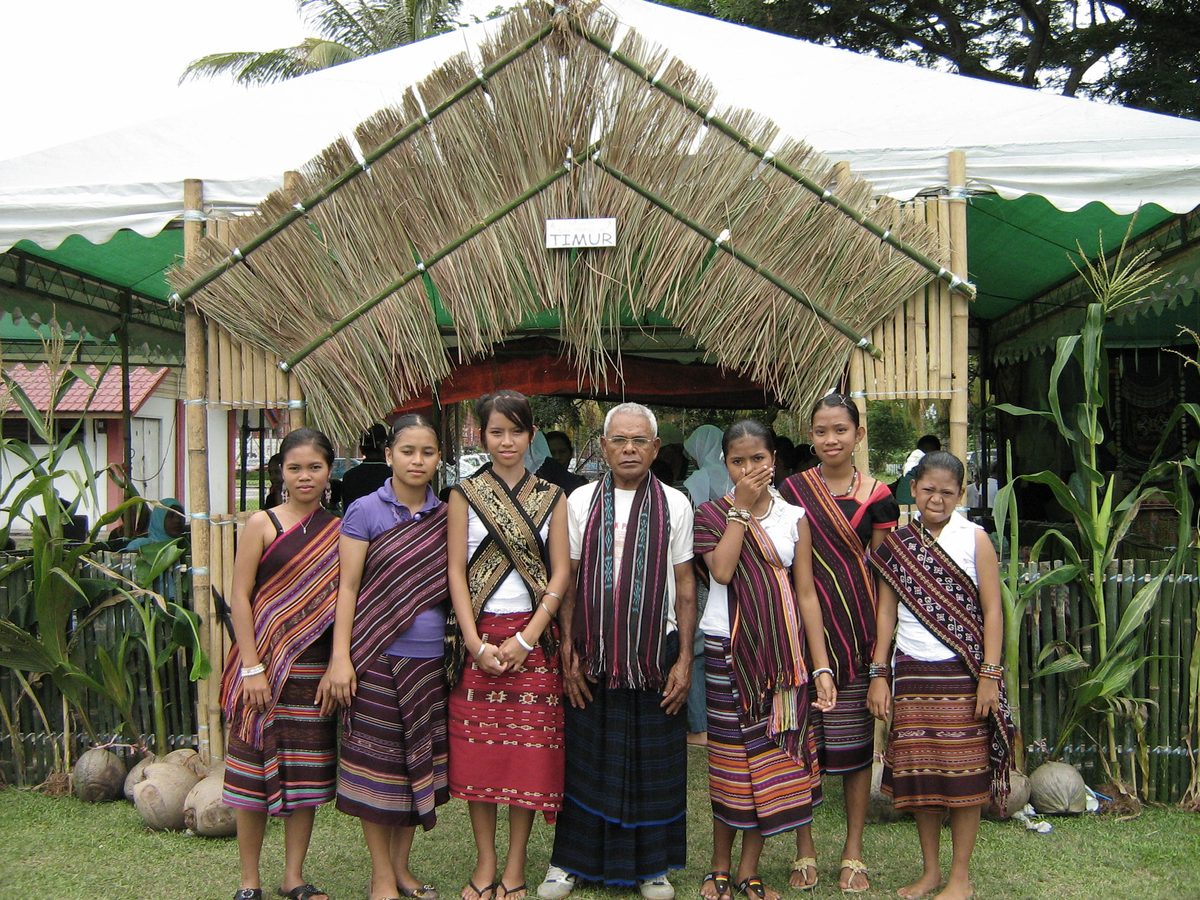
Timor youths teaching the crowd to dance, Tawau Cultural Festival, 26 March 2006.帝汶青年教觀眾跳舞,斗湖文化節,2006年3月26日。Belia Timor mengajar orang ramai menari, Festival Kebudayaan Tawau, 26 Mac 2006.The Timor group at their thatched booth, Tawau Cultural Festival, 25 March 2007.帝汶隊伍在茅草攤位前,斗湖文化節,2007年3月25日。Kumpulan Timor di gerai beratap rumbia, Festival Kebudayaan Tawau, 25 Mac 2007.
Sources differ: when did they come?
說法不一:他們何時到來?
Sumber berbeza: bilakah mereka datang?
Hugo places the first pioneers in the 1940s; Tirtosudarmo says the late 1950s; Wikipedia says most arrived after Indonesia occupied East Timor in 1975. All three may be true for different families from different places.
Hugo meletakkan perintis pertama pada 1940-an; Tirtosudarmo menyebut lewat 1950-an; Wikipedia menyatakan kebanyakannya tiba selepas Indonesia menduduki Timor Timur pada 1975. Ketiga-tiganya mungkin benar bagi keluarga berbeza dari tempat berbeza.
What we still do not know
我們仍不知道的事
Apa yang kita masih belum tahu
Which estates did the first Timor families of Tawau work on, and where did they live? How many Timor-descended people live in the Tawau Division today? Malaysian statistics do not count them separately. Please share your family’s story with eTawau.
Di ladang manakah keluarga Timor pertama di Tawau bekerja, dan di mana mereka tinggal? Berapa ramai keturunan Timor di Bahagian Tawau hari ini? Statistik Malaysia tidak mengira mereka secara berasingan. Sila kongsikan kisah keluarga anda dengan eTawau.
Sources: A. T. Eki (2002), citing G. Hugo; R. Tirtosudarmo (2018); Wan Shawaluddin, Ramli Dollah & Dewi Herviani, MANU 22 (2015); Wikipedia, “Timorese in Malaysia”; festival photos (team).
資料來源:A. T. Eki (2002), citing G. Hugo; R. Tirtosudarmo (2018); Wan Shawaluddin, Ramli Dollah & Dewi Herviani, MANU 22 (2015); Wikipedia, “Timorese in Malaysia”; festival photos (team).
Sumber: A. T. Eki (2002), citing G. Hugo; R. Tirtosudarmo (2018); Wan Shawaluddin, Ramli Dollah & Dewi Herviani, MANU 22 (2015); Wikipedia, “Timorese in Malaysia”; festival photos (team).
6
Through the ages
歷代變遷
Sepanjang zaman
10th centuryTimorese sandalwood reaches China through the Straits of Malacca.帝汶檀香經馬六甲海峽運往中國。Cendana Timor sampai ke China melalui Selat Melaka.
1225Zhao Rugua records Timor as rich in sandalwood.趙汝适記載帝汶盛產檀香。Zhao Rugua mencatat Timor kaya dengan cendana.
c. 14th century (tradition)The Tetum arrive from “Sina Mutin Malaka” and found Wehali and other kingdoms.德頓人從「Sina Mutin Malaka」到來,建立韋哈利等王國。Orang Tetum tiba dari “Sina Mutin Malaka” dan mengasaskan Wehali dan kerajaan lain.
1365The Javanese Nagarakretagama names Timor among Majapahit’s tributaries.爪哇《爪哇史頌》把帝汶列為滿者伯夷的屬地。Nagarakretagama Jawa menamakan Timor antara negeri naungan Majapahit.
1556Dominican friars found Lifau on the north coast.道明會修士在北岸建立利法烏。Paderi Dominican membuka Lifau di pantai utara.
1613Larantuka on Flores becomes the Portuguese base.弗洛勒斯島的拉蘭圖卡成為葡萄牙據點。Larantuka di Flores menjadi pangkalan Portugis.
1650sThe Dutch take Kupang (Fort Concordia).荷蘭人奪得古邦(和諧堡)。Belanda merampas Kupang (Kubu Concordia).
1702The first Portuguese governor arrives at Lifau.第一任葡萄牙總督抵達利法烏。Gabenor Portugis pertama tiba di Lifau.
1769The Portuguese capital moves to Dili.葡萄牙首府遷到帝力。Ibu kota Portugis berpindah ke Dili.
1859 · 1916Treaties divide Timor between the Netherlands and Portugal.條約把帝汶分給荷蘭和葡萄牙。Perjanjian membahagi Timor antara Belanda dan Portugis.
1942–1943Japan invades; Sparrow Force and Timorese criados fight a guerrilla war.日本入侵;雀鳥部隊和帝汶「隨從」打游擊戰。Jepun menyerang; Sparrow Force dan criados Timor berperang gerila.
1940s–1960sHugo’s “pioneer stage” of migration from East Nusa Tenggara to Sabah.雨果所說的東努沙登加拉到沙巴移民的「先驅階段」。“Peringkat perintis” Hugo bagi penghijrahan dari NTT ke Sabah.
1958Indonesia creates the province of East Nusa Tenggara.印尼設立東努沙登加拉省。Indonesia mewujudkan wilayah Nusa Tenggara Timur.
Late 1950sEast Flores families begin to settle in Sabah.東弗洛勒斯家庭開始在沙巴定居。Keluarga Flores Timur mula menetap di Sabah.
1960s34 Timor workers and family members on Imam Estate, Tawau.斗湖伊瑪目園坵有34名帝汶工人及家屬。34 pekerja Timor dan keluarga di Ladang Imam, Tawau.
1975Indonesia invades East Timor (7 December).印尼入侵東帝汶(12月7日)。Indonesia menyerang Timor Timur (7 Disember).
1992An Indonesian Catholic welfare group is founded at Holy Trinity Church, Tawau.斗湖聖三堂成立印尼天主教福利會。Kumpulan kebajikan Katolik Indonesia diasaskan di Gereja Holy Trinity, Tawau.
1999East Timor votes for independence (30 August).東帝汶公投選擇獨立(8月30日)。Timor Timur mengundi untuk merdeka (30 Ogos).
2006Timor youths teach the crowd to dance at the Tawau Cultural Festival (26 March).帝汶青年在斗湖文化節上教觀眾跳舞(3月26日)。Belia Timor mengajar orang ramai menari di Festival Kebudayaan Tawau (26 Mac).
2007Timor dancers on the open-air stage of the Tawau festival (25 March).帝汶舞者在斗湖文化節露天舞台演出(3月25日)。Penari Timor di pentas terbuka festival Tawau (25 Mac).
2012The second Flores–Kalimantan–Sabah pastoral meeting is held at Holy Trinity, Tawau (22–23 May).第二次弗洛勒斯—加里曼丹—沙巴牧靈會議在斗湖聖三堂舉行(5月22–23日)。Pertemuan pastoral Flores–Kalimantan–Sabah kedua diadakan di Holy Trinity, Tawau (22–23 Mei).
2014Xanana Gusmão, Prime Minister of Timor-Leste, visits Sabah (2 April).東帝汶總理夏納納·古斯芒訪問沙巴(4月2日)。Xanana Gusmão, Perdana Menteri Timor-Leste, melawat Sabah (2 April).
2017More than 6,000 dancers perform the likurai at Fulan Fehan, Belu (28 October).六千多名舞者在貝盧的富蘭費漢同跳利庫萊(10月28日)。Lebih 6,000 penari mempersembahkan likurai di Fulan Fehan, Belu (28 Oktober).
2021UNESCO lists Timor-Leste’s tais for urgent safeguarding (15 December).聯合國教科文組織把東帝汶的塔伊斯列入急需保護名錄(12月15日)。UNESCO menyenaraikan tais Timor-Leste untuk perlindungan segera (15 Disember).
2025Timor-Leste joins ASEAN in Kuala Lumpur (26 October).東帝汶在吉隆坡加入東盟(10月26日)。Timor-Leste menyertai ASEAN di Kuala Lumpur (26 Oktober).
Sources: Wikipedia (“Timor”, “Pre-colonial Timor”, “Chinese people in Timor-Leste”, “Tetum people”, “Portuguese Timor”, “Battle of Timor”, “East Nusa Tenggara”); WorldStatesmen; Eki (2002); Tirtosudarmo (2018); MANU 22 (2015); Diocese of Sandakan; UMS; JPNN; UNESCO; Bernama; eTawau photos.
資料來源:Wikipedia (“Timor”, “Pre-colonial Timor”, “Chinese people in Timor-Leste”, “Tetum people”, “Portuguese Timor”, “Battle of Timor”, “East Nusa Tenggara”); WorldStatesmen; Eki (2002); Tirtosudarmo (2018); MANU 22 (2015); Diocese of Sandakan; UMS; JPNN; UNESCO; Bernama; eTawau photos.
Sumber: Wikipedia (“Timor”, “Pre-colonial Timor”, “Chinese people in Timor-Leste”, “Tetum people”, “Portuguese Timor”, “Battle of Timor”, “East Nusa Tenggara”); WorldStatesmen; Eki (2002); Tirtosudarmo (2018); MANU 22 (2015); Diocese of Sandakan; UMS; JPNN; UNESCO; Bernama; eTawau photos.
7
Tais, likurai and the round house
塔伊斯織布、利庫萊舞與圓屋
Tais, likurai dan rumah bulat
How tais is made: cotton, dye from plants, a simple loom, and motifs that show where the wearer belongs. Schematic drawing.塔伊斯的製作:棉花、植物染料、簡單的織機,以及顯示穿戴者歸屬的花紋。示意圖。Bagaimana tais dibuat: kapas, pewarna tumbuhan, alat tenun ringkas, dan motif yang menunjukkan asal pemakai. Lukisan skematik.
🧵 Tais🧵 塔伊斯🧵 TaisHandwoven by women from plant-dyed cotton; on UNESCO’s urgent safeguarding list since 2021.婦女用植物染色的棉紗手織而成;2021年起列入聯合國教科文組織急需保護名錄。Ditenun tangan oleh wanita daripada kapas berwarna tumbuhan; dalam senarai perlindungan segera UNESCO sejak 2021.
🥁 Likurai🥁 利庫萊🥁 LikuraiOnce a welcome for warriors home from battle; men dance with swords, women beat the tihar drum.原是迎接戰士凱旋的舞蹈;男人持劍,婦女拍打tihar鼓。Dahulu sambutan pahlawan pulang dari perang; lelaki menari dengan pedang, wanita memukul gendang tihar.
🛖 Ume kbubu🛖 圓屋🛖 Ume kbubuThe Atoni round house, with a door so low that every adult must bow.阿托尼人的圓屋,門低得每個成年人都要彎腰。Rumah bulat Atoni, dengan pintu yang rendah sehingga setiap orang dewasa mesti tunduk.
🕯️ Semana Santa🕯️ 聖週🕯️ Semana SantaLarantuka’s Holy Week, Portuguese devotion kept since the 16th century.拉蘭圖卡的聖週,保留自16世紀的葡式虔敬。Minggu Suci Larantuka, devosi Portugis sejak abad ke-16.
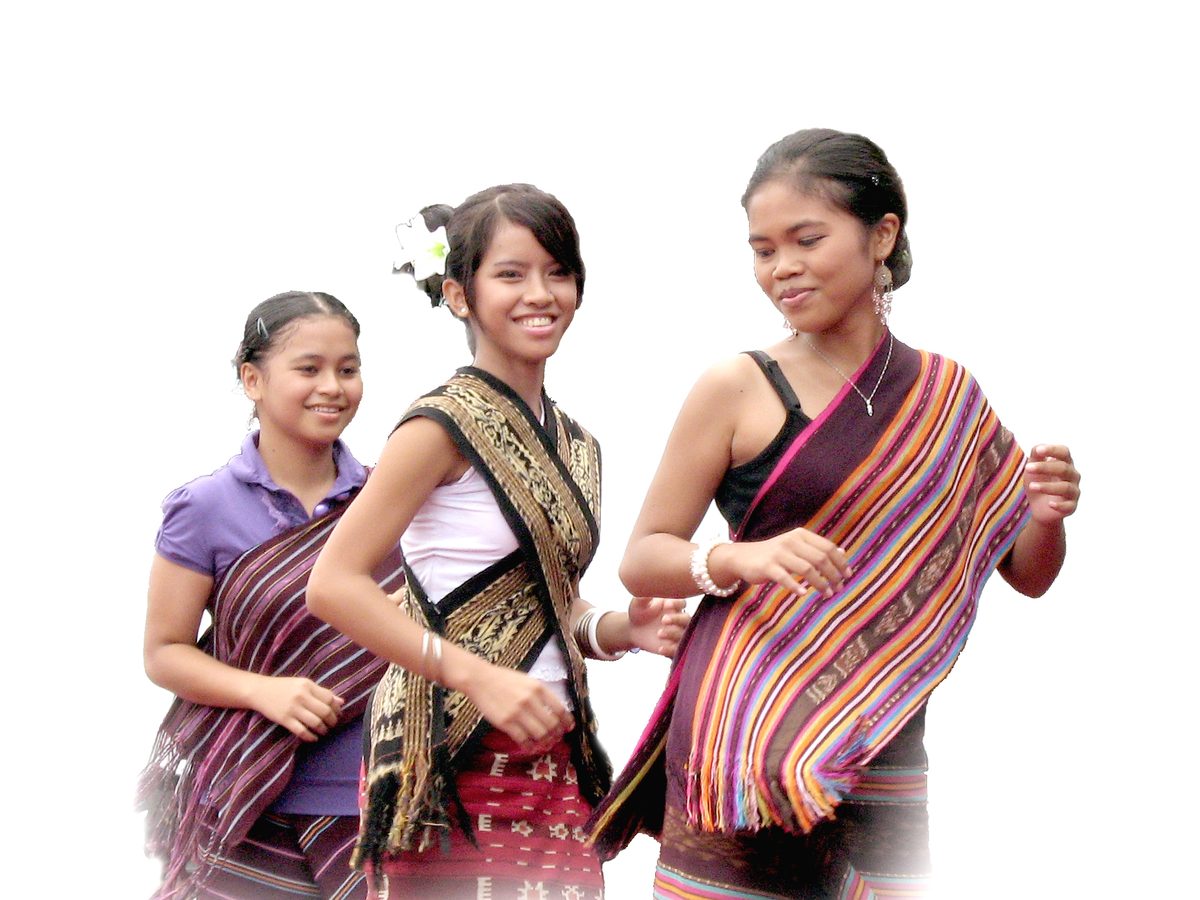
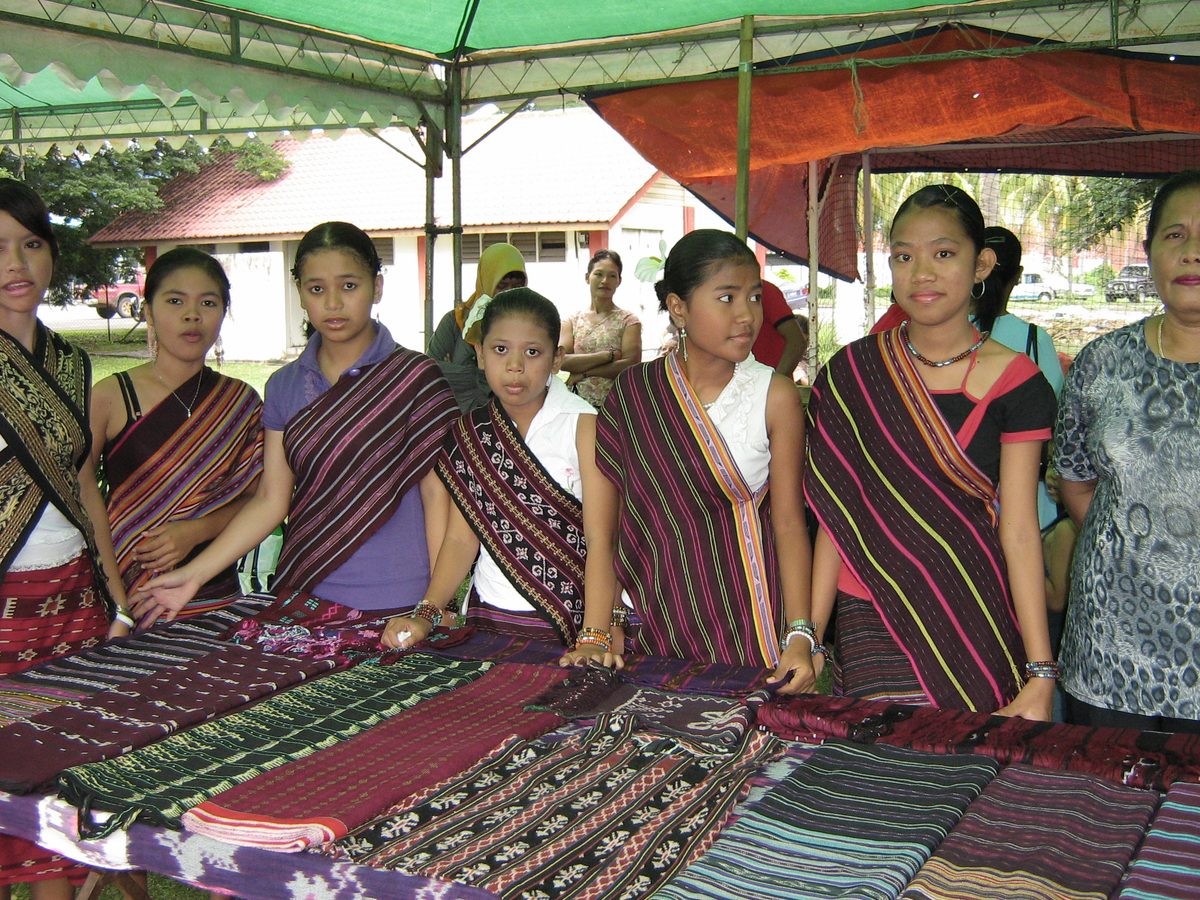
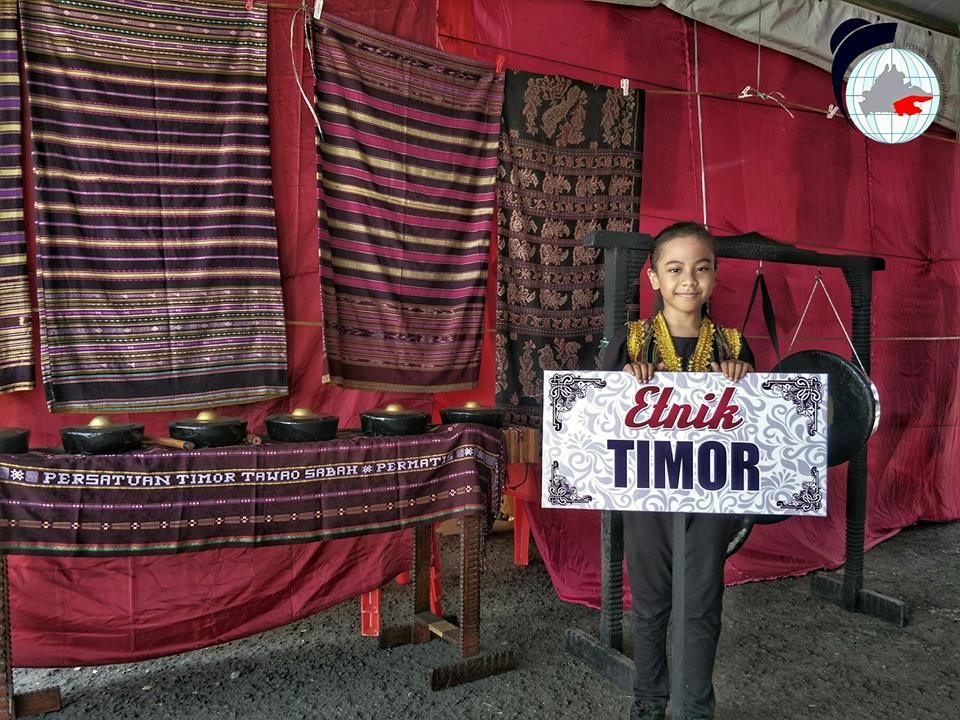
Dancers in tais shawls, Tawau Cultural Festival, 25 March 2007.披著塔伊斯的舞者,斗湖文化節,2007年3月25日。Penari berselendang tais, Festival Kebudayaan Tawau, 25 Mac 2007.Woven tais on show at the Timor booth, 25 March 2007.帝汶攤位展示的手織塔伊斯,2007年3月25日。Tais tenunan dipamerkan di gerai Timor, 25 Mac 2007.Gongs, tais and the PERMATIS banner at the Timor booth (photo file dated April 2018).帝汶攤位上的銅鑼、塔伊斯和PERMATIS橫幅(照片檔案日期為2018年4月)。Gong, tais dan sepanduk PERMATIS di gerai Timor (fail foto bertarikh April 2018).
Sources: UNESCO ICH (2021); The Jakarta Post (2017); JPNN (2017); Wikipedia, “Music of East Timor” and “Atoni”; Zenodo (2024); Indonesia Travel (Semana Santa); eTawau festival photos (team).
資料來源:UNESCO ICH (2021); The Jakarta Post (2017); JPNN (2017); Wikipedia, “Music of East Timor” and “Atoni”; Zenodo (2024); Indonesia Travel (Semana Santa); eTawau festival photos (team).
Sumber: UNESCO ICH (2021); The Jakarta Post (2017); JPNN (2017); Wikipedia, “Music of East Timor” and “Atoni”; Zenodo (2024); Indonesia Travel (Semana Santa); eTawau festival photos (team).
8
The Timor people today
今日帝汶人
Orang Timor hari ini
Many Timor and Flores families in Sabah find a second home in the church. At Holy Trinity Church, Tawau, an Indonesian Catholic welfare group has met since 1992, and the Catholic dioceses of Flores, North Kalimantan and Sabah now plan pastoral care together. Life is not easy: the anthropologist Catherine Allerton describes families “stuck” between a village they cannot afford to return to and a country where their Sabah-born children cannot go to government school. Yet at every Tawau festival the community is there — with tais, gongs and the likurai drum.
Ramai keluarga Timor dan Flores di Sabah menemui rumah kedua di gereja. Di Gereja Holy Trinity, Tawau, kumpulan kebajikan Katolik Indonesia telah bertemu sejak 1992, dan keuskupan Katolik di Flores, Kalimantan Utara dan Sabah kini merancang penjagaan pastoral bersama. Hidup tidak mudah: ahli antropologi Catherine Allerton menggambarkan keluarga yang “tersepit” antara kampung yang tidak mampu mereka pulangi dan negara tempat anak-anak mereka yang lahir di Sabah tidak dapat ke sekolah kerajaan. Namun di setiap festival Tawau komuniti itu hadir — dengan tais, gong dan gendang likurai.
Two views
兩種觀點
Dua pandangan
Sabah’s plantations — the state’s largest employer of foreign workers — depend on Indonesian labour, while the state enforces the immigration law and deports undocumented workers through Tawau to Nunukan. Church and migrant-rights groups ask for better protection for workers and their children. eTawau records these views without taking sides.
Ladang-ladang Sabah — majikan terbesar pekerja asing di negeri ini — bergantung kepada buruh Indonesia, manakala negeri menguatkuasakan undang-undang imigresen dan menghantar pulang pekerja tanpa dokumen melalui Tawau ke Nunukan. Kumpulan gereja dan hak pekerja migran meminta perlindungan lebih baik untuk pekerja dan anak-anak mereka. eTawau merekodkan pandangan ini tanpa memihak.
Sources: Diocese of Sandakan (2011–2012); Archdiocese of Kota Kinabalu (2017); C. Allerton, Ethnos 85(2) (2020); MANU 22 (2015); The Star and Daily Express (deportations via Tawau).
資料來源:Diocese of Sandakan (2011–2012); Archdiocese of Kota Kinabalu (2017); C. Allerton, Ethnos 85(2) (2020); MANU 22 (2015); The Star and Daily Express (deportations via Tawau).
Sumber: Diocese of Sandakan (2011–2012); Archdiocese of Kota Kinabalu (2017); C. Allerton, Ethnos 85(2) (2020); MANU 22 (2015); The Star and Daily Express (deportations via Tawau).
9
The Timor Story, in eight chapters
帝汶的故事(共八篇)
Kisah Timor, dalam lapan bab
A light-reading series for visitors, students and families, in three languages. These are short first drafts that eTawau will develop into full articles as more information and photos arrive.
Siri bacaan ringan untuk pelawat, pelajar dan keluarga, dalam tiga bahasa. Ini draf pertama yang pendek yang akan dikembangkan oleh eTawau menjadi artikel lengkap apabila lebih banyak maklumat dan foto diterima.
A Chinese official, a Portuguese governor, a national leader, a choreographer, and the scholars who wrote down the story of the journey to Sabah.
一位中國官員、一位葡萄牙總督、一位國家領袖、一位編舞家,以及記錄前往沙巴之旅的學者們。
Seorang pegawai China, seorang gabenor Portugis, seorang pemimpin negara, seorang koreografer, dan para sarjana yang mencatat kisah perjalanan ke Sabah.
ZR
Zhao Rugua (趙汝适)
Song dynasty official, 1225宋朝官員,1225年Pegawai Dinasti Song, 1225
In his notes on foreign lands, compiled from traders, he recorded Timor as a place rich in sandalwood — one of the earliest written mentions of the island.
他根據商人口述編成的外國筆記中,把帝汶記為盛產檀香之地──這是關於此島最早的文字記載之一。
Dalam catatannya tentang negeri asing yang dikumpul daripada pedagang, beliau mencatat Timor sebagai tempat kaya cendana — antara sebutan bertulis terawal tentang pulau itu.
Wikipedia, “Chinese people in Timor-Leste” and “Timor”
CG
António Coelho Guerreiro
First Portuguese governor, 1702首任葡萄牙總督,1702年Gabenor Portugis pertama, 1702
Sent from Lisbon to Lifau in 1702, when the territory officially became the colony of Portuguese Timor.
1702年由里斯本派往利法烏,那一年這片領土正式成為葡屬帝汶殖民地。
Dihantar dari Lisbon ke Lifau pada 1702, apabila wilayah itu secara rasmi menjadi tanah jajahan Timor Portugis.
Wikipedia, “Portuguese Timor”
XG
Xanana Gusmão
Resistance leader; first President of Timor-Leste抵抗運動領袖;東帝汶首任總統Pemimpin penentangan; Presiden pertama Timor-Leste
Elected first president in 2002. As Prime Minister he visited Sabah on 2 April 2014, when Universiti Malaysia Sabah gave him an honorary doctorate, and in 2025 he led Timor-Leste into ASEAN in Kuala Lumpur.
Dipilih presiden pertama pada 2002. Sebagai Perdana Menteri beliau melawat Sabah pada 2 April 2014, apabila Universiti Malaysia Sabah menganugerahkannya ijazah doktor kehormat, dan pada 2025 beliau membawa Timor-Leste menyertai ASEAN di Kuala Lumpur.
NOVA timeline; UMS (2014); Bernama (2014, 2025)
GH
Graeme Hugo
Australian demographer澳洲人口學家Ahli demografi Australia
Described the flow from East Nusa Tenggara to East Malaysia as a migration system of its own, with pioneer, expansion and mature stages.
把從東努沙登加拉到東馬的人流描述為一個獨立的遷移系統,分為先驅、擴展和成熟三個階段。
Menggambarkan aliran dari NTT ke Malaysia Timur sebagai sistem migrasi tersendiri, dengan peringkat perintis, perkembangan dan matang.
G. Hugo (2000); Eki (2002)
AE
Ayub Titu Eki
Scholar from Nusa Cendana University, Kupang古邦努沙仙達納大學學者Sarjana Universiti Nusa Cendana, Kupang
Wrote a 2002 doctoral study of labour migration from East Flores to Sabah: who goes, why, and what the money sent home means for the villages.
Menulis kajian doktor falsafah 2002 tentang migrasi buruh dari Flores Timur ke Sabah: siapa yang pergi, mengapa, dan apa makna wang yang dihantar pulang bagi kampung.
University of Adelaide
RT
Riwanto Tirtosudarmo
Indonesian migration scholar印尼移民研究學者Sarjana migrasi Indonesia
Wrote the story of the Florenese community in the Sabah borderland — from the late 1950s, through Confrontation, to life on the estates.
記述了沙巴邊境弗洛勒斯人社群的故事──從1950年代末,經過對抗時期,到園坵生活。
Menulis kisah komuniti Flores di sempadan Sabah — dari lewat 1950-an, melalui Konfrontasi, hingga kehidupan di ladang.
Springer (2018)
CA
Catherine Allerton
Anthropologist, London School of Economics倫敦政治經濟學院人類學家Ahli antropologi, London School of Economics
Studied Flores families and their Sabah-born children, and how families care for one another when they are “stuck” between two homes.
研究弗洛勒斯家庭及其在沙巴出生的孩子,以及家庭在「卡」於兩個家園之間時如何相互照顧。
Mengkaji keluarga Flores dan anak-anak mereka yang lahir di Sabah, dan bagaimana keluarga menjaga satu sama lain apabila “tersepit” antara dua tanah air.
Ethnos (2020)
ES
Eko Supriyanto
Choreographer編舞家Koreografer
Choreographed the colossal likurai of 28 October 2017, when more than 6,000 dancers filled the savanna of Fulan Fehan in Belu.
為2017年10月28日的大型利庫萊舞編舞,六千多名舞者佈滿貝盧富蘭費漢的草原。
Koreografer likurai kolosal pada 28 Oktober 2017, apabila lebih 6,000 penari memenuhi padang savana Fulan Fehan di Belu.
JPNN (2017); The Jakarta Post
Do you know Timor people of Tawau who should be here — a family that came long ago, a dance leader, a weaver, a church leader? Please tell eTawau.您知道有哪些斗湖的帝汶人應該列在這裡嗎──很久以前來到的家庭、舞蹈領隊、織工、教會領袖?請告訴eTawau。Adakah anda mengenali orang Timor Tawau yang patut disenaraikan di sini — keluarga yang datang lama dahulu, ketua tarian, penenun, pemimpin gereja? Sila beritahu eTawau.
Wikipedia, “West Timor” (Kupang the best natural harbour; Dutch fort 1640; Kupang taken 1653/1656) — link
Wikipedia, “Lamaholot people” (East Flores, Adonara, Solor; mostly Catholic; presence in Sabah) — link
Wikipedia, “Battle of Timor” (Sparrow Force at Kupang 12 Dec 1941; invasion 19–20 Feb 1942; last Australians out 10 Feb 1943; criados) — link
Wikipedia, “Music of East Timor” (likurai: welcome for men home from war; modern courtship form) — link
Wikipedia, “East Nusa Tenggara” (5,325,566 in 2020; more than 500 islands; established 1958) — link
Britannica, “East Nusa Tenggara” (great majority Christian; Mount Mutis) — link
Databoks / Katadata, religion in East Nusa Tenggara, 2024 (Catholic 53.79%, Protestant 36.1%, Muslim 9.45%) — link
G. C. Gunn, Timor Loro Sae: 500 Years (1999), introduction (name from “east”; crocodile-like shape) — link
Encyclopedia.com, “Tetum” (belu = “friend”; Western and Eastern Tetum) — link
Gomes, van Oven, Souto et al., “Lack of gene–language correlation … in Austronesians and non-Austronesians of East Timor”, European Journal of Human Genetics 25(2) (2017) 246–252 — link
G. A. Kaiping & M. Klamer, “The dialect chain of the Timor-Alor-Pantar language family”, Language Dynamics and Change 12 (2022) — link
G. Holton & M. Klamer, “The Papuan languages of East Nusantara and the Bird’s Head” (Bunaq, Makasae) — link
Petra Christian University, studies of Atoni traditional houses (sonaf, ume kbubu, lopo; Schulte Nordholt: “people of the dry land”) — link
“The Features of Dawanese Traditional House as a Cultural Identity Marker” (2024), Zenodo (ume kbubu) — link
“Indigenous round houses versus ‘healthy houses’ … among the Dawan of West Timor”, Health & Place 18(5) (2012) — link
University of Melbourne, study of Wewiku-Wehali and Belu — link
Review of A. de Roever, De jacht op sandelhout (2002), Leiden University (Topasses; Lifau in 1689) — link
WorldStatesmen, “East Timor” (Solor 1571, Larantuka 1613, Kupang/Concordia 1652, Lifau to 1769, British in Dutch Timor 1812–1816, 20 Apr 1859) — link
Cavac, “Portuguese Timor” (treaties 1851, 1854, 1859; border by the Permanent Court of Arbitration 1914, ratified 1916) — link
GlobalSecurity, “Timor – History” (Lifau capital 1702–1767) and “1999–2002 Independence” — link
Indonesia Travel, “Semana Santa: Easter Holy Week Devotions in Larantuka, East Flores” — link
Australian War Memorial, “Fighting in Timor, 1942” — link
UCDP, “Indonesia: East Timor” (27th province, July 1976; 1999 ballot) — link
UN Peacemaker, Timor-Leste constitution timeline (28 Nov 1975; 7 Dec 1975; 30 Aug 1999; 20 Oct 1999) — link
NOVA, “East Timor” timeline (Gusmão elected president, April 2002) — link
Gale, “East Timor Gains Its Independence” (2022) — link
Holocaust Museum Houston, “East Timor, 1975–1999” (about 170,000 deaths) — link
Center for Justice & Accountability, “Timor-Leste” (Amnesty estimate 200,000 of 600,000; 1999 violence) — link
ANU Press, “New track, new path” (resettlement in Belu, September 1999) — link
Bernama, “Timor-Leste Officially Joins ASEAN” (26 Oct 2025); The Star; Malay Mail — link
Universiti Malaysia Sabah, “UMS Confers Honorary Doctorate to Prime Minister of Timor-Leste” (2 Apr 2014) — link
Bernama via APSN, “UMS, Timor-Leste ink MoU on oil and gas industrial training cooperation” (2 Apr 2014) — link
R. Tirtosudarmo, “In the Margins of a Borderland: A Florenese Community in Sabah”, in The Politics of Migration in Indonesia and Beyond (Springer, 2018) — link
A. T. Eki, International Labour Emigration from Eastern Flores Indonesia to Sabah Malaysia, PhD thesis, University of Adelaide (2002) — link
G. Hugo, “Labour migration from East Indonesia to East Malaysia: Recent trends”, Revue européenne des migrations internationales 16(1) (2000) 97–126 — link
Wan Shawaluddin Wan Hassan, Ramli Dollah & Dewi Herviani, “Tenaga Kerja Indonesia (TKI) Bugis dalam Sektor Perladangan Kelapa Sawit di Sabah”, MANU 22 (2015) 61–79 (Timor = Adonara and Flores; “Om”; Imam Estate, Tawau) — link
Syed Abdul Razak Sayed Mahadi, Hanafi Hussin & A. Khoso, “Migrant Workers: Recruitment and Travelling from Indonesia to Tawau (Sabah) Malaysia”, Borneo Research Journal 12 (2018) — link
Wan Shawaluddin Wan Hassan, Marja Azlima Omar & Ramli Dollah, “The Illegal Immigrants in Sabah”, Borneo Research Journal (Torajas and Flores mostly Christian) — link
C. Allerton, “Stuck in the short term: immobility and temporalities of care among Florenese migrants in Sabah, Malaysia”, Ethnos 85(2) (2020) — link
Diocese of Sandakan, Indonesian Pastoral Community at Holy Trinity Parish, Tawau (1 May 2011) — link
Diocese of Sandakan, pastoral meetings of sending, transit and receiving dioceses (Tarakan 2011; Holy Trinity Tawau, 22–23 May 2012) — link
Diocese of Sandakan, first dialogue session and visits to Tawau (2011–2012) — link
Archdiocese of Kota Kinabalu, 5th Tripartite Pastoral Gathering, Mataloko, Flores (2–5 Oct 2017) — link
AsiaNews, “The Church in East Nusa Tenggara working to stop the death of migrant workers” (26 Oct 2016) — link
South China Morning Post, “It’s modern-day slavery: migrant workers from Indonesia’s East Nusa Tenggara” (2019 deaths; poverty rate) — link
Mongabay Indonesia (18 Sep 2021), Indonesian oil-palm workers in Sabah (KBMB data) — link
The Star (24 Nov 2022), deportation from Tawau to Nunukan — link
UNESCO Intangible Cultural Heritage, “Tais, traditional textile” (Urgent Safeguarding List, 2021) — link
UNESCO, Decision 16.COM 8.A.6 (reasons for urgent safeguarding) — link
Tatoli, “TL celebrates Tais as Intangible Cultural Heritage” (28 Feb 2022; inscribed 15 Dec 2021) — link
The Jakarta Post, “6,000 dancers in Belu break the MURI record” (30 Oct 2017) and “Likurai dance for victors” (14 Nov 2017) — link
JPNN, “Rayakan Sumpah Pemuda dengan Tari Kolosal di Perbatasan” (28 Oct 2017; choreographer Eko Supriyanto) — link
UNNES Catharsis, “Creativity of Likurai Dance Choreography at Green Dance Studio, Kupang City” (swords and tihar) — link
RRI, “Fulan Fehan Festival Strengthens Cross-Border Friendship Through Likurai Dance” (1 Jul 2026) — link
eTawau, People/Timorese.htm (old page, 2018) and Timur/TimurDancer.htm (2007 gallery); festival photos 2006, 2007, 2011, 2017 and c. 2018 with photo notes (team)
Is your family Timor, from Flores or from Adonara? Corrections, family stories and photos are welcome: please email eTawau@yahoo.com.