
Vestalis amaryllis Lieftinck, 1965
Last Updated on Monday, 12 September, 2022 07:38:10 PM
Damselflies of Borneo > Family Calopterygidae > Genus Vestalis > Vestalis amaryllis
Vestalis amaryllis Lieftinck, 1965
Found in Asia: China, Indonesia, Malaysia, Peninsular Malaysia
Vestalis amaryllis (Hagen in Selys, 1853) is a beautiful species with metallic
green body that shine under the sun.
In Sabah, it only found in clear, swift forest streams such as Danum Valley in
Lahad Datu or Tawau Hills Park
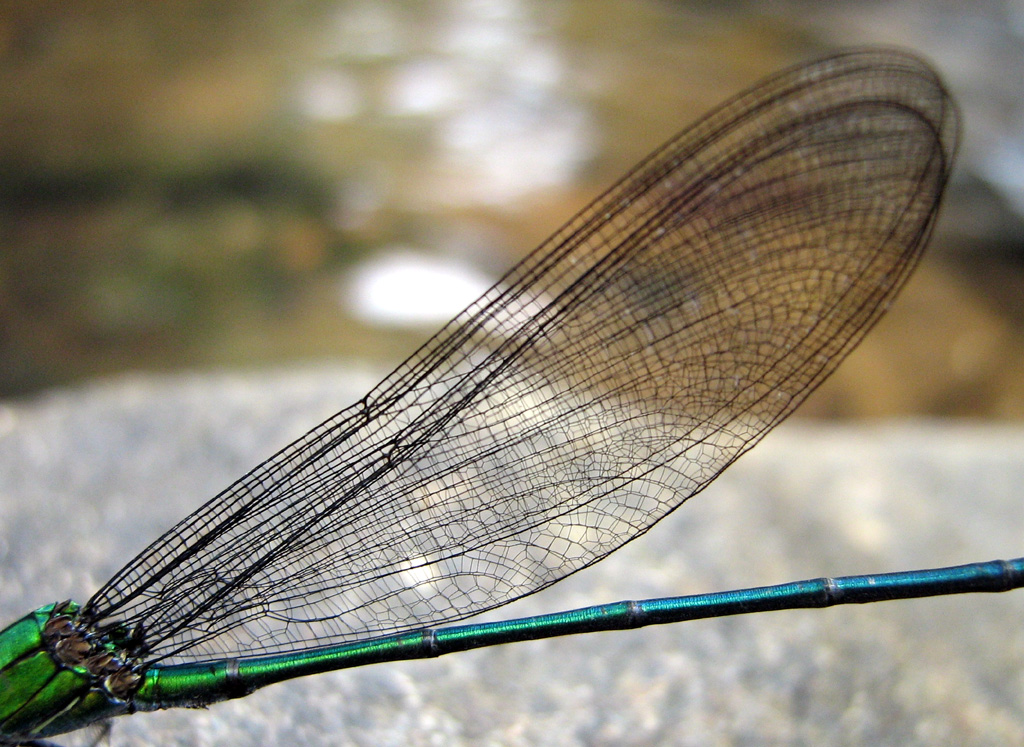
Vestalis amaryllis is a broad-winged Damselfly. Broad-winged Damselflies are so
called because their wings are not abruptly narrowed near the base as are the
wings of other damselflies (narrow-winged damselfly and pond damselfly)
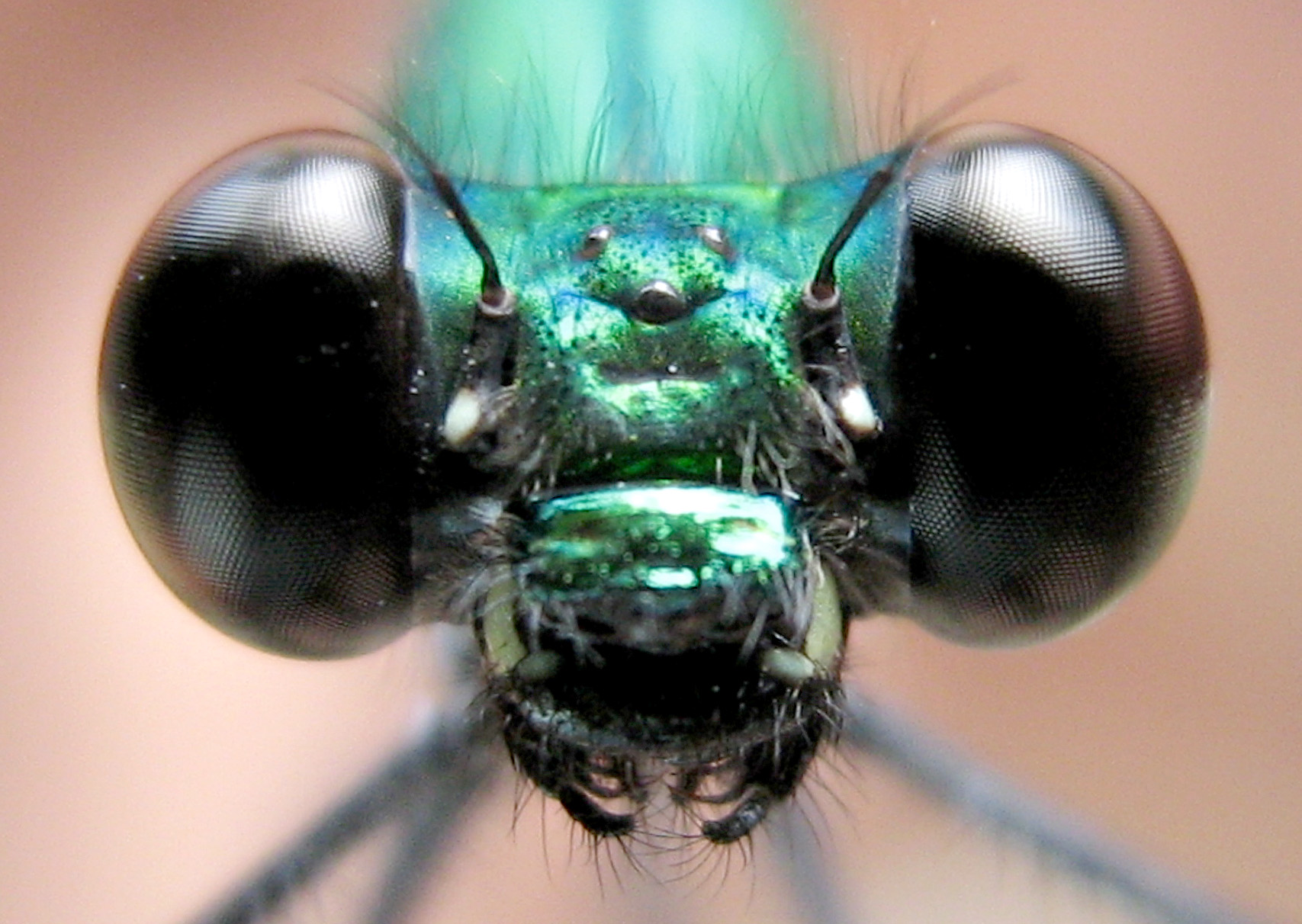
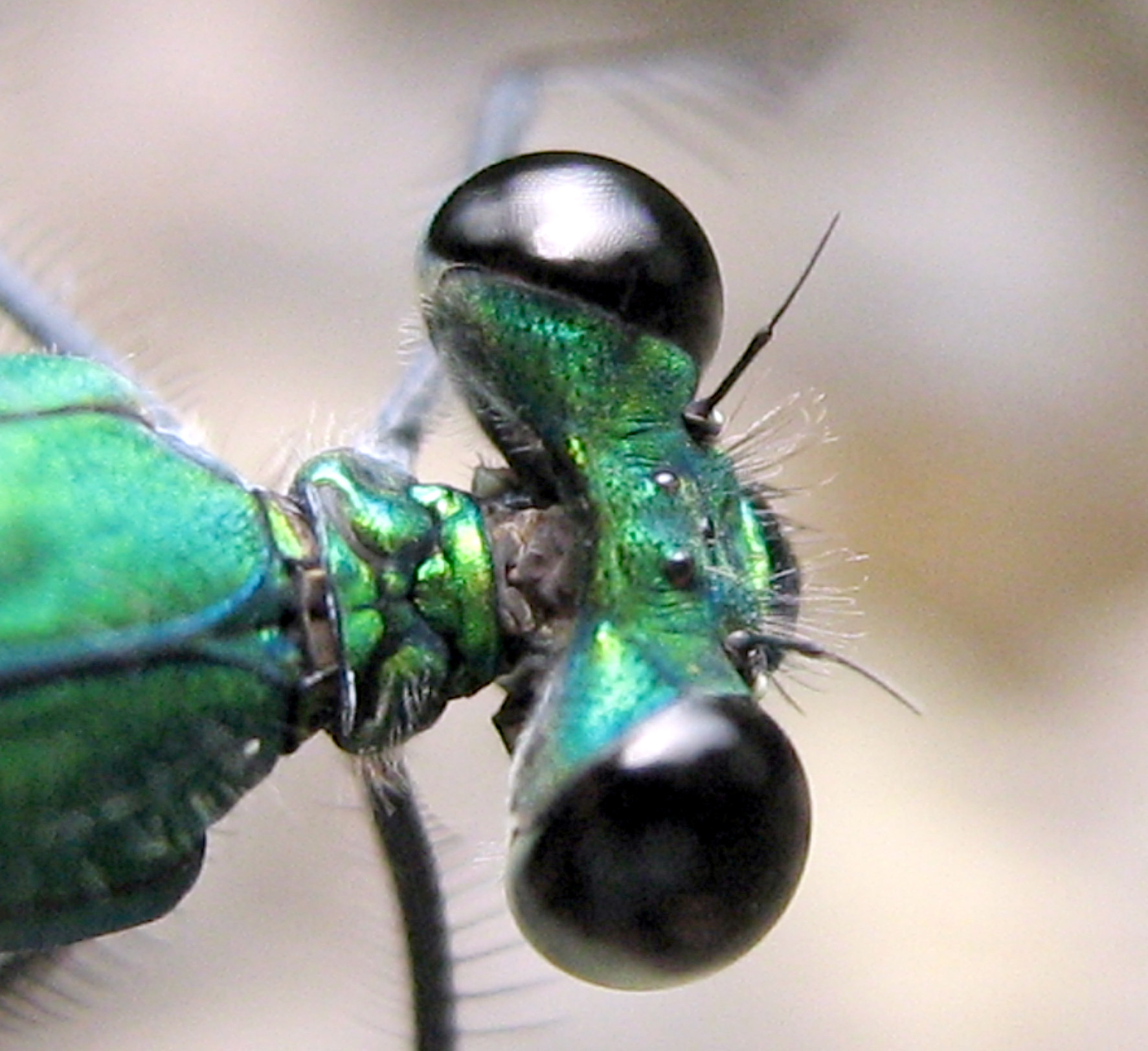
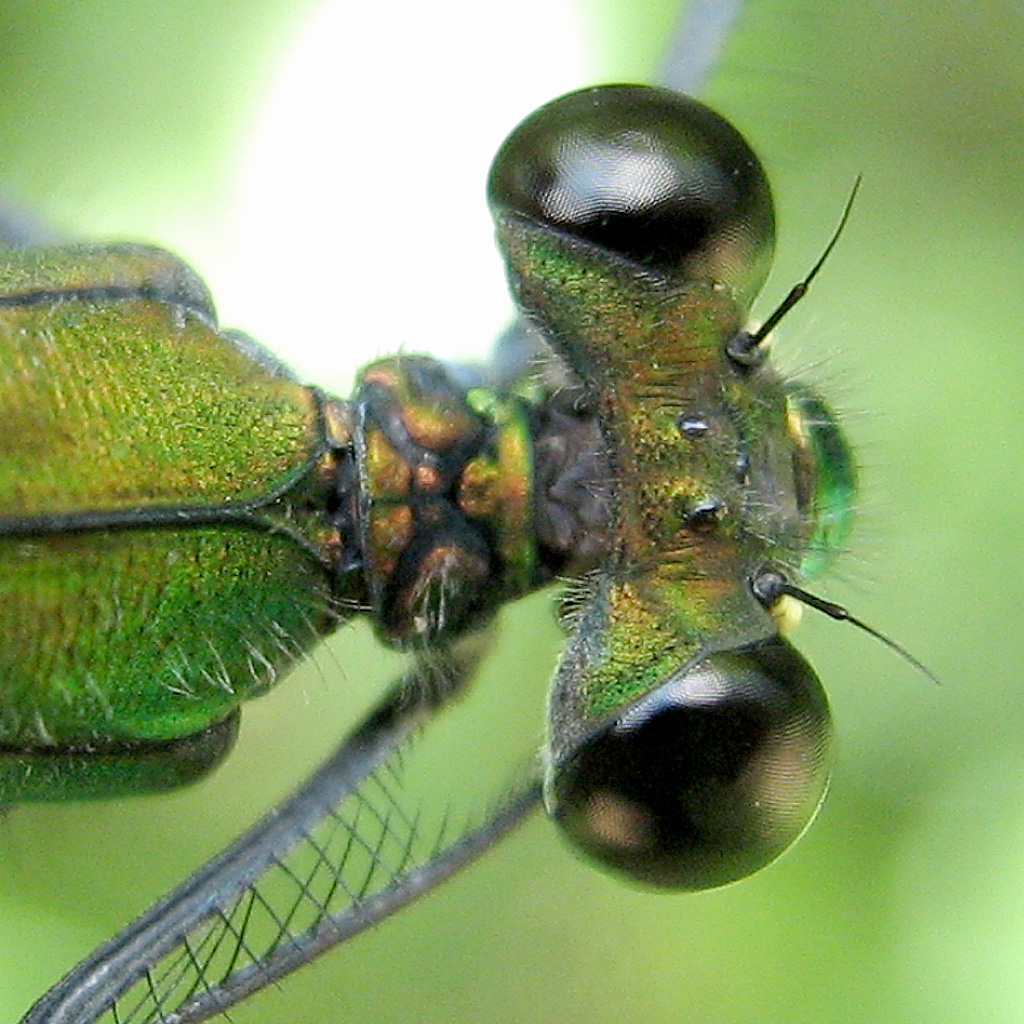
Dorsal view of the head and prothorax of the same male Vestalis amaryllis.
In the middle of prothorax is a round shape as if having a 4th ocellus on the
prothorax
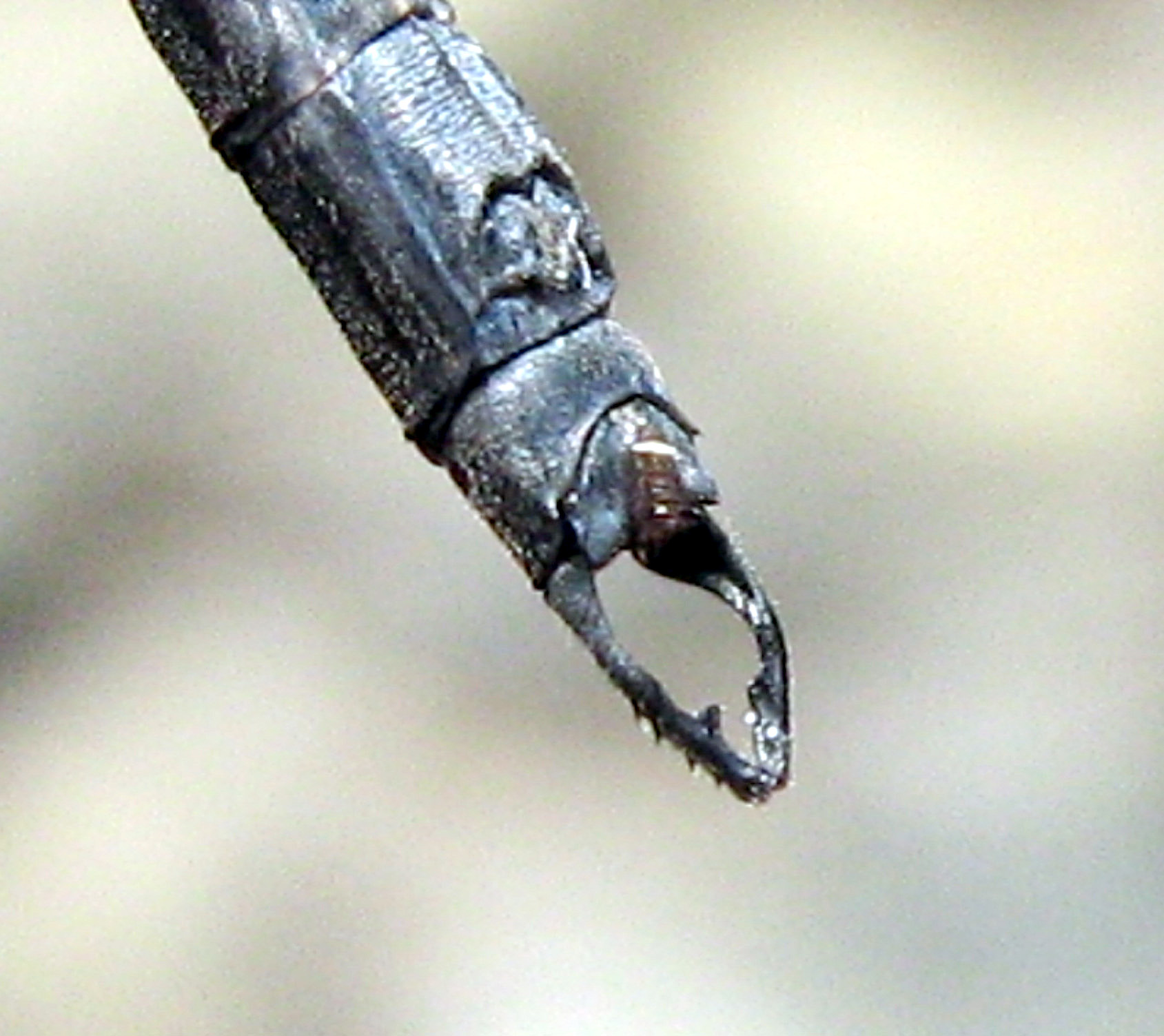
Ventral view (bottom view) of the last 3 segments of this male Vestalis
amaryllis (Hagen in Selys, 1853).
There are at least 4 green Vestalis species with similar outlook and can only be
differentiate from their appendages.
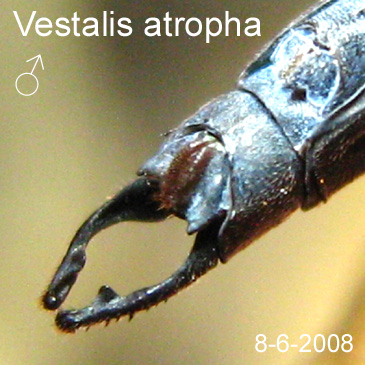
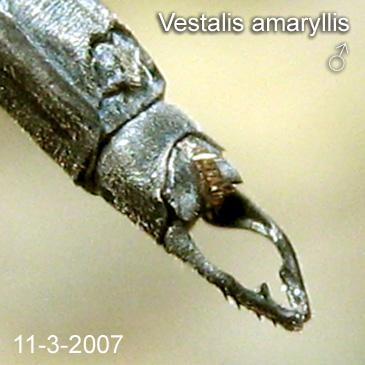
Comparing section 8 and 9 between Vestalis atropha and Vestalis amaryllis
The family of CALOPTERYGIDAE is known as the Broad-Winged Damsels because
their wings are broader than other damselflies. These are large damselflies with
iridescent green or blue coloration. In most species the wing is marked with
black or smoky brown.
Vestalis amaryllis's flight pattern is similar to the flitting of a butterfly. I
spotted this Vestalis amaryllis by its rather bouncy erratic flight, similar to
that of a butterfly. With two pairs of broad wing and fly like a butterfly, one
may easily mistaken a flying Vestalis amaryllis as a butterfly.
The body color of these broad-winged damselflies is often metallic. The eyes are
black in males and brown in females. They fly more like a butterflies.
Broad-winged Damsels are almost always seen perched horizontally on streamside
vegetation and rarely take on any other perching position.
Broad-winged Damsels usually prefer streams and rivers. Broad-winged damselflies
(Family Calopterygidae) have broader wings, black or with with blackish
markings, that are narrowed at the base. When the fly is resting, the wings are
held together over the body.
These are large damselflies with stout abdomens and relatively large wings
that have either black or red markings. Bases of the wings are gradually
narrowed. They are strong flyers, with a characteristic buoyant dancing flight
style.
The females lay eggs (oviposit) in plant tissues without the male, often
crawling down a plant stem a foot beneath the water. In some species the male
will hover over the female to prevent other males to mate with her.
The naiads of these damselflies are usually found in streams and rivers. They
cling to underwater roots and vegetation and wait for the water current to bring
them food.
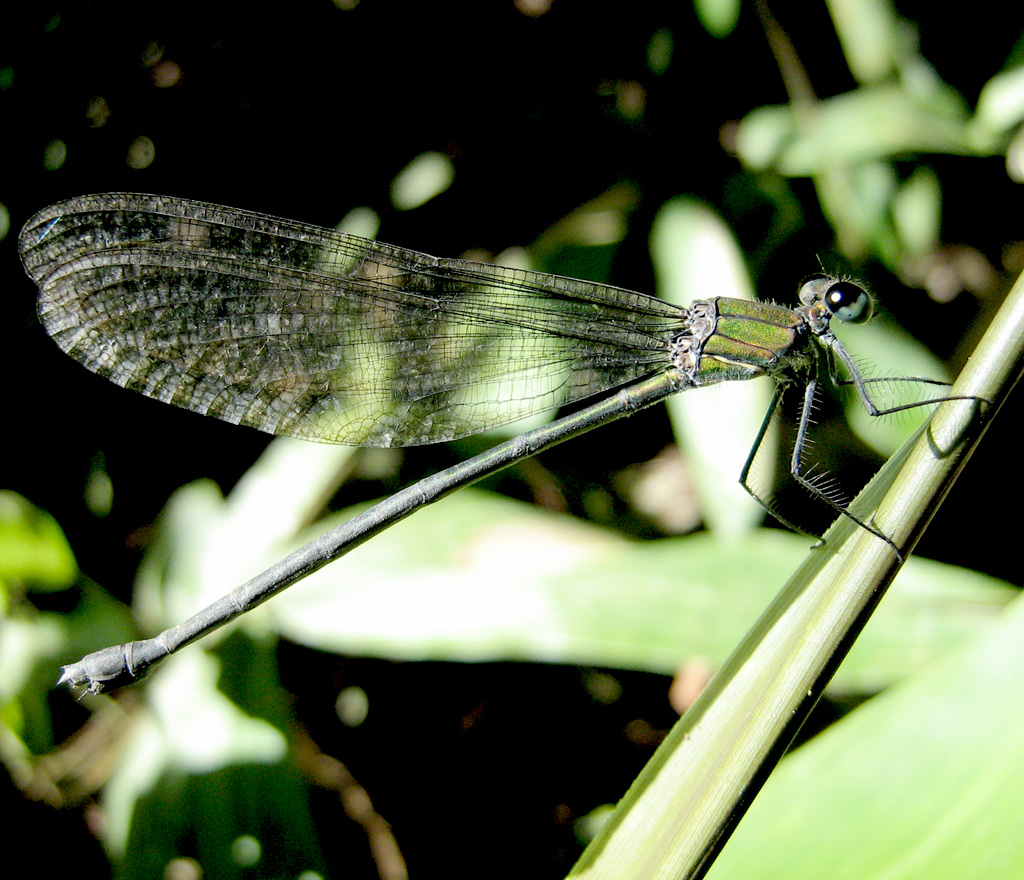
This female Vestalis amaryllis belongs to the family of CALOPTERYGIDAE that is
known as the Broad-Winged Damselflies because their wings are broader than other
damselflies. These are large damselflies with metallic green coloration.
This female measures:
Hind wing length = 36mm
Total body length = 50mm
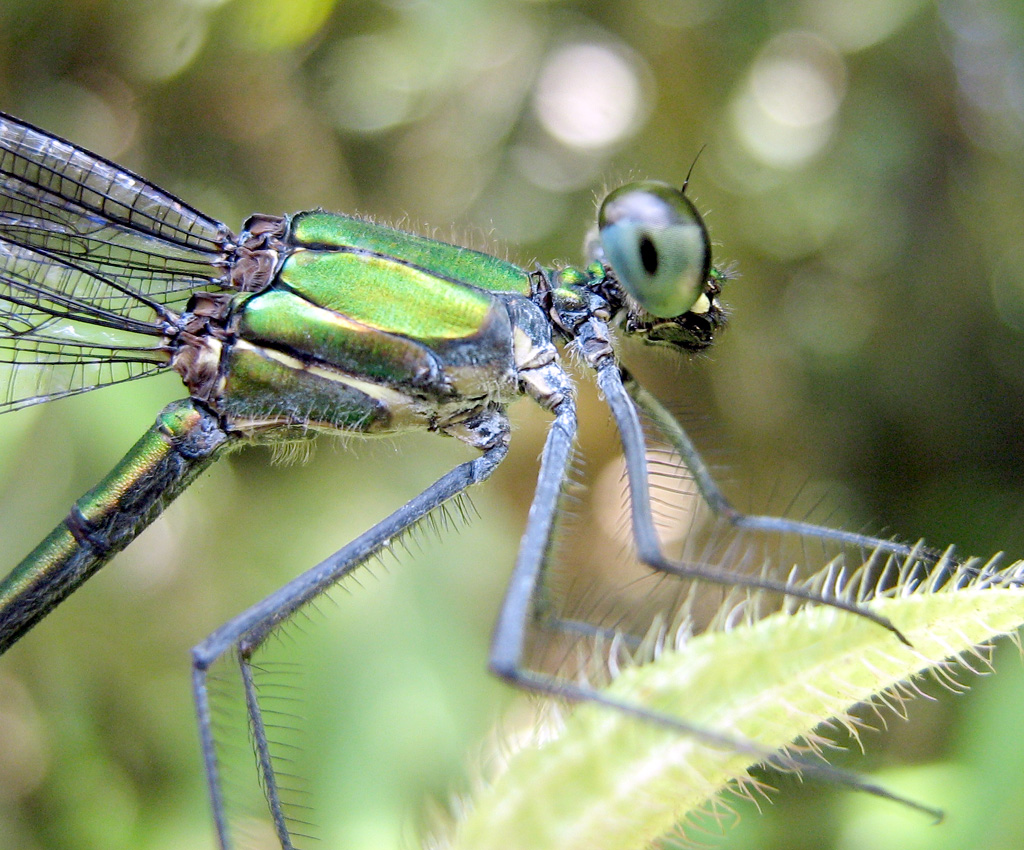
This family of damselfly has long black legs. They are very easy to find beside
mountain stream because they like to rest on sun lighted spots.
This female’s marking is same as the male except that a female has greater color
variable from metallic green to metallic gold. When flying in a pair, the female
can be easily identified by its golden metallic reflection.
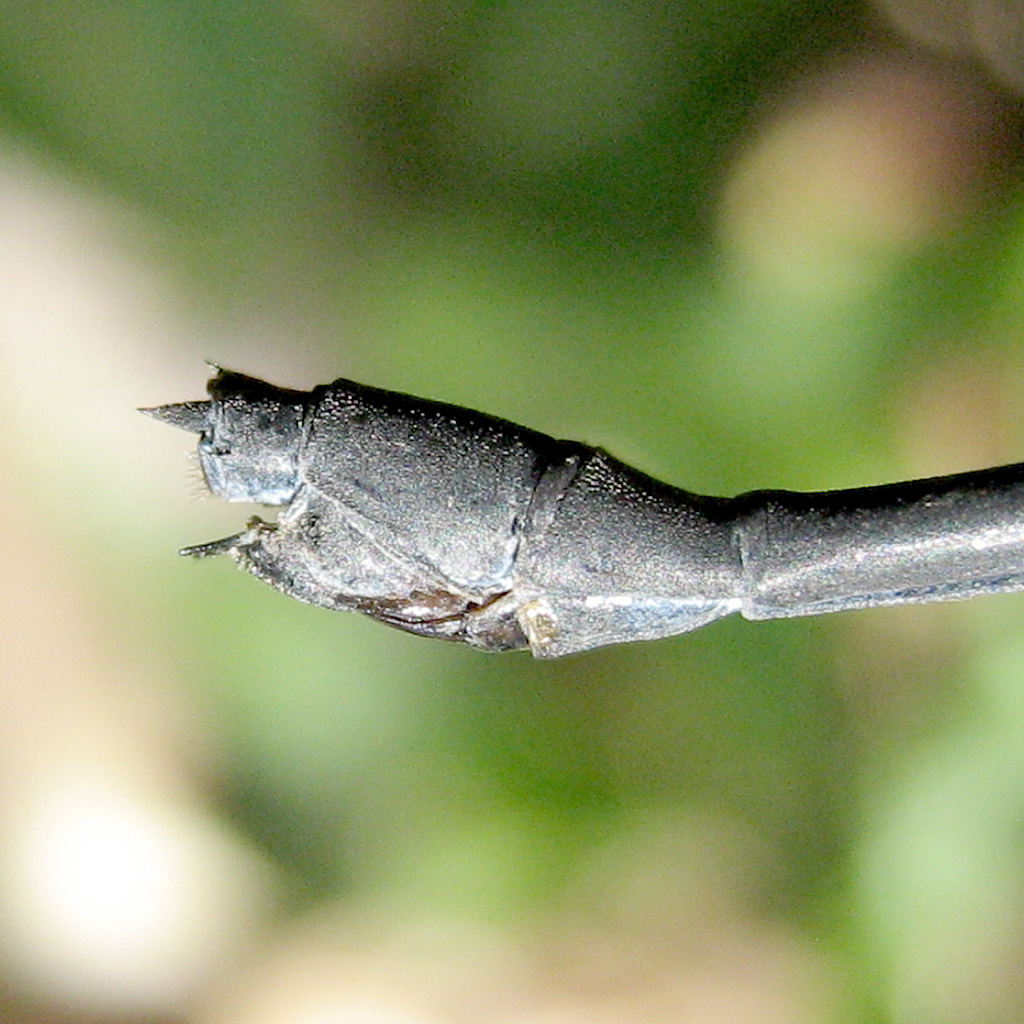
Segment 8,9,10 of a female Vestalis amaryllis

Bright warm sunspot at a mountain stream of Tawau Hills Park. A favorite
perching location of damselflies Vestalis amaryllis.
Here are index to damselflies sorted according to colour for our quick identification:
1- GREEN damselflies of Sabah, Borneo
2- BLUE damselflies
3- RED damselflies
4- ORANGE damselflies
Out of the global 10 families of damselflies, the following 7 families are found in Borneo Island :
RELATED TOPICS
Damselfly head include :
1- compound eyes,
2- ocelli,
3- antennae,
4- mouth structures

Dragonflies of Borneo
"With 275 named species so far recorded in Borneo, the island has one of the
richest and most exciting dragonfly faunas in the world. More than 40% of
species occur nowhere else, making it the most distinctive sub-region of
Sundaland." A Guide to the Dragonflies of Borneo by Albert G. Orr
|
GO FURTHER
Dragonflies are among the most beautiful of insects. Peninsular Malaysia and Singapore are home to more than 230 species (twice the number found in Europe). They include some of the most exquisite forms found anywhere in the World. FLORA Borneo has 150 species of wild fig trees. Most of them are found in forests of Sabah. FISHERIES Prawn farming is a main commercial activities in Tawau. Spawners from Tawau are graded the best in Malaysia. For decades, Tawau has been exporting high-grade tiger prawns to several countries such as Korea, Japan, Taiwan, China, Vietnam, Singapore, Egypt and Australia.
|
|
|
Damselflies of Borneo |


