Family: CHLOROCYPHIDAE
Libellago semiopaca (Selys, 1873)
Last Updated on Monday, 05 June, 2023 04:51:28 AM
Damselflies of Borneo > Family Chlorocyphidae 鼻蟌科/鼓蟌科 > Genus Libellago >
Family: CHLOROCYPHIDAE
Libellago semiopaca (Selys, 1873)
Found in Asia: Indonesia, Malaysia
Although small, Libellago semiopaca is perhaps the most conspicuous member of
the genus. It is brightly marked on the dorsum of the abdomen with pale green,
and the forewings bear broad dark terminal patches which are used to signal
aggressively to other males.
There is a good deal of variation in the extent of the green marking and of the
dark patch, but present opinion holds that there is just one species.
Males spend many hours in contests facing each other, hovering around almost the
same spot. A climactic event in aggressive behavior is the 'stationary-wing
display', during which the dominant male flies with his hind wings while holding
the dark-tipped forewings outstretched and motionless, facing the opponent. An
opponent confronted with this display shows considerable agitation, rocking
rapidly from side to side, and often abandons the contest.
Courtship too, is often protracted with the male swinging to and fro as close as
10 cm in front of the female. Curiously, the males lack the white coloration on
the legs found on other species. During courtship the legs dangle limply below
the body rather than being thrust toward the female in display. Almost all
females which land in a male's territory and attempt to oviposit are courted
vigorously. Following a successful courtship, mating takes place on the log just
above the water.
The pair remain together for about a minute . Females are guarded while they
remain in a male's territory but they often oviposit in groups in company with
Rhinocypha species. Females in groups almost never respond to courtship; at this
stage they are probably not receptive and courting males become disorientated
with respect to which female they have selected. Males also rest on logs near
the water while waiting for females, and both sexes often fall prey to Dolomedes
spiders . Individuals which escape such depredations may live for about 10-14
days after they commence reproduction, spending their entire life stationed
around the same log.
Libellago semiopaca is locally common on clear forest streams and near the banks
of broad rivers throughout Sundaland.
FEMALE
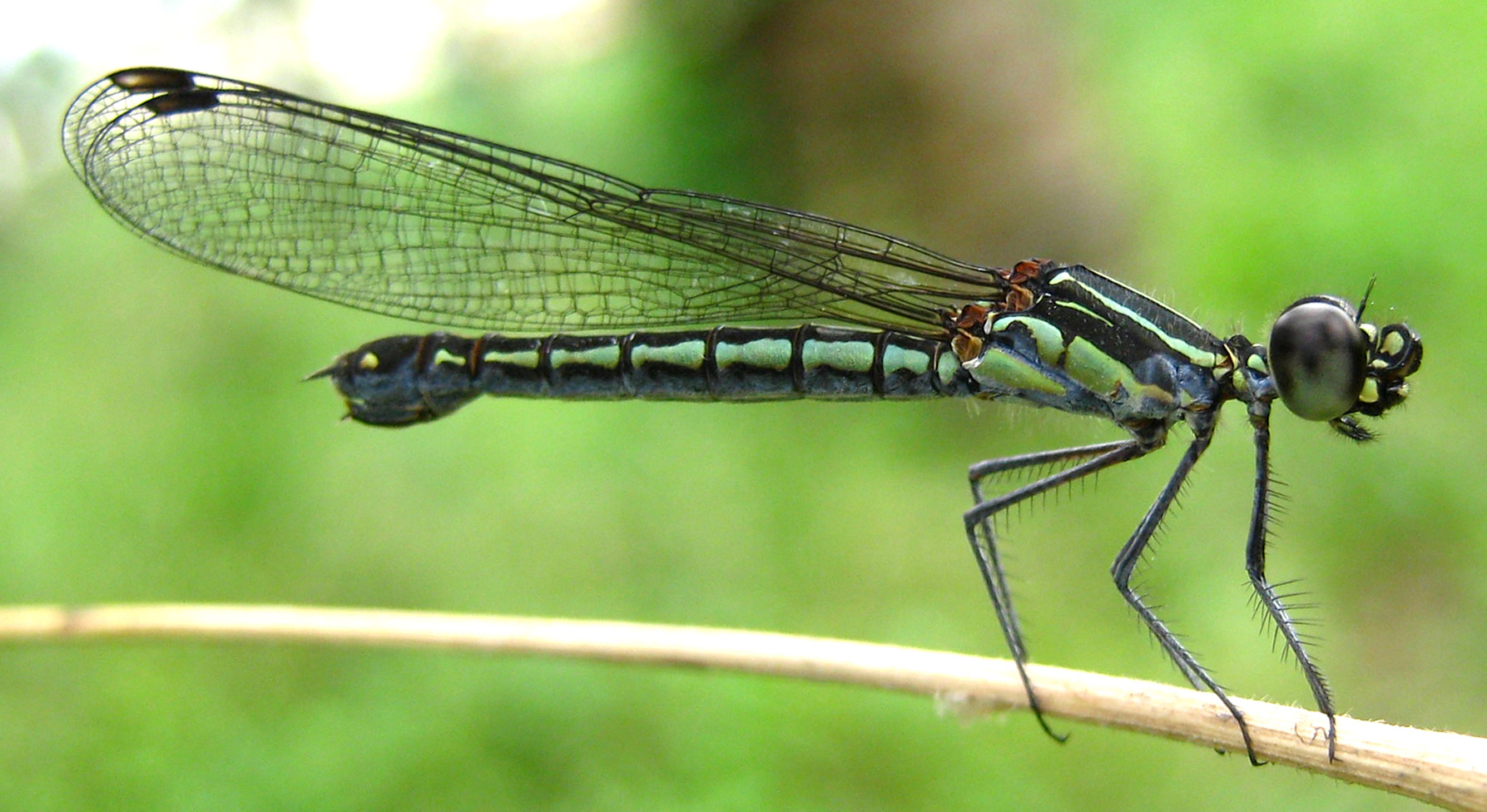
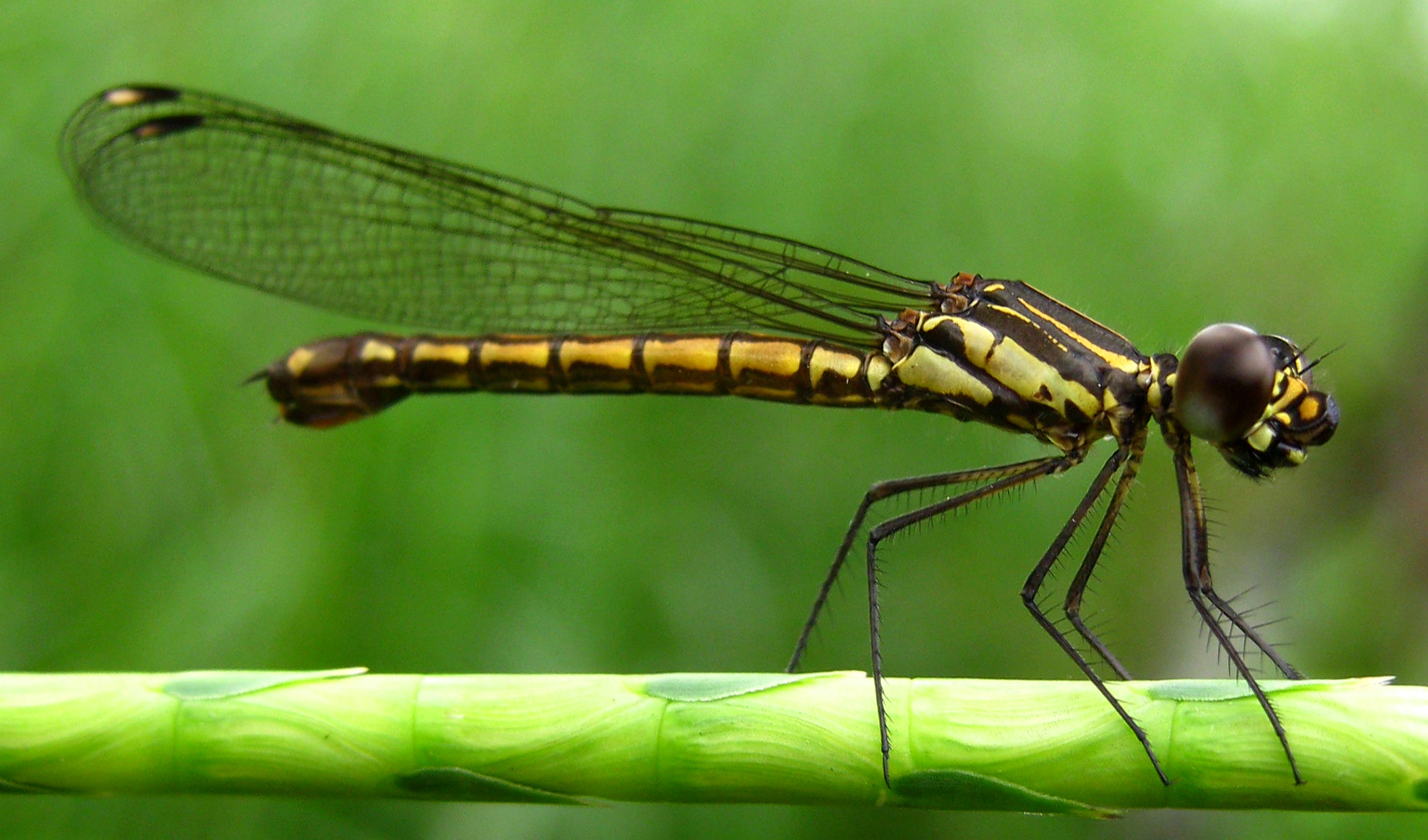
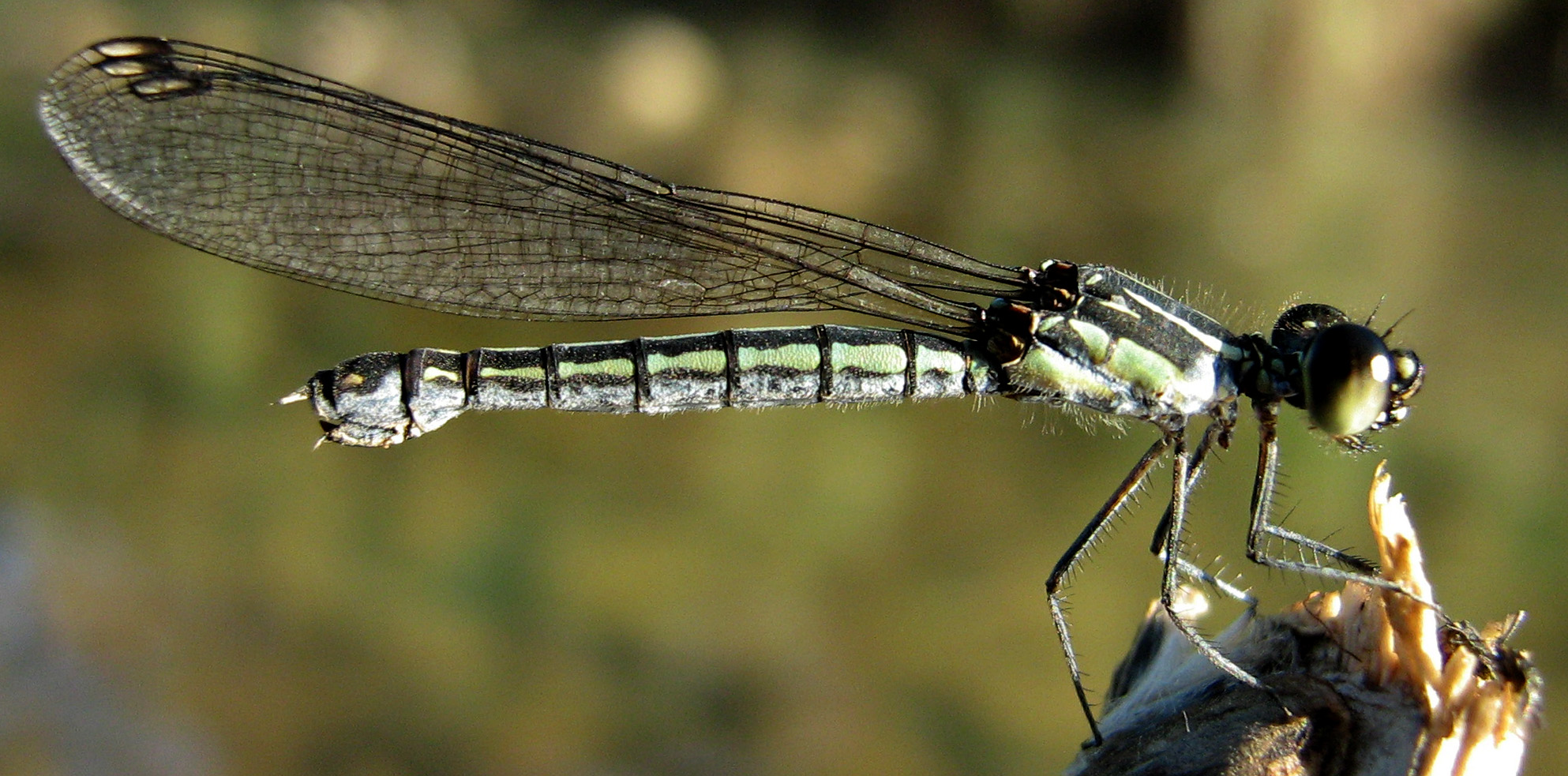
Top Image : An aging female Libellago semiopaca
Middle Image : A matured female
Bottom Image : A young juvenile female
Notice the top image of aging female has a layer of white powder (white
pruinescence) covering the whole lower part body from thorax to the tip of
abdomen.
Libellago semiopaca is a small damselfly. This female size is :
The whole body length = 22 mm
Hind wing length = 19 mm
The following two female photographed on the same day at the same location. One
is Pale Green while another is Yellowish Brown. The Yellowish brown is immature
female.
MALE
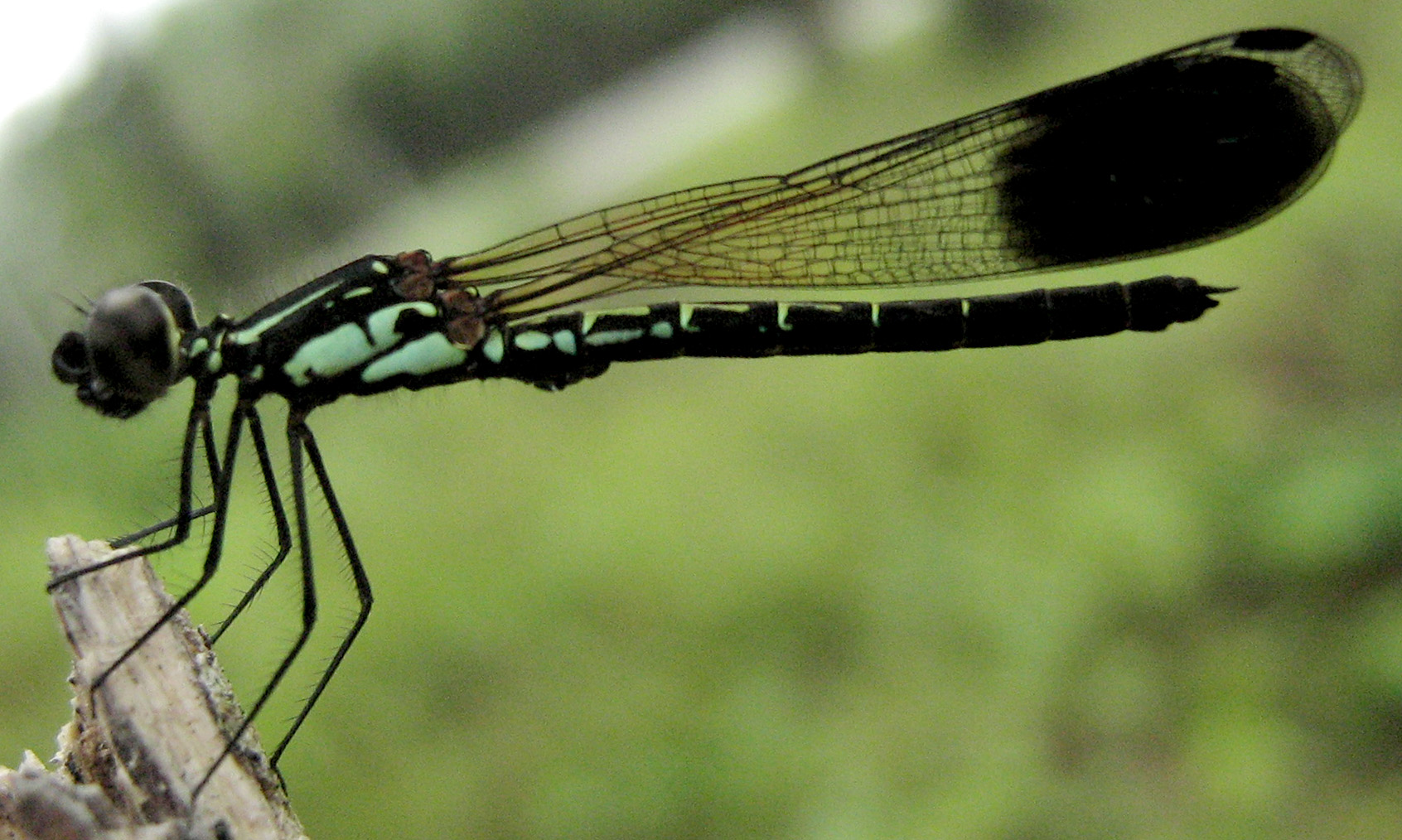
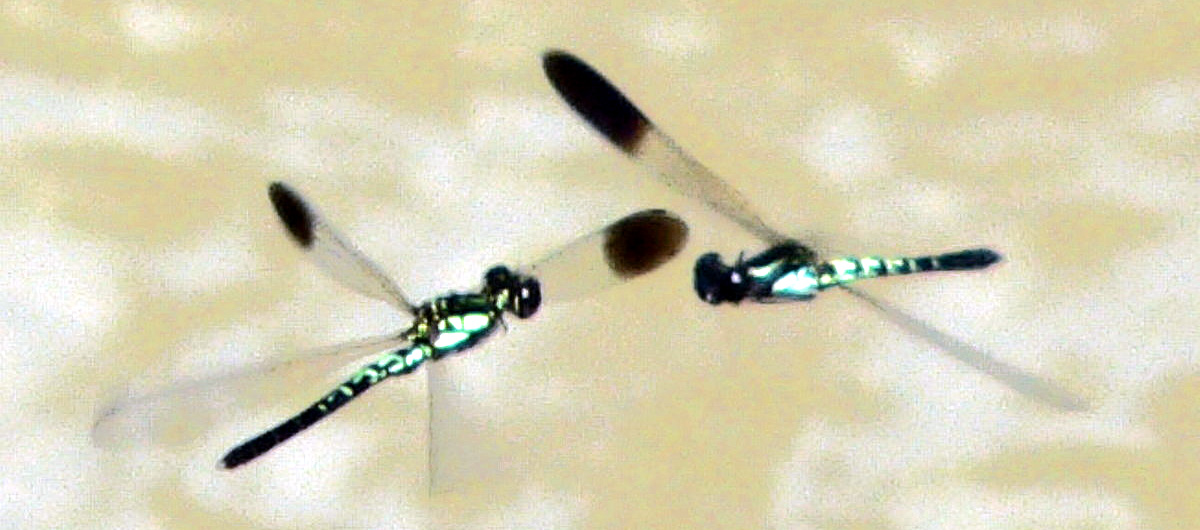
Males are tenacious in combat; protagonists often hover facing each other for
minutes.
Libellago semiopaca contests for territories are time consuming lasting as much
as 4minutes. The males face each other and hover rather than move vertically
during the territorial dispute. The pair rotates horizontally 90 degrees and
offer a series of stationary wing displays until a winner is decided.
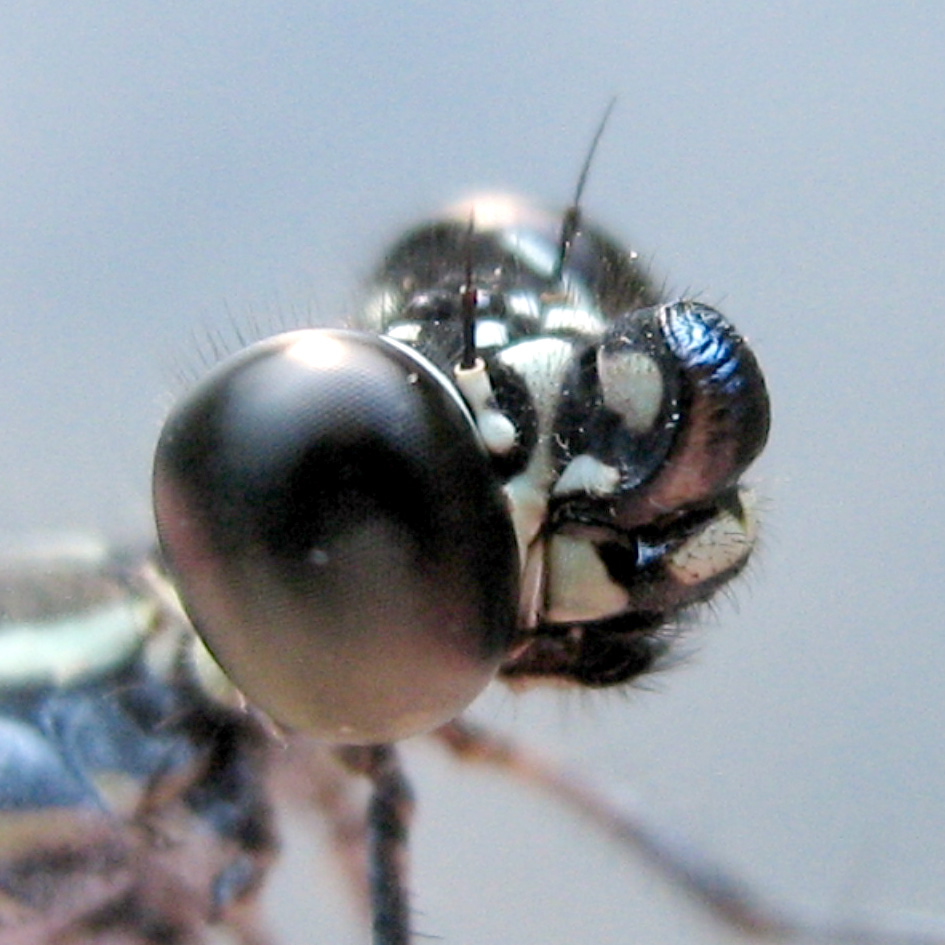 A female Libellago semiopaca’s unique big fat nose. Libellago damselfly species have unique extended frons making these damselflies look as if having big fat noses. These nose shape separate them from other similar Rhinocypha species in Malaysia. |
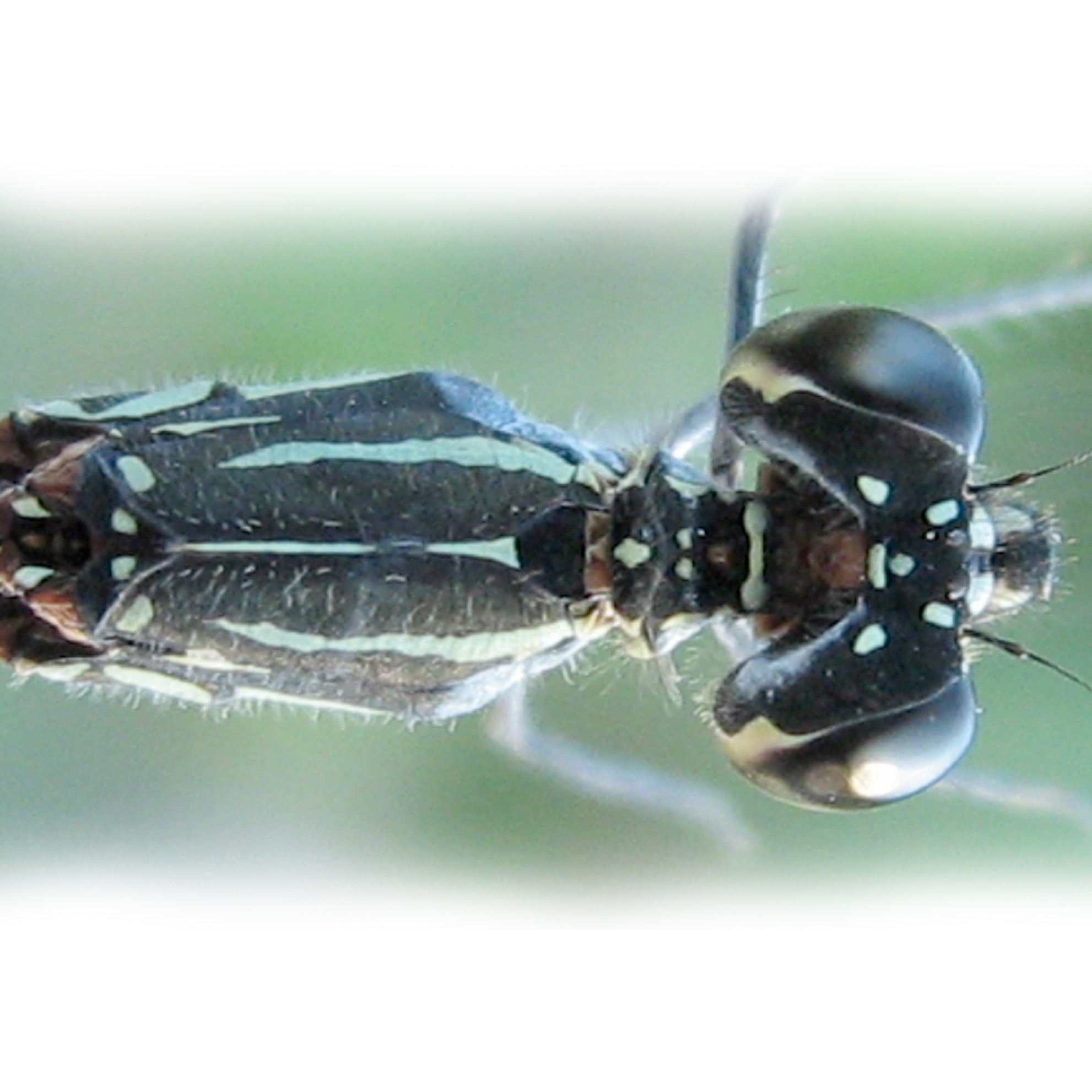 View from top of a female Libellago semiopaca. The marking is very similar to a Libellago lineate except that L. lineate is yellowish while L. semiopaca is greenish (bluish for male) |
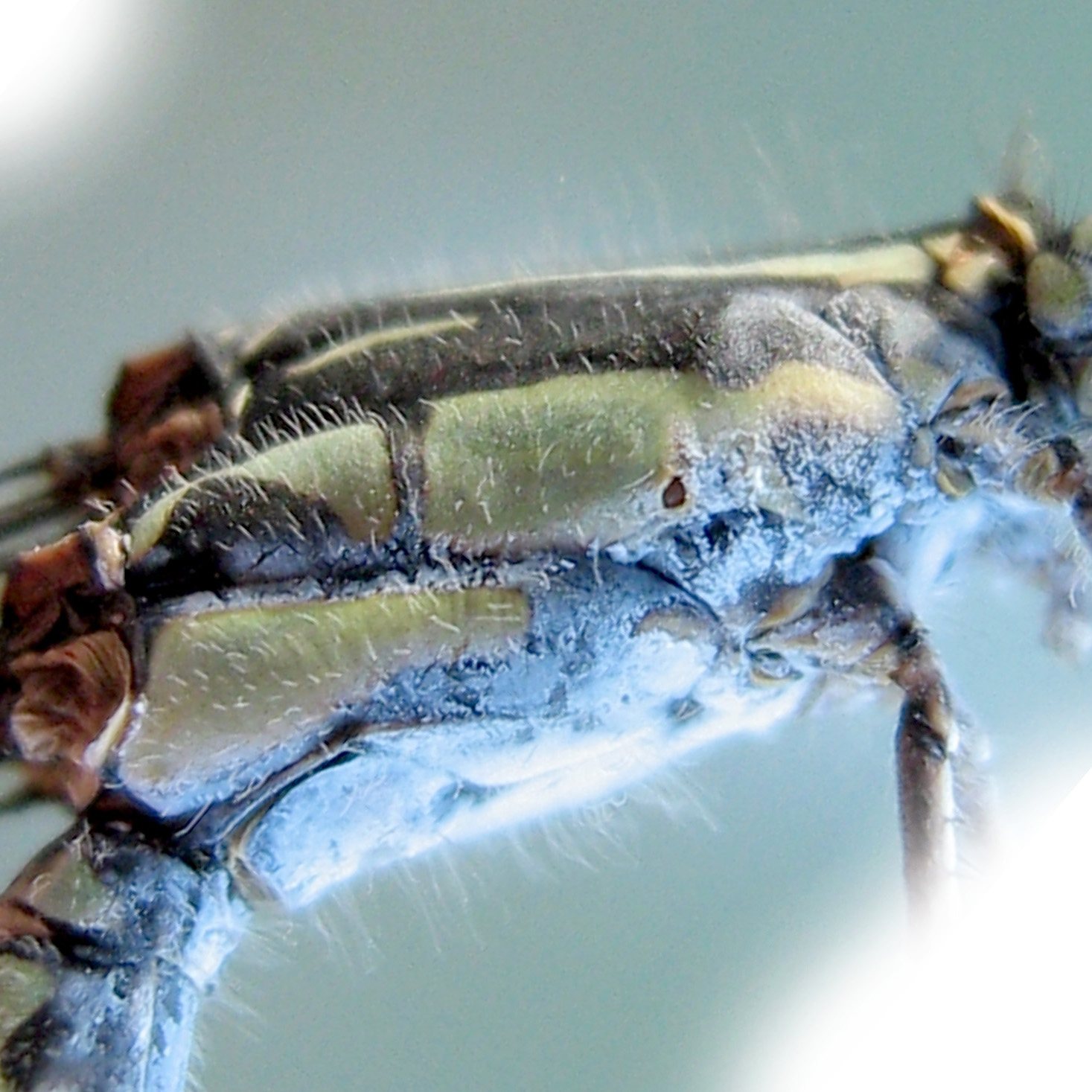 This matured female Libellago semiopaca has developed white pruinescence (like white powder) over the lower thorax and lower abdomen. The white powder make a matured female lost her bright color and look dull in appetence. |
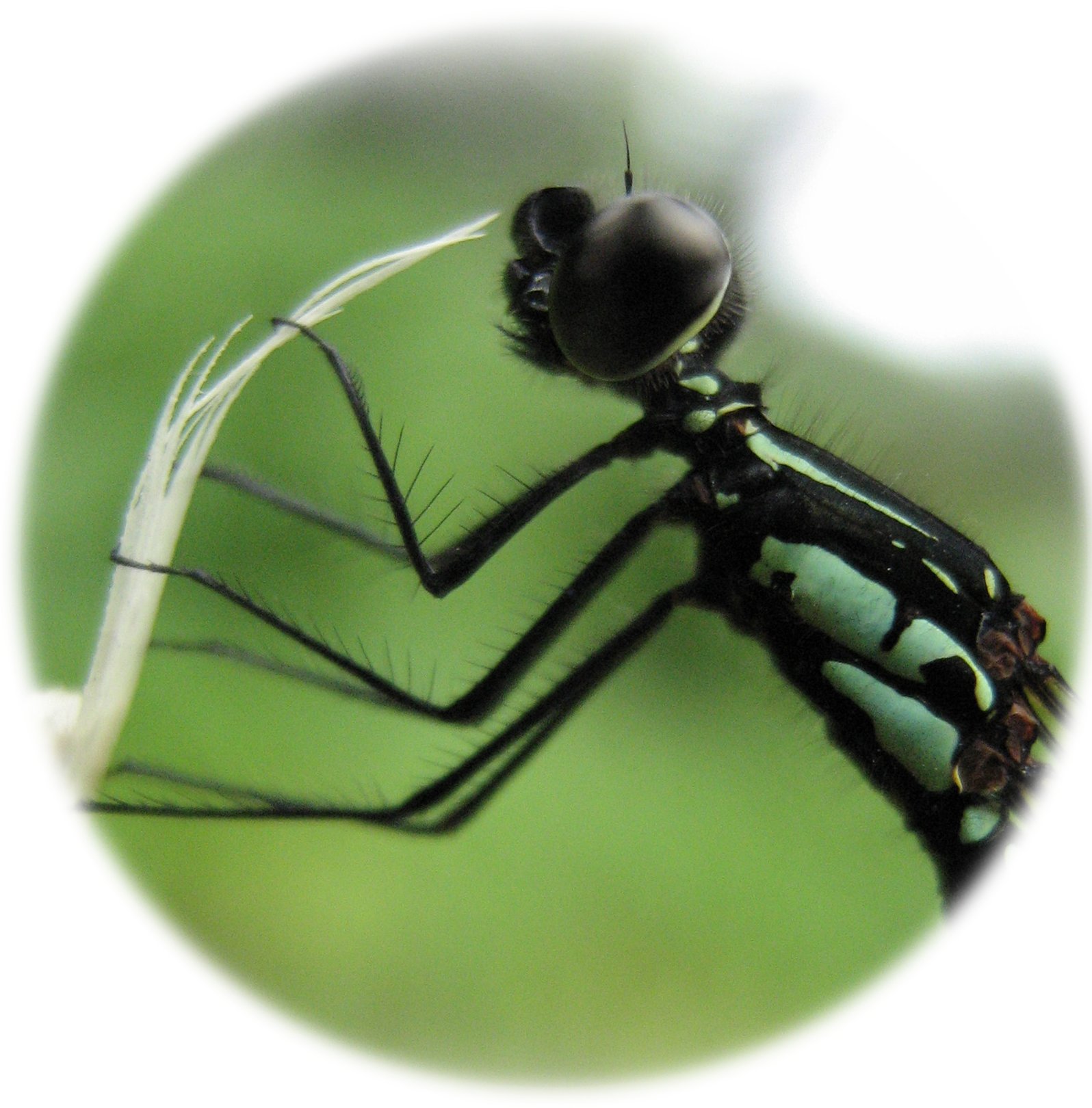 Legs are black. |
Here are index to damselflies sorted according to colour for our quick identification:
1- GREEN damselflies of Sabah, Borneo
2- BLUE damselflies
3- RED damselflies
4- ORANGE damselflies
Out of the global 10 families of damselflies, the following 7 families are found in Borneo Island :
RELATED TOPICS
Damselfly head include :
1- compound eyes,
2- ocelli,
3- antennae,
4- mouth structures

Dragonflies of Borneo
"With 275 named species so far recorded in Borneo, the island has one of the
richest and most exciting dragonfly faunas in the world. More than 40% of
species occur nowhere else, making it the most distinctive sub-region of
Sundaland." A Guide to the Dragonflies of Borneo by Albert G. Orr
|
GO FURTHER FLORA Borneo has 150 species of wild fig trees. Most of them are found in forests of Sabah. FISHERIES Prawn farming is a main commercial activities in Tawau. Spawners from Tawau are graded the best in Malaysia. For decades, Tawau has been exporting high-grade tiger prawns to several countries such as Korea, Japan, Taiwan, China, Vietnam, Singapore, Egypt and Australia.
|
|
|
Damselflies of Borneo |


