Xiphiagrion cyanomelas (Selys, 1876)
黑背細蟌
Last Updated on Sunday, 04 June, 2023 11:36:22 AM
INDEX > Damselflies of Borneo > Family Coenagrionidae 細蟌科 > Xiphiagrion cyanomelas (Selys, 1876) 黑背細蟌
Xiphiagrion cyanomelas (Selys, 1876)
黑背細蟌
Found in Asia: Indonesia, Philippines, Borneo
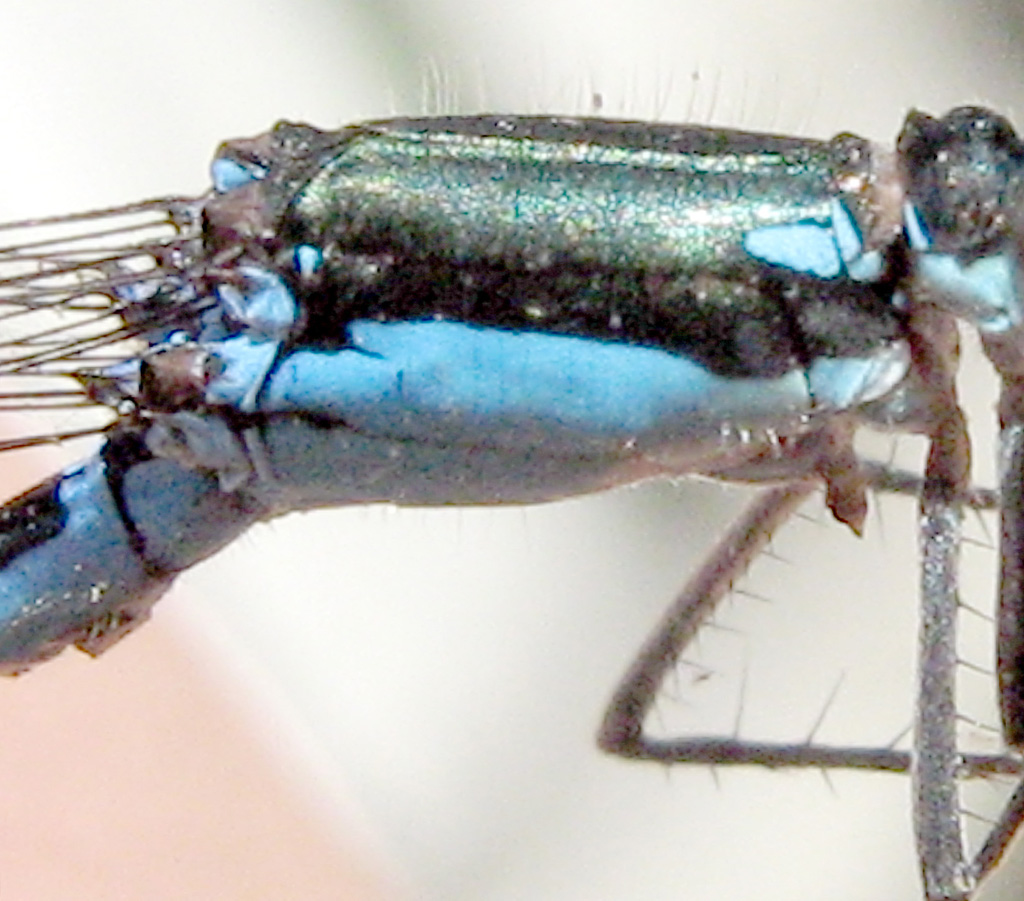
Xiphiagrion cyanomelas is a very small, dainty species distinguished by the presence of two short spots at the front of the synthorax viewed from above. Also, the distinctive marking on the abdomen of the male separates it from other very small species.
The female has exceptionally dark dorsal coloration. It occurs from lowlands up
to 1500 m around ponds, lakes and slow streams in open country and at forest
edges.
A small black-and-blue coenagrionid damselfly.
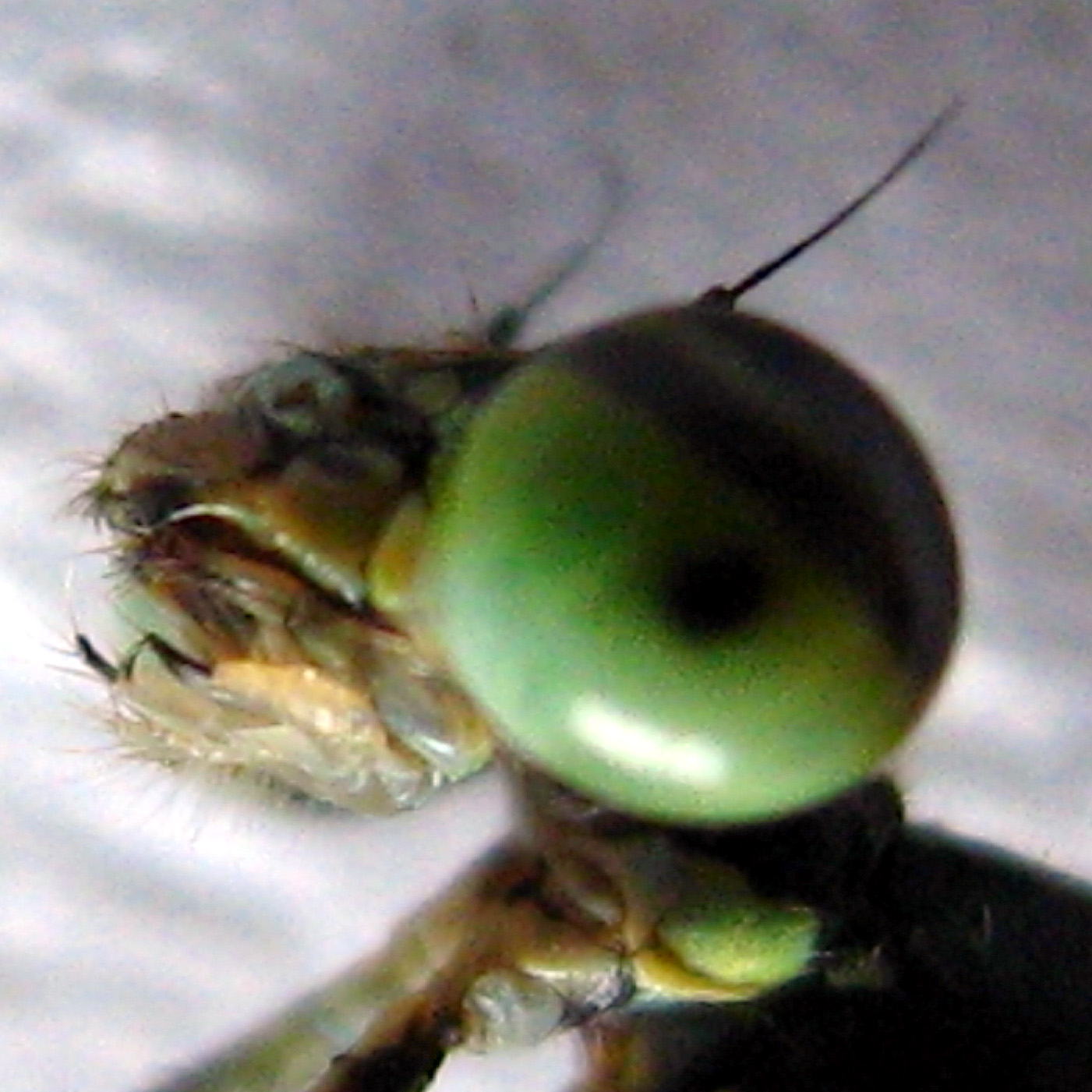
A close up view of the mouth piece of above female Xiphiagrion cyanomelas.
See the Labium with two sharp hock (like our lower jaw with two sharp teeth)
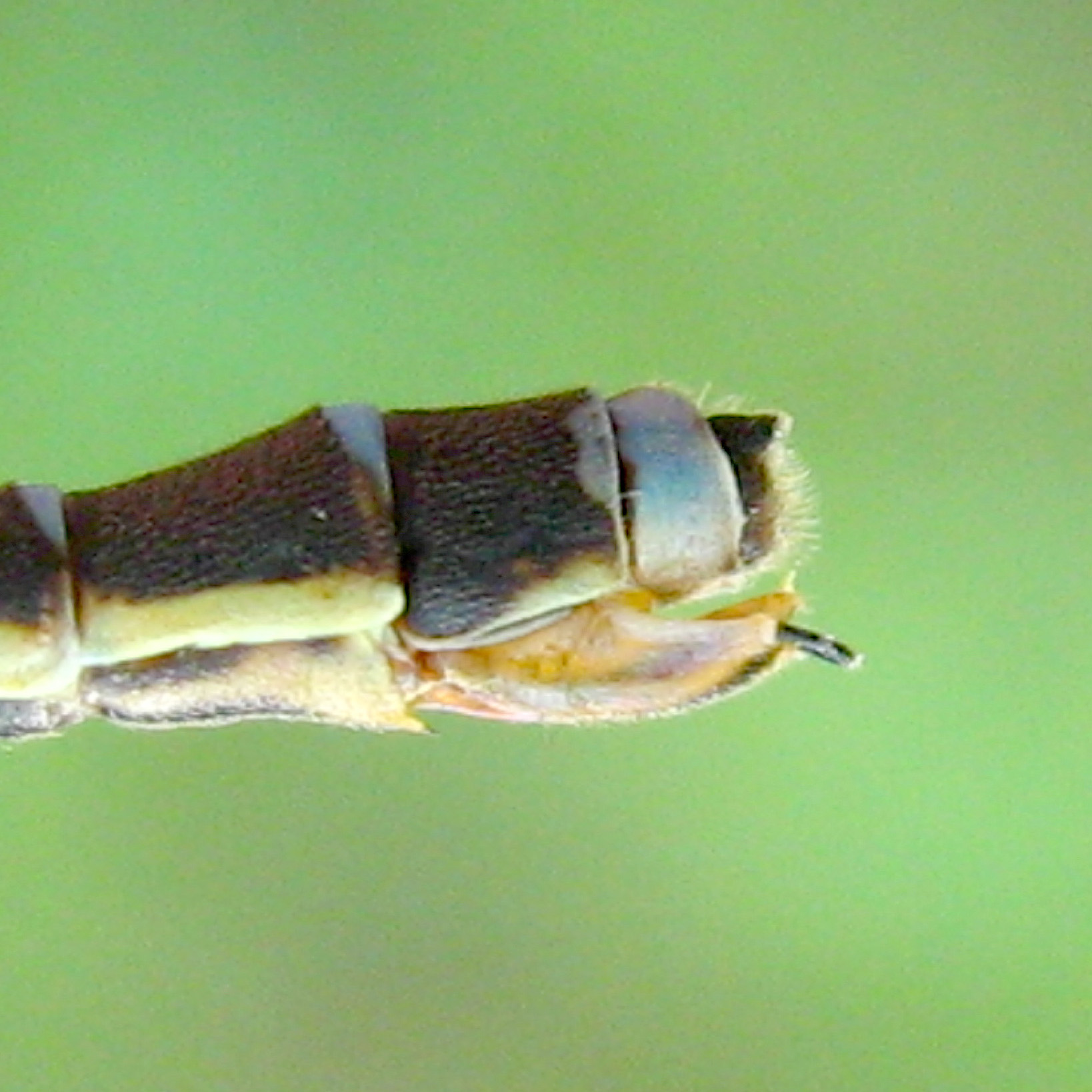
Female
Xiphiagrion cyanomelas
黑背細蟌
Female
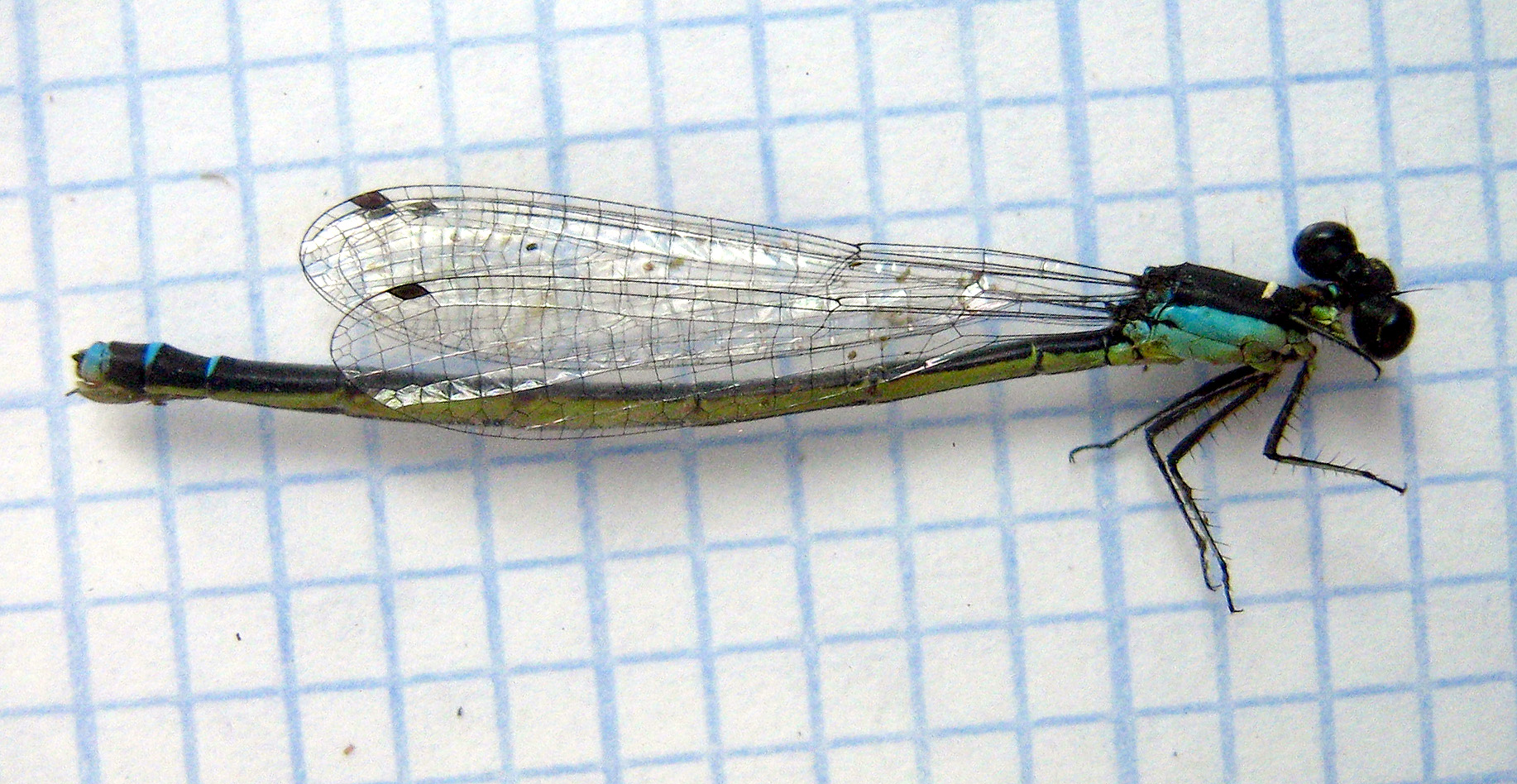
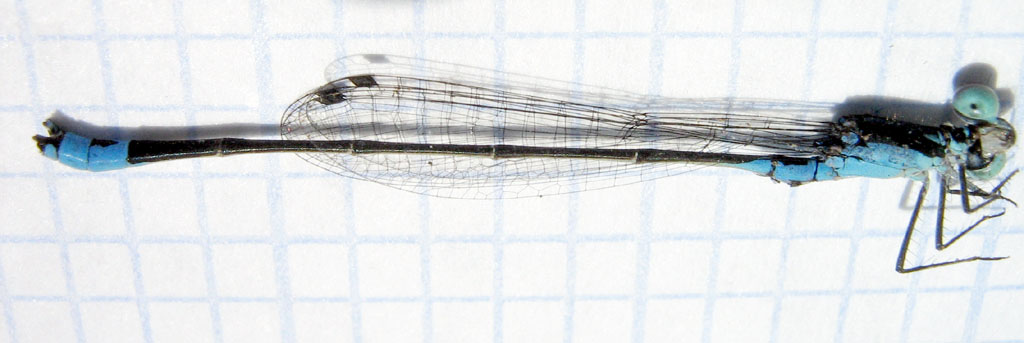
I found this female Xiphiagrion cyanomelas drowning on the drain on 22 June
2007. Still alive. I photographed it enclosed in a clear PVC beg over a graph
paper.
From the graph scale, this female’s hind wing is 16mm
Abdomen = 20mm
Whole body length = 26mm
Head width = 3mm
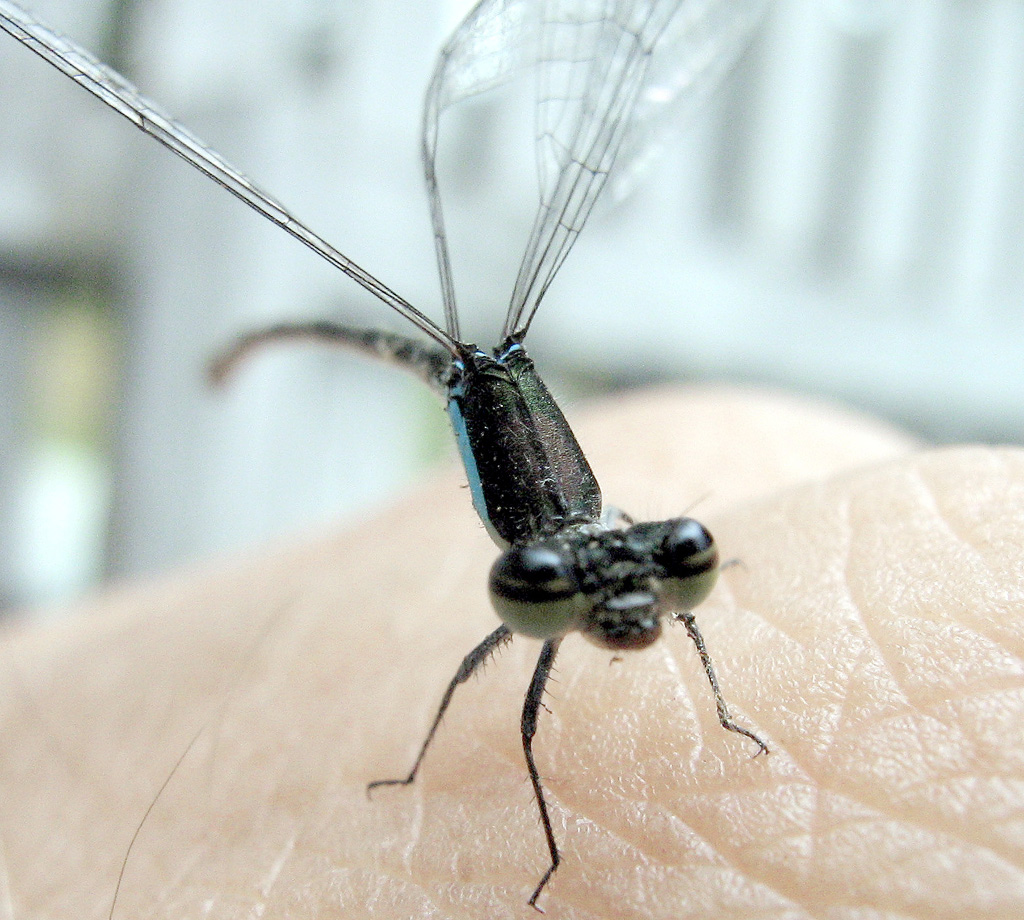
The color and size of both male and female Xiphiagrion cyanomelas are similar.
When viewed from top their eyes and thorax are pure black. This is unique patent
make them easily distinguish from other similar species.
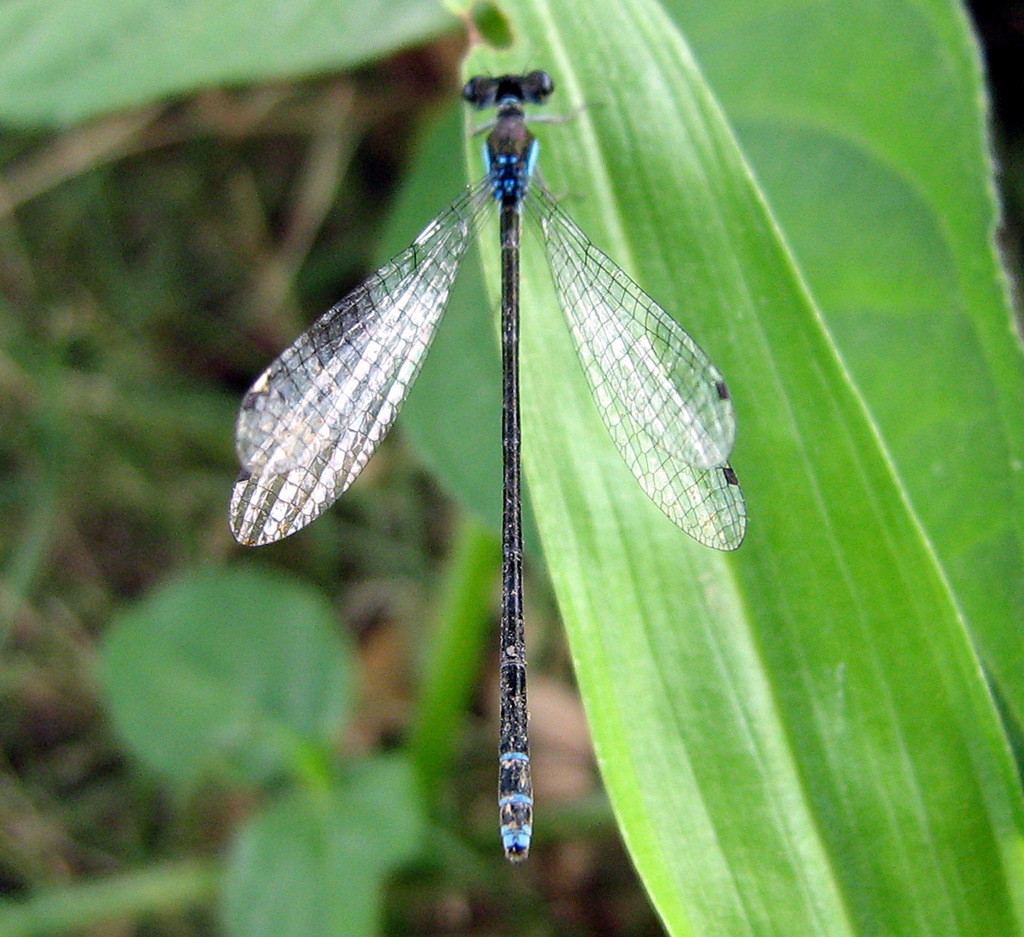
(See following photos descriptions ) Alive and back to nature, this female
Xiphiagrion cyanomelas narrow escaped from dead only few minutes ago.
These two photos have great information to tell how strong the male appendages of Xiphiagrion cyanomelas can hold on to the female prothorex. The first photo shown a tandem couple of Xiphiagrion cyanomelas. The female was laying eggs beneath water, while the male remain above water a wolf spider jumped in and killed the male. I chased away the spider and rescued the couple damselflies while remaining in tandem. The grip was so strong from the death male that the female could not free itself without help.
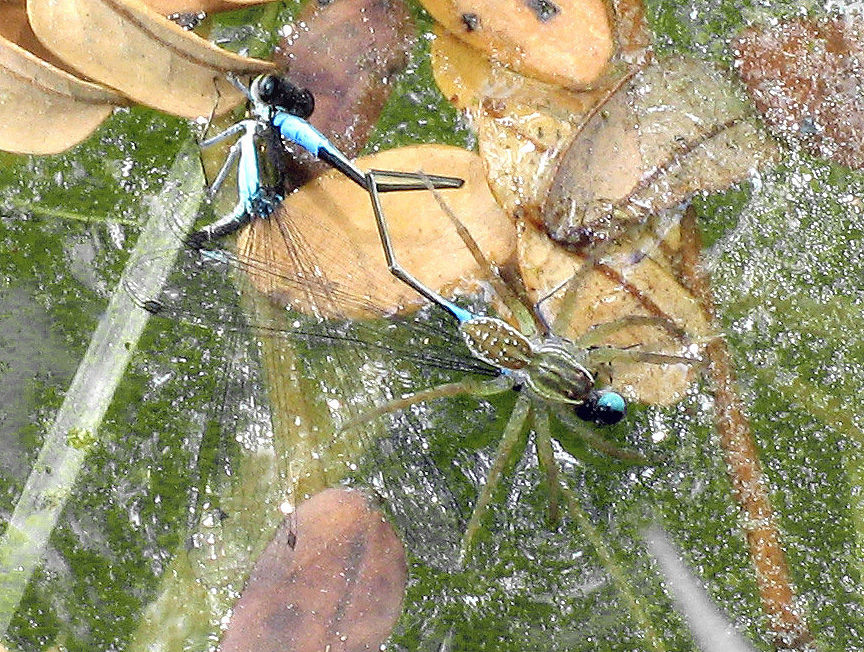
A pair of Xiphiagrion cyanomelas. The female so concentrated in
continuing laying eggs (oviposit) and does not aware the MALE already fell pray
to a spider.
The color of the spider match the color and patent of the water surface making
the couple difficult to see a dangerous enemy near by. At that time the female
might have fully immerged into water to oviposit leaving only the male above the
water. An adult Xiphiagrion cyanomelas is only 26 mm in length. Such high above
water is an easy height for this long lagged spider to jump onto.
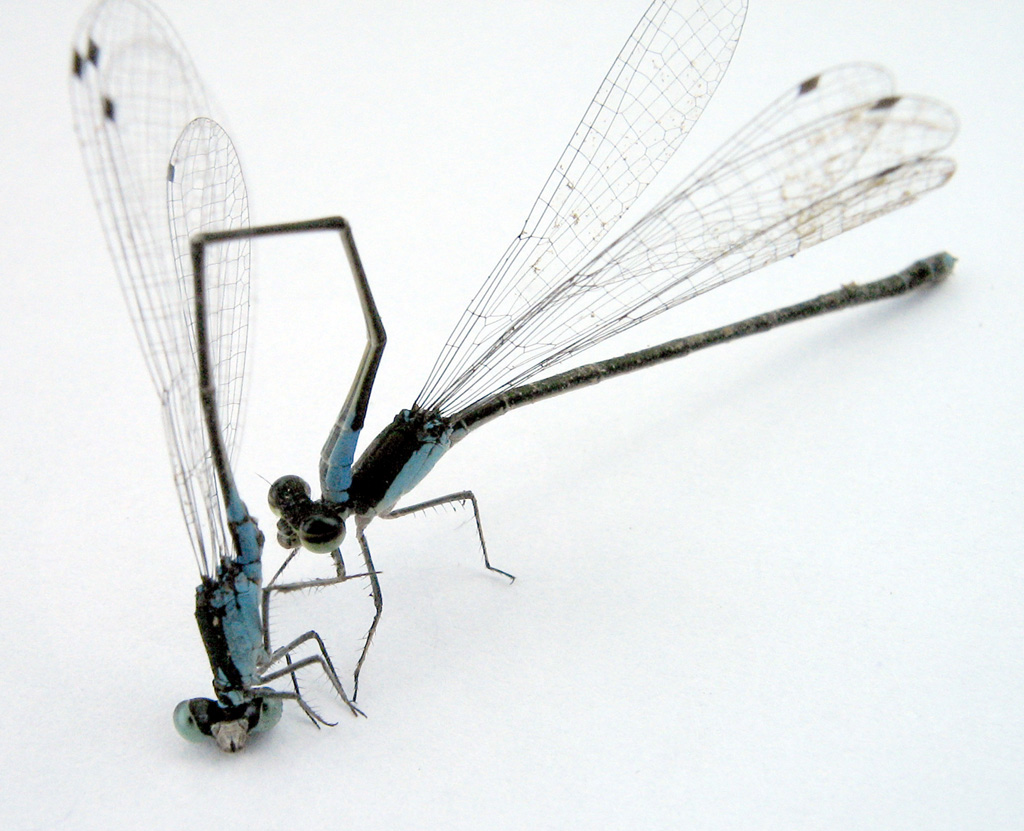
The spider escaped when I rescue this pair of Xiphiagrion cyanomelas (Selys,
1876) from the water.
The female is alive and restlessly seem that she still want to continue her
obligatory in completing her ovipositing (laying eggs). Though dead, the male
anal appendage hold on tight onto the female’s pro-thorax.
The male is lifeless. The spider had injected enough poison into his left neck.
Here are index to damselflies sorted according to colour for our quick identification:
1- GREEN damselflies of Sabah, Borneo
2- BLUE damselflies
3- RED damselflies
4- ORANGE damselflies
Out of the global 10 families of damselflies, the following 6 families are found in Borneo Island :
|
01- Family Calopterygidae 色蟌科 02- Family Chlorocyphidae 鼻蟌科 03- Family Coenagrionidae 細蟌科 04- Family Euphaeidae 溪蟌科 05- Family Lestidae 絲蟌科 06- Family Protoneuridae 原蟌科 |
RELATED TOPICS
Damselfly head include :
1- compound eyes,
2- ocelli,
3- antennae,
4- mouth structures

Dragonflies of Borneo
"With 275 named species so far recorded in Borneo, the island has one of the
richest and most exciting dragonfly faunas in the world. More than 40% of
species occur nowhere else, making it the most distinctive sub-region of
Sundaland." A Guide to the Dragonflies of Borneo by Albert G. Orr
|
GO FURTHER FLORA Borneo has 150 species of wild fig trees. Most of them are found in forests of Sabah. FISHERIES Prawn farming is a main commercial activities in Tawau. Spawners from Tawau are graded the best in Malaysia. For decades, Tawau has been exporting high-grade tiger prawns to several countries such as Korea, Japan, Taiwan, China, Vietnam, Singapore, Egypt and Australia.
|
|
|
Damselflies of Borneo |


