Last Updated on Friday, 22 September, 2023 06:59:45 PM
INDEX > Dragonflies of Borneo > Family Libellulidae > Eggs of Dragonflies
Eggs of Dragonflies
How does a dragonfly lay eggs?
There are two egg laying methods. Depending on the species, a female dragonfly use either Vulvar Lamina or Ovipositor Structure 產卵管 to lay its eggs.
The two methods of deposit eggs into water by Female Odonata (Dragonfly and Damselfly):
| FEMALE DRAGONFLY | FEMALE DAMSELFLY | |
| Type 1 Dragonfly | Type 2 Dragonfly | ALL Female damselflies have a ovipositor |
| Egg laying method 1 -
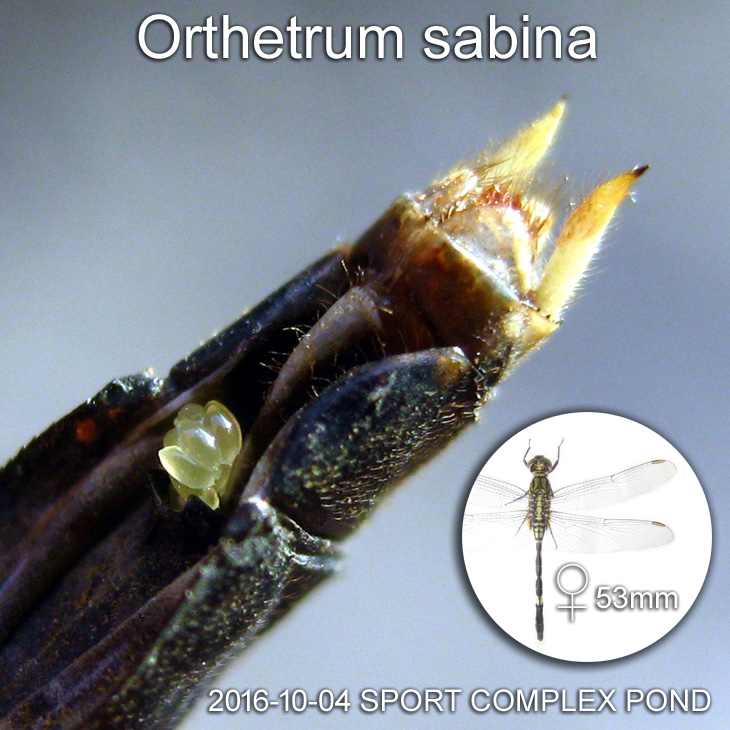
using Vulvar Lamina Exophytic eggs are laid by dipping the tip of the abdomen beneath the water whilst in flight. |
Egg laying method 2 - using
Ovipositor Structure Endophytic eggs are inserted into a substrate such as plant tissue |
|
| NOT ALL female dragonflies have a ovipositor. These female have a Vulvar lamina instead | ONE Family Aeshnidae of dragonflies have a ovipositor | |
| Female Dragonflies with Vulvar lamina♀ | Female Dragonflies with Ovipositor structure ♀ | Female Damselflies' Ovipositor structure |
 Vulvar lamina of a female Agrionoptera Insignis 八仙蜻蜓
|
 Ovipositor of a female Gynacantha Basiguttata 綠眼晏蜓 |
 Ovipositor of a female Ceriagrion Bellona ♀38mm Endemic of Borneo |
 Vulvar lamina of a female Brachydiplax Chalybea 藍額疏脈蜻蜓 ♀30mm |
 Ovipositor of a female Indaeschna sp HSBC (unidentified) |
 Ovipositor of a female Pseudagrion Pilidorsum 弓背細蟌 ♀39mm |
 Vulvar lamina of a female Orthetrum Sabina 杜松蜻蜓/狭腹灰蜻 ♀53mm |
 Ovipositor of a female Indaeschna Grubaueri ♀85mm |
 Ovipositor of a female Coeliccia Nigrohamata ♀42mm An Endemic Damselfly of Borneo Island |
 |
 |
 |
Dragonflies are one of the oldest species of insects in the world with 300 million years records.
Dragonflies only difference between modern and ancient dragonflies is in size.
Dragonflies have three stages in life:
1- Egg,
2- Nymph,
3- Adult.
| Dragonfly Eggs | Dragonfly Nymph | Adult Dragonfly |
 Eggs of Indaeschna Grubaueri. Length of an egg is 1.5mm and width is 0.35mm |
 Nymph (larva) of Anax Guttatus. Fully developed and ready for emergence of the adult dragonfly. |
 An adult dragonfly Gynacantha Basiguttata male. |
The length of each stage depends on dragonfly species. Tropical Dragonflies typically spend less time in each stage than Temperate Dragonflies.
The life cycle of a dragonfly starts with eggs. A female dragonfly always find still water in which to lay her eggs.
Female dragonflies lay their eggs on submerged aquatic plants, mud banks
submerged in water, or if they can't find a better spot, directly in the water.
Depending on the species, a female can lay hundreds or thousands of eggs during
her lifespan.
In tropical regions, dragonfly eggs may hatch in as little as five days. In
temperate (areas where winter temperatures drop near or below freezing) regions,
dragonfly eggs usually won't hatch until the following spring.
When dragonflies hatch they are called nymphs. Dragonfly nymphs are voracious
predators that have no resemblance to their adult forms. They molt (shed their
skin) up to many times and can spend as long as four years as nymphs.
Tropical Dragonflies spend less time in the nymph form while Temperate
Dragonflies spend longer as nymphs as the onset of winter delays maturation.
Dragonfly nymphs are aquatic, living in water until emerging to molt for one final time. During the final molting, the nymph's skin splits and the nymph emerges as an adult dragonfly. Dragonfly nymphs are hemimetabolous, meaning they don't form a cocoon or pupate before emerging as an adult.
After the final molt from nymph to adult, most dragonfly species spend the
next month fully maturing. Their gonads (sex organs) finish developing, their
color becomes brighter with their final markings emerging and they disperse,
sometimes hundreds of miles, from the ponds or rivers where they developed.
Adult dragonflies are also voracious predators eating small insects, primarily
mosquitoes and flies, which they catch while flying. Dragonflies can hover, fly
backwards, forwards and sideways.
After a female dragonfly fully developed, it mate with several males before she is ready to lay her eggs. Both female and male dragonflies only live two to four months as adults before dying.


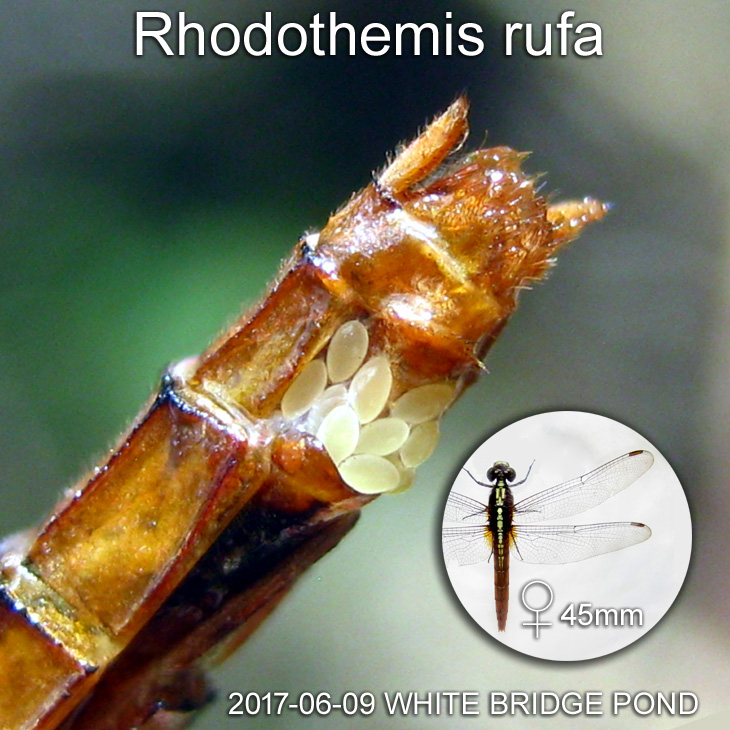


The 3 families of dragonflies found in Borneo Island:
1 Family of Aeshnidae
RELATED TOPICS
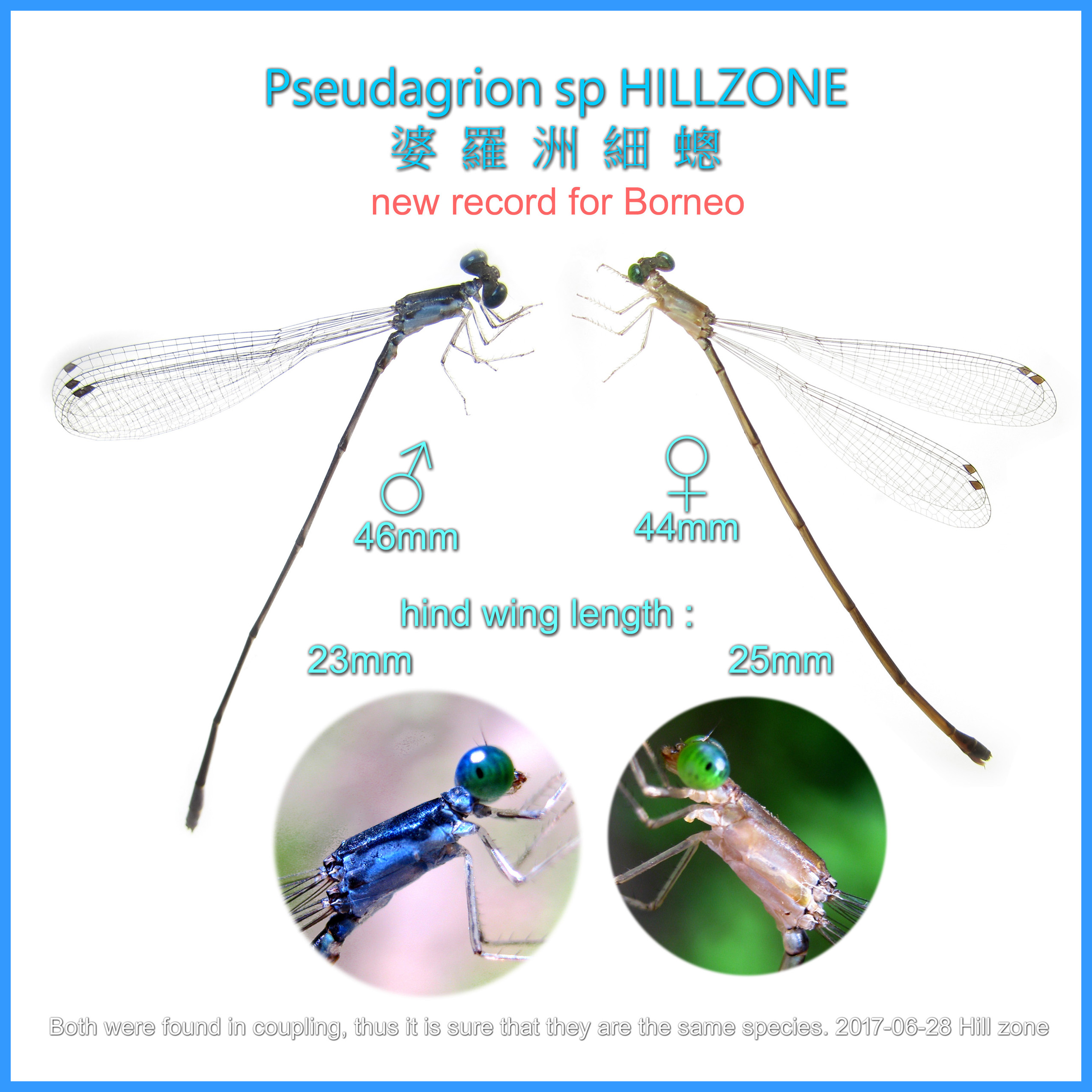
INTRODUCTION TO THE DAMSELFLIES OF SABAH, BORNEO ISLAND
Insects are diverse and dominant inhabitants of the tropical rainforests in Borneo Island. New species are discovered too often. Entomologists are still struggling to cope with the documentation of tropical insect diversity.
Most of the common dragonflies in Sabah are red coloured, especially from the family Libellulidae. Some red pecies are even confused as same species, for example the three species of Genus Neurothemis.

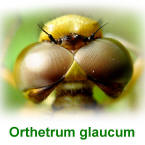
The compound eyes of dragonflies
Dragonflies and damselflies have large compound eyes that can see in all directions. When the compound eye is magnified several hundred times, each individual facet (ommatidium) is shown to be hexagonal in shape.
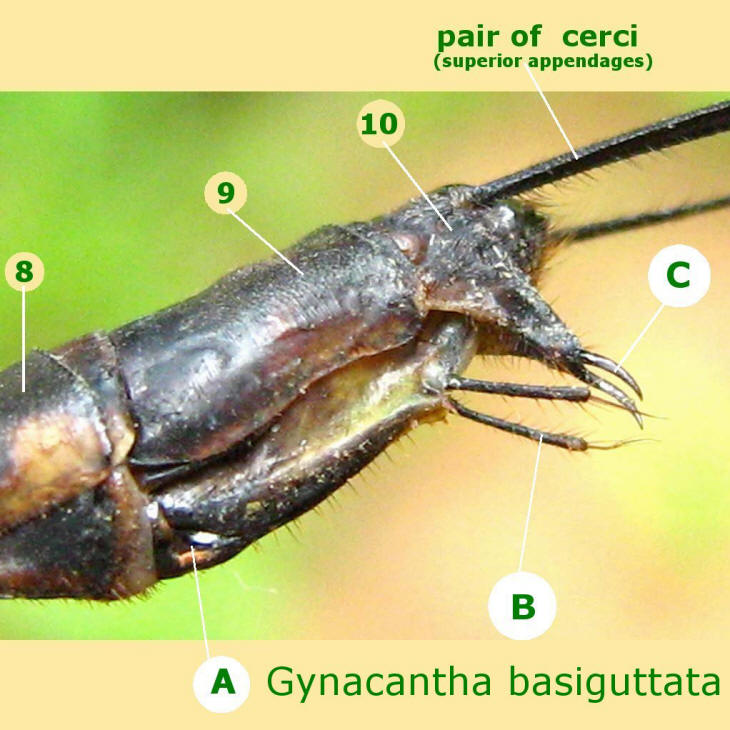
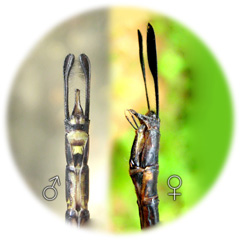
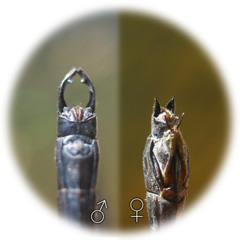
Ovipositor (Vulvar Lamina)
of Female Dragonflies and Damselflies
Female dragonflies have either one of the two method of depositing eggs from
the abdomen:
1- using Ovipositor Structure
2- using Vulvar Lamina
Male do not have an ovipositor. Instead male dragonfly and damselfly have appendages.
|
GO FURTHER FLORA Borneo has 150 species of wild fig trees. Most of them are found in forests of Sabah. FISHERIES Prawn farming is a main commercial activities in Tawau. Spawners from Tawau are graded the best in Malaysia. For decades, Tawau has been exporting high-grade tiger prawns to several countries such as Korea, Japan, Taiwan, China, Vietnam, Singapore, Egypt and Australia. |
|
|
Damselflies of Borneo |