From a coral atoll in the Indian Ocean — by copra estate, emigrant ship and tobacco field — to the violins of Kampung Balung Cocos
從印度洋上的珊瑚環礁──經由椰乾莊園、移民船和煙草田──來到巴隆科科斯村的小提琴聲中
Dari atol karang di Lautan Hindi — melalui estet kopra, kapal penghijrah dan ladang tembakau — ke biola Kampung Balung Cocos
Stream B · sea lanes源流B · 海路Aliran B · laluan laut
1826The first settlers reach the Cocos (Keeling) Islands in the Indian Ocean第一批定居者抵達印度洋上的科科斯(基林)群島Peneroka pertama tiba di Kepulauan Cocos (Keeling) di Lautan Hindi
1949The first ship carries about 180 Cocos Malays to North Borneo第一艘船載著約180名科科斯馬來人前往北婆羅洲Kapal pertama membawa kira-kira 180 orang Melayu Cocos ke Borneo Utara
1,600+people leave the islands between 1948 and 19511948至1951年間離開群島的人數orang meninggalkan pulau antara 1948 dan 1951
40 kmfrom Tawau: Kampung Balung Cocos, the largest Cocos village in Sabah距斗湖40公里:巴隆科科斯村,沙巴最大的科科斯村落dari Tawau: Kampung Balung Cocos, kampung Cocos terbesar di Sabah
1
Who are the Cocos Malays?
科科斯馬來人是誰?
Siapakah orang Melayu Cocos?
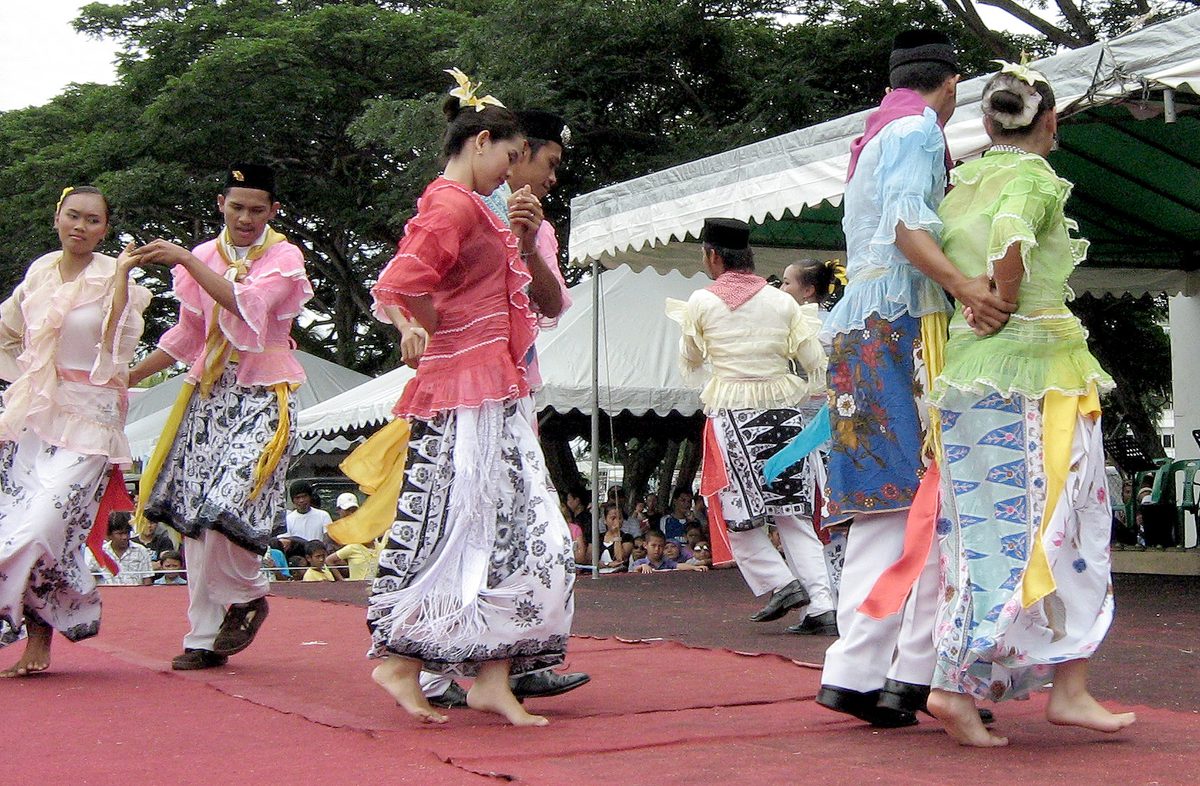
Cocos Malay couples dance the Dansa at the Tawau Cultural Festival, March 2007.科科斯馬來人舞伴在斗湖文化節跳Dansa舞,2007年3月。Pasangan Melayu Cocos menarikan Dansa di Festival Kebudayaan Tawau, Mac 2007.
The Cocos Malays — Orang Cocos or Melayu Kokos — are a small Muslim Malay people whose ancestors were brought to the Cocos (Keeling) Islands, a coral atoll in the Indian Ocean, from 1826 to work the coconut plantations of the Clunies-Ross family. Between 1948 and 1951 more than 1,600 of them left the overcrowded islands, and most went to North Borneo, now Sabah. Today their largest village is Kampung Balung Cocos, about 40 kilometres from Tawau, and there are others at Kunak, Lahad Datu and Sandakan. They are famous in Sabah for the Dansa, a dance to the violin that echoes a Scottish reel.
Orang Melayu Cocos — Orang Cocos atau Melayu Kokos — ialah bangsa Melayu Islam yang kecil, yang nenek moyangnya dibawa ke Kepulauan Cocos (Keeling), sebuah atol karang di Lautan Hindi, sejak 1826 untuk bekerja di ladang kelapa keluarga Clunies-Ross. Antara 1948 dan 1951 lebih 1,600 orang meninggalkan pulau-pulau yang sesak itu, dan kebanyakannya pergi ke Borneo Utara, kini Sabah. Hari ini kampung terbesar mereka ialah Kampung Balung Cocos, kira-kira 40 kilometer dari Tawau, dan ada yang lain di Kunak, Lahad Datu dan Sandakan. Mereka terkenal di Sabah dengan Dansa, tarian diiringi biola yang mengingatkan reel Scotland.
Stream B · sea lanes源流B · 海路Aliran B · laluan lautLanguage: Cocos Malay (Basa Pulu Kokos) — Austronesian語言:科科斯馬來語(Basa Pulu Kokos)──南島語系Bahasa: Melayu Cocos (Basa Pulu Kokos) — Austronesia
Names you will meet
您會遇到的名字
Nama yang akan anda temui
Orang Cocos · Melayu Kokos
the Cocos Malays; in Sabah often simply “Cocos”科科斯馬來人;在沙巴常簡稱「Cocos」orang Melayu Cocos; di Sabah selalunya “Cocos” sahaja
Pulu Kokos
the Cocos Islands, in the Cocos Malay dialect科科斯方言對科科斯群島的稱呼Kepulauan Cocos, dalam dialek Melayu Cocos
Clunies-Ross
the Scottish family that owned and ruled the islands, 1827–19781827至1978年擁有並統治群島的蘇格蘭家族keluarga Scotland yang memiliki dan memerintah pulau-pulau itu, 1827–1978
Orang Cape · Orang Banten
the two older groups of islanders, who later merged島上兩個較早的群體,後來融合為一dua kumpulan penduduk pulau yang lebih awal, yang kemudian bergabung
Dansa
the couples’ dance to the violin, from English “dance”伴著小提琴的雙人舞,源自英語「dance」tarian berpasangan diiringi biola, daripada Inggeris “dance”
Baskat · Peril
the men’s frilled jacket and the women’s frilled kebaya top男子的荷葉邊外套和女子的荷葉邊可峇雅上衣jaket berkerut lelaki dan baju kebaya berkerut wanita
Kemiti
the women’s committee that leads mutual help at feasts在宴席時帶領互助的婦女委員會jawatankuasa wanita yang mengetuai tolong-menolong di kenduri
Kg Balung Cocos
the cooperative village near Balung, Tawau斗湖巴隆附近的合作社村落kampung koperasi dekat Balung, Tawau
How many Cocos Malays?
科科斯馬來人有多少?
Berapa ramai orang Melayu Cocos?
Nobody has a recent count. Older sources give about 4,000 in Sabah (eTawau 2007 and 2025; a language survey of 2000) or about 5,000 (a 1965 geography, quoted by Wikipedia). A banner at the 2018 Tawau festival said 5,000 in the whole world, three-quarters of them in Sabah. Malaysian census tables do not show the Cocos separately. On the islands themselves, the 2021 census counted 593 people of all backgrounds. So the Sabah community is clearly several times larger than the one left at home — but the exact numbers are estimates.
Tiada siapa mempunyai bilangan terkini. Sumber lama memberi kira-kira 4,000 di Sabah (eTawau 2007 dan 2025; tinjauan bahasa 2000) atau kira-kira 5,000 (sebuah buku geografi 1965, dipetik Wikipedia). Sepanduk di festival Tawau 2018 menyebut 5,000 di seluruh dunia, tiga perempat di Sabah. Jadual banci Malaysia tidak menunjukkan orang Cocos secara berasingan. Di pulau itu sendiri, banci 2021 mengira 593 orang daripada semua latar. Jadi komuniti Sabah jelas beberapa kali lebih besar daripada yang tinggal di kampung asal — tetapi angka tepatnya hanyalah anggaran.
Sources: Wikipedia, “Cocos Malays” and “Cocos Malay”; Isa Romtie et al., MANU 29 (2019); eTawau, OrangCocos.htm (2025), CocosDancer.htm (2007) and 2018 festival photos; Liputan6 (2021 census); team photos.
資料來源:Wikipedia, “Cocos Malays” and “Cocos Malay”; Isa Romtie et al., MANU 29 (2019); eTawau, OrangCocos.htm (2025), CocosDancer.htm (2007) and 2018 festival photos; Liputan6 (2021 census); team photos.
Sumber: Wikipedia, “Cocos Malays” and “Cocos Malay”; Isa Romtie et al., MANU 29 (2019); eTawau, OrangCocos.htm (2025), CocosDancer.htm (2007) and 2018 festival photos; Liputan6 (2021 census); team photos.
2
The Cocos (Keeling) Islands
科科斯(基林)群島
Kepulauan Cocos (Keeling)
The southern Cocos atoll, with Home Island and its village of Bantam. Schematic, not to scale.科科斯南環礁,以及家島和島上的班塔姆村。示意圖,非按比例。Atol Cocos selatan, dengan Pulau Home dan kampungnya, Bantam. Skematik, tidak berskala.
The Cocos (Keeling) Islands are an Australian territory in the Indian Ocean, about 2,800 kilometres north-west of Perth. There are 27 coral islands in two atolls, with a land area of only about 14 square kilometres. The Cocos Malays live mainly on Home Island, in the village of Bantam, named after Banten in Java; most other residents live on West Island, which has the airstrip. The islands were sighted in 1609 but had no inhabitants until 1826.
Kepulauan Cocos (Keeling) ialah wilayah Australia di Lautan Hindi, kira-kira 2,800 kilometer ke barat laut Perth. Terdapat 27 pulau karang dalam dua atol, dengan keluasan daratan hanya kira-kira 14 kilometer persegi. Orang Melayu Cocos tinggal terutamanya di Pulau Home, di kampung Bantam, sempena Banten di Jawa; kebanyakan penduduk lain tinggal di Pulau Barat, yang mempunyai landasan kapal terbang. Pulau-pulau itu dilihat pada 1609 tetapi tiada penghuni sehingga 1826.
🏝️
27 coral islands
27個珊瑚島
27 pulau karang
Two atolls, about 14 km² of land.
兩個環礁,陸地約14平方公里。
Dua atol, kira-kira 14 km² daratan.
🥥
Copra islands
椰乾之島
Pulau kopra
For 150 years the islands lived from coconuts.
150年來群島靠椰子為生。
Selama 150 tahun pulau-pulau itu hidup daripada kelapa.
Sources: National Archives of Australia, “History of the Cocos (Keeling) Islands”; Australian Government, Department of Infrastructure; Cocos Keeling Islands tourism site, “History, culture & language”; Wikipedia, “Cocos (Keeling) Islands”.
資料來源:National Archives of Australia, “History of the Cocos (Keeling) Islands”; Australian Government, Department of Infrastructure; Cocos Keeling Islands tourism site, “History, culture & language”; Wikipedia, “Cocos (Keeling) Islands”.
Sumber: National Archives of Australia, “History of the Cocos (Keeling) Islands”; Australian Government, Department of Infrastructure; Cocos Keeling Islands tourism site, “History, culture & language”; Wikipedia, “Cocos (Keeling) Islands”.
3
Hare, Clunies-Ross and the coconut kingdom
黑爾、克盧尼斯-羅斯與椰子王國
Hare, Clunies-Ross dan kerajaan kelapa
In 1826 the English merchant Alexander Hare settled on the islands with a household of slaves and dependants. In 1827 came John Clunies-Ross, a Scottish sea captain, who soon took over and brought in Malay workers to harvest coconuts for copra. His family ruled the islands as a private estate for about 150 years; in 1886 Queen Victoria granted them all the land for ever. Between 1857 and 1910 the family also brought labourers from Banten, Central Java and Madura. The people from many islands became one community, Muslim and Malay-speaking, with a dialect of their own.
Pada 1826 saudagar Inggeris Alexander Hare menetap di pulau-pulau itu dengan sekumpulan hamba dan orang tanggungan. Pada 1827 datang John Clunies-Ross, seorang kapten laut Scotland, yang segera mengambil alih dan membawa pekerja Melayu untuk memetik kelapa bagi kopra. Keluarganya memerintah pulau-pulau itu sebagai estet persendirian selama kira-kira 150 tahun; pada 1886 Ratu Victoria menganugerahkan semua tanah kepada mereka buat selama-lamanya. Antara 1857 dan 1910 keluarga itu juga membawa buruh dari Banten, Jawa Tengah dan Madura. Orang dari pelbagai pulau menjadi satu komuniti, beragama Islam dan berbahasa Melayu, dengan dialek sendiri.
👑 1886👑 1886年👑 1886The land granted to the family.土地授予該家族。Tanah dianugerahkan kepada keluarga itu.
🇦🇺 1955🇦🇺 1955年🇦🇺 1955The islands pass to Australia.群島移交澳洲。Pulau-pulau diserahkan kepada Australia.
Two views
兩種觀點
Dua pandangan
The Clunies-Ross family called its rule kind and fatherly. Charles Darwin, who visited in 1836, wrote of people living in slavery, and later writers describe an estate that paid wages in tokens for its own shop and would not let those who left come back. eTawau records both views without taking sides.
Keluarga Clunies-Ross menyebut pemerintahan mereka baik hati dan kebapaan. Charles Darwin, yang melawat pada 1836, menulis tentang orang yang hidup dalam perhambaan, dan penulis kemudian menggambarkan estet yang membayar gaji dengan token untuk kedainya sendiri dan tidak membenarkan mereka yang pergi kembali. eTawau merekodkan kedua-dua pandangan tanpa memihak.
Sources: National Archives of Australia; Wikipedia, “Cocos Malays”, “Cocos Malay” and “Clunies-Ross family”; Britannica; Inside Indonesia 109 (2012); Tahmindjis, QUT Law Review (1985).
資料來源:National Archives of Australia; Wikipedia, “Cocos Malays”, “Cocos Malay” and “Clunies-Ross family”; Britannica; Inside Indonesia 109 (2012); Tahmindjis, QUT Law Review (1985).
Sumber: National Archives of Australia; Wikipedia, “Cocos Malays”, “Cocos Malay” and “Clunies-Ross family”; Britannica; Inside Indonesia 109 (2012); Tahmindjis, QUT Law Review (1985).
4
Leaving the islands, 1948–1951
離開群島,1948–1951年
Meninggalkan pulau, 1948–1951
Where the ancestors came from, and where their descendants went. Schematic, not to scale.祖先從哪裡來,後代往哪裡去。示意圖,非按比例。Dari mana nenek moyang datang, dan ke mana keturunan mereka pergi. Skematik, tidak berskala.
By the 1940s Home Island had more people than the copra estate could support. A Universiti Malaysia Sabah study names overcrowding and a declining economy, with British officials encouraging people to leave. In 1948 a small group went to Christmas Island; in late 1949 the first ship carried about 180 people to North Borneo to work on the plantations. An Australian law journal counts more than 1,600 Cocos Malays sent to North Borneo, Singapore and Christmas Island between 1948 and 1951. In 1951 British ministers told Parliament that most islanders had asked to go to North Borneo, and that all who wished should be able to leave before the islands passed to Australia in 1955.
Menjelang 1940-an Pulau Home mempunyai lebih ramai penduduk daripada yang mampu ditanggung estet kopra. Satu kajian Universiti Malaysia Sabah menamakan kesesakan dan ekonomi merosot, dengan pegawai British menggalakkan orang pergi. Pada 1948 sekumpulan kecil pergi ke Pulau Krismas; pada akhir 1949 kapal pertama membawa kira-kira 180 orang ke Borneo Utara untuk bekerja di ladang. Sebuah jurnal undang-undang Australia mengira lebih 1,600 orang Melayu Cocos dihantar ke Borneo Utara, Singapura dan Pulau Krismas antara 1948 dan 1951. Pada 1951 menteri British memberitahu Parlimen bahawa kebanyakan penduduk pulau meminta untuk pergi ke Borneo Utara, dan semua yang mahu patut dapat pergi sebelum pulau-pulau itu diserahkan kepada Australia pada 1955.
Sources: Isa Romtie et al., MANU 29 (2019); Mohd Ariffin & Osri (IIUM), via ResearchGate; M. Tahmindjis, QUT Law Review (1985); UK Parliament, Hansard (4 Jul 1951; 31 Jan 1955); Inside Indonesia 109 (2012).
資料來源:Isa Romtie et al., MANU 29 (2019); Mohd Ariffin & Osri (IIUM), via ResearchGate; M. Tahmindjis, QUT Law Review (1985); UK Parliament, Hansard (4 Jul 1951; 31 Jan 1955); Inside Indonesia 109 (2012).
Sumber: Isa Romtie et al., MANU 29 (2019); Mohd Ariffin & Osri (IIUM), via ResearchGate; M. Tahmindjis, QUT Law Review (1985); UK Parliament, Hansard (4 Jul 1951; 31 Jan 1955); Inside Indonesia 109 (2012).
5
Cocos Malays in Sabah and Tawau
沙巴與斗湖的科科斯馬來人
Orang Melayu Cocos di Sabah dan Tawau
Cocos Malay villages in eastern Sabah. Schematic, positions approximate.沙巴東部的科科斯馬來人村落。示意圖,位置為約略位置。Kampung Melayu Cocos di timur Sabah. Skematik, kedudukan anggaran.
Many of the first families worked on British tobacco estates around Lahad Datu on Darvel Bay — a Cocos community writer names the Segama and Mostyn estates — and a 2009 cooperative tribunal records a settler brought to Lahad Datu in 1953. In 1966 Cocos families applied for land, and the Cocos Settlement Scheme at the Giram estate near Kunak gave each share 15 acres; its cooperative was registered on 13 December 1977, and the village is Kampung Skim Kokos. Kunak belonged to the Lahad Datu district until 1990, which is why older pages, eTawau’s among them, spoke of a “Kampung Cocos near Lahad Datu”.
Ramai keluarga pertama bekerja di ladang tembakau British sekitar Lahad Datu di Teluk Darvel — seorang penulis komuniti Cocos menamakan ladang Segama dan Mostyn — dan satu tribunal koperasi 2009 merekodkan seorang peneroka dibawa ke Lahad Datu pada 1953. Pada 1966 keluarga Cocos memohon tanah, dan Rancangan Penempatan Cocos di ladang Giram dekat Kunak memberi setiap saham 15 ekar; koperasinya didaftarkan pada 13 Disember 1977, dan kampungnya ialah Kampung Skim Kokos. Kunak sebahagian daripada daerah Lahad Datu sehingga 1990, sebab itulah halaman lama, termasuk eTawau, menyebut “Kampung Cocos dekat Lahad Datu”.
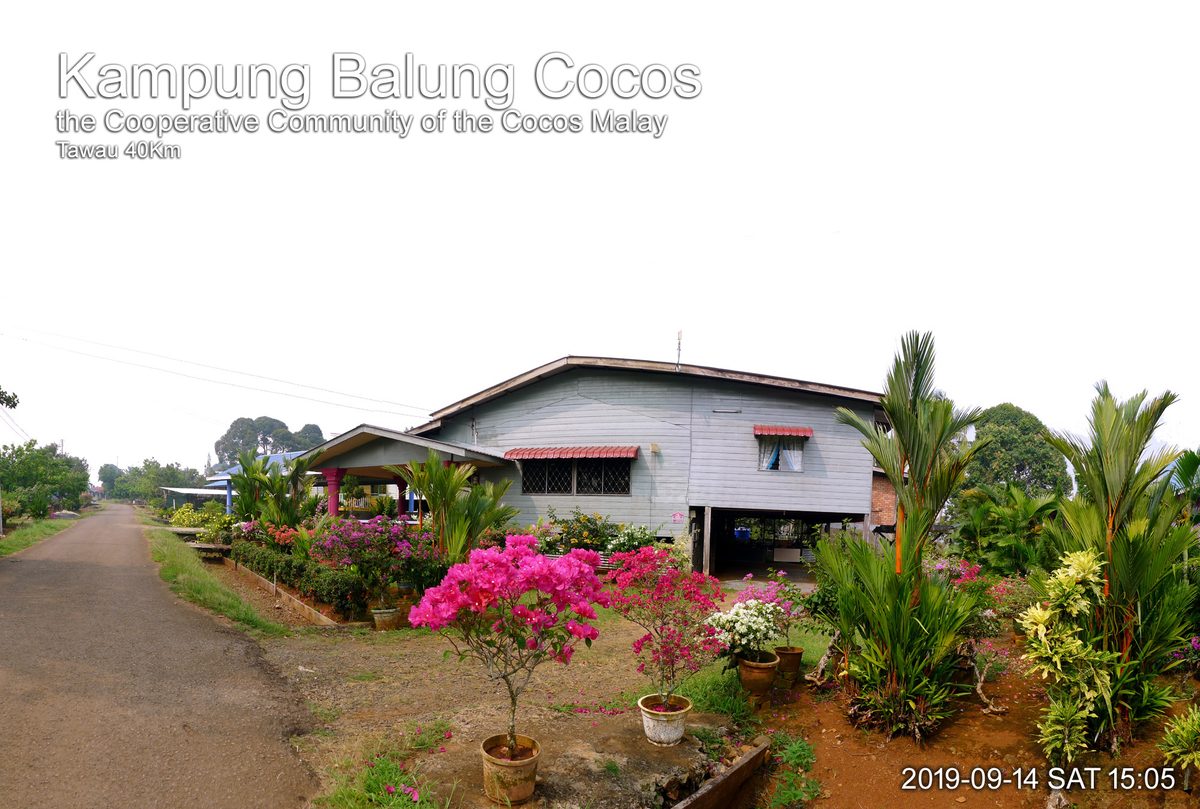
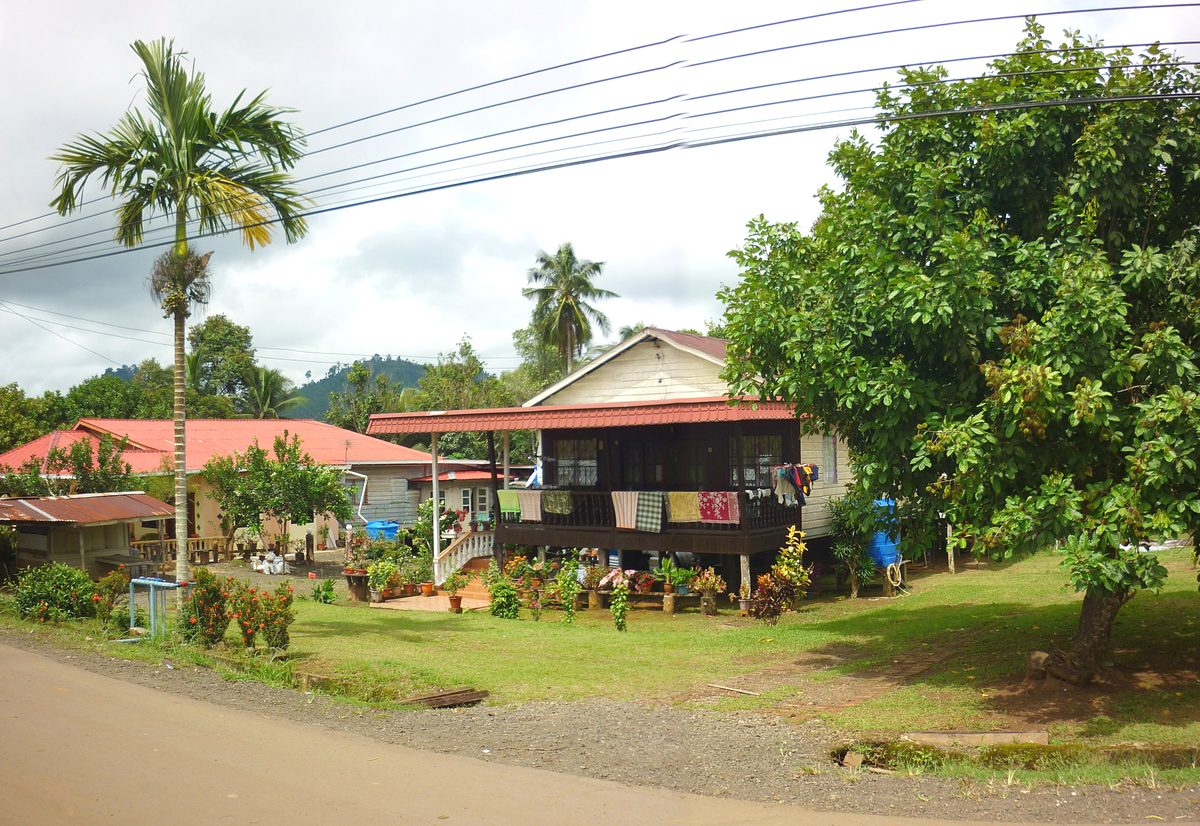
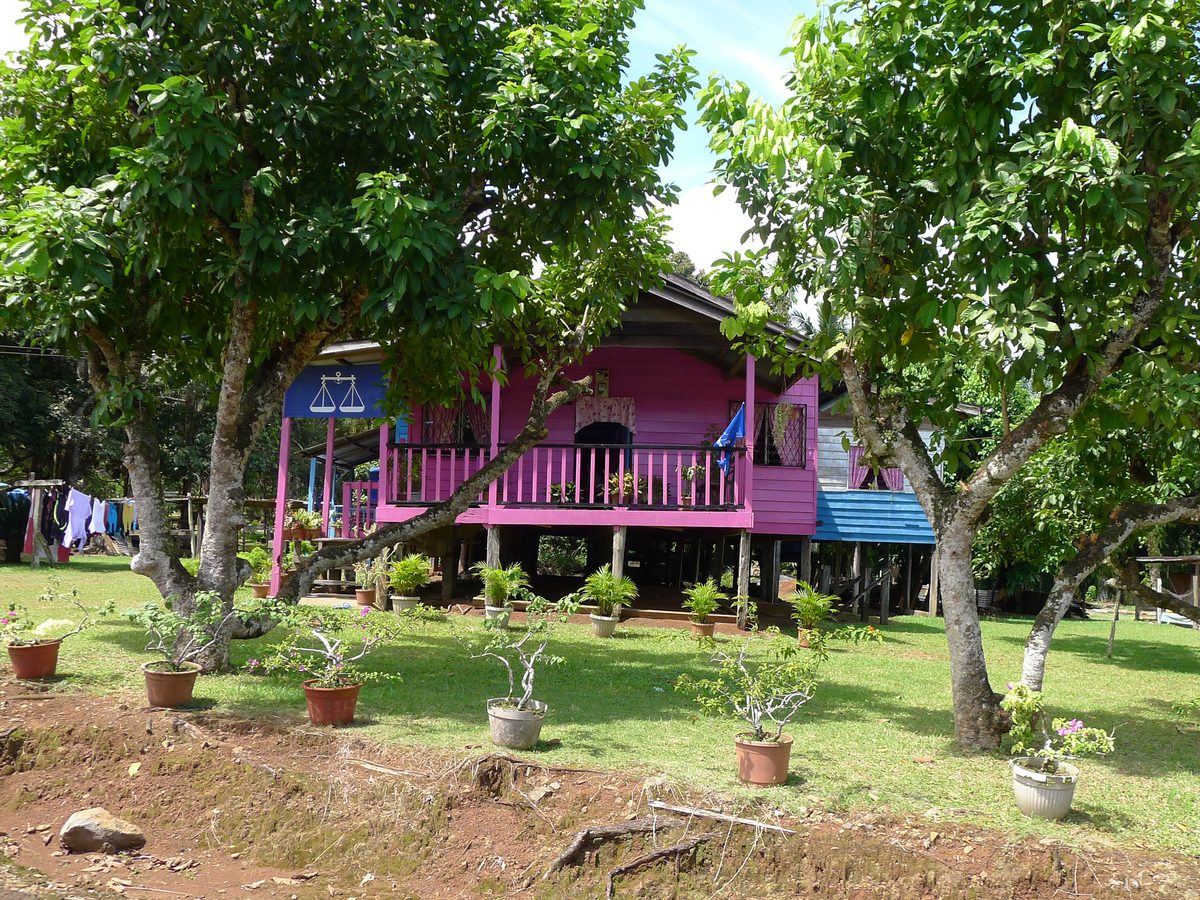
Kampung Balung Cocos, 14 September 2019.巴隆科科斯村,2019年9月14日。Kampung Balung Cocos, 14 September 2019.The village road, 5 November 2011.村中道路,2011年11月5日。Jalan kampung, 5 November 2011.
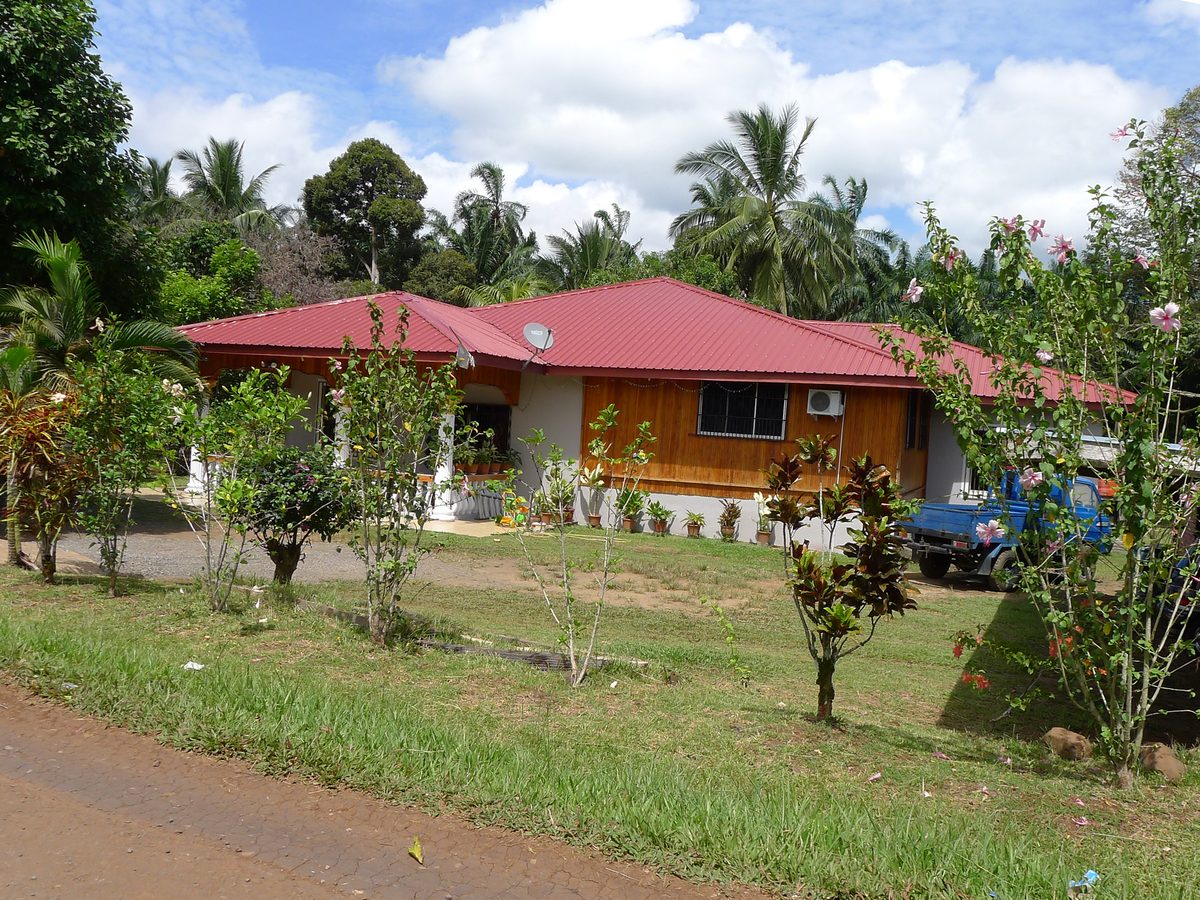
Near Tawau, Kampung Balung Cocos lies about 40 kilometres from town, 13 kilometres from the airport and 5 kilometres from Balung. Researchers and the press agree it is the largest Cocos Malay community in Sabah. Most villagers belong to the Balung Cocos Islanders Co-operative Land Development Society, registration RCS61/61, and grow oil palm. Architecture researchers from IIUM found that on the islands the masters had always designed the workers’ houses; in Sabah, after 1963, the families built their own — the painted timber houses on stilts that eTawau’s team photographed in 2011, 2013 and 2019.
Dekat Tawau, Kampung Balung Cocos terletak kira-kira 40 kilometer dari bandar, 13 kilometer dari lapangan terbang dan 5 kilometer dari Balung. Penyelidik dan akhbar bersetuju bahawa ia komuniti Melayu Cocos terbesar di Sabah. Kebanyakan penduduk menganggotai Balung Cocos Islanders Co-operative Land Development Society, pendaftaran RCS61/61, dan menanam kelapa sawit. Penyelidik seni bina UIAM mendapati di pulau-pulau itu tuan sentiasa mereka bentuk rumah pekerja; di Sabah, selepas 1963, keluarga membina rumah sendiri — rumah kayu bertiang berwarna yang dirakam pasukan eTawau pada 2011, 2013 dan 2019.
What we still do not know
我們仍不知道的事
Apa yang kita masih belum tahu
When exactly was the Balung cooperative founded? eTawau’s 2025 Chinese page said 1962; the registration number RCS61/61 may point to 1961. Did the first families also work on banana estates in Tawau, as that page said? How many people live in Kampung Balung Cocos today? Please share what you know with eTawau.
Bilakah tepatnya koperasi Balung ditubuhkan? Halaman Cina eTawau 2025 menyatakan 1962; nombor pendaftaran RCS61/61 mungkin menunjuk kepada 1961. Adakah keluarga pertama juga bekerja di ladang pisang di Tawau, seperti kata halaman itu? Berapa ramai orang tinggal di Kampung Balung Cocos hari ini? Sila kongsikan apa yang anda tahu dengan eTawau.
Sources: Suruhanjaya Koperasi Malaysia, Tribunal award T-106-2009; Cocos Islander Community blog (2011); Wikipedia, “Kunak District”; eTawau, OrangCocos.htm (2025), BalungCocos.htm (2019) and CocosMalay_Big5.htm (2025); Mohd Ariffin & Osri, Advanced Science Letters 23(7) (2017); MANU 29 (2019); Free Malaysia Today (22 Mar 2026); team photos.
資料來源:Suruhanjaya Koperasi Malaysia, Tribunal award T-106-2009; Cocos Islander Community blog (2011); Wikipedia, “Kunak District”; eTawau, OrangCocos.htm (2025), BalungCocos.htm (2019) and CocosMalay_Big5.htm (2025); Mohd Ariffin & Osri, Advanced Science Letters 23(7) (2017); MANU 29 (2019); Free Malaysia Today (22 Mar 2026); team photos.
Sumber: Suruhanjaya Koperasi Malaysia, Tribunal award T-106-2009; Cocos Islander Community blog (2011); Wikipedia, “Kunak District”; eTawau, OrangCocos.htm (2025), BalungCocos.htm (2019) and CocosMalay_Big5.htm (2025); Mohd Ariffin & Osri, Advanced Science Letters 23(7) (2017); MANU 29 (2019); Free Malaysia Today (22 Mar 2026); team photos.
6
Through the ages
歷代變遷
Sepanjang zaman
1609The English captain William Keeling sights the islands.英國船長威廉·基林發現這些島嶼。Kapten Inggeris William Keeling melihat pulau-pulau itu.
1826Alexander Hare makes the first settlement, with slaves and dependants.亞歷山大·黑爾帶著奴隸和依附者建立第一個定居點。Alexander Hare membuka penempatan pertama, dengan hamba dan orang tanggungan.
1827John Clunies-Ross arrives and brings Malay workers for the coconut groves.約翰·克盧尼斯-羅斯到來,引進馬來工人經營椰林。John Clunies-Ross tiba dan membawa pekerja Melayu untuk kebun kelapa.
1834Hare dies in Java; Clunies-Ross takes over his people and groves.黑爾死於爪哇;克盧尼斯-羅斯接收他的人和椰林。Hare meninggal di Jawa; Clunies-Ross mengambil alih orang dan kebunnya.
1836Charles Darwin visits on the Beagle and studies the atoll.查爾斯·達爾文乘「小獵犬號」到訪並研究環礁。Charles Darwin melawat dengan Beagle dan mengkaji atol itu.
1857Britain annexes the islands.英國兼併群島。Britain menggabungkan pulau-pulau itu.
1857–1910Labourers brought from Banten, Central Java and Madura.從萬丹、中爪哇和馬都拉引進勞工。Buruh dibawa dari Banten, Jawa Tengah dan Madura.
1886Queen Victoria grants all the land to George Clunies-Ross and his heirs.維多利亞女王把所有土地授予喬治·克盧尼斯-羅斯及其後人。Ratu Victoria menganugerahkan semua tanah kepada George Clunies-Ross dan warisnya.
1948Emigration begins: a small group goes to Christmas Island.移民開始:一小群人去了聖誕島。Penghijrahan bermula: sekumpulan kecil pergi ke Pulau Krismas.
1949Late in the year, the first ship takes about 180 people to North Borneo.年底,第一艘船載約180人前往北婆羅洲。Pada akhir tahun, kapal pertama membawa kira-kira 180 orang ke Borneo Utara.
1948–1951More than 1,600 leave for North Borneo, Singapore and Christmas Island.超過1,600人前往北婆羅洲、新加坡和聖誕島。Lebih 1,600 orang berhijrah ke Borneo Utara, Singapura dan Pulau Krismas.
1953Cocos settlers working in the Lahad Datu district.科科斯移民在拿篤縣工作。Peneroka Cocos bekerja di daerah Lahad Datu.
1955The islands pass to Australia (23 November).群島移交澳洲(11月23日)。Pulau-pulau diserahkan kepada Australia (23 November).
1963Sabah joins Malaysia; the Cocos become an independent community.沙巴加入馬來西亞;科科斯人成為獨立的社群。Sabah menyertai Malaysia; orang Cocos menjadi komuniti bebas.
1966Cocos families apply for land for the settlement scheme at Giram, Kunak (23 March).科科斯家庭為古納Giram的安置計劃申請土地(3月23日)。Keluarga Cocos memohon tanah untuk rancangan penempatan di Giram, Kunak (23 Mac).
1970sSome Cocos Malays from the islands settle in Western Australia.一些群島上的科科斯馬來人移居西澳。Sebahagian orang Melayu Cocos dari pulau menetap di Australia Barat.
1978Australia buys the Clunies-Ross land.澳洲收購克盧尼斯-羅斯的土地。Australia membeli tanah Clunies-Ross.
1984Act of Self-Determination: the islanders vote to join Australia fully (6 April).自決行動:島民投票與澳洲全面整合(4月6日)。Akta Penentuan Nasib Sendiri: penduduk mengundi untuk bersatu sepenuhnya dengan Australia (6 April).
2007Cocos dancers at the Tawau Cultural Festival (24–25 March).科科斯舞者參加斗湖文化節(3月24–25日)。Penari Cocos di Festival Kebudayaan Tawau (24–25 Mac).
2011RTM films Kampung Skim Kokos, Kunak (March); eTawau photographs Kg Balung Cocos (November).馬來西亞廣播電視台拍攝古納Skim Kokos村(3月);eTawau拍攝巴隆科科斯村(11月)。RTM merakam Kampung Skim Kokos, Kunak (Mac); eTawau merakam Kg Balung Cocos (November).
2016Giram Nek Legek opened to visitors; IIUM researchers present the Cocos heritage studies.Giram Nek Legek開放給遊客;國際伊斯蘭大學研究者發表科科斯文化遺產研究。Giram Nek Legek dibuka kepada pelawat; penyelidik UIAM membentangkan kajian warisan Cocos.
2018Cocos dancers at the Tawau International Cultural Festival (7 April).科科斯舞者參加斗湖國際文化節(4月7日)。Penari Cocos di Festival Kebudayaan Antarabangsa Tawau (7 April).
2019A Universiti Malaysia Sabah study of Cocos pantun; eTawau photographs the village (14 September).沙巴大學發表科科斯班頓詩研究;eTawau拍攝村落(9月14日)。Kajian pantun Cocos oleh Universiti Malaysia Sabah; eTawau merakam kampung (14 September).
2023The Sabah Cultural Board publishes a book on Cocos beliefs and customs.沙巴文化局出版關於科科斯信仰與習俗的書。Lembaga Kebudayaan Negeri Sabah menerbitkan buku tentang kepercayaan dan adat Cocos.
2026Free Malaysia Today reports on Hari Raya at Kampung Balung Cocos (March).《今日自由大馬》報道巴隆科科斯村的開齋節(3月)。Free Malaysia Today melaporkan Hari Raya di Kampung Balung Cocos (Mac).
Sources: National Archives of Australia; Australian Government, Department of Infrastructure; Shire of Cocos; Wikipedia (“Cocos Malays”, “Cocos Malay”, “Cocos (Keeling) Islands”); Tahmindjis (1985); Mohd Ariffin & Osri (IIUM, 2016–2017); SKM Tribunal award T-106-2009; Inside Indonesia (2012); ABC News; The Borneo Post (2011); MANU 29 (2019); Lembaga Kebudayaan Negeri Sabah (2023); Free Malaysia Today (2026); eTawau, CocosDancer.htm, OrangCocos.htm and IndexInterest.htm.
資料來源:National Archives of Australia; Australian Government, Department of Infrastructure; Shire of Cocos; Wikipedia (“Cocos Malays”, “Cocos Malay”, “Cocos (Keeling) Islands”); Tahmindjis (1985); Mohd Ariffin & Osri (IIUM, 2016–2017); SKM Tribunal award T-106-2009; Inside Indonesia (2012); ABC News; The Borneo Post (2011); MANU 29 (2019); Lembaga Kebudayaan Negeri Sabah (2023); Free Malaysia Today (2026); eTawau, CocosDancer.htm, OrangCocos.htm and IndexInterest.htm.
Sumber: National Archives of Australia; Australian Government, Department of Infrastructure; Shire of Cocos; Wikipedia (“Cocos Malays”, “Cocos Malay”, “Cocos (Keeling) Islands”); Tahmindjis (1985); Mohd Ariffin & Osri (IIUM, 2016–2017); SKM Tribunal award T-106-2009; Inside Indonesia (2012); ABC News; The Borneo Post (2011); MANU 29 (2019); Lembaga Kebudayaan Negeri Sabah (2023); Free Malaysia Today (2026); eTawau, CocosDancer.htm, OrangCocos.htm and IndexInterest.htm.
7
Dansa, pantun and the baskat
Dansa舞、班頓詩與baskat
Dansa, pantun dan baskat
Floor patterns of the Dansa, and the violin. Schematic drawing.Dansa舞的隊形與小提琴。示意圖。Corak lantai Dansa, dan biola. Lukisan skematik.
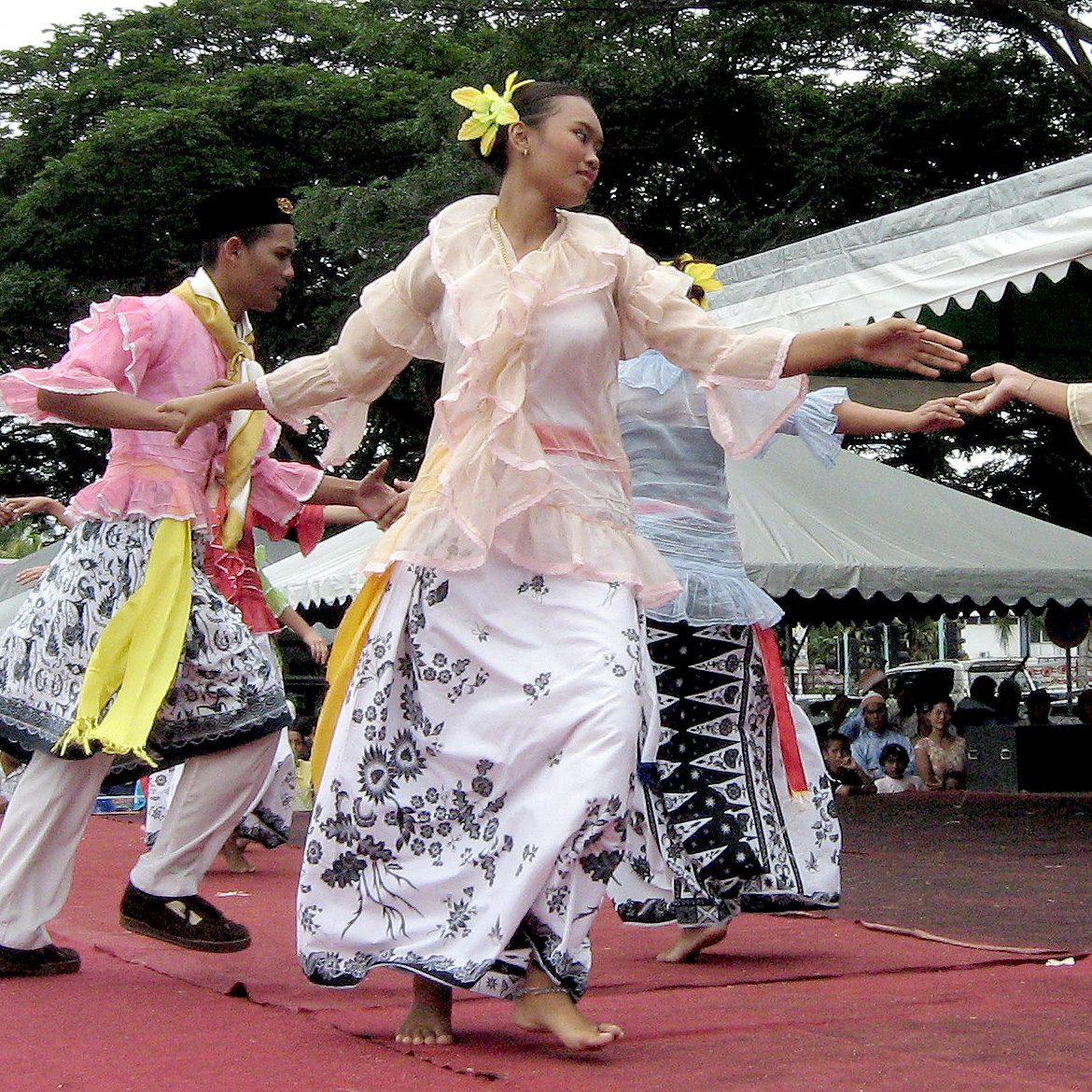
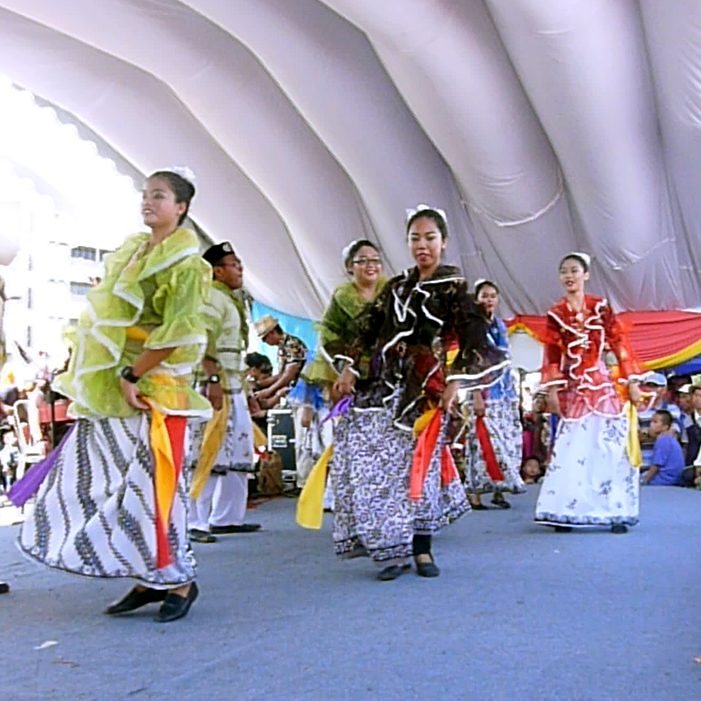
The Dansa takes its name from the English word “dance”. According to the national culture mapping record (JKKN), it grew from contact with English sailors after 1826, and its steps resemble the Scottish strathspey and the Reel of Tulloch. Couples dance in circles and lines while one or two penggesek play the violin; at a Cocos wedding the bride and groom dance first, then their families join in. The men-only Melenggok began as a contest of pantun between two groups, and a 2019 Universiti Malaysia Sabah study found Cocos pantun still sung in the Melenggok, Selong and Labuan Tidak Berbukit dances, to violin, drum and rebana.
Dansa這個名字來自英語「dance」。根據國家文化地圖紀錄(JKKN),它源於1826年後與英國水手的接觸,舞步像蘇格蘭的strathspey和Tulloch里爾舞。舞伴們排成圓圈和行列起舞,一兩位penggesek拉小提琴;在科科斯婚禮上,新郎新娘先跳,然後家人加入。只由男子跳的Melenggok起源於兩組人之間的班頓詩對唱比賽;2019年沙巴大學的研究發現,科科斯班頓詩仍在Melenggok、Selong和Labuan Tidak Berbukit舞中唱出,伴以小提琴、鼓和手鼓。
Dansa mengambil nama daripada perkataan Inggeris “dance”. Menurut rekod pemetaan budaya kebangsaan (JKKN), ia berkembang daripada hubungan dengan kelasi Inggeris selepas 1826, dan langkahnya menyerupai tarian Scotland strathspey dan Reel of Tulloch. Pasangan menari dalam bulatan dan barisan manakala seorang atau dua penggesek bermain biola; pada majlis perkahwinan Cocos pengantin menari dahulu, kemudian keluarga mereka turut serta. Melenggok yang ditarikan lelaki sahaja bermula sebagai pertandingan pantun antara dua kumpulan, dan kajian Universiti Malaysia Sabah 2019 mendapati pantun Cocos masih dinyanyikan dalam tarian Melenggok, Selong dan Labuan Tidak Berbukit, diiringi biola, gendang dan rebana.
🎻 Dansa🎻 Dansa舞🎻 DansaCouples in circles and lines, to the violin. Variants: Halldock, Step, Senap, Baral, Scotrail.舞伴排成圓圈和行列,伴著小提琴。變體:Halldock、Step、Senap、Baral、Scotrail。Pasangan dalam bulatan dan barisan, diiringi biola. Variasi: Halldock, Step, Senap, Baral, Scotrail.
🪘 Melenggok🪘 Melenggok舞🪘 MelenggokMen only, with violin, drum and tambourine, and a chorus of pantun.只由男子跳,伴以小提琴、鼓和鈴鼓,以及班頓詩合唱。Lelaki sahaja, dengan biola, gendang dan tamborin, serta korus pantun.
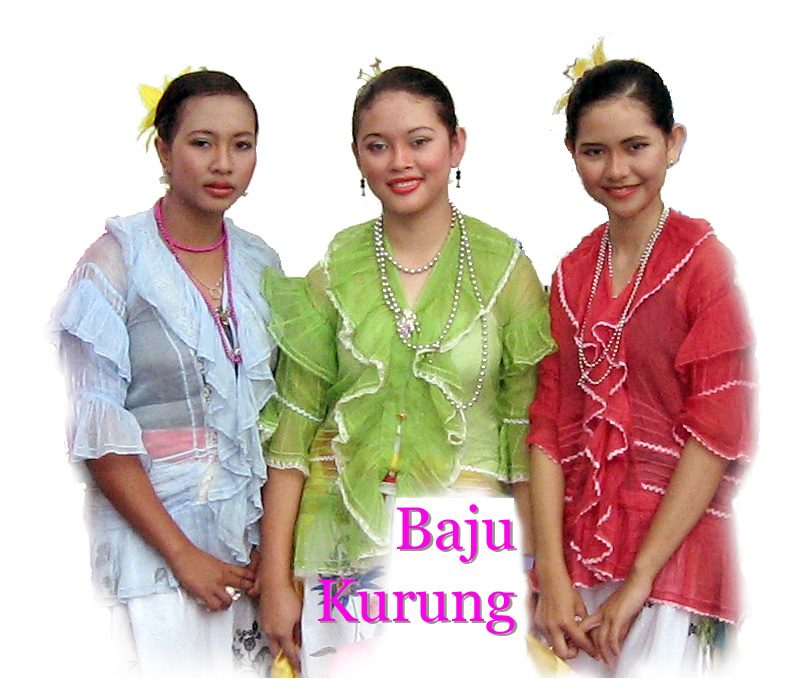
🧥 Baskat🧥 Baskat🧥 BaskatThe men’s frilled jacket, white satin trousers, sash and songkok.男子的荷葉邊外套、白緞褲、腰帶和宋谷帽。Jaket berkerut lelaki, seluar satin putih, selempang dan songkok.
👚 Peril👚 Peril👚 PerilThe women’s frilled kebaya top, batik skirt and flowered bun.女子的荷葉邊可峇雅上衣、蠟染裙和插花髮髻。Baju kebaya berkerut wanita, kain batik dan sanggul berbunga.
Partners face to face in the Dansa, Tawau Cultural Festival, March 2007.Dansa舞中面對面的舞伴,斗湖文化節,2007年3月。Pasangan bersemuka dalam Dansa, Festival Kebudayaan Tawau, Mac 2007.Young women in Cocos dance costume, 2011.穿著科科斯舞蹈服裝的年輕女子,2011年。Gadis-gadis berpakaian tarian Cocos, 2011.Tawau International Cultural Festival, 7 April 2018.斗湖國際文化節,2018年4月7日。Festival Kebudayaan Antarabangsa Tawau, 7 April 2018.
Not quite baju kurung
並非巴汝古隆
Bukan baju kurung
An older eTawau photo of three young dancers was labelled “Baju Kurung”. The national record calls the women’s costume the peril: a frilled top cut like a long kebaya, worn over a black bodice. We have corrected the caption.
Sekeping foto lama eTawau tiga penari muda dilabel “Baju Kurung”. Rekod kebangsaan menyebut pakaian wanita itu peril: baju berkerut berpotongan kebaya panjang, dipakai di atas korset hitam. Kami telah membetulkan kapsyennya.
Sources: JKKN, Pemetaan Budaya, “Tarian Dansa Cocos” and “Tarian Melenggok”; Isa Romtie et al., MANU 29 (2019); Lembaga Kebudayaan Negeri Sabah, Audio Gallery; eTawau, CocosDancer.htm (2007) and OrangCocos.htm (2025); team photos.
資料來源:JKKN, Pemetaan Budaya, “Tarian Dansa Cocos” and “Tarian Melenggok”; Isa Romtie et al., MANU 29 (2019); Lembaga Kebudayaan Negeri Sabah, Audio Gallery; eTawau, CocosDancer.htm (2007) and OrangCocos.htm (2025); team photos.
Sumber: JKKN, Pemetaan Budaya, “Tarian Dansa Cocos” and “Tarian Melenggok”; Isa Romtie et al., MANU 29 (2019); Lembaga Kebudayaan Negeri Sabah, Audio Gallery; eTawau, CocosDancer.htm (2007) and OrangCocos.htm (2025); team photos.
8
The Cocos community today
今日的科科斯社群
Komuniti Cocos hari ini
The Cocos Malays of Sabah are Malaysian citizens and Muslims, counted as part of Sabah’s Malay community. Their villages grow oil palm, and some families now live in Kota Kinabalu for work or marriage. The Sabah Cultural Board’s 2023 book records customs kept and customs dropped: feasts (kondangan) and mutual help (menulung) led by the women’s kemiti remain, while the yearly sedekah bumi offering was given up as people felt it did not fit Islam. At Hari Raya in Kampung Balung Cocos, Free Malaysia Today found ketupat cooked with beans, ayam begana in toasted coconut, Malam Ketupat and Malam Pasung at the mosque, and hambur duit — banknotes thrown in the air for others to catch. Families run dance classes so that children learn the Dansa and the Melenggok.
Orang Melayu Cocos di Sabah ialah warganegara Malaysia dan beragama Islam, dikira sebahagian masyarakat Melayu Sabah. Kampung mereka menanam kelapa sawit, dan sebahagian keluarga kini tinggal di Kota Kinabalu kerana kerja atau perkahwinan. Buku Lembaga Kebudayaan Negeri Sabah 2023 merekodkan adat yang dikekalkan dan yang ditinggalkan: kenduri (kondangan) dan tolong-menolong (menulung) yang diketuai kemiti wanita masih ada, manakala sedekah bumi tahunan ditinggalkan kerana dirasakan tidak sesuai dengan Islam. Pada Hari Raya di Kampung Balung Cocos, Free Malaysia Today mendapati ketupat dimasak dengan kacang, ayam begana berkerisik, Malam Ketupat dan Malam Pasung di masjid, dan hambur duit — wang kertas dilontar ke udara untuk ditangkap orang lain. Keluarga mengadakan kelas tarian supaya kanak-kanak belajar Dansa dan Melenggok.
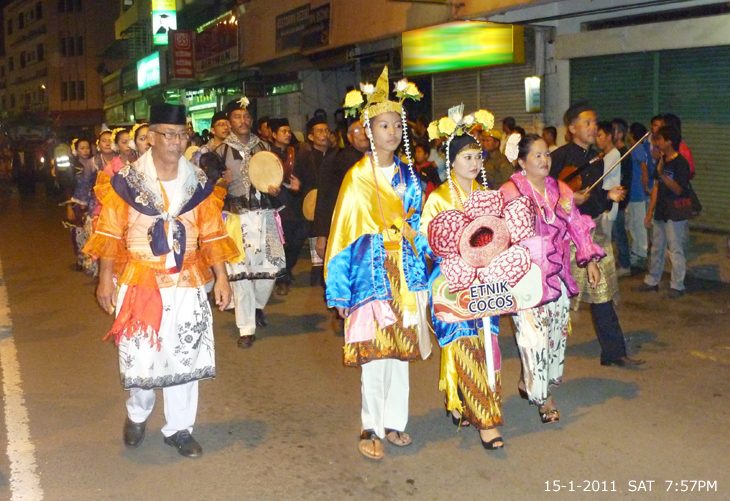
Kampung Balung Cocos, 10 August 2013.巴隆科科斯村,2013年8月10日。Kampung Balung Cocos, 10 Ogos 2013.A newer house, 10 August 2013.一間較新的房屋,2013年8月10日。Sebuah rumah lebih baharu, 10 Ogos 2013.In the festival night parade, Tawau, 15 January 2011.文化節夜間遊行,斗湖,2011年1月15日。Dalam perarakan malam festival, Tawau, 15 Januari 2011.
Two homes
兩個家鄉
Dua kampung halaman
Since 1984, when the islanders voted to join Australia and the Clunies-Ross rule ended, some families from Sabah have visited or returned to Home Island, and links have grown. In Balung, a seventh-generation Cocos Malay told Free Malaysia Today in 2026 that he hopes to take his family to the islands one day. Sabah is home; Pulu Kokos is the old home.
Sejak 1984, apabila penduduk pulau mengundi untuk menyertai Australia dan pemerintahan Clunies-Ross berakhir, sebahagian keluarga dari Sabah telah melawat atau kembali ke Pulau Home, dan hubungan semakin erat. Di Balung, seorang Melayu Cocos generasi ketujuh memberitahu Free Malaysia Today pada 2026 bahawa dia berharap membawa keluarganya ke pulau-pulau itu suatu hari nanti. Sabah ialah rumah; Pulu Kokos ialah kampung asal.
Sources: Lembaga Kebudayaan Negeri Sabah, Etnik Cocos (2023); Free Malaysia Today (22 Mar 2026); Inside Indonesia 109 (2012); Wikipedia, “Cocos Malays” (Malaysian Malays of Sabah); eTawau, BalungCocos.htm (2019); team photos.
資料來源:Lembaga Kebudayaan Negeri Sabah, Etnik Cocos (2023); Free Malaysia Today (22 Mar 2026); Inside Indonesia 109 (2012); Wikipedia, “Cocos Malays” (Malaysian Malays of Sabah); eTawau, BalungCocos.htm (2019); team photos.
Sumber: Lembaga Kebudayaan Negeri Sabah, Etnik Cocos (2023); Free Malaysia Today (22 Mar 2026); Inside Indonesia 109 (2012); Wikipedia, “Cocos Malays” (Malaysian Malays of Sabah); eTawau, BalungCocos.htm (2019); team photos.
9
The Cocos Story, in eight chapters
科科斯的故事(共八篇)
Kisah Cocos, dalam lapan bab
A light-reading series for visitors, students and families, in three languages. These are short first drafts that eTawau will develop into full articles as more information and photos arrive.
Siri bacaan ringan untuk pelawat, pelajar dan keluarga, dalam tiga bahasa. Ini draf pertama yang pendek yang akan dikembangkan oleh eTawau menjadi artikel lengkap apabila lebih banyak maklumat dan foto diterima.
Dua pengasas, seorang naturalis, dua waris, seorang ahli geografi, dua pasukan penyelidik Malaysia, dan seorang penjaga ingatan Cocos yang muda.
AH
Alexander Hare
First settler, 18261826年的第一位定居者Peneroka pertama, 1826
An English merchant and adventurer who had tried to found territories in Borneo and at the Cape of Good Hope. He brought the first people to the islands in 1826 and made coconut oil, but quarrelled with Clunies-Ross, left, and died in Java in 1834.
Seorang saudagar dan pengembara Inggeris yang pernah cuba membuka wilayah di Borneo dan Tanjung Harapan Baik. Dia membawa orang pertama ke pulau-pulau itu pada 1826 dan membuat minyak kelapa, tetapi bertelagah dengan Clunies-Ross, pergi, dan meninggal di Jawa pada 1834.
Shire of Cocos; Inside Indonesia (2012)
JC
John Clunies-Ross
Founder of the estate, 1827莊園的創立者,1827年Pengasas estet, 1827
A Scottish sea captain who settled in 1827, took over Hare’s people and groves, and founded the family that ruled the islands for some 150 years. He died in 1854.
Seorang kapten laut Scotland yang menetap pada 1827, mengambil alih orang dan kebun Hare, dan mengasaskan keluarga yang memerintah pulau-pulau itu kira-kira 150 tahun. Dia meninggal pada 1854.
National Archives of Australia; Shire of Cocos
CD
Charles Darwin
Naturalist, visited in 1836博物學家,1836年到訪Naturalis, melawat pada 1836
Visited on HMS Beagle in 1836, surveyed the atoll and formed his theory of how atolls grow. He also recorded the islanders living in slavery.
Melawat dengan HMS Beagle pada 1836, meninjau atol itu dan membentuk teorinya tentang pertumbuhan atol. Dia juga mencatat penduduk pulau hidup dalam perhambaan.
Shire of Cocos; Inside Indonesia (2012)
GC
George Clunies-Ross
Granted the islands, 18861886年獲授群島Dianugerahkan pulau-pulau, 1886
The third head of the family, to whom Queen Victoria granted all the land of the islands in 1886, to him and his heirs for ever.
家族的第三代掌門人,維多利亞女王在1886年把群島所有土地永久授予他和他的後人。
Ketua keluarga ketiga, yang dianugerahkan Ratu Victoria semua tanah pulau-pulau itu pada 1886, kepadanya dan warisnya buat selama-lamanya.
National Archives of Australia
JS
John Sidney Clunies-Ross
Brought the Orang Banten引進萬丹人Membawa Orang Banten
Arranged with the Dutch authorities, from around 1910, to bring convicts from Java to the islands. These Orang Banten first lived apart, then married into the older community.
Mengatur dengan pihak berkuasa Belanda, sekitar 1910, untuk membawa banduan dari Jawa ke pulau-pulau itu. Orang Banten ini mula-mula tinggal berasingan, kemudian berkahwin dengan masyarakat lebih lama.
Inside Indonesia 109 (2012)
YL
Yong Leng Lee
Geographer地理學家Ahli geografi
His 1965 book North Borneo (Sabah): A Study in Settlement Geography recorded the Cocos Islanders among the colony’s peoples and is still quoted for their numbers.
Bukunya pada 1965, North Borneo (Sabah): A Study in Settlement Geography, merekodkan penduduk Pulau Cocos antara bangsa tanah jajahan itu dan masih dipetik tentang bilangan mereka.
Wikipedia, “Cocos Malays”
NA
Noor Aziah Hj Mohd Ariffin & Nurul Ain Osri
Researchers, IIUM國際伊斯蘭大學研究者Penyelidik, UIAM
Architecture researchers at the International Islamic University Malaysia who studied the houses and intangible heritage of the Cocos Malays of Tawau in 2016 and 2017.
Penyelidik seni bina di Universiti Islam Antarabangsa Malaysia yang mengkaji rumah dan warisan tidak ketara orang Melayu Cocos di Tawau pada 2016 dan 2017.
Kajian mereka pada 2019 tentang pantun Cocos, berdasarkan kerja lapangan di Kampung Balung Cocos dan Kunak, menunjukkan bagaimana pantun yang dinyanyikan mendidik di samping menghibur.
From Kampung Balung Cocos, he writes about and shares his community’s dialect, food and Raya customs, and wrote about them for Free Malaysia Today in 2026.
Dari Kampung Balung Cocos, dia menulis dan berkongsi dialek, makanan dan adat Raya komunitinya, dan menulis tentangnya untuk Free Malaysia Today pada 2026.
Free Malaysia Today (22 Mar 2026)
Do you know Cocos Malay families, elders, dancers or violinists who should be here? Please tell eTawau.您知道有哪些科科斯馬來家庭、長輩、舞者或小提琴手應該列在這裡嗎?請告訴eTawau。Adakah anda mengenali keluarga, orang tua-tua, penari atau pemain biola Melayu Cocos yang patut disenaraikan di sini? Sila beritahu eTawau.
National Archives of Australia, “History of the Cocos (Keeling) Islands” (27 coral islands, two atolls, about 14 km², about 2,800 km north-west of Perth; Hare 1826; Clunies-Ross 1827; 1886 grant; Australian territory from 23 Nov 1955) — link
National Archives of Australia, Fact sheet 103, “The Cocos (Keeling) Islands” (1979 council; 1984 vote) — link
Australian Government, Department of Infrastructure, “Cocos (Keeling) Islands environment and heritage” (discovered 1609; inhabited from 1826; 1978 purchase; 1984 land trust) — link
Shire of Cocos, “History” (timeline: Hare 1826; Pulu Gangsa 1827; 1829 coconut oil; Hare dies 1834; Darwin 1836; 1857 annexation) — link
Cocos Keeling Islands (tourism), “History, culture & language” — link
Britannica, “Cocos Islands” (descendants of plantation workers brought by John Clunies-Ross, 1827–31; Home Island) — link
Wikipedia, “Cocos Malays” (origins; 4,000–5,000; Kampung Cocos in Lahad Datu and Tawau; dress; dialect words; Yong Leng Lee 1965) — link
Wikipedia, “Cocos Malay” (labourers from Banten, Central Java and Madura, 1857–1910; emigration to Christmas Island and Sabah in the 1950s; 4,000 in Malaysia, 2000) — link
Wikipedia (Indonesian), “Orang Melayu Cocos” and “Bahasa Melayu Cocos” — link
Wikipedia, “Cocos (Keeling) Islands” (dual name official from 1955; Bantam on Home Island; Malay island names) — link
Wikipedia, “Clunies-Ross family” (surveyed 1825; settled 1827) — link
N. Herriman & M. Winarnita, “Sinetron keeps links with Indonesia alive”, Inside Indonesia 109 (Jul–Sep 2012) (Orang Cape and Orang Banten; 1836 list of origins; Darwin; Balong Kokos in Sabah; returns since 1984; Western Australia) — link
M. Tahmindjis, “Australia, the Cocos Is. and Self-Determination”, QUT Law Review (1985) (over 1,600 expatriated to North Borneo, Singapore and Christmas Island, 1948–1951; tokens; no return) — link
UK Parliament, Hansard, “Cocos Islands (Transfer)” (4 Jul 1951) — link
UK Parliament, Hansard, “Cocos Islands Bill” (31 Jan 1955) (emigration to North Borneo since 1948) — link
New Mandala, “Australia’s Malay population” (1978 purchase) — link
ABC News (via inkl), “There was trouble in paradise until Cocos Islanders changed their destiny” (6 April 1984 vote) — link
Liputan6, “Cocos Keeling Islands, pulau Australia yang penduduknya berbahasa Betawi” (593 people in the 2021 census) — link
JatimTIMES, on Bantam village, Home Island, and Basa Pulu Kokos (27 Jun 2024) — link
N.A. Hj Mohd Ariffin & N.A. Osri, “Intangible Cultural Heritage (ICH) of Cocos Malays in Tawau, Sabah”, ICABE 2016, Kuala Lumpur (IIUM Repository 52255); with N.H. Salleh, American Scientific Publishers (2017) — link
N.A. Hj Mohd Ariffin & N.A. Osri, “The evolution of space organisation in Cocos Malays’ dwellings in Tawau, Sabah”, Advanced Science Letters 23(7): 6231–6236 (2017) — link
N.A. Osri et al., “Evolution of the dwellings for Cocos Malays in Cocos (Keeling) Island” (late 1948 to Christmas Island; late 1949 first trip, 180 to North Borneo) — link
Isa Romtie, Asmiaty Amat & Lokman Abdul Samad, “Nyanyian Panton sebagai Medium Hiburan dan Pendidikan Masyarakat Cocos di Sabah”, MANU 29: 115–135 (Universiti Malaysia Sabah, 2019) — link
Lembaga Kebudayaan Negeri Sabah, Etnik Cocos: Kepercayaan dan Amalan Tradisi (e-book, 2023) — link
Lembaga Kebudayaan Negeri Sabah, Audio Gallery (“Dansa”, music of the Cocos) — link
Jabatan Kebudayaan dan Kesenian Negara (JKKN), Pemetaan Budaya, “Tarian Dansa Cocos” (no. 1136) — link
JKKN, Pemetaan Budaya, “Tarian Melenggok” (no. 1137) — link
“Traditional dance in Malaysia: Sabah” (SlideShare) (Dansa: three couples, violins) — link
Suruhanjaya Koperasi Malaysia, Tribunal award T-106-2009, Koperasi Rancangan Kokos Kunak Berhad (1953; 23 Mar 1966; 15 acres per share; registered 13 Dec 1977) — link
“Kokos Scheme Kunak, Lahad Datu”, Cocos Islander Community blog (16 May 2011) (Segama and Mostyn tobacco estates) — link
The Borneo Post, “RTM documenting unique culture of Sabah Cocos community” (7 Mar 2011) — link
Wikipedia, “Kunak” and “Kunak District” (Cocos resettlement scheme near the Giram estate; Kunak part of Lahad Datu before 1990) — link
Wikipedia, “Darvel Bay” (Darvel Bay Tobacco Plantations Ltd) — link
Southeast Asian Studies (Tōnan Ajia Kenkyū) 31(3) (Kyoto, 1993) (three Kampung Cocos in east Sabah) — link
Jabatan Air Negeri Sabah, notice on Kampung Skim Kokos, Kunak (Dec 2023) — link
Muhammad Arief Ab Razak, “Welcoming Syawal with the Cocos Malays in Tawau”, Free Malaysia Today (22 Mar 2026) — link
MySabah.com, “Batu Bersusun (Columnar Basalt) of Tawau” (Giram Nek Legek) — link
eTawau, ColumnarBasalt.htm and IndexInterest.htm (columns 30–40 cm wide, about 100 m along the Balung River; 1 km walk) — link
eTawau, OrangCocos.htm (old page, 2025), Cocos/BalungCocos.htm (2019), Cocos/CocosDancer.htm (2007) and Cocos/CocosMalay_Big5.htm (2025) — link
eTawau team photos: Tawau Cultural Festival (Mar 2007; 15 Jan 2011; 1 Feb 2013; 7 Apr 2018) and Kampung Balung Cocos (5 Nov 2011; 10 Aug 2013; 14 Sep 2019)
Is your family Cocos Malay, in Balung, Kunak, Lahad Datu or elsewhere? Corrections, family stories and photos are welcome: please email eTawau@yahoo.com.
Adakah keluarga anda orang Melayu Cocos, di Balung, Kunak, Lahad Datu atau tempat lain? Pembetulan, kisah keluarga dan foto amat dialu-alukan: sila e-mel eTawau@yahoo.com.